
ADVENTURES
OF
HUCKLEBERRY FINN
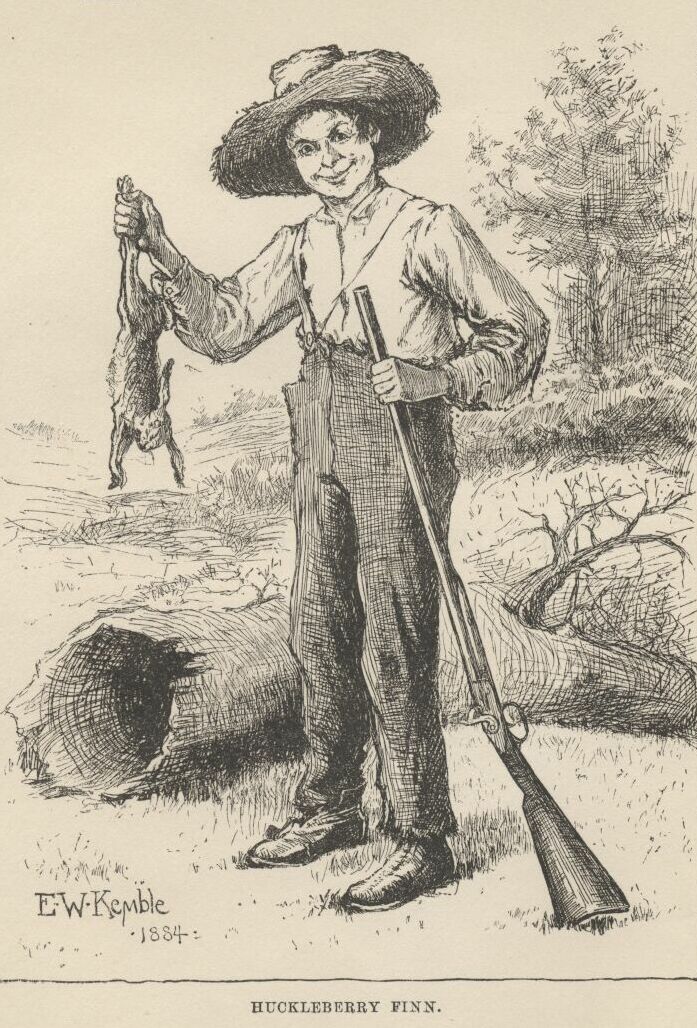
(Tom Sawyer’s Comrade)By Mark Twain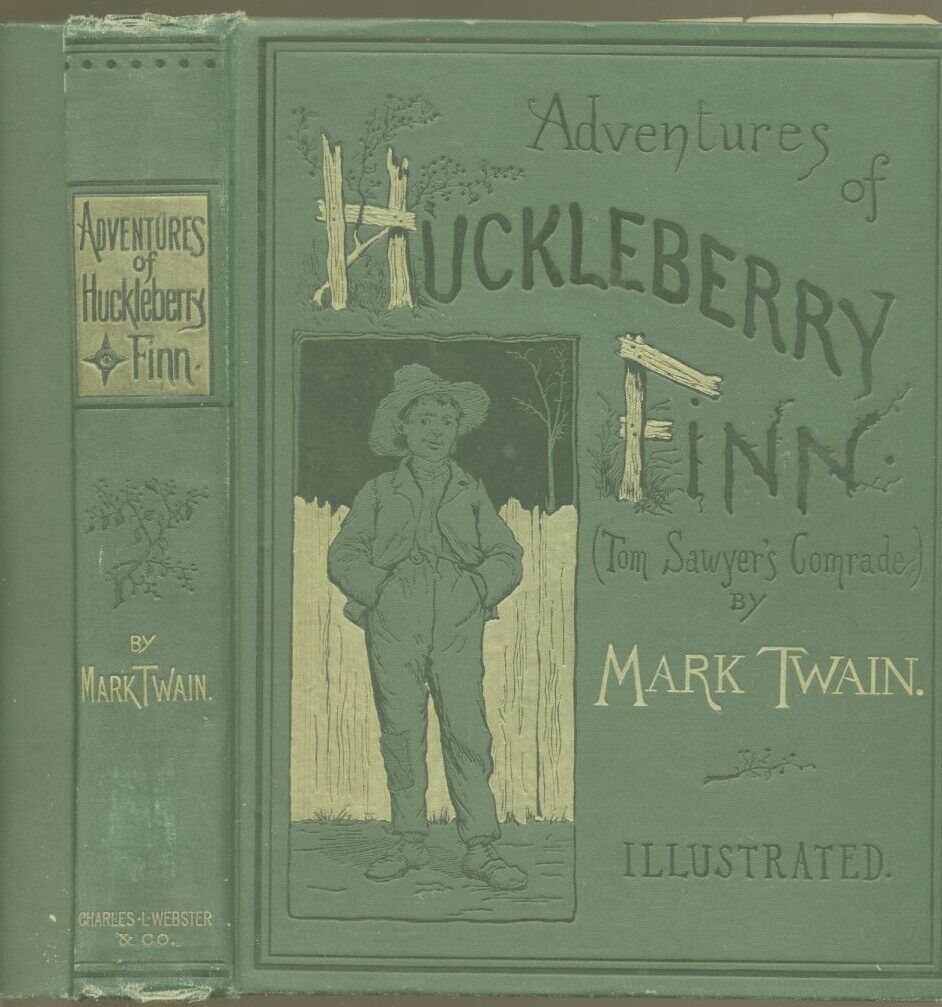

CONTENTS.
CHAPTER I.
Civilizing Huck.—Miss Watson.—Tom Sawyer Waits.
CHAPTER II.
The baby dolls for 2 year olds under 50 dollarsBoys Escape Jim.—Torn Sawyer’s Gang.—Deep-laid Plans.
CHAPTER III.
A Good Going-over.—Grace Triumphant.—“One of Tom Sawyers’s Lies”.
CHAPTER IV.
Huck and the Judge.—Superstition.
CHAPTER V.
Huck’s Father.—The Fond Parent.—Reform.
CHAPTER VI.
He Went for Judge Thatcher.—Huck Decided to Leave.—Political
Economy.—Thrashing Around.
CHAPTER VII.
Laying for Him.—Locked in the Cabin.—Sinking the Body.—Resting.
CHAPTER VIII.
Sleeping in the Woods.—Raising the Dead.—Exploring the Island.—Finding Jim.—Jim’s Escape.—Signs.—Balum.
CHAPTER IX.
The Cave.—The Floating House.
CHAPTER X.
The Find.—Old Hank Bunker.—In Disguise.
CHAPTER XI.
Huck and the Woman.—The Search.—Prevarication.—Going to Goshen.
CHAPTER XII.
Slow Navigation.—Borrowing Things.—Boarding the Wreck.—The Plotters.—Hunting for the Boat.
CHAPTER XIII.
Escaping from the Wreck.—The Watchman.—Sinking.
CHAPTER XIV.
A General Good Time.—The Harem.—French.
CHAPTER XV.
Huck Loses the Raft.—In the Fog.—Huck Finds the Raft.—Trash.
CHAPTER XVI.
Expectation.—A White Lie.—Floating Currency.—Running by Cairo.—Swimming Ashore.
CHAPTER XVII.
An Evening Call.—The Farm in Arkansaw.—Interior Decorations.—Stephen Dowling Bots.—Poetical Effusions.
CHAPTER XVIII.
Col. Grangerford.—Aristocracy.—Feuds.—The Testament.—Recovering the Raft.—The Wood—pile.—Pork and Cabbage.
CHAPTER XIX.
Tying Up Day—times.—An Astronomical Theory.—Running a Temperance Revival.—The Duke of Bridgewater.—The Troubles of Royalty.
CHAPTER XX.
Huck Explains.—Laying Out a Campaign.—Working the Camp—meeting.—A Pirate at the Camp—meeting.—The Duke as a Printer.
CHAPTER XXI.
Sword Exercise.—Hamlet’s Soliloquy.—They Loafed Around Town.—A Lazy Town.—Old Boggs.—Dead.
CHAPTER XXII.
Sherburn.—Attending the Circus.—Intoxication in the Ring.—The Thrilling Tragedy.
CHAPTER XXIII.
Sold.—Royal Comparisons.—Jim Gets Home-sick.
CHAPTER XXIV.
Jim in Royal Robes.—They Take a Passenger.—Getting Information.—Family Grief.
CHAPTER XXV.
Is It Them?—Singing the “Doxologer.”—Awful Square—Funeral Orgies.—A Bad Investment .
CHAPTER XXVI.
A Pious King.—The King’s Clergy.—She Asked His Pardon.—Hiding in the Room.—Huck Takes the Money.
CHAPTER XXVII.
The Funeral.—Satisfying Curiosity.—Suspicious of Huck,—Quick Sales and Small.
CHAPTER XXVIII.
The Trip to England.—“The Brute!”—Mary Jane Decides to Leave.—Huck Parting with Mary Jane.—Mumps.—The Opposition Line.
CHAPTER XXIX.
Contested Relationship.—The King Explains the Loss.—A Question of Handwriting.—Digging up the Corpse.—Huck Escapes.
CHAPTER XXX.
The King Went for Him.—A Royal Row.—Powerful Mellow.
CHAPTER XXXI.
Ominous Plans.—News from Jim.—Old Recollections.—A Sheep Story.—Valuable Information.
CHAPTER XXXII.
Still and Sunday—like.—Mistaken Identity.—Up a Stump.—In a Dilemma.
CHAPTER XXXIII.
A Nigger Stealer.—Southern Hospitality.—A Pretty Long Blessing.—Tar and Feathers.
CHAPTER XXXIV.
The Hut by the Ash Hopper.—Outrageous.—Climbing the Lightning Rod.—Troubled with Witches.
CHAPTER XXXV.
Escaping Properly.—Dark Schemes.—Discrimination in Stealing.—A Deep Hole.
CHAPTER XXXVI.
The Lightning Rod.—His Level Best.—A Bequest to Posterity.—A High Figure.
CHAPTER XXXVII.
The Last Shirt.—Mooning Around.—Sailing Orders.—The Witch Pie.
CHAPTER XXXVIII.
The Coat of Arms.—A Skilled Superintendent.—Unpleasant Glory.—A Tearful Subject.
CHAPTER XXXIX.
Rats.—Lively Bed—fellows.—The Straw Dummy.
CHAPTER XL.
Fishing.—The Vigilance Committee.—A Lively Run.—Jim Advises a Doctor.
CHAPTER XLI.
The Doctor.—Uncle Silas.—Sister Hotchkiss.—Aunt Sally in Trouble.
CHAPTER XLII.
Tom Sawyer Wounded.—The Doctor’s Story.—Tom Confesses.—Aunt Polly Arrives.—Hand Out Them Letters.
CHAPTER THE LAST.
Out of Bondage.—Paying the Captive.—Yours Truly, Huck Finn.
ILLUSTRATIONS.
| The Widows |
| Moses and the “Bulrushers” |
| Miss Watson |
| Huck Stealing Away |
| They Tip-toed Along |
| Jim |
| Tom Sawyer’s Band of Robbers |
| Huck Creeps into his Window |
| Miss Watson’s Lecture |
| The Robbers Dispersed |
| Rubbing the Lamp |
| ! ! ! ! |
| Judge Thatcher surprised |
| Jim Listening |
| “Pap” |
| Huck and his Father |
| Reforming the Drunkard |
| Falling from Grace |
| Getting out of the Way |
| Solid Comfort |
| Thinking it Over |
| Raising a Howl |
| “Git Up” |
| The Shanty |
| Shooting the Pig |
| Taking a Rest |
| In the Woods |
| Watching the Boat |
| Discovering the Camp Fire |
| Jim and the Ghost |
| Misto Bradish’s Nigger |
| Exploring the Cave |
| In the Cave |
| Jim sees a Dead Man |
| They Found Eight Dollars |
| Jim and the Snake |
| Old Hank Bunker |
| “A Fair Fit” |
| “Come In” |
| “Him and another Man” |
| She puts up a Snack |
| “Hump Yourself” |
| On the Raft |
| He sometimes Lifted a Chicken |
| “Please don’t, Bill” |
| “It ain’t Good Morals” |
| “Oh! Lordy, Lordy!” |
| In a Fix |
| “Hello, What’s Up?” |
| The Wreck |
| We turned in and Slept |
| Turning over the Truck |
| Solomon and his Million Wives |
| The story of “Sollermun” |
| “We Would Sell the Raft” |
| Among the Snags |
| Asleep on the Raft |
| “Something being Raftsman” |
| “Boy, that’s a Lie” |
| “Here I is, Huck” |
| Climbing up the Bank |
| “Who’s There?” |
| “Buck” |
| “It made Her look Spidery” |
| “They got him out and emptied Him” |
| The House |
| Col. Grangerford |
| Young Harney Shepherdson |
| Miss Charlotte |
| “And asked me if I Liked Her” |
| “Behind the Wood-pile” |
| Hiding Day-times |
| “And Dogs a-Coming” |
| “By rights I am a Duke!” |
| “I am the Late Dauphin” |
| Tail Piece |
| On the Raft |
| The King as Juliet |
| “Courting on the Sly” |
| “A Pirate for Thirty Years” |
| Another little Job |
| Practizing |
| Hamlet’s Soliloquy |
| “Gimme a Chaw” |
| A Little Monthly Drunk |
| The Death of Boggs |
| Sherburn steps out |
| A Dead Head |
| He shed Seventeen Suits |
| Tragedy |
| Their Pockets Bulged |
| Henry the Eighth in Boston Harbor |
| Harmless |
| Adolphus |
| He fairly emptied that Young Fellow |
| “Alas, our Poor Brother” |
| “You Bet it is” |
| Leaking |
| Making up the “Deffisit” |
| Going for him |
| The Doctor |
| The Bag of Money |
| The Cubby |
| Supper with the Hare-Lip |
| Honest Injun |
| The Duke looks under the Bed |
| Huck takes the Money |
| A Crack in the Dining-room Door |
| The Undertaker |
| “He had a Rat!” |
| “Was you in my Room?” |
| Jawing |
| In Trouble |
| Indignation |
| How to Find Them |
| He Wrote |
| Hannah with the Mumps |
| The Auction |
| The True Brothers |
| The Doctor leads Huck |
| The Duke Wrote |
| “Gentlemen, Gentlemen!” |
| “Jim Lit Out” |
| The King shakes Huck |
| The Duke went for Him |
| Spanish Moss |
| “Who Nailed Him?” |
| Thinking |
| He gave him Ten Cents |
| Striking for the Back Country |
| Still and Sunday-like |
| She hugged him tight |
| “Who do you reckon it is?” |
| “It was Tom Sawyer” |
| “Mr. Archibald Nichols, I presume?” |
| A pretty long Blessing |
| Traveling By Rail |
| Vittles |
| A Simple Job |
| Witches |
| Getting Wood |
| One of the Best Authorities |
| The Breakfast-Horn |
| Smouching the Knives |
| Going down the Lightning-Rod |
| Stealing spoons |
| Tom advises a Witch Pie |
| The Rubbage-Pile |
| “Missus, dey’s a Sheet Gone” |
| In a Tearing Way |
| One of his Ancestors |
| Jim’s Coat of Arms |
| A Tough Job |
| Buttons on their Tails |
| Irrigation |
| Keeping off Dull Times |
| Sawdust Diet |
| Trouble is Brewing |
| Fishing |
| Every one had a Gun |
| Tom caught on a Splinter |
| Jim advises a Doctor |
| The Doctor |
| Uncle Silas in Danger |
| Old Mrs. Hotchkiss |
| Aunt Sally talks to Huck |
| Tom Sawyer wounded |
| The Doctor speaks for Jim |
| Tom rose square up in Bed |
| “Hand out them Letters” |
| Out of Bondage |
| Tom’s Liberality |
| Yours Truly |
NOTICE.
Persons attempting to find a motive in this narrative will be prosecuted;persons attempting to find a moral in it will be banished; persons attempting tofind a plot in it will be shot.
BY ORDER OF THE AUTHOR
PERG. G., CHIEF OF ORDNANCE.
EXPLANATORY
In this book a number of dialects are used, to wit: the Missouri negro dialect;the extremest form of the backwoods Southwestern dialect; the ordinary “PikeCounty” dialect; and four modified varieties of this last. The shadings havenot been done in a haphazard fashion, or by guesswork; but painstakingly, andwith the trustworthy guidance and support of personal familiarity with theseseveral forms of speech.
I make this explanation for the reason that without it many readers wouldsuppose that all these characters were trying to talk alike and not succeeding.
THE AUTHOR.
HUCKLEBERRY FINN
Scene: The Mississippi Valley Time: Forty to fifty years ago
CHAPTER I.
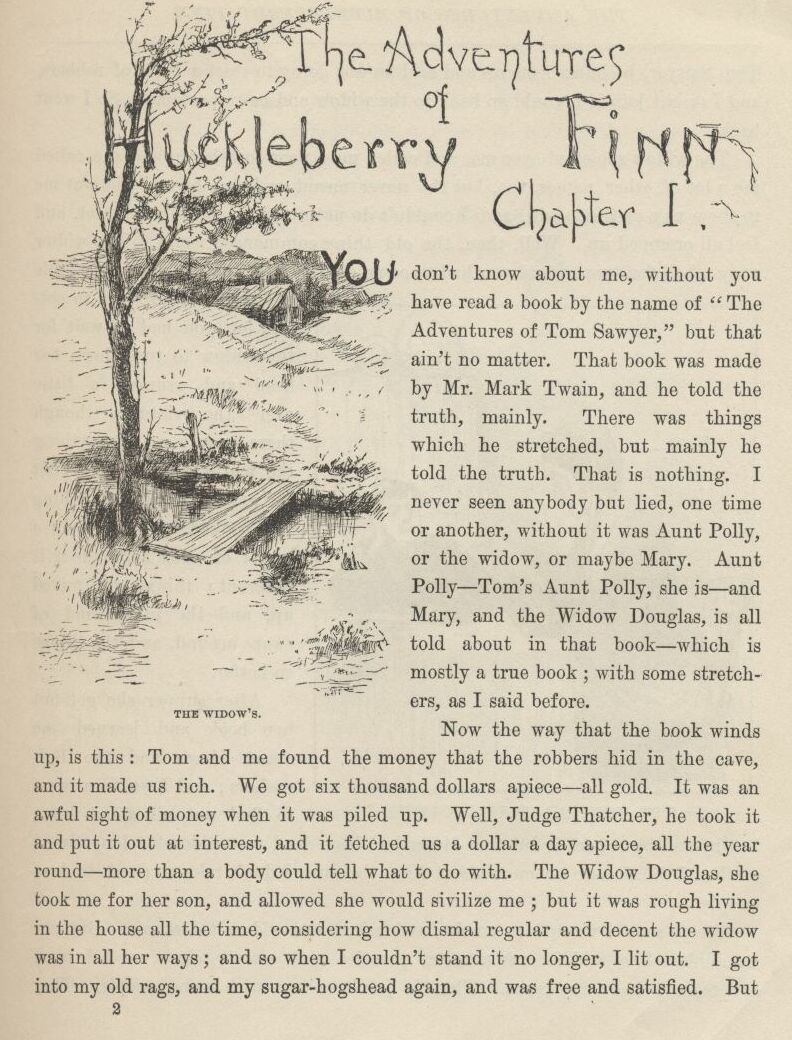
You don’t know about me without you have read a book by the name of TheAdventures of Tom Sawyer; but that ain’t no matter. That book was made by Mr.Mark Twain, and he told the truth, mainly. There was things which he stretched,but mainly he told the truth. That is nothing. I never seen anybody but liedone time or another, without it was Aunt Polly, or the widow, or maybe Mary.Aunt Polly—Tom’s Aunt Polly, she is—and Mary, and the Widow Douglas is all toldabout in that book, which is mostly a true book, with some stretchers, as Isaid before.
Now the way that the book winds up is this: Tom and me found the money that therobbers hid in the cave, and it made us rich. We got six thousand dollarsapiece—all gold. It was an awful sight of money when it was piled up. Well,Judge Thatcher he took it and put it out at interest, and it fetched us adollar a day apiece all the year round—more than a body could tell what to dowith. The Widow Douglas she took me for her son, and allowed she would sivilizeme; but it was rough living in the house all the time, considering how dismalregular and decent the widow was in all her ways; and so when I couldn’t standit no longer I lit out. I got into my old rags and my sugar-hogshead again, andwas free and satisfied. But Tom Sawyer he hunted me up and said he was going tostart a band of robbers, and I might join if I would go back to the widow andbe respectable. So I went back.
The widow she cried over me, and called me a poor lost lamb, and she called mea lot of other names, too, but she never meant no harm by it. She put me inthem new clothes again, and I couldn’t do nothing but sweat and sweat, and feelall cramped up. Well, then, the old thing commenced again. The widow rung abell for supper, and you had to come to time. When you got to the table youcouldn’t go right to eating, but you had to wait for the widow to tuck down herhead and grumble a little over the victuals, though there warn’t reallyanything the matter with them,—that is, nothing only everything was cooked byitself. In a barrel of odds and ends it is different; things get mixed up, andthe juice kind of swaps around, and the things go better.
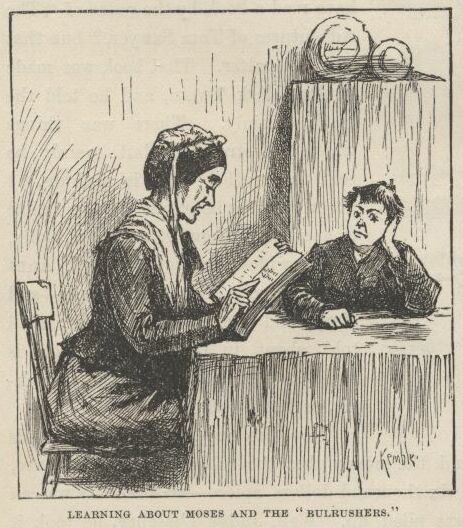
After supper she got out her book and learned me about Moses and theBulrushers, and I was in a sweat to find out all about him; but by-and-by shelet it out that Moses had been dead a considerable long time; so then I didn’tcare no more about him, because I don’t take no stock in dead people.
Pretty soon I wanted to smoke, and asked the widow to let me. But she wouldn’t.She said it was a mean practice and wasn’t clean, and I must try to not do itany more. That is just the way with some people. They get down on a thing whenthey don’t know nothing about it. Here she was a-bothering about Moses, whichwas no kin to her, and no use to anybody, being gone, you see, yet finding apower of fault with me for doing a thing that had some good in it. And she tooksnuff, too; of course that was all right, because she done it herself.
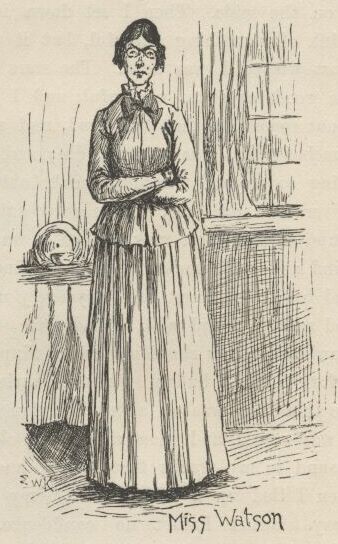
Her sister, Miss Watson, a tolerable slim old maid, with goggles on, had justcome to live with her, and took a set at me now with a spelling-book. Sheworked me middling hard for about an hour, and then the widow made her ease up.I couldn’t stood it much longer. Then for an hour it was deadly dull, and I wasfidgety. Miss Watson would say, “Don’t put your feet up there, Huckleberry;”and “Don’t scrunch up like that, Huckleberry—set up straight;” and pretty soonshe would say, “Don’t gap and stretch like that, Huckleberry—why don’t you tryto behave?” Then she told me all about the bad place, and I said I wished I wasthere. She got mad then, but I didn’t mean no harm. All I wanted was to gosomewheres; all I wanted was a change, I warn’t particular. She said it waswicked to say what I said; said she wouldn’t say it for the whole world; shewas going to live so as to go to the good place. Well, I couldn’t see noadvantage in going where she was going, so I made up my mind I wouldn’t try forit. But I never said so, because it would only make trouble, and wouldn’t do nogood.
Now she had got a start, and she went on and told me all about the good place.She said all a body would have to do there was to go around all day long with aharp and sing, forever and ever. So I didn’t think much of it. But I never saidso. I asked her if she reckoned Tom Sawyer would go there, and she said not bya considerable sight. I was glad about that, because I wanted him and me to betogether.
Miss Watson she kept pecking at me, and it got tiresome and lonesome. By-and-bythey fetched the niggers in and had prayers, and then everybody was off to bed.I went up to my room with a piece of candle, and put it on the table. Then Iset down in a chair by the window and tried to think of something cheerful, butit warn’t no use. I felt so lonesome I most wished I was dead. The stars wereshining, and the leaves rustled in the woods ever so mournful; and I heard anowl, away off, who-whooing about somebody that was dead, and a whippowill and adog crying about somebody that was going to die; and the wind was trying towhisper something to me, and I couldn’t make out what it was, and so it madethe cold shivers run over me. Then away out in the woods I heard that kind of asound that a ghost makes when it wants to tell about something that’s on itsmind and can’t make itself understood, and so can’t rest easy in its grave, andhas to go about that way every night grieving. I got so down-hearted and scaredI did wish I had some company. Pretty soon a spider went crawling up myshoulder, and I flipped it off and it lit in the candle; and before I couldbudge it was all shriveled up. I didn’t need anybody to tell me that that wasan awful bad sign and would fetch me some bad luck, so I was scared and mostshook the clothes off of me. I got up and turned around in my tracks threetimes and crossed my breast every time; and then I tied up a little lock of myhair with a thread to keep witches away. But I hadn’t no confidence. You dothat when you’ve lost a horseshoe that you’ve found, instead of nailing it upover the door, but I hadn’t ever heard anybody say it was any way to keep offbad luck when you’d killed a spider.
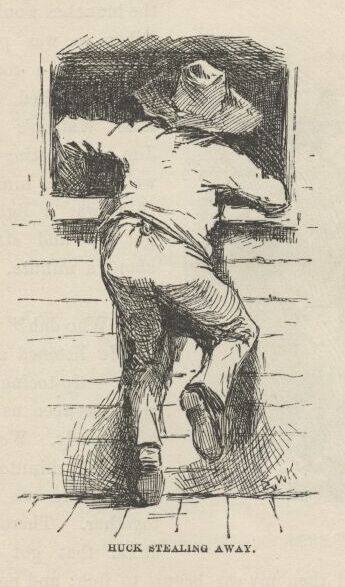
I set down again, a-shaking all over, and got out my pipe for a smoke; for thehouse was all as still as death now, and so the widow wouldn’t know. Well,after a long time I heard the clock away off in the town goboom—boom—boom—twelve licks; and all still again—stiller than ever. Pretty soonI heard a twig snap down in the dark amongst the trees—something was astirring. I set still and listened. Directly I could just barely hear a“me-yow! me-yow!” down there. That was good! Says I, “me-yow!me-yow!” as soft as I could, and then I put out the light and scrambled outof the window on to the shed. Then I slipped down to the ground and crawled inamong the trees, and, sure enough, there was Tom Sawyer waiting for me.
CHAPTER II.
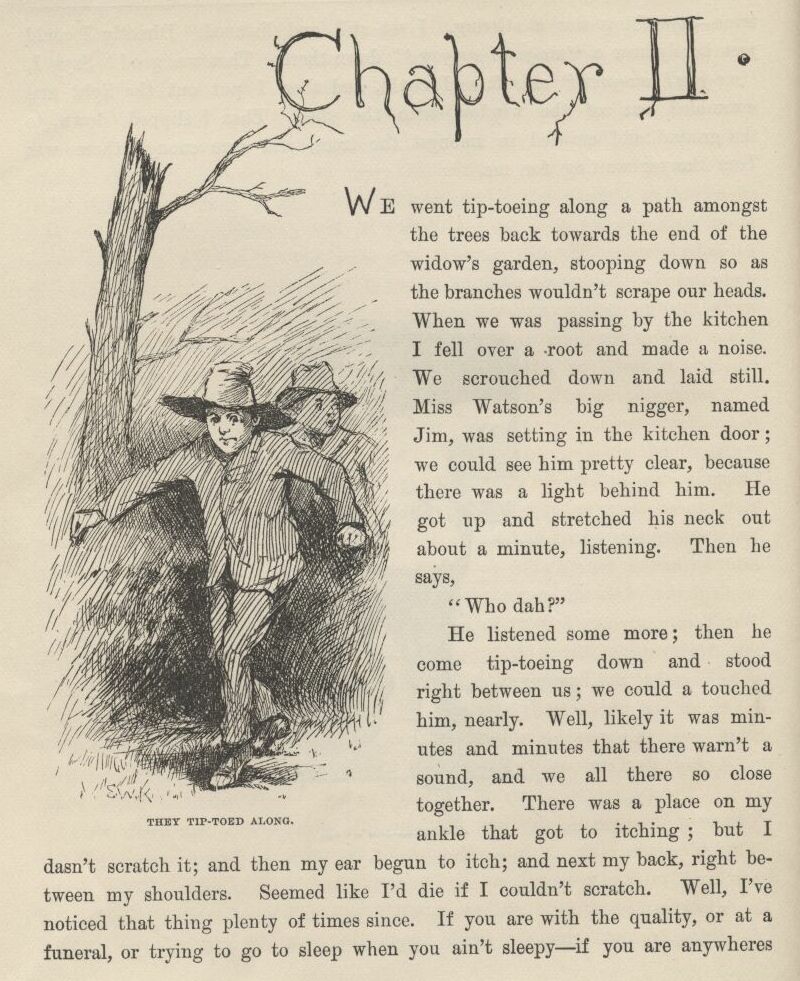
We went tiptoeing along a path amongst the trees back towards the end of thewidow’s garden, stooping down so as the branches wouldn’t scrape our heads.When we was passing by the kitchen I fell over a root and made a noise. Wescrouched down and laid still. Miss Watson’s big nigger, named Jim, was settingin the kitchen door; we could see him pretty clear, because there was a lightbehind him. He got up and stretched his neck out about a minute, listening.Then he says:
“Who dah?”
He listened some more; then he come tiptoeing down and stood right between us;we could a touched him, nearly. Well, likely it was minutes and minutes thatthere warn’t a sound, and we all there so close together. There was a place onmy ankle that got to itching, but I dasn’t scratch it; and then my ear begun toitch; and next my back, right between my shoulders. Seemed like I’d die if Icouldn’t scratch. Well, I’ve noticed that thing plenty times since. If you arewith the quality, or at a funeral, or trying to go to sleep when you ain’tsleepy—if you are anywheres where it won’t do for you to scratch, why you willitch all over in upwards of a thousand places. Pretty soon Jim says:
“Say, who is you? Whar is you? Dog my cats ef I didn’ hear sumf’n. Well, I knowwhat I’s gwyne to do: I’s gwyne to set down here and listen tell I hears itagin.”
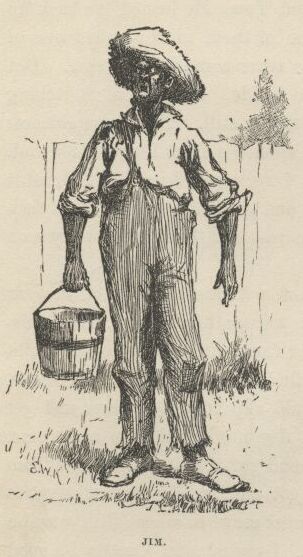
So he set down on the ground betwixt me and Tom. He leaned his back up againsta tree, and stretched his legs out till one of them most touched one of mine.My nose begun to itch. It itched till the tears come into my eyes. But I dasn’tscratch. Then it begun to itch on the inside. Next I got to itching underneath.I didn’t know how I was going to set still. This miserableness went on as muchas six or seven minutes; but it seemed a sight longer than that. I was itchingin eleven different places now. I reckoned I couldn’t stand it more’n a minutelonger, but I set my teeth hard and got ready to try. Just then Jim begun tobreathe heavy; next he begun to snore—and then I was pretty soon comfortableagain.
Tom he made a sign to me—kind of a little noise with his mouth—and we wentcreeping away on our hands and knees. When we was ten foot off Tom whispered tome, and wanted to tie Jim to the tree for fun. But I said no; he might wake andmake a disturbance, and then they’d find out I warn’t in. Then Tom said hehadn’t got candles enough, and he would slip in the kitchen and get some more.I didn’t want him to try. I said Jim might wake up and come. But Tom wanted toresk it; so we slid in there and got three candles, and Tom laid five cents onthe table for pay. Then we got out, and I was in a sweat to get away; butnothing would do Tom but he must crawl to where Jim was, on his hands andknees, and play something on him. I waited, and it seemed a good while,everything was so still and lonesome.
As soon as Tom was back we cut along the path, around the garden fence, andby-and-by fetched up on the steep top of the hill the other side of the house.Tom said he slipped Jim’s hat off of his head and hung it on a limb right overhim, and Jim stirred a little, but he didn’t wake. Afterwards Jim said thewitches bewitched him and put him in a trance, and rode him all over the State,and then set him under the trees again, and hung his hat on a limb to show whodone it. And next time Jim told it he said they rode him down to New Orleans;and, after that, every time he told it he spread it more and more, tillby-and-by he said they rode him all over the world, and tired him most todeath, and his back was all over saddle-boils. Jim was monstrous proud aboutit, and he got so he wouldn’t hardly notice the other niggers. Niggers wouldcome miles to hear Jim tell about it, and he was more looked up to than anynigger in that country. Strange niggers would stand with their mouths open andlook him all over, same as if he was a wonder. Niggers is always talking aboutwitches in the dark by the kitchen fire; but whenever one was talking andletting on to know all about such things, Jim would happen in and say, “Hm!What you know ’bout witches?” and that nigger was corked up and had to take aback seat. Jim always kept that five-center piece round his neck with a string,and said it was a charm the devil give to him with his own hands, and told himhe could cure anybody with it and fetch witches whenever he wanted to just bysaying something to it; but he never told what it was he said to it. Niggerswould come from all around there and give Jim anything they had, just for asight of that five-center piece; but they wouldn’t touch it, because the devilhad had his hands on it. Jim was most ruined for a servant, because he gotstuck up on account of having seen the devil and been rode by witches.
Well, when Tom and me got to the edge of the hilltop we looked away down intothe village and could see three or four lights twinkling, where there was sickfolks, maybe; and the stars over us was sparkling ever so fine; and down by thevillage was the river, a whole mile broad, and awful still and grand. We wentdown the hill and found Jo Harper and Ben Rogers, and two or three more of theboys, hid in the old tanyard. So we unhitched a skiff and pulled down the rivertwo mile and a half, to the big scar on the hillside, and went ashore.
We went to a clump of bushes, and Tom made everybody swear to keep the secret,and then showed them a hole in the hill, right in the thickest part of thebushes. Then we lit the candles, and crawled in on our hands and knees. We wentabout two hundred yards, and then the cave opened up. Tom poked about amongstthe passages, and pretty soon ducked under a wall where you wouldn’t a noticedthat there was a hole. We went along a narrow place and got into a kind ofroom, all damp and sweaty and cold, and there we stopped. Tom says:
“Now, we’ll start this band of robbers and call it Tom Sawyer’s Gang. Everybodythat wants to join has got to take an oath, and write his name in blood.”
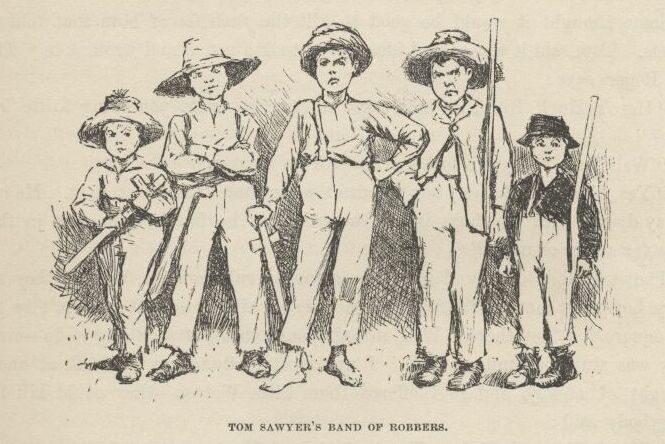
Everybody was willing. So Tom got out a sheet of paper that he had wrote theoath on, and read it. It swore every boy to stick to the band, and never tellany of the secrets; and if anybody done anything to any boy in the band,whichever boy was ordered to kill that person and his family must do it, and hemustn’t eat and he mustn’t sleep till he had killed them and hacked a cross intheir breasts, which was the sign of the band. And nobody that didn’t belong tothe band could use that mark, and if he did he must be sued; and if he done itagain he must be killed. And if anybody that belonged to the band told thesecrets, he must have his throat cut, and then have his carcass burnt up andthe ashes scattered all around, and his name blotted off of the list with bloodand never mentioned again by the gang, but have a curse put on it and be forgotforever.
Everybody said it was a real beautiful oath, and asked Tom if he got it out ofhis own head. He said, some of it, but the rest was out of pirate-books androbber-books, and every gang that was high-toned had it.
Some thought it would be good to kill the familiesof boys that told thesecrets. Tom said it was a good idea, so he took a pencil and wrote it in. ThenBen Rogers says:
“Here’s Huck Finn, he hain’t got no family; what you going to do ’bout him?”
“Well, hain’t he got a father?” says Tom Sawyer.
“Yes, he’s got a father, but you can’t never find him these days. He used tolay drunk with the hogs in the tanyard, but he hain’t been seen in these partsfor a year or more.”
They talked it over, and they was going to rule me out, because they said everyboy must have a family or somebody to kill, or else it wouldn’t be fair andsquare for the others. Well, nobody could think of anything to do—everybody wasstumped, and set still. I was most ready to cry; but all at once I thought of away, and so I offered them Miss Watson—they could kill her. Everybody said:
“Oh, she’ll do. That’s all right. Huck can come in.”
Then they all stuck a pin in their fingers to get blood to sign with, and Imade my mark on the paper.
“Now,” says Ben Rogers, “what’s the line of business of this Gang?”
“Nothing only robbery and murder,” Tom said.
“But who are we going to rob?—houses, or cattle, or—”
“Stuff! stealing cattle and such things ain’t robbery; it’s burglary,” says TomSawyer. “We ain’t burglars. That ain’t no sort of style. We are highwaymen. Westop stages and carriages on the road, with masks on, and kill the people andtake their watches and money.”
“Must we always kill the people?”
“Oh, certainly. It’s best. Some authorities think different, but mostly it’sconsidered best to kill them—except some that you bring to the cave here, andkeep them till they’re ransomed.”
“Ransomed? What’s that?”
“I don’t know. But that’s what they do. I’ve seen it in books; and so of coursethat’s what we’ve got to do.”
“But how can we do it if we don’t know what it is?”
“Why, blame it all, we’ve gotto do it. Don’t I tell you it’s in thebooks? Do you want to go to doing different from what’s in the books, and getthings all muddled up?”
“Oh, that’s all very fine to say, Tom Sawyer, but how in the nation arethese fellows going to be ransomed if we don’t know how to do it tothem?—that’s the thing Iwant to get at. Now, what do you reckonit is?”
“Well, I don’t know. But per’aps if we keep them till they’re ransomed, itmeans that we keep them till they’re dead.”
“Now, that’s something like. That’ll answer. Why couldn’t you said thatbefore? We’ll keep them till they’re ransomed to death; and a bothersome lotthey’ll be, too—eating up everything, and always trying to get loose.”
“How you talk, Ben Rogers. How can they get loose when there’s a guard overthem, ready to shoot them down if they move a peg?”
“A guard! Well, that isgood. So somebody’s got to set up all night andnever get any sleep, just so as to watch them. I think that’s foolishness. Whycan’t a body take a club and ransom them as soon as they get here?”
“Because it ain’t in the books so—that’s why. Now, Ben Rogers, do you want todo things regular, or don’t you?—that’s the idea. Don’t you reckon that thepeople that made the books knows what’s the correct thing to do? Do you reckonyoucan learn ’em anything? Not by a good deal. No, sir, we’ll just goon and ransom them in the regular way.”
“All right. I don’t mind; but I say it’s a fool way, anyhow. Say, do we killthe women, too?”
“Well, Ben Rogers, if I was as ignorant as you I wouldn’t let on. Kill thewomen? No; nobody ever saw anything in the books like that. You fetch them tothe cave, and you’re always as polite as pie to them; and by-and-by they fallin love with you, and never want to go home any more.”
“Well, if that’s the way I’m agreed, but I don’t take no stock in it. Mightysoon we’ll have the cave so cluttered up with women, and fellows waiting to beransomed, that there won’t be no place for the robbers. But go ahead, I ain’tgot nothing to say.”
Little Tommy Barnes was asleep now, and when they waked him up he was scared,and cried, and said he wanted to go home to his ma, and didn’t want to be arobber any more.
So they all made fun of him, and called him cry-baby, and that made him mad,and he said he would go straight and tell all the secrets. But Tom give himfive cents to keep quiet, and said we would all go home and meet next week, androb somebody and kill some people.
Ben Rogers said he couldn’t get out much, only Sundays, and so he wanted tobegin next Sunday; but all the boys said it would be wicked to do it on Sunday,and that settled the thing. They agreed to get together and fix a day as soonas they could, and then we elected Tom Sawyer first captain and Jo Harpersecond captain of the Gang, and so started home.
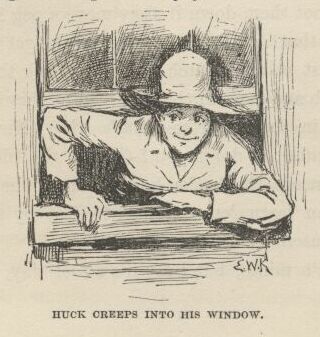
I clumb up the shed and crept into my window just before day was breaking. Mynew clothes was all greased up and clayey, and I was dog-tired.
CHAPTER III.
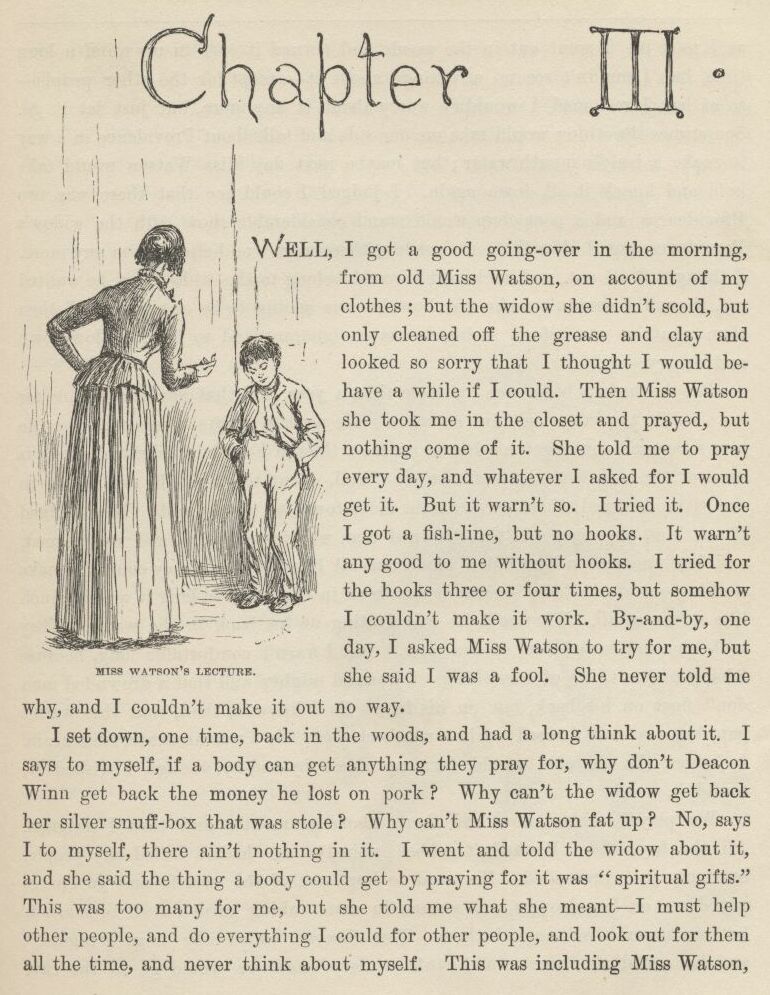
Well, I got a good going-over in the morning from old Miss Watson on account ofmy clothes; but the widow she didn’t scold, but only cleaned off the grease andclay, and looked so sorry that I thought I would behave a while if I could.Then Miss Watson she took me in the closet and prayed, but nothing come of it.She told me to pray every day, and whatever I asked for I would get it. But itwarn’t so. I tried it. Once I got a fish-line, but no hooks. It warn’t any goodto me without hooks. I tried for the hooks three or four times, but somehow Icouldn’t make it work. By-and-by, one day, I asked Miss Watson to try for me,but she said I was a fool. She never told me why, and I couldn’t make it out noway.
I set down one time back in the woods, and had a long think about it. I says tomyself, if a body can get anything they pray for, why don’t Deacon Winn getback the money he lost on pork? Why can’t the widow get back her silversnuffbox that was stole? Why can’t Miss Watson fat up? No, says I to myself,there ain’t nothing in it. I went and told the widow about it, and she said thething a body could get by praying for it was “spiritual gifts.” This was toomany for me, but she told me what she meant—I must help other people, and doeverything I could for other people, and look out for them all the time, andnever think about myself. This was including Miss Watson, as I took it. I wentout in the woods and turned it over in my mind a long time, but I couldn’t seeno advantage about it—except for the other people; so at last I reckoned Iwouldn’t worry about it any more, but just let it go. Sometimes the widow wouldtake me one side and talk about Providence in a way to make a body’s mouthwater; but maybe next day Miss Watson would take hold and knock it all downagain. I judged I could see that there was two Providences, and a poor chapwould stand considerable show with the widow’s Providence, but if Miss Watson’sgot him there warn’t no help for him any more. I thought it all out, andreckoned I would belong to the widow’s if he wanted me, though I couldn’t makeout how he was a-going to be any better off then than what he was before,seeing I was so ignorant, and so kind of low-down and ornery.
Pap he hadn’t been seen for more than a year, and that was comfortable for me;I didn’t want to see him no more. He used to always whale me when he was soberand could get his hands on me; though I used to take to the woods most of thetime when he was around. Well, about this time he was found in the riverdrownded, about twelve mile above town, so people said. They judged it was him,anyway; said this drownded man was just his size, and was ragged, and haduncommon long hair, which was all like pap; but they couldn’t make nothing outof the face, because it had been in the water so long it warn’t much like aface at all. They said he was floating on his back in the water. They took himand buried him on the bank. But I warn’t comfortable long, because I happenedto think of something. I knowed mighty well that a drownded man don’t float onhis back, but on his face. So I knowed, then, that this warn’t pap, but a womandressed up in a man’s clothes. So I was uncomfortable again. I judged the oldman would turn up again by-and-by, though I wished he wouldn’t.
We played robber now and then about a month, and then I resigned. All the boysdid. We hadn’t robbed nobody, hadn’t killed any people, but only justpretended. We used to hop out of the woods and go charging down on hog-driversand women in carts taking garden stuff to market, but we never hived any ofthem. Tom Sawyer called the hogs “ingots,” and he called the turnips and stuff“julery,” and we would go to the cave and powwow over what we had done, and howmany people we had killed and marked. But I couldn’t see no profit in it. Onetime Tom sent a boy to run about town with a blazing stick, which he called aslogan (which was the sign for the Gang to get together), and then he said hehad got secret news by his spies that next day a whole parcel of Spanishmerchants and rich A-rabs was going to camp in Cave Hollow with two hundredelephants, and six hundred camels, and over a thousand “sumter” mules, allloaded down with di’monds, and they didn’t have only a guard of four hundredsoldiers, and so we would lay in ambuscade, as he called it, and kill the lotand scoop the things. He said we must slick up our swords and guns, and getready. He never could go after even a turnip-cart but he must have the swordsand guns all scoured up for it, though they was only lath and broomsticks, andyou might scour at them till you rotted, and then they warn’t worth a mouthfulof ashes more than what they was before. I didn’t believe we could lick such acrowd of Spaniards and A-rabs, but I wanted to see the camels and elephants, soI was on hand next day, Saturday, in the ambuscade; and when we got the word werushed out of the woods and down the hill. But there warn’t no Spaniards andA-rabs, and there warn’t no camels nor no elephants. It warn’t anything but aSunday-school picnic, and only a primer-class at that. We busted it up, andchased the children up the hollow; but we never got anything but some doughnutsand jam, though Ben Rogers got a rag doll, and Jo Harper got a hymn-book and atract; and then the teacher charged in, and made us drop everything and cut.
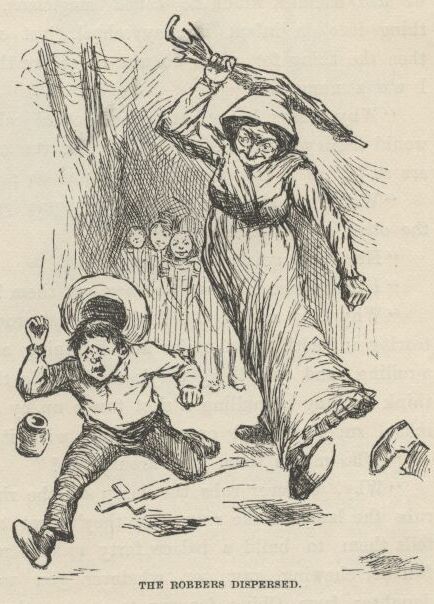
I didn’t see no di’monds, and I told Tom Sawyer so. He said there was loads ofthem there, anyway; and he said there was A-rabs there, too, and elephants andthings. I said, why couldn’t we see them, then? He said if I warn’t soignorant, but had read a book called Don Quixote, I would know without asking.He said it was all done by enchantment. He said there was hundreds of soldiersthere, and elephants and treasure, and so on, but we had enemies which hecalled magicians; and they had turned the whole thing into an infantSunday-school, just out of spite. I said, all right; then the thing for us todo was to go for the magicians. Tom Sawyer said I was a numskull.
“Why,” said he, “a magician could call up a lot of genies, and they would hashyou up like nothing before you could say Jack Robinson. They are as tall as atree and as big around as a church.”
“Well,” I says, “s’pose we got some genies to help us—can’t we lick theother crowd then?”
“How you going to get them?”
“I don’t know. How do theyget them?”
“Why, they rub an old tin lamp or an iron ring, and then the genies cometearing in, with the thunder and lightning a-ripping around and the smokea-rolling, and everything they’re told to do they up and do it. They don’tthink nothing of pulling a shot-tower up by the roots, and belting aSunday-school superintendent over the head with it—or any other man.”
“Who makes them tear around so?”
“Why, whoever rubs the lamp or the ring. They belong to whoever rubs the lampor the ring, and they’ve got to do whatever he says. If he tells them to builda palace forty miles long out of di’monds, and fill it full of chewing-gum, orwhatever you want, and fetch an emperor’s daughter from China for you to marry,they’ve got to do it—and they’ve got to do it before sun-up next morning, too.And more: they’ve got to waltz that palace around over the country wherever youwant it, you understand.”
“Well,” says I, “I think they are a pack of flat-heads for not keeping thepalace themselves ’stead of fooling them away like that. And what’s more—if Iwas one of them I would see a man in Jericho before I would drop my businessand come to him for the rubbing of an old tin lamp.”
“How you talk, Huck Finn. Why, you’d haveto come when he rubbed it,whether you wanted to or not.”
“What! and I as high as a tree and as big as a church? All right, then; Iwouldcome; but I lay I’d make that man climb the highest tree there wasin the country.”
“Shucks, it ain’t no use to talk to you, Huck Finn. You don’t seem to knowanything, somehow—perfect saphead.”
I thought all this over for two or three days, and then I reckoned I would seeif there was anything in it. I got an old tin lamp and an iron ring, and wentout in the woods and rubbed and rubbed till I sweat like an Injun, calculatingto build a palace and sell it; but it warn’t no use, none of the genies come.So then I judged that all that stuff was only just one of Tom Sawyer’s lies. Ireckoned he believed in the A-rabs and the elephants, but as for me I thinkdifferent. It had all the marks of a Sunday-school.

CHAPTER IV.
Well, three or four months run along, and it was well into the winter now. Ihad been to school most all the time and could spell and read and write just alittle, and could say the multiplication table up to six times seven isthirty-five, and I don’t reckon I could ever get any further than that if I wasto live forever. I don’t take no stock in mathematics, anyway.
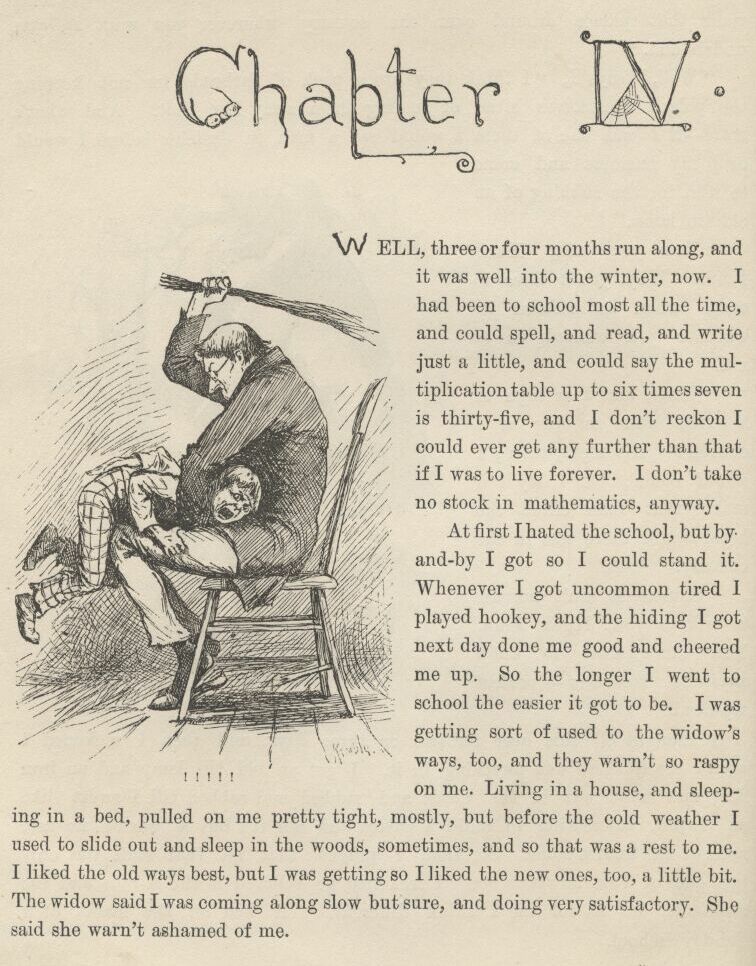
At first I hated the school, but by-and-by I got so I could stand it. WheneverI got uncommon tired I played hookey, and the hiding I got next day done megood and cheered me up. So the longer I went to school the easier it got to be.I was getting sort of used to the widow’s ways, too, and they warn’t so raspyon me. Living in a house and sleeping in a bed pulled on me pretty tightmostly, but before the cold weather I used to slide out and sleep in the woodssometimes, and so that was a rest to me. I liked the old ways best, but I wasgetting so I liked the new ones, too, a little bit. The widow said I was comingalong slow but sure, and doing very satisfactory. She said she warn’t ashamedof me.
One morning I happened to turn over the salt-cellar at breakfast. I reached forsome of it as quick as I could to throw over my left shoulder and keep off thebad luck, but Miss Watson was in ahead of me, and crossed me off. She says,“Take your hands away, Huckleberry; what a mess you are always making!” Thewidow put in a good word for me, but that warn’t going to keep off the badluck, I knowed that well enough. I started out, after breakfast, feelingworried and shaky, and wondering where it was going to fall on me, and what itwas going to be. There is ways to keep off some kinds of bad luck, but thiswasn’t one of them kind; so I never tried to do anything, but just poked alonglow-spirited and on the watch-out.
I went down to the front garden and clumb over the stile where you go throughthe high board fence. There was an inch of new snow on the ground, and I seensomebody’s tracks. They had come up from the quarry and stood around the stilea while, and then went on around the garden fence. It was funny they hadn’tcome in, after standing around so. I couldn’t make it out. It was very curious,somehow. I was going to follow around, but I stooped down to look at the tracksfirst. I didn’t notice anything at first, but next I did. There was a cross inthe left boot-heel made with big nails, to keep off the devil.
I was up in a second and shinning down the hill. I looked over my shoulderevery now and then, but I didn’t see nobody. I was at Judge Thatcher’s as quickas I could get there. He said:
“Why, my boy, you are all out of breath. Did you come for your interest?”
“No, sir,” I says; “is there some for me?”
“Oh, yes, a half-yearly is in, last night—over a hundred and fifty dollars.Quite a fortune for you. You had better let me invest it along with your sixthousand, because if you take it you’ll spend it.”
“No, sir,” I says, “I don’t want to spend it. I don’t want it at all—nor thesix thousand, nuther. I want you to take it; I want to give it to you—the sixthousand and all.”
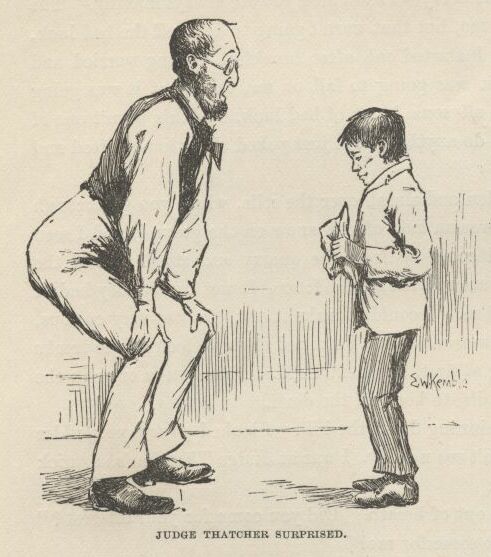
He looked surprised. He couldn’t seem to make it out. He says:
“Why, what can you mean, my boy?”
I says, “Don’t you ask me no questions about it, please. You’ll take it—won’tyou?”
He says:
“Well, I’m puzzled. Is something the matter?”
“Please take it,” says I, “and don’t ask me nothing—then I won’t have to tellno lies.”
He studied a while, and then he says:
“Oho-o! I think I see. You want to sellall your property to me—not giveit. That’s the correct idea.”
Then he wrote something on a paper and read it over, and says:
“There; you see it says ‘for a consideration.’ That means I have bought it ofyou and paid you for it. Here’s a dollar for you. Now you sign it.”
So I signed it, and left.
Miss Watson’s nigger, Jim, had a hair-ball as big as your fist, which had beentook out of the fourth stomach of an ox, and he used to do magic with it. Hesaid there was a spirit inside of it, and it knowed everything. So I went tohim that night and told him pap was here again, for I found his tracks in thesnow. What I wanted to know was, what he was going to do, and was he going tostay? Jim got out his hair-ball and said something over it, and then he held itup and dropped it on the floor. It fell pretty solid, and only rolled about aninch. Jim tried it again, and then another time, and it acted just the same.Jim got down on his knees, and put his ear against it and listened. But itwarn’t no use; he said it wouldn’t talk. He said sometimes it wouldn’t talkwithout money. I told him I had an old slick counterfeit quarter that warn’t nogood because the brass showed through the silver a little, and it wouldn’t passnohow, even if the brass didn’t show, because it was so slick it felt greasy,and so that would tell on it every time. (I reckoned I wouldn’t say nothingabout the dollar I got from the judge.) I said it was pretty bad money, butmaybe the hair-ball would take it, because maybe it wouldn’t know thedifference. Jim smelt it and bit it and rubbed it, and said he would manage sothe hair-ball would think it was good. He said he would split open a raw Irishpotato and stick the quarter in between and keep it there all night, and nextmorning you couldn’t see no brass, and it wouldn’t feel greasy no more, and soanybody in town would take it in a minute, let alone a hair-ball. Well, Iknowed a potato would do that before, but I had forgot it.
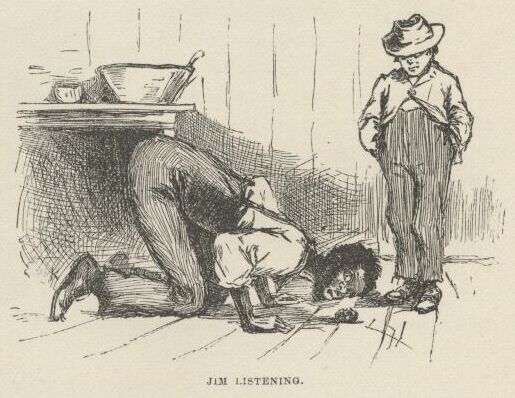
Jim put the quarter under the hair-ball, and got down and listened again. Thistime he said the hair-ball was all right. He said it would tell my wholefortune if I wanted it to. I says, go on. So the hair-ball talked to Jim, andJim told it to me. He says:
“Yo’ ole father doan’ know yit what he’s a-gwyne to do. Sometimes he spec he’llgo ’way, en den agin he spec he’ll stay. De bes’ way is to res’ easy en let deole man take his own way. Dey’s two angels hoverin’ roun’ ’bout him. One uv ’emis white en shiny, en t’other one is black. De white one gits him to go right alittle while, den de black one sail in en bust it all up. A body can’t tell yitwhich one gwyne to fetch him at de las’. But you is all right. You gwyne tohave considable trouble in yo’ life, en considable joy. Sometimes you gwyne togit hurt, en sometimes you gwyne to git sick; but every time you’s gwyne to gitwell agin. Dey’s two gals flyin’ ’bout you in yo’ life. One uv ’em’s light ent’other one is dark. One is rich en t’other is po’. You’s gwyne to marry de po’one fust en de rich one by en by. You wants to keep ’way fum de water as muchas you kin, en don’t run no resk, ’kase it’s down in de bills dat you’s gwyneto git hung.”
When I lit my candle and went up to my room that night there sat pap his ownself!
CHAPTER V.
I had shut the door to. Then I turned around and there he was. I used to bescared of him all the time, he tanned me so much. I reckoned I was scared now,too; but in a minute I see I was mistaken—that is, after the first jolt, as youmay say, when my breath sort of hitched, he being so unexpected; but right awayafter I see I warn’t scared of him worth bothring about.
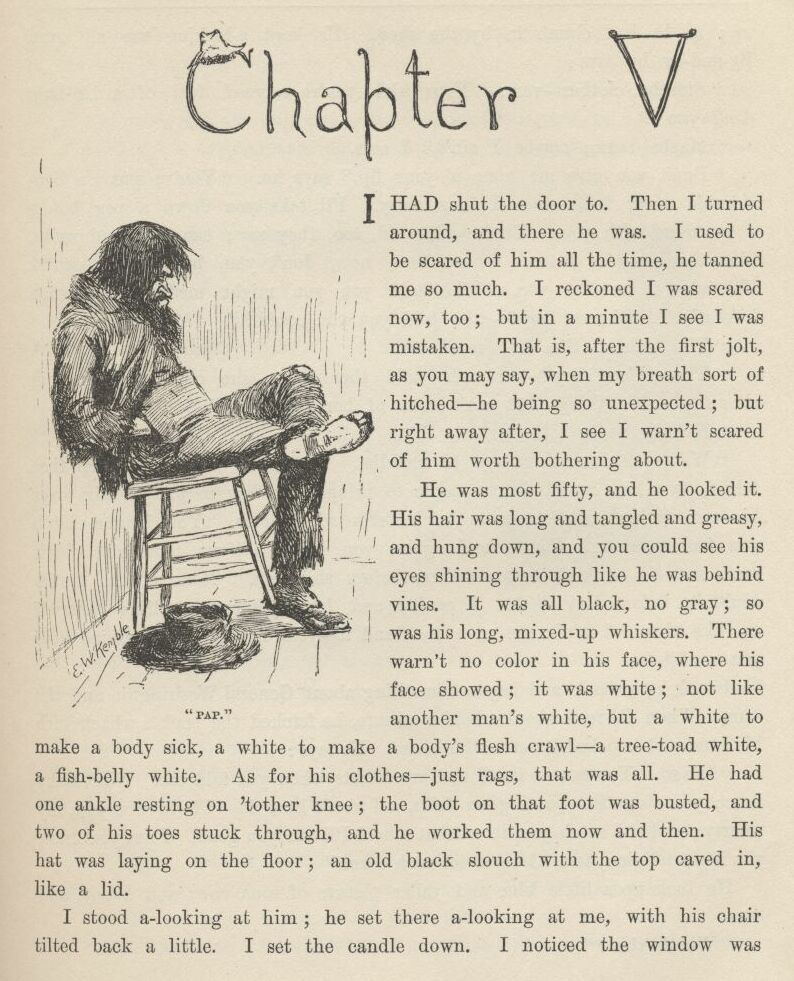
He was most fifty, and he looked it. His hair was long and tangled and greasy,and hung down, and you could see his eyes shining through like he was behindvines. It was all black, no gray; so was his long, mixed-up whiskers. Therewarn’t no color in his face, where his face showed; it was white; not likeanother man’s white, but a white to make a body sick, a white to make a body’sflesh crawl—a tree-toad white, a fish-belly white. As for his clothes—justrags, that was all. He had one ankle resting on t’other knee; the boot on thatfoot was busted, and two of his toes stuck through, and he worked them now andthen. His hat was laying on the floor—an old black slouch with the top cavedin, like a lid.
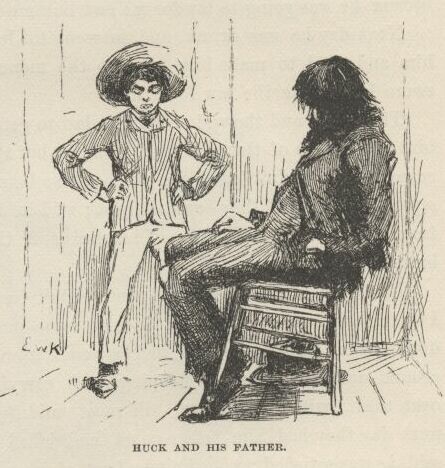
I stood a-looking at him; he set there a-looking at me, with his chair tiltedback a little. I set the candle down. I noticed the window was up; so he hadclumb in by the shed. He kept a-looking me all over. By-and-by he says:
“Starchy clothes—very. You think you’re a good deal of a big-bug, don’tyou?”
“Maybe I am, maybe I ain’t,” I says.
“Don’t you give me none o’ your lip,” says he. “You’ve put on considerable manyfrills since I been away. I’ll take you down a peg before I get done with you.You’re educated, too, they say—can read and write. You think you’re better’nyour father, now, don’t you, because he can’t? I’lltake it out of you.Who told you you might meddle with such hifalut’n foolishness, hey?—who toldyou you could?”
“The widow. She told me.”
“The widow, hey?—and who told the widow she could put in her shovel about athing that ain’t none of her business?”
“Nobody never told her.”
“Well, I’ll learn her how to meddle. And looky here—you drop that school, youhear? I’ll learn people to bring up a boy to put on airs over his own fatherand let on to be better’n what heis. You lemme catch you fooling aroundthat school again, you hear? Your mother couldn’t read, and she couldn’t write,nuther, before she died. None of the family couldn’t before theydied.Ican’t; and here you’re a-swelling yourself up like this. I ain’t theman to stand it—you hear? Say, lemme hear you read.”
I took up a book and begun something about General Washington and the wars.When I’d read about a half a minute, he fetched the book a whack with his handand knocked it across the house. He says:
“It’s so. You can do it. I had my doubts when you told me. Now looky here; youstop that putting on frills. I won’t have it. I’ll lay for you, my smarty; andif I catch you about that school I’ll tan you good. First you know you’ll getreligion, too. I never see such a son.”
He took up a little blue and yaller picture of some cows and a boy, and says:
“What’s this?”
“It’s something they give me for learning my lessons good.”
He tore it up, and says:
“I’ll give you something better—I’ll give you a cowhide.”
He set there a-mumbling and a-growling a minute, and then he says:
“Ain’tyou a sweet-scented dandy, though? A bed; and bedclothes; and alook’n’-glass; and a piece of carpet on the floor—and your own father got tosleep with the hogs in the tanyard. I never see such a son. I bet I’ll takesome o’ these frills out o’ you before I’m done with you. Why, there ain’t noend to your airs—they say you’re rich. Hey?—how’s that?”
“They lie—that’s how.”
“Looky here—mind how you talk to me; I’m a-standing about all I can standnow—so don’t gimme no sass. I’ve been in town two days, and I hain’t heardnothing but about you bein’ rich. I heard about it away down the river, too.That’s why I come. You git me that money to-morrow—I want it.”
“I hain’t got no money.”
“It’s a lie. Judge Thatcher’s got it. You git it. I want it.”
“I hain’t got no money, I tell you. You ask Judge Thatcher; he’ll tell you thesame.”
“All right. I’ll ask him; and I’ll make him pungle, too, or I’ll know thereason why. Say, how much you got in your pocket? I want it.”
“I hain’t got only a dollar, and I want that to—”
“It don’t make no difference what you want it for—you just shell it out.”
He took it and bit it to see if it was good, and then he said he was going downtown to get some whisky; said he hadn’t had a drink all day. When he had gotout on the shed he put his head in again, and cussed me for putting on frillsand trying to be better than him; and when I reckoned he was gone he come backand put his head in again, and told me to mind about that school, because hewas going to lay for me and lick me if I didn’t drop that.
Next day he was drunk, and he went to Judge Thatcher’s and bullyragged him, andtried to make him give up the money; but he couldn’t, and then he swore he’dmake the law force him.
The judge and the widow went to law to get the court to take me away from himand let one of them be my guardian; but it was a new judge that had just come,and he didn’t know the old man; so he said courts mustn’t interfere andseparate families if they could help it; said he’d druther not take a childaway from its father. So Judge Thatcher and the widow had to quit on thebusiness.
That pleased the old man till he couldn’t rest. He said he’d cowhide me till Iwas black and blue if I didn’t raise some money for him. I borrowed threedollars from Judge Thatcher, and pap took it and got drunk, and went a-blowingaround and cussing and whooping and carrying on; and he kept it up all overtown, with a tin pan, till most midnight; then they jailed him, and next daythey had him before court, and jailed him again for a week. But he saidhewas satisfied; said he was boss of his son, and he’d make it warm forhim.
When he got out the new judge said he was a-going to make a man of him. So hetook him to his own house, and dressed him up clean and nice, and had him tobreakfast and dinner and supper with the family, and was just old pie to him,so to speak. And after supper he talked to him about temperance and such thingstill the old man cried, and said he’d been a fool, and fooled away his life;but now he was a-going to turn over a new leaf and be a man nobody wouldn’t beashamed of, and he hoped the judge would help him and not look down on him. Thejudge said he could hug him for them words; so hecried, and his wifeshe cried again; pap said he’d been a man that had always been misunderstoodbefore, and the judge said he believed it. The old man said that what a manwanted that was down was sympathy, and the judge said it was so; so they criedagain. And when it was bedtime the old man rose up and held out his hand, andsays:
“Look at it, gentlemen and ladies all; take a-hold of it; shake it. There’s ahand that was the hand of a hog; but it ain’t so no more; it’s the hand of aman that’s started in on a new life, and’ll die before he’ll go back. You markthem words—don’t forget I said them. It’s a clean hand now; shake it—don’t beafeard.”
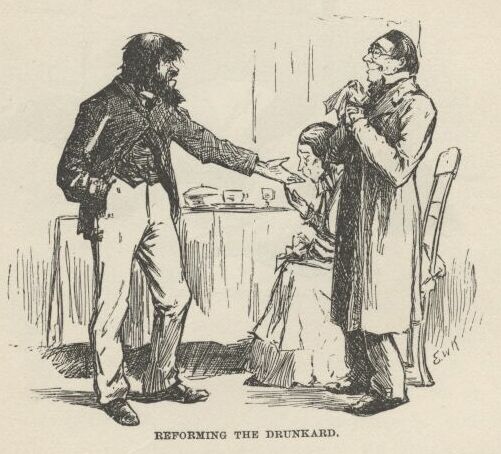
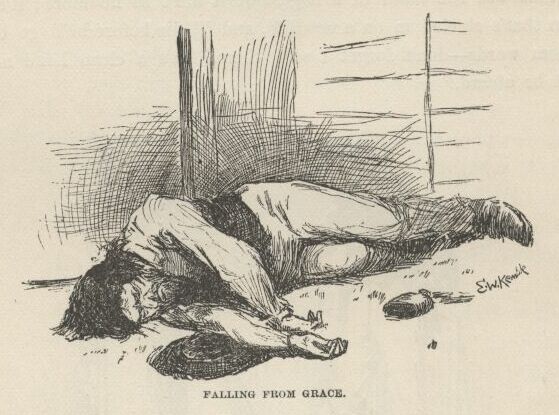
So they shook it, one after the other, all around, and cried. The judge’s wifeshe kissed it. Then the old man he signed a pledge—made his mark. The judgesaid it was the holiest time on record, or something like that. Then theytucked the old man into a beautiful room, which was the spare room, and in thenight some time he got powerful thirsty and clumb out on to the porch-roof andslid down a stanchion and traded his new coat for a jug of forty-rod, and clumbback again and had a good old time; and towards daylight he crawled out again,drunk as a fiddler, and rolled off the porch and broke his left arm in twoplaces, and was most froze to death when somebody found him after sun-up. Andwhen they come to look at that spare room they had to take soundings beforethey could navigate it.
The judge he felt kind of sore. He said he reckoned a body could reform the oldman with a shotgun, maybe, but he didn’t know no other way.
CHAPTER VI.
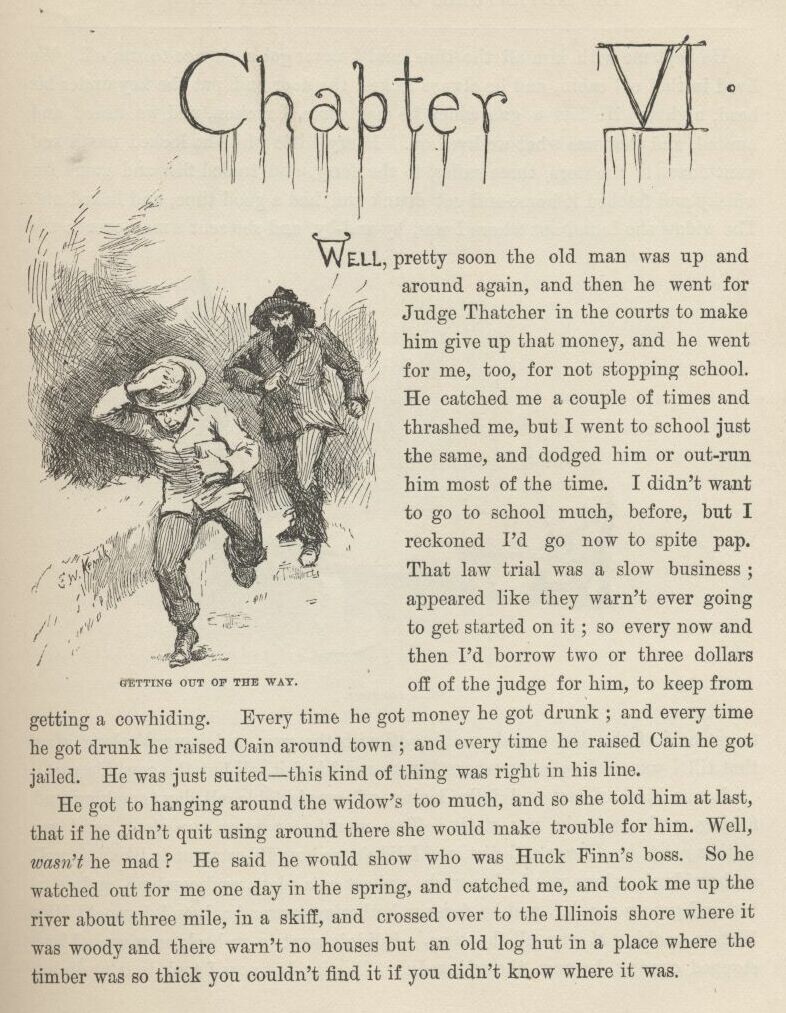
Well, pretty soon the old man was up and around again, and then he went forJudge Thatcher in the courts to make him give up that money, and he went forme, too, for not stopping school. He catched me a couple of times and thrashedme, but I went to school just the same, and dodged him or outrun him most ofthe time. I didn’t want to go to school much before, but I reckoned I’d go nowto spite pap. That law trial was a slow business—appeared like they warn’t evergoing to get started on it; so every now and then I’d borrow two or threedollars off of the judge for him, to keep from getting a cowhiding. Every timehe got money he got drunk; and every time he got drunk he raised Cain aroundtown; and every time he raised Cain he got jailed. He was just suited—this kindof thing was right in his line.
He got to hanging around the widow’s too much and so she told him at last thatif he didn’t quit using around there she would make trouble for him. Well,wasn’the mad? He said he would show who was Huck Finn’s boss. So hewatched out for me one day in the spring, and catched me, and took me up theriver about three mile in a skiff, and crossed over to the Illinois shore whereit was woody and there warn’t no houses but an old log hut in a place where thetimber was so thick you couldn’t find it if you didn’t know where it was.
He kept me with him all the time, and I never got a chance to run off. We livedin that old cabin, and he always locked the door and put the key under his headnights. He had a gun which he had stole, I reckon, and we fished and hunted,and that was what we lived on. Every little while he locked me in and went downto the store, three miles, to the ferry, and traded fish and game for whisky,and fetched it home and got drunk and had a good time, and licked me. The widowshe found out where I was by-and-by, and she sent a man over to try to get holdof me; but pap drove him off with the gun, and it warn’t long after that till Iwas used to being where I was, and liked it—all but the cowhide part.
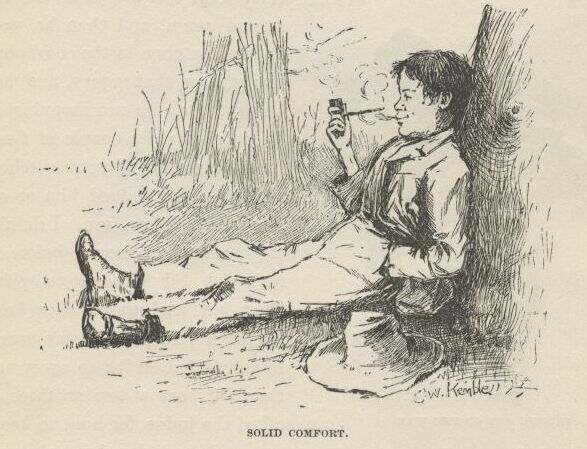
It was kind of lazy and jolly, laying off comfortable all day, smoking andfishing, and no books nor study. Two months or more run along, and my clothesgot to be all rags and dirt, and I didn’t see how I’d ever got to like it sowell at the widow’s, where you had to wash, and eat on a plate, and comb up,and go to bed and get up regular, and be forever bothering over a book, andhave old Miss Watson pecking at you all the time. I didn’t want to go back nomore. I had stopped cussing, because the widow didn’t like it; but now I tookto it again because pap hadn’t no objections. It was pretty good times up inthe woods there, take it all around.
But by-and-by pap got too handy with his hick’ry, and I couldn’t stand it. Iwas all over welts. He got to going away so much, too, and locking me in. Oncehe locked me in and was gone three days. It was dreadful lonesome. I judged hehad got drownded, and I wasn’t ever going to get out any more. I was scared. Imade up my mind I would fix up some way to leave there. I had tried to get outof that cabin many a time, but I couldn’t find no way. There warn’t a window toit big enough for a dog to get through. I couldn’t get up the chimbly; it wastoo narrow. The door was thick, solid oak slabs. Pap was pretty careful not toleave a knife or anything in the cabin when he was away; I reckon I had huntedthe place over as much as a hundred times; well, I was most all the time at it,because it was about the only way to put in the time. But this time I foundsomething at last; I found an old rusty wood-saw without any handle; it waslaid in between a rafter and the clapboards of the roof. I greased it up andwent to work. There was an old horse-blanket nailed against the logs at the farend of the cabin behind the table, to keep the wind from blowing through thechinks and putting the candle out. I got under the table and raised theblanket, and went to work to saw a section of the big bottom log out—big enoughto let me through. Well, it was a good long job, but I was getting towards theend of it when I heard pap’s gun in the woods. I got rid of the signs of mywork, and dropped the blanket and hid my saw, and pretty soon pap come in.
Pap warn’t in a good humor—so he was his natural self. He said he was downtown, and everything was going wrong. His lawyer said he reckoned he would winhis lawsuit and get the money if they ever got started on the trial; but thenthere was ways to put it off a long time, and Judge Thatcher knowed how to doit. And he said people allowed there’d be another trial to get me away from himand give me to the widow for my guardian, and they guessed it would win thistime. This shook me up considerable, because I didn’t want to go back to thewidow’s any more and be so cramped up and sivilized, as they called it. Thenthe old man got to cussing, and cussed everything and everybody he could thinkof, and then cussed them all over again to make sure he hadn’t skipped any, andafter that he polished off with a kind of a general cuss all round, including aconsiderable parcel of people which he didn’t know the names of, and so calledthem what’s-his-name when he got to them, and went right along with hiscussing.
He said he would like to see the widow get me. He said he would watch out, andif they tried to come any such game on him he knowed of a place six or sevenmile off to stow me in, where they might hunt till they dropped and theycouldn’t find me. That made me pretty uneasy again, but only for a minute; Ireckoned I wouldn’t stay on hand till he got that chance.
The old man made me go to the skiff and fetch the things he had got. There wasa fifty-pound sack of corn meal, and a side of bacon, ammunition, and afour-gallon jug of whisky, and an old book and two newspapers for wadding,besides some tow. I toted up a load, and went back and set down on the bow ofthe skiff to rest. I thought it all over, and I reckoned I would walk off withthe gun and some lines, and take to the woods when I run away. I guessed Iwouldn’t stay in one place, but just tramp right across the country, mostlynight times, and hunt and fish to keep alive, and so get so far away that theold man nor the widow couldn’t ever find me any more. I judged I would saw outand leave that night if pap got drunk enough, and I reckoned he would. I got sofull of it I didn’t notice how long I was staying till the old man hollered andasked me whether I was asleep or drownded.
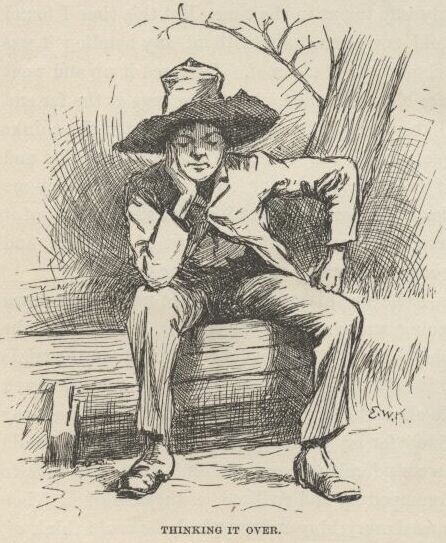
I got the things all up to the cabin, and then it was about dark. While I wascooking supper the old man took a swig or two and got sort of warmed up, andwent to ripping again. He had been drunk over in town, and laid in the gutterall night, and he was a sight to look at. A body would a thought he was Adam—hewas just all mud. Whenever his liquor begun to work he most always went for thegovment, this time he says:
“Call this a govment! why, just look at it and see what it’s like. Here’s thelaw a-standing ready to take a man’s son away from him—a man’s own son, whichhe has had all the trouble and all the anxiety and all the expense of raising.Yes, just as that man has got that son raised at last, and ready to go to workand begin to do suthin’ for himand give him a rest, the law up and goesfor him. And they call thatgovment! That ain’t all, nuther. The lawbacks that old Judge Thatcher up and helps him to keep me out o’ my property.Here’s what the law does: The law takes a man worth six thousand dollars andup’ards, and jams him into an old trap of a cabin like this, and lets him goround in clothes that ain’t fitten for a hog. They call that govment! A mancan’t get his rights in a govment like this. Sometimes I’ve a mighty notion tojust leave the country for good and all. Yes, and I told’em so; I toldold Thatcher so to his face. Lots of ’em heard me, and can tell what I said.Says I, for two cents I’d leave the blamed country and never come a-near itagin. Them’s the very words. I says look at my hat—if you call it a hat—but thelid raises up and the rest of it goes down till it’s below my chin, and then itain’t rightly a hat at all, but more like my head was shoved up through a jinto’ stove-pipe. Look at it, says I—such a hat for me to wear—one of thewealthiest men in this town if I could git my rights.
“Oh, yes, this is a wonderful govment, wonderful. Why, looky here. There was afree nigger there from Ohio—a mulatter, most as white as a white man. He hadthe whitest shirt on you ever see, too, and the shiniest hat; and there ain’t aman in that town that’s got as fine clothes as what he had; and he had a goldwatch and chain, and a silver-headed cane—the awfulest old gray-headed nabob inthe State. And what do you think? They said he was a p’fessor in a college, andcould talk all kinds of languages, and knowed everything. And that ain’t thewust. They said he could votewhen he was at home. Well, that let meout. Thinks I, what is the country a-coming to? It was ’lection day, and I wasjust about to go and vote myself if I warn’t too drunk to get there; but whenthey told me there was a State in this country where they’d let that niggervote, I drawed out. I says I’ll never vote agin. Them’s the very words I said;they all heard me; and the country may rot for all me—I’ll never vote agin aslong as I live. And to see the cool way of that nigger—why, he wouldn’t a giveme the road if I hadn’t shoved him out o’ the way. I says to the people, whyain’t this nigger put up at auction and sold?—that’s what I want to know. Andwhat do you reckon they said? Why, they said he couldn’t be sold till he’d beenin the State six months, and he hadn’t been there that long yet. There,now—that’s a specimen. They call that a govment that can’t sell a free niggertill he’s been in the State six months. Here’s a govment that calls itself agovment, and lets on to be a govment, and thinks it is a govment, and yet’s gotto set stock-still for six whole months before it can take a hold of aprowling, thieving, infernal, white-shirted free nigger, and—”
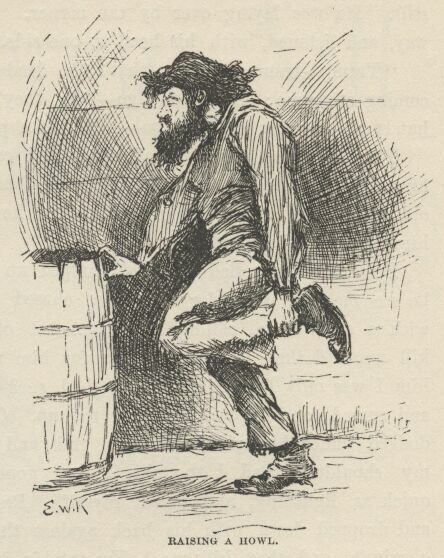
Pap was agoing on so he never noticed where his old limber legs was taking himto, so he went head over heels over the tub of salt pork and barked both shins,and the rest of his speech was all the hottest kind of language—mostly hove atthe nigger and the govment, though he give the tub some, too, all along, hereand there. He hopped around the cabin considerable, first on one leg and thenon the other, holding first one shin and then the other one, and at last he letout with his left foot all of a sudden and fetched the tub a rattling kick. Butit warn’t good judgment, because that was the boot that had a couple of histoes leaking out of the front end of it; so now he raised a howl that fairlymade a body’s hair raise, and down he went in the dirt, and rolled there, andheld his toes; and the cussing he done then laid over anything he had ever doneprevious. He said so his own self afterwards. He had heard old Sowberry Haganin his best days, and he said it laid over him, too; but I reckon that was sortof piling it on, maybe.
After supper pap took the jug, and said he had enough whisky there for twodrunks and one delirium tremens. That was always his word. I judged he would beblind drunk in about an hour, and then I would steal the key, or saw myselfout, one or t’other. He drank and drank, and tumbled down on his blanketsby-and-by; but luck didn’t run my way. He didn’t go sound asleep, but wasuneasy. He groaned and moaned and thrashed around this way and that for a longtime. At last I got so sleepy I couldn’t keep my eyes open all I could do, andso before I knowed what I was about I was sound asleep, and the candle burning.
I don’t know how long I was asleep, but all of a sudden there was an awfulscream and I was up. There was pap looking wild, and skipping around everywhich way and yelling about snakes. He said they was crawling up his legs; andthen he would give a jump and scream, and say one had bit him on the cheek—butI couldn’t see no snakes. He started and run round and round the cabin,hollering “Take him off! take him off! he’s biting me on the neck!” I never seea man look so wild in the eyes. Pretty soon he was all fagged out, and felldown panting; then he rolled over and over wonderful fast, kicking things everywhich way, and striking and grabbing at the air with his hands, and screamingand saying there was devils a-hold of him. He wore out by-and-by, and laidstill a while, moaning. Then he laid stiller, and didn’t make a sound. I couldhear the owls and the wolves away off in the woods, and it seemed terriblestill. He was laying over by the corner. By-and-by he raised up part way andlistened, with his head to one side. He says, very low:
“Tramp—tramp—tramp; that’s the dead; tramp—tramp—tramp; they’re coming afterme; but I won’t go. Oh, they’re here! don’t touch me—don’t! hands off—they’recold; let go. Oh, let a poor devil alone!”
Then he went down on all fours and crawled off, begging them to let him alone,and he rolled himself up in his blanket and wallowed in under the old pinetable, still a-begging; and then he went to crying. I could hear him throughthe blanket.
By-and-by he rolled out and jumped up on his feet looking wild, and he see meand went for me. He chased me round and round the place with a clasp-knife,calling me the Angel of Death, and saying he would kill me, and then I couldn’tcome for him no more. I begged, and told him I was only Huck; but he laughedsucha screechy laugh, and roared and cussed, and kept on chasing me up.Once when I turned short and dodged under his arm he made a grab and got me bythe jacket between my shoulders, and I thought I was gone; but I slid out ofthe jacket quick as lightning, and saved myself. Pretty soon he was all tiredout, and dropped down with his back against the door, and said he would rest aminute and then kill me. He put his knife under him, and said he would sleepand get strong, and then he would see who was who.
So he dozed off pretty soon. By-and-by I got the old split-bottom chair andclumb up as easy as I could, not to make any noise, and got down the gun. Islipped the ramrod down it to make sure it was loaded, then I laid it acrossthe turnip barrel, pointing towards pap, and set down behind it to wait for himto stir. And how slow and still the time did drag along.
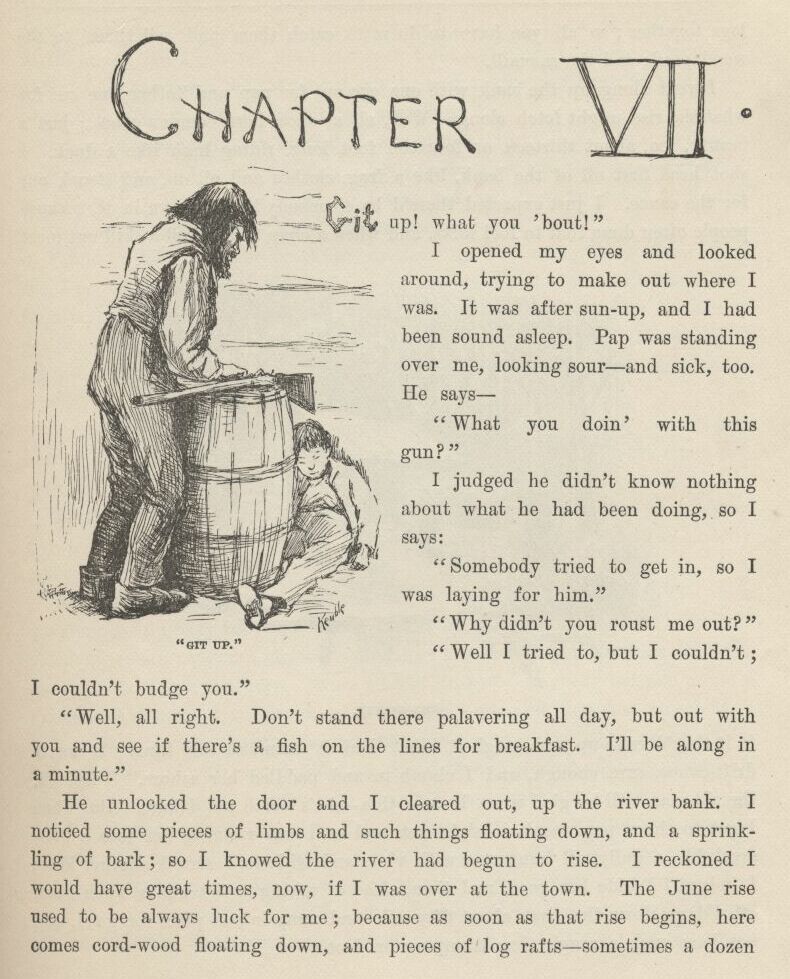
CHAPTER VII.
“Git up! What you ’bout?”
I opened my eyes and looked around, trying to make out where I was. It wasafter sun-up, and I had been sound asleep. Pap was standing over me lookingsour and sick, too. He says:
“What you doin’ with this gun?”
I judged he didn’t know nothing about what he had been doing, so I says:
“Somebody tried to get in, so I was laying for him.”
“Why didn’t you roust me out?”
“Well, I tried to, but I couldn’t; I couldn’t budge you.”
“Well, all right. Don’t stand there palavering all day, but out with you andsee if there’s a fish on the lines for breakfast. I’ll be along in a minute.”
He unlocked the door, and I cleared out up the river-bank. I noticed somepieces of limbs and such things floating down, and a sprinkling of bark; so Iknowed the river had begun to rise. I reckoned I would have great times now ifI was over at the town. The June rise used to be always luck for me; because assoon as that rise begins here comes cordwood floating down, and pieces of lografts—sometimes a dozen logs together; so all you have to do is to catch themand sell them to the wood-yards and the sawmill.
I went along up the bank with one eye out for pap and t’other one out for whatthe rise might fetch along. Well, all at once here comes a canoe; just abeauty, too, about thirteen or fourteen foot long, riding high like a duck. Ishot head-first off of the bank like a frog, clothes and all on, and struck outfor the canoe. I just expected there’d be somebody laying down in it, becausepeople often done that to fool folks, and when a chap had pulled a skiff outmost to it they’d raise up and laugh at him. But it warn’t so this time. It wasa drift-canoe sure enough, and I clumb in and paddled her ashore. Thinks I, theold man will be glad when he sees this—she’s worth ten dollars. But when I gotto shore pap wasn’t in sight yet, and as I was running her into a little creeklike a gully, all hung over with vines and willows, I struck another idea: Ijudged I’d hide her good, and then, ’stead of taking to the woods when I runoff, I’d go down the river about fifty mile and camp in one place for good, andnot have such a rough time tramping on foot.
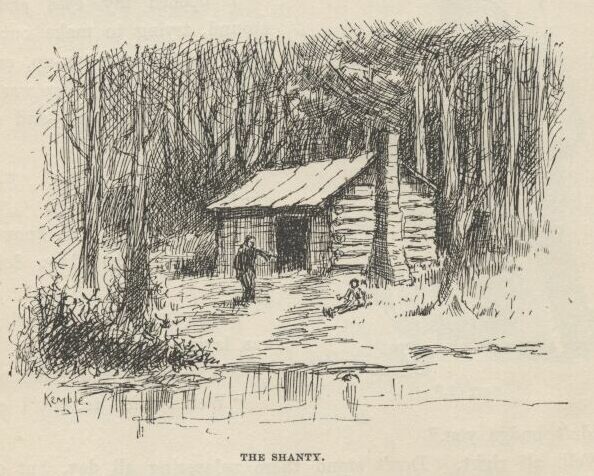
It was pretty close to the shanty, and I thought I heard the old man coming allthe time; but I got her hid; and then I out and looked around a bunch ofwillows, and there was the old man down the path a piece just drawing a bead ona bird with his gun. So he hadn’t seen anything.
When he got along I was hard at it taking up a “trot” line. He abused me alittle for being so slow; but I told him I fell in the river, and that was whatmade me so long. I knowed he would see I was wet, and then he would be askingquestions. We got five catfish off the lines and went home.
While we laid off after breakfast to sleep up, both of us being about wore out,I got to thinking that if I could fix up some way to keep pap and the widowfrom trying to follow me, it would be a certainer thing than trusting to luckto get far enough off before they missed me; you see, all kinds of things mighthappen. Well, I didn’t see no way for a while, but by-and-by pap raised up aminute to drink another barrel of water, and he says:
“Another time a man comes a-prowling round here you roust me out, you hear?That man warn’t here for no good. I’d a shot him. Next time you roust me out,you hear?”
Then he dropped down and went to sleep again; but what he had been saying giveme the very idea I wanted. I says to myself, I can fix it now so nobody won’tthink of following me.
About twelve o’clock we turned out and went along up the bank. The river wascoming up pretty fast, and lots of driftwood going by on the rise. By-and-byalong comes part of a log raft—nine logs fast together. We went out with theskiff and towed it ashore. Then we had dinner. Anybody but pap would a waitedand seen the day through, so as to catch more stuff; but that warn’t pap’sstyle. Nine logs was enough for one time; he must shove right over to town andsell. So he locked me in and took the skiff, and started off towing the raftabout half-past three. I judged he wouldn’t come back that night. I waited tillI reckoned he had got a good start; then I out with my saw, and went to work onthat log again. Before he was t’other side of the river I was out of the hole;him and his raft was just a speck on the water away off yonder.
I took the sack of corn meal and took it to where the canoe was hid, and shovedthe vines and branches apart and put it in; then I done the same with the sideof bacon; then the whisky-jug. I took all the coffee and sugar there was, andall the ammunition; I took the wadding; I took the bucket and gourd; I took adipper and a tin cup, and my old saw and two blankets, and the skillet and thecoffee-pot. I took fish-lines and matches and other things—everything that wasworth a cent. I cleaned out the place. I wanted an axe, but there wasn’t any,only the one out at the woodpile, and I knowed why I was going to leave that. Ifetched out the gun, and now I was done.
I had wore the ground a good deal crawling out of the hole and dragging out somany things. So I fixed that as good as I could from the outside by scatteringdust on the place, which covered up the smoothness and the sawdust. Then Ifixed the piece of log back into its place, and put two rocks under it and oneagainst it to hold it there, for it was bent up at that place and didn’t quitetouch ground. If you stood four or five foot away and didn’t know it was sawed,you wouldn’t never notice it; and besides, this was the back of the cabin, andit warn’t likely anybody would go fooling around there.
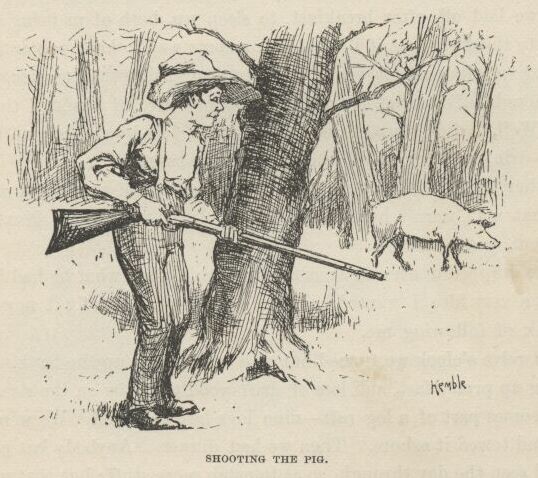
It was all grass clear to the canoe, so I hadn’t left a track. I followedaround to see. I stood on the bank and looked out over the river. All safe. SoI took the gun and went up a piece into the woods, and was hunting around forsome birds when I see a wild pig; hogs soon went wild in them bottoms afterthey had got away from the prairie farms. I shot this fellow and took him intocamp.
I took the axe and smashed in the door. I beat it and hacked it considerablea-doing it. I fetched the pig in, and took him back nearly to the table andhacked into his throat with the axe, and laid him down on the ground to bleed;I say ground because it wasground—hard packed, and no boards. Well,next I took an old sack and put a lot of big rocks in it—all I could drag—and Istarted it from the pig, and dragged it to the door and through the woods downto the river and dumped it in, and down it sunk, out of sight. You could easysee that something had been dragged over the ground. I did wish Tom Sawyer wasthere; I knowed he would take an interest in this kind of business, and throwin the fancy touches. Nobody could spread himself like Tom Sawyer in such athing as that.
Well, last I pulled out some of my hair, and blooded the axe good, and stuck iton the back side, and slung the axe in the corner. Then I took up the pig andheld him to my breast with my jacket (so he couldn’t drip) till I got a goodpiece below the house and then dumped him into the river. Now I thought ofsomething else. So I went and got the bag of meal and my old saw out of thecanoe, and fetched them to the house. I took the bag to where it used to stand,and ripped a hole in the bottom of it with the saw, for there warn’t no knivesand forks on the place—pap done everything with his clasp-knife about thecooking. Then I carried the sack about a hundred yards across the grass andthrough the willows east of the house, to a shallow lake that was five milewide and full of rushes—and ducks too, you might say, in the season. There wasa slough or a creek leading out of it on the other side that went miles away, Idon’t know where, but it didn’t go to the river. The meal sifted out and made alittle track all the way to the lake. I dropped pap’s whetstone there too, soas to look like it had been done by accident. Then I tied up the rip in themeal sack with a string, so it wouldn’t leak no more, and took it and my saw tothe canoe again.
It was about dark now; so I dropped the canoe down the river under some willowsthat hung over the bank, and waited for the moon to rise. I made fast to awillow; then I took a bite to eat, and by-and-by laid down in the canoe tosmoke a pipe and lay out a plan. I says to myself, they’ll follow the track ofthat sackful of rocks to the shore and then drag the river for me. And they’llfollow that meal track to the lake and go browsing down the creek that leadsout of it to find the robbers that killed me and took the things. They won’tever hunt the river for anything but my dead carcass. They’ll soon get tired ofthat, and won’t bother no more about me. All right; I can stop anywhere I wantto. Jackson’s Island is good enough for me; I know that island pretty well, andnobody ever comes there. And then I can paddle over to town nights, and slinkaround and pick up things I want. Jackson’s Island’s the place.
I was pretty tired, and the first thing I knowed I was asleep. When I woke up Ididn’t know where I was for a minute. I set up and looked around, a littlescared. Then I remembered. The river looked miles and miles across. The moonwas so bright I could a counted the drift logs that went a-slipping along,black and still, hundreds of yards out from shore. Everything was dead quiet,and it looked late, and smeltlate. You know what I mean—I don’t knowthe words to put it in.
I took a good gap and a stretch, and was just going to unhitch and start when Iheard a sound away over the water. I listened. Pretty soon I made it out. Itwas that dull kind of a regular sound that comes from oars working in rowlockswhen it’s a still night. I peeped out through the willow branches, and there itwas—a skiff, away across the water. I couldn’t tell how many was in it. It kepta-coming, and when it was abreast of me I see there warn’t but one man in it.Think’s I, maybe it’s pap, though I warn’t expecting him. He dropped below mewith the current, and by-and-by he came a-swinging up shore in the easy water,and he went by so close I could a reached out the gun and touched him. Well, itwaspap, sure enough—and sober, too, by the way he laid his oars.
I didn’t lose no time. The next minute I was a-spinning down stream soft butquick in the shade of the bank. I made two mile and a half, and then struck outa quarter of a mile or more towards the middle of the river, because prettysoon I would be passing the ferry landing, and people might see me and hail me.I got out amongst the driftwood, and then laid down in the bottom of the canoeand let her float.
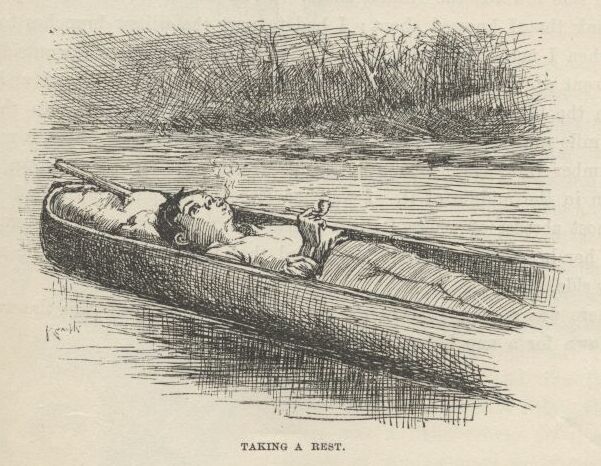
I laid there, and had a good rest and a smoke out of my pipe, looking away intothe sky; not a cloud in it. The sky looks ever so deep when you lay down onyour back in the moonshine; I never knowed it before. And how far a body canhear on the water such nights! I heard people talking at the ferry landing. Iheard what they said, too—every word of it. One man said it was getting towardsthe long days and the short nights now. T’other one said thiswarn’t oneof the short ones, he reckoned—and then they laughed, and he said it overagain, and they laughed again; then they waked up another fellow and told him,and laughed, but he didn’t laugh; he ripped out something brisk, and said lethim alone. The first fellow said he ’lowed to tell it to his old woman—shewould think it was pretty good; but he said that warn’t nothing to some thingshe had said in his time. I heard one man say it was nearly three o’clock, andhe hoped daylight wouldn’t wait more than about a week longer. After that thetalk got further and further away, and I couldn’t make out the words any more;but I could hear the mumble, and now and then a laugh, too, but it seemed along ways off.
I was away below the ferry now. I rose up, and there was Jackson’s Island,about two mile and a half down stream, heavy timbered and standing up out ofthe middle of the river, big and dark and solid, like a steamboat without anylights. There warn’t any signs of the bar at the head—it was all under waternow.
It didn’t take me long to get there. I shot past the head at a ripping rate,the current was so swift, and then I got into the dead water and landed on theside towards the Illinois shore. I run the canoe into a deep dent in the bankthat I knowed about; I had to part the willow branches to get in; and when Imade fast nobody could a seen the canoe from the outside.
I went up and set down on a log at the head of the island, and looked out onthe big river and the black driftwood and away over to the town, three mileaway, where there was three or four lights twinkling. A monstrous biglumber-raft was about a mile up stream, coming along down, with a lantern inthe middle of it. I watched it come creeping down, and when it was most abreastof where I stood I heard a man say, “Stern oars, there! heave her head tostabboard!” I heard that just as plain as if the man was by my side.
There was a little gray in the sky now; so I stepped into the woods, and laiddown for a nap before breakfast.
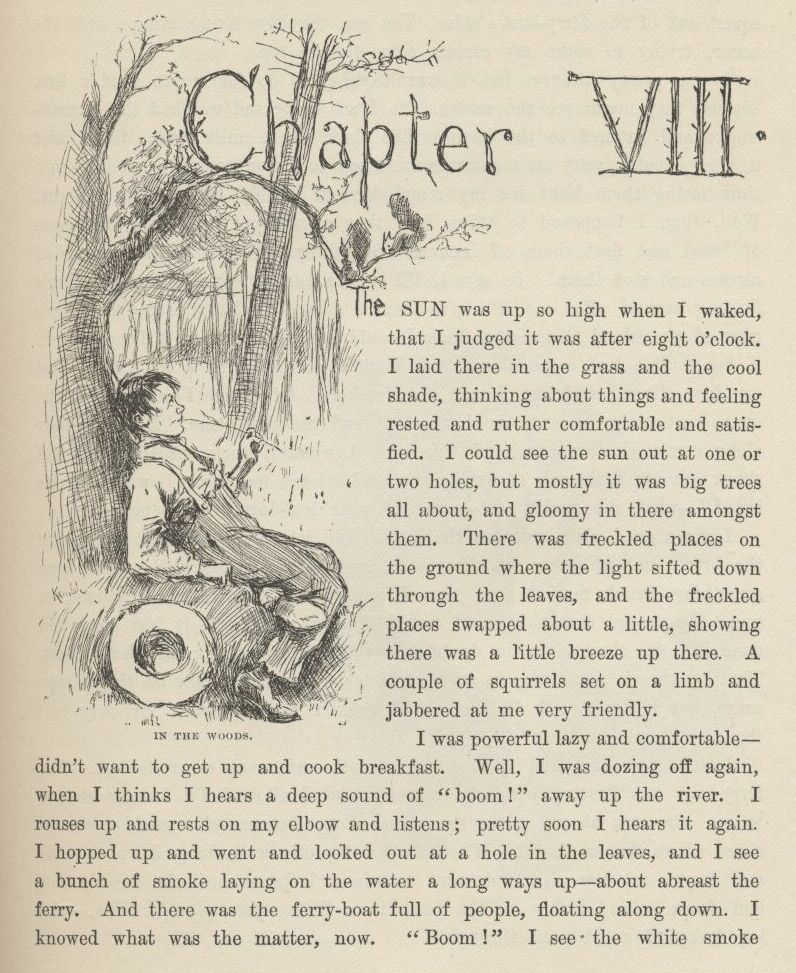
CHAPTER VIII.
The sun was up so high when I waked that I judged it was after eight o’clock. Ilaid there in the grass and the cool shade thinking about things, and feelingrested and ruther comfortable and satisfied. I could see the sun out at one ortwo holes, but mostly it was big trees all about, and gloomy in there amongstthem. There was freckled places on the ground where the light sifted downthrough the leaves, and the freckled places swapped about a little, showingthere was a little breeze up there. A couple of squirrels set on a limb andjabbered at me very friendly.
I was powerful lazy and comfortable—didn’t want to get up and cook breakfast.Well, I was dozing off again when I thinks I hears a deep sound of “boom!” awayup the river. I rouses up, and rests on my elbow and listens; pretty soon Ihears it again. I hopped up, and went and looked out at a hole in the leaves,and I see a bunch of smoke laying on the water a long ways up—about abreast theferry. And there was the ferry-boat full of people floating along down. I knowedwhat was the matter now. “Boom!” I see the white smoke squirt out of theferry-boat’s side. You see, they was firing cannon over the water, trying tomake my carcass come to the top.
I was pretty hungry, but it warn’t going to do for me to start a fire, becausethey might see the smoke. So I set there and watched the cannon-smoke andlistened to the boom. The river was a mile wide there, and it always lookspretty on a summer morning—so I was having a good enough time seeing them huntfor my remainders if I only had a bite to eat. Well, then I happened to thinkhow they always put quicksilver in loaves of bread and float them off, becausethey always go right to the drownded carcass and stop there. So, says I, I’llkeep a lookout, and if any of them’s floating around after me I’ll give them ashow. I changed to the Illinois edge of the island to see what luck I couldhave, and I warn’t disappointed. A big double loaf come along, and I most gotit with a long stick, but my foot slipped and she floated out further. Ofcourse I was where the current set in the closest to the shore—I knowed enoughfor that. But by-and-by along comes another one, and this time I won. I tookout the plug and shook out the little dab of quicksilver, and set my teeth in.It was “baker’s bread”—what the quality eat; none of your low-down corn-pone.
I got a good place amongst the leaves, and set there on a log, munching thebread and watching the ferry-boat, and very well satisfied. And then somethingstruck me. I says, now I reckon the widow or the parson or somebody prayed thatthis bread would find me, and here it has gone and done it. So there ain’t nodoubt but there is something in that thing—that is, there’s something in itwhen a body like the widow or the parson prays, but it don’t work for me, and Ireckon it don’t work for only just the right kind.

I lit a pipe and had a good long smoke, and went on watching. The ferry-boat wasfloating with the current, and I allowed I’d have a chance to see who wasaboard when she come along, because she would come in close, where the breaddid. When she’d got pretty well along down towards me, I put out my pipe andwent to where I fished out the bread, and laid down behind a log on the bank ina little open place. Where the log forked I could peep through.
By-and-by she come along, and she drifted in so close that they could a run outa plank and walked ashore. Most everybody was on the boat. Pap, and JudgeThatcher, and Bessie Thatcher, and Jo Harper, and Tom Sawyer, and his old AuntPolly, and Sid and Mary, and plenty more. Everybody was talking about themurder, but the captain broke in and says:
“Look sharp, now; the current sets in the closest here, and maybe he’s washedashore and got tangled amongst the brush at the water’s edge. I hope so,anyway.”
I didn’t hope so. They all crowded up and leaned over the rails, nearly in myface, and kept still, watching with all their might. I could see themfirst-rate, but they couldn’t see me. Then the captain sung out:
“Stand away!” and the cannon let off such a blast right before me that it mademe deef with the noise and pretty near blind with the smoke, and I judged I wasgone. If they’d a had some bullets in, I reckon they’d a got the corpse theywas after. Well, I see I warn’t hurt, thanks to goodness. The boat floated onand went out of sight around the shoulder of the island. I could hear thebooming now and then, further and further off, and by-and-by, after an hour, Ididn’t hear it no more. The island was three mile long. I judged they had gotto the foot, and was giving it up. But they didn’t yet a while. They turnedaround the foot of the island and started up the channel on the Missouri side,under steam, and booming once in a while as they went. I crossed over to thatside and watched them. When they got abreast the head of the island they quitshooting and dropped over to the Missouri shore and went home to the town.
I knowed I was all right now. Nobody else would come a-hunting after me. I gotmy traps out of the canoe and made me a nice camp in the thick woods. I made akind of a tent out of my blankets to put my things under so the rain couldn’tget at them. I catched a catfish and haggled him open with my saw, and towardssundown I started my camp fire and had supper. Then I set out a line to catchsome fish for breakfast.
When it was dark I set by my camp fire smoking, and feeling pretty wellsatisfied; but by-and-by it got sort of lonesome, and so I went and set on thebank and listened to the current swashing along, and counted the stars anddrift logs and rafts that come down, and then went to bed; there ain’t nobetter way to put in time when you are lonesome; you can’t stay so, you soonget over it.
And so for three days and nights. No difference—just the same thing. But thenext day I went exploring around down through the island. I was boss of it; itall belonged to me, so to say, and I wanted to know all about it; but mainly Iwanted to put in the time. I found plenty strawberries, ripe and prime; andgreen summer grapes, and green razberries; and the green blackberries was justbeginning to show. They would all come handy by-and-by, I judged.
Well, I went fooling along in the deep woods till I judged I warn’t far fromthe foot of the island. I had my gun along, but I hadn’t shot nothing; it wasfor protection; thought I would kill some game nigh home. About this time Imighty near stepped on a good-sized snake, and it went sliding off through thegrass and flowers, and I after it, trying to get a shot at it. I clipped along,and all of a sudden I bounded right on to the ashes of a camp fire that wasstill smoking.
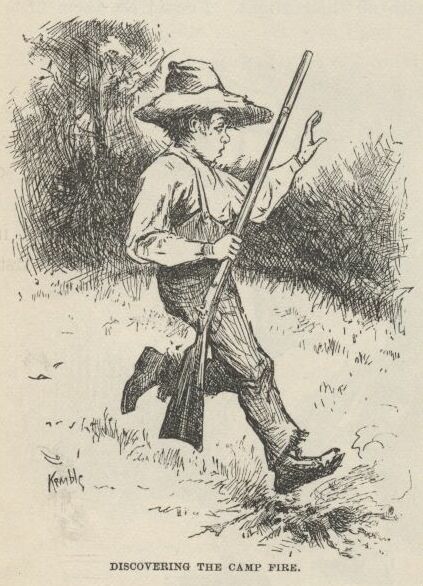
My heart jumped up amongst my lungs. I never waited for to look further, butuncocked my gun and went sneaking back on my tiptoes as fast as ever I could.Every now and then I stopped a second amongst the thick leaves and listened,but my breath come so hard I couldn’t hear nothing else. I slunk along anotherpiece further, then listened again; and so on, and so on. If I see a stump, Itook it for a man; if I trod on a stick and broke it, it made me feel like aperson had cut one of my breaths in two and I only got half, and the shorthalf, too.
When I got to camp I warn’t feeling very brash, there warn’t much sand in mycraw; but I says, this ain’t no time to be fooling around. So I got all mytraps into my canoe again so as to have them out of sight, and I put out thefire and scattered the ashes around to look like an old last year’s camp, andthen clumb a tree.
I reckon I was up in the tree two hours; but I didn’t see nothing, I didn’thear nothing—I only thoughtI heard and seen as much as a thousandthings. Well, I couldn’t stay up there forever; so at last I got down, but Ikept in the thick woods and on the lookout all the time. All I could get to eatwas berries and what was left over from breakfast.
By the time it was night I was pretty hungry. So when it was good and dark Islid out from shore before moonrise and paddled over to the Illinois bank—abouta quarter of a mile. I went out in the woods and cooked a supper, and I hadabout made up my mind I would stay there all night when I hear aplunkety-plunk, plunkety-plunk, and says to myself, horses coming; andnext I hear people’s voices. I got everything into the canoe as quick as Icould, and then went creeping through the woods to see what I could find out. Ihadn’t got far when I hear a man say:
“We better camp here if we can find a good place; the horses is about beat out.Let’s look around.”
I didn’t wait, but shoved out and paddled away easy. I tied up in the oldplace, and reckoned I would sleep in the canoe.
I didn’t sleep much. I couldn’t, somehow, for thinking. And every time I wakedup I thought somebody had me by the neck. So the sleep didn’t do me no good.By-and-by I says to myself, I can’t live this way; I’m a-going to find out whoit is that’s here on the island with me; I’ll find it out or bust. Well, I feltbetter right off.
So I took my paddle and slid out from shore just a step or two, and then letthe canoe drop along down amongst the shadows. The moon was shining, andoutside of the shadows it made it most as light as day. I poked along well onto an hour, everything still as rocks and sound asleep. Well, by this time Iwas most down to the foot of the island. A little ripply, cool breeze begun toblow, and that was as good as saying the night was about done. I give her aturn with the paddle and brung her nose to shore; then I got my gun and slippedout and into the edge of the woods. I sat down there on a log, and looked outthrough the leaves. I see the moon go off watch, and the darkness begin toblanket the river. But in a little while I see a pale streak over the treetops,and knowed the day was coming. So I took my gun and slipped off towards where Ihad run across that camp fire, stopping every minute or two to listen. But Ihadn’t no luck somehow; I couldn’t seem to find the place. But by-and-by, sureenough, I catched a glimpse of fire away through the trees. I went for it,cautious and slow. By-and-by I was close enough to have a look, and there laida man on the ground. It most give me the fan-tods. He had a blanket around hishead, and his head was nearly in the fire. I set there behind a clump ofbushes, in about six foot of him, and kept my eyes on him steady. It wasgetting gray daylight now. Pretty soon he gapped and stretched himself and hoveoff the blanket, and it was Miss Watson’s Jim! I bet I was glad to see him. Isays:
“Hello, Jim!” and skipped out.
He bounced up and stared at me wild. Then he drops down on his knees, and putshis hands together and says:
“Doan’ hurt me—don’t! I hain’t ever done no harm to a ghos’. I alwuz liked deadpeople, en done all I could for ’em. You go en git in de river agin, whah youb’longs, en doan’ do nuffn to Ole Jim, ’at ’uz awluz yo’ fren’.”
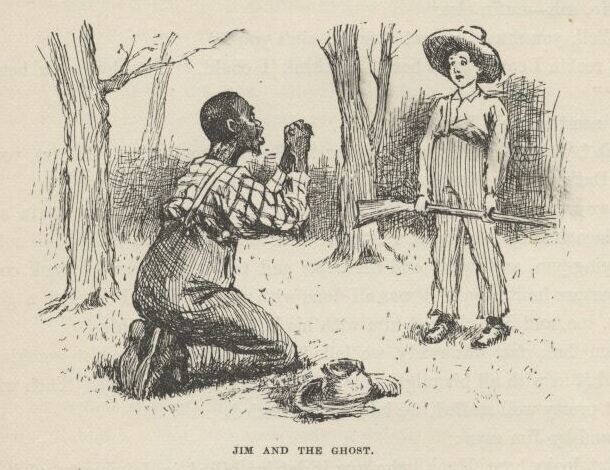
Well, I warn’t long making him understand I warn’t dead. I was ever so glad tosee Jim. I warn’t lonesome now. I told him I warn’t afraid of himtelling the people where I was. I talked along, but he only set there andlooked at me; never said nothing. Then I says:
“It’s good daylight. Le’s get breakfast. Make up your camp fire good.”
“What’s de use er makin’ up de camp fire to cook strawbries en sich truck? Butyou got a gun, hain’t you? Den we kin git sumfn better den strawbries.”
“Strawberries and such truck,” I says. “Is that what you live on?”
“I couldn’ git nuffn else,” he says.
“Why, how long you been on the island, Jim?”
“I come heah de night arter you’s killed.”
“What, all that time?”
“Yes—indeedy.”
“And ain’t you had nothing but that kind of rubbage to eat?”
“No, sah—nuffn else.”
“Well, you must be most starved, ain’t you?”
“I reck’n I could eat a hoss. I think I could. How long you ben on de islan’?”
“Since the night I got killed.”
“No! W’y, what has you lived on? But you got a gun. Oh, yes, you got a gun.Dat’s good. Now you kill sumfn en I’ll make up de fire.”
So we went over to where the canoe was, and while he built a fire in a grassyopen place amongst the trees, I fetched meal and bacon and coffee, andcoffee-pot and frying-pan, and sugar and tin cups, and the nigger was set backconsiderable, because he reckoned it was all done with witchcraft. I catched agood big catfish, too, and Jim cleaned him with his knife, and fried him.
When breakfast was ready we lolled on the grass and eat it smoking hot. Jimlaid it in with all his might, for he was most about starved. Then when we hadgot pretty well stuffed, we laid off and lazied. By-and-by Jim says:
“But looky here, Huck, who wuz it dat ’uz killed in dat shanty ef it warn’tyou?”
Then I told him the whole thing, and he said it was smart. He said Tom Sawyercouldn’t get up no better plan than what I had. Then I says:
“How do you come to be here, Jim, and how’d you get here?”
He looked pretty uneasy, and didn’t say nothing for a minute. Then he says:
“Maybe I better not tell.”
“Why, Jim?”
“Well, dey’s reasons. But you wouldn’ tell on me ef I uz to tell you, wouldyou, Huck?”
“Blamed if I would, Jim.”
“Well, I b’lieve you, Huck. I—I run off.”
“Jim!”
“But mind, you said you wouldn’ tell—you know you said you wouldn’ tell, Huck.”
“Well, I did. I said I wouldn’t, and I’ll stick to it. Honest injun, Iwill. People would call me a low-down Abolitionist and despise me for keepingmum—but that don’t make no difference. I ain’t a-going to tell, and I ain’ta-going back there, anyways. So, now, le’s know all about it.”
“Well, you see, it ’uz dis way. Ole missus—dat’s Miss Watson—she pecks on meall de time, en treats me pooty rough, but she awluz said she wouldn’ sell medown to Orleans. But I noticed dey wuz a nigger trader roun’ de placeconsidable lately, en I begin to git oneasy. Well, one night I creeps to de do’pooty late, en de do’ warn’t quite shet, en I hear old missus tell de widdershe gwyne to sell me down to Orleans, but she didn’ want to, but she could giteight hund’d dollars for me, en it ’uz sich a big stack o’ money she couldn’resis’. De widder she try to git her to say she wouldn’ do it, but I neverwaited to hear de res’. I lit out mighty quick, I tell you.
“I tuck out en shin down de hill, en ’spec to steal a skift ’long de sho’som’ers ’bove de town, but dey wuz people a-stirring yit, so I hid in de oletumble-down cooper-shop on de bank to wait for everybody to go ’way. Well, Iwuz dah all night. Dey wuz somebody roun’ all de time. ’Long ’bout six in demawnin’ skifts begin to go by, en ’bout eight er nine every skift dat went’long wuz talkin’ ’bout how yo’ pap come over to de town en say you’s killed.Dese las’ skifts wuz full o’ ladies en genlmen a-goin’ over for to see deplace. Sometimes dey’d pull up at de sho’ en take a res’ b’fo’ dey startedacrost, so by de talk I got to know all ’bout de killin’. I ’uz powerful sorryyou’s killed, Huck, but I ain’t no mo’ now.
“I laid dah under de shavin’s all day. I ’uz hungry, but I warn’t afeard;bekase I knowed ole missus en de widder wuz goin’ to start to de camp-meet’n’right arter breakfas’ en be gone all day, en dey knows I goes off wid de cattle’bout daylight, so dey wouldn’ ’spec to see me roun’ de place, en so deywouldn’ miss me tell arter dark in de evenin’. De yuther servants wouldn’ missme, kase dey’d shin out en take holiday soon as de ole folks ’uz out’n de way.
“Well, when it come dark I tuck out up de river road, en went ’bout two mile ermore to whah dey warn’t no houses. I’d made up my mine ’bout what I’s agwyne todo. You see, ef I kep’ on tryin’ to git away afoot, de dogs ’ud track me; ef Istole a skift to cross over, dey’d miss dat skift, you see, en dey’d know ’boutwhah I’d lan’ on de yuther side, en whah to pick up my track. So I says, a raffis what I’s arter; it doan’ makeno track.
“I see a light a-comin’ roun’ de p’int bymeby, so I wade’ in en shove’ a logahead o’ me en swum more’n half way acrost de river, en got in ’mongst dedrift-wood, en kep’ my head down low, en kinder swum agin de current tell deraff come along. Den I swum to de stern uv it en tuck a-holt. It clouded up en’uz pooty dark for a little while. So I clumb up en laid down on de planks. Demen ’uz all ’way yonder in de middle, whah de lantern wuz. De river wuza-risin’, en dey wuz a good current; so I reck’n’d ’at by fo’ in de mawnin’ I’dbe twenty-five mile down de river, en den I’d slip in jis b’fo’ daylight enswim asho’, en take to de woods on de Illinois side.
“But I didn’ have no luck. When we ’uz mos’ down to de head er de islan’ a manbegin to come aft wid de lantern, I see it warn’t no use fer to wait, so I slidoverboard en struck out fer de islan’. Well, I had a notion I could lan’ mos’anywhers, but I couldn’t—bank too bluff. I ’uz mos’ to de foot er de islan’b’fo’ I found’ a good place. I went into de woods en jedged I wouldn’ fool widraffs no mo’, long as dey move de lantern roun’ so. I had my pipe en a plug erdog-leg, en some matches in my cap, en dey warn’t wet, so I ’uz all right.”
“And so you ain’t had no meat nor bread to eat all this time? Why didn’t youget mud-turkles?”
“How you gwyne to git ’m? You can’t slip up on um en grab um; en how’s a bodygwyne to hit um wid a rock? How could a body do it in de night? En I warn’tgwyne to show mysef on de bank in de daytime.”
“Well, that’s so. You’ve had to keep in the woods all the time, of course. Didyou hear ’em shooting the cannon?”
“Oh, yes. I knowed dey was arter you. I see um go by heah—watched um thoo debushes.”
Some young birds come along, flying a yard or two at a time and lighting. Jimsaid it was a sign it was going to rain. He said it was a sign when youngchickens flew that way, and so he reckoned it was the same way when young birdsdone it. I was going to catch some of them, but Jim wouldn’t let me. He said itwas death. He said his father laid mighty sick once, and some of them catched abird, and his old granny said his father would die, and he did.
And Jim said you mustn’t count the things you are going to cook for dinner,because that would bring bad luck. The same if you shook the table-cloth aftersundown. And he said if a man owned a beehive and that man died, the bees mustbe told about it before sun-up next morning, or else the bees would all weakendown and quit work and die. Jim said bees wouldn’t sting idiots; but I didn’tbelieve that, because I had tried them lots of times myself, and they wouldn’tsting me.
I had heard about some of these things before, but not all of them. Jim knowedall kinds of signs. He said he knowed most everything. I said it looked to melike all the signs was about bad luck, and so I asked him if there warn’t anygood-luck signs. He says:
“Mighty few—an’ deyain’t no use to a body. What you want to know whengood luck’s a-comin’ for? Want to keep it off?” And he said: “Ef you’s gothairy arms en a hairy breas’, it’s a sign dat you’s agwyne to be rich. Well,dey’s some use in a sign like dat, ’kase it’s so fur ahead. You see, maybeyou’s got to be po’ a long time fust, en so you might git discourage’ en killyo’sef ’f you didn’ know by de sign dat you gwyne to be rich bymeby.”
“Have you got hairy arms and a hairy breast, Jim?”
“What’s de use to ax dat question? Don’t you see I has?”
“Well, are you rich?”
“No, but I ben rich wunst, and gwyne to be rich agin. Wunst I had foteendollars, but I tuck to specalat’n’, en got busted out.”
“What did you speculate in, Jim?”
“Well, fust I tackled stock.”
“What kind of stock?”
“Why, live stock—cattle, you know. I put ten dollars in a cow. But I ain’ gwyneto resk no mo’ money in stock. De cow up ’n’ died on my han’s.”
“So you lost the ten dollars.”
“No, I didn’t lose it all. I on’y los’ ’bout nine of it. I sole de hide entaller for a dollar en ten cents.”
“You had five dollars and ten cents left. Did you speculate any more?”
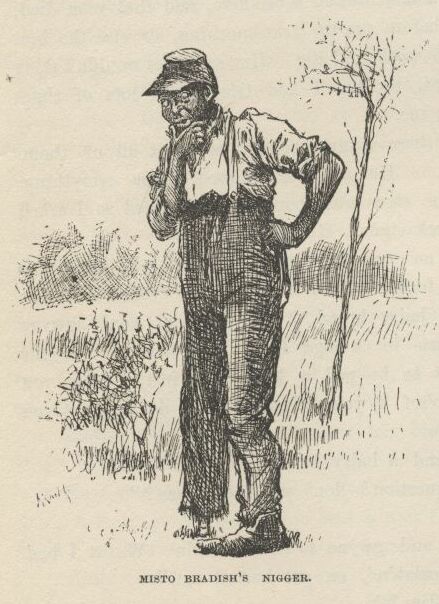
“Yes. You know that one-laigged nigger dat b’longs to old Misto Bradish? Well,he sot up a bank, en say anybody dat put in a dollar would git fo’ dollars mo’at de en’ er de year. Well, all de niggers went in, but dey didn’t have much. Iwuz de on’y one dat had much. So I stuck out for mo’ dan fo’ dollars, en I said’f I didn’ git it I’d start a bank mysef. Well, o’ course dat nigger want’ tokeep me out er de business, bekase he says dey warn’t business ’nough for twobanks, so he say I could put in my five dollars en he pay me thirty-five at deen’ er de year.
“So I done it. Den I reck’n’d I’d inves’ de thirty-five dollars right off enkeep things a-movin’. Dey wuz a nigger name’ Bob, dat had ketched a wood-flat,en his marster didn’ know it; en I bought it off’n him en told him to take dethirty-five dollars when de en’ er de year come; but somebody stole dewood-flat dat night, en nex day de one-laigged nigger say de bank’s busted. Sodey didn’ none uv us git no money.”
“What did you do with the ten cents, Jim?”
“Well, I ’uz gwyne to spen’ it, but I had a dream, en de dream tole me to giveit to a nigger name’ Balum—Balum’s Ass dey call him for short; he’s one er demchuckleheads, you know. But he’s lucky, dey say, en I see I warn’t lucky. Dedream say let Balum inves’ de ten cents en he’d make a raise for me. Well,Balum he tuck de money, en when he wuz in church he hear de preacher say datwhoever give to de po’ len’ to de Lord, en boun’ to git his money back a hund’dtimes. So Balum he tuck en give de ten cents to de po’, en laid low to see whatwuz gwyne to come of it.”
“Well, what did come of it, Jim?”
“Nuffn never come of it. I couldn’ manage to k’leck dat money no way; en Balumhe couldn’. I ain’ gwyne to len’ no mo’ money ’dout I see de security. Boun’ togit yo’ money back a hund’d times, de preacher says! Ef I could git de tencentsback, I’d call it squah, en be glad er de chanst.”
“Well, it’s all right anyway, Jim, long as you’re going to be rich again sometime or other.”
“Yes; en I’s rich now, come to look at it. I owns mysef, en I’s wuth eighthund’d dollars. I wisht I had de money, I wouldn’ want no mo’.”
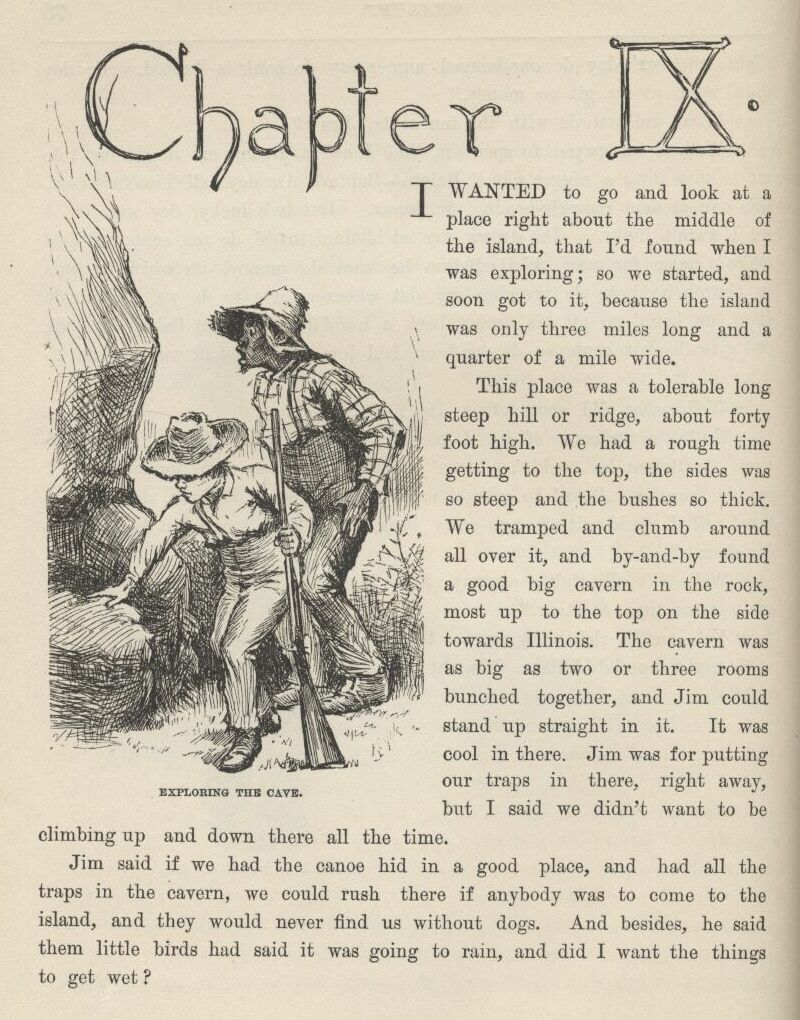
CHAPTER IX.
I wanted to go and look at a place right about the middle of the island thatI’d found when I was exploring; so we started and soon got to it, because theisland was only three miles long and a quarter of a mile wide.
This place was a tolerable long, steep hill or ridge about forty foot high. Wehad a rough time getting to the top, the sides was so steep and the bushes sothick. We tramped and clumb around all over it, and by-and-by found a good bigcavern in the rock, most up to the top on the side towards Illinois. The cavernwas as big as two or three rooms bunched together, and Jim could stand upstraight in it. It was cool in there. Jim was for putting our traps in thereright away, but I said we didn’t want to be climbing up and down there all thetime.
Jim said if we had the canoe hid in a good place, and had all the traps in thecavern, we could rush there if anybody was to come to the island, and theywould never find us without dogs. And, besides, he said them little birds hadsaid it was going to rain, and did I want the things to get wet?
So we went back and got the canoe, and paddled up abreast the cavern, andlugged all the traps up there. Then we hunted up a place close by to hide thecanoe in, amongst the thick willows. We took some fish off of the lines and setthem again, and begun to get ready for dinner.
The door of the cavern was big enough to roll a hogshead in, and on one side ofthe door the floor stuck out a little bit, and was flat and a good place tobuild a fire on. So we built it there and cooked dinner.

We spread the blankets inside for a carpet, and eat our dinner in there. We putall the other things handy at the back of the cavern. Pretty soon it darkenedup, and begun to thunder and lighten; so the birds was right about it. Directlyit begun to rain, and it rained like all fury, too, and I never see the windblow so. It was one of these regular summer storms. It would get so dark thatit looked all blue-black outside, and lovely; and the rain would thrash alongby so thick that the trees off a little ways looked dim and spider-webby; andhere would come a blast of wind that would bend the trees down and turn up thepale underside of the leaves; and then a perfect ripper of a gust would followalong and set the branches to tossing their arms as if they was just wild; andnext, when it was just about the bluest and blackest—fst!it was asbright as glory, and you’d have a little glimpse of tree-tops a-plunging aboutaway off yonder in the storm, hundreds of yards further than you could seebefore; dark as sin again in a second, and now you’d hear the thunder let gowith an awful crash, and then go rumbling, grumbling, tumbling, down the skytowards the under side of the world, like rolling empty barrels downstairs—where it’s long stairs and they bounce a good deal, you know.
“Jim, this is nice,” I says. “I wouldn’t want to be nowhere else but here. Passme along another hunk of fish and some hot corn-bread.”
“Well, you wouldn’t a ben here ’f it hadn’t a ben for Jim. You’d a ben down dahin de woods widout any dinner, en gittn’ mos’ drownded, too; dat you would,honey. Chickens knows when it’s gwyne to rain, en so do de birds, chile.”
The river went on raising and raising for ten or twelve days, till at last itwas over the banks. The water was three or four foot deep on the island in thelow places and on the Illinois bottom. On that side it was a good many mileswide, but on the Missouri side it was the same old distance across—a half amile—because the Missouri shore was just a wall of high bluffs.
Daytimes we paddled all over the island in the canoe, It was mighty cool andshady in the deep woods, even if the sun was blazing outside. We went windingin and out amongst the trees, and sometimes the vines hung so thick we had toback away and go some other way. Well, on every old broken-down tree you couldsee rabbits and snakes and such things; and when the island had been overfloweda day or two they got so tame, on account of being hungry, that you couldpaddle right up and put your hand on them if you wanted to; but not the snakesand turtles—they would slide off in the water. The ridge our cavern was in wasfull of them. We could a had pets enough if we’d wanted them.
One night we catched a little section of a lumber raft—nice pine planks. It wastwelve foot wide and about fifteen or sixteen foot long, and the top stoodabove water six or seven inches—a solid, level floor. We could see saw-logs goby in the daylight sometimes, but we let them go; we didn’t show ourselves indaylight.
Another night when we was up at the head of the island, just before daylight,here comes a frame-house down, on the west side. She was a two-story, andtilted over considerable. We paddled out and got aboard—clumb in at an upstairswindow. But it was too dark to see yet, so we made the canoe fast and set inher to wait for daylight.
The light begun to come before we got to the foot of the island. Then we lookedin at the window. We could make out a bed, and a table, and two old chairs, andlots of things around about on the floor, and there was clothes hanging againstthe wall. There was something laying on the floor in the far corner that lookedlike a man. So Jim says:
“Hello, you!”
But it didn’t budge. So I hollered again, and then Jim says:
“De man ain’t asleep—he’s dead. You hold still—I’ll go en see.”
He went, and bent down and looked, and says:
“It’s a dead man. Yes, indeedy; naked, too. He’s ben shot in de back. I reck’nhe’s ben dead two er three days. Come in, Huck, but doan’ look at his face—it’stoo gashly.”

I didn’t look at him at all. Jim throwed some old rags over him, but he needn’tdone it; I didn’t want to see him. There was heaps of old greasy cardsscattered around over the floor, and old whisky bottles, and a couple of masksmade out of black cloth; and all over the walls was the ignorantest kind ofwords and pictures made with charcoal. There was two old dirty calico dresses,and a sun-bonnet, and some women’s underclothes hanging against the wall, andsome men’s clothing, too. We put the lot into the canoe—it might come good.There was a boy’s old speckled straw hat on the floor; I took that, too. Andthere was a bottle that had had milk in it, and it had a rag stopper for a babyto suck. We would a took the bottle, but it was broke. There was a seedy oldchest, and an old hair trunk with the hinges broke. They stood open, but therewarn’t nothing left in them that was any account. The way things was scatteredabout we reckoned the people left in a hurry, and warn’t fixed so as to carryoff most of their stuff.
We got an old tin lantern, and a butcher-knife without any handle, and abran-new Barlow knife worth two bits in any store, and a lot of tallow candles,and a tin candlestick, and a gourd, and a tin cup, and a ratty old bedquilt offthe bed, and a reticule with needles and pins and beeswax and buttons andthread and all such truck in it, and a hatchet and some nails, and a fishlineas thick as my little finger with some monstrous hooks on it, and a roll ofbuckskin, and a leather dog-collar, and a horseshoe, and some vials of medicinethat didn’t have no label on them; and just as we was leaving I found atolerable good curry-comb, and Jim he found a ratty old fiddle-bow, and awooden leg. The straps was broke off of it, but, barring that, it was a goodenough leg, though it was too long for me and not long enough for Jim, and wecouldn’t find the other one, though we hunted all around.
And so, take it all around, we made a good haul. When we was ready to shove offwe was a quarter of a mile below the island, and it was pretty broad day; so Imade Jim lay down in the canoe and cover up with the quilt, because if he setup people could tell he was a nigger a good ways off. I paddled over to theIllinois shore, and drifted down most a half a mile doing it. I crept up thedead water under the bank, and hadn’t no accidents and didn’t see nobody. Wegot home all safe.
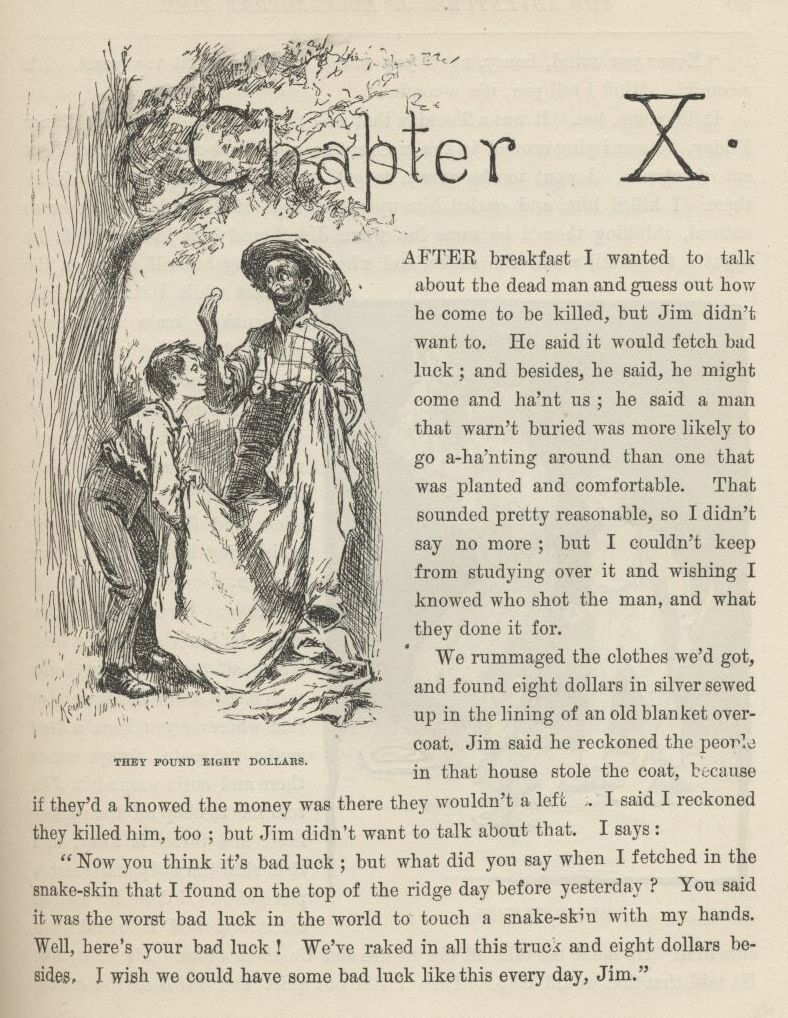
CHAPTER X.
After breakfast I wanted to talk about the dead man and guess out how he cometo be killed, but Jim didn’t want to. He said it would fetch bad luck; andbesides, he said, he might come and ha’nt us; he said a man that warn’t buriedwas more likely to go a-ha’nting around than one that was planted andcomfortable. That sounded pretty reasonable, so I didn’t say no more; but Icouldn’t keep from studying over it and wishing I knowed who shot the man, andwhat they done it for.
We rummaged the clothes we’d got, and found eight dollars in silver sewed up inthe lining of an old blanket overcoat. Jim said he reckoned the people in thathouse stole the coat, because if they’d a knowed the money was there theywouldn’t a left it. I said I reckoned they killed him, too; but Jim didn’t wantto talk about that. I says:
“Now you think it’s bad luck; but what did you say when I fetched in thesnake-skin that I found on the top of the ridge day before yesterday? You saidit was the worst bad luck in the world to touch a snake-skin with my hands.Well, here’s your bad luck! We’ve raked in all this truck and eight dollarsbesides. I wish we could have some bad luck like this every day, Jim.”
“Never you mind, honey, never you mind. Don’t you git too peart. It’s a-comin’.Mind I tell you, it’s a-comin’.”
It did come, too. It was a Tuesday that we had that talk. Well, after dinnerFriday we was laying around in the grass at the upper end of the ridge, and gotout of tobacco. I went to the cavern to get some, and found a rattlesnake inthere. I killed him, and curled him up on the foot of Jim’s blanket, ever sonatural, thinking there’d be some fun when Jim found him there. Well, by nightI forgot all about the snake, and when Jim flung himself down on the blanketwhile I struck a light the snake’s mate was there, and bit him.
He jumped up yelling, and the first thing the light showed was the varmintcurled up and ready for another spring. I laid him out in a second with astick, and Jim grabbed pap’s whisky-jug and begun to pour it down.
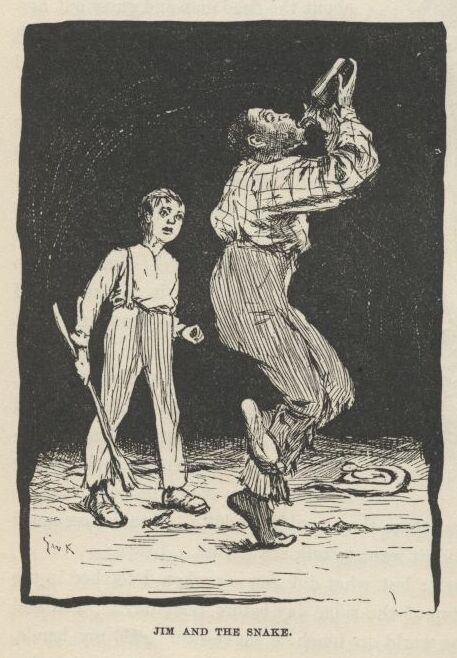
He was barefooted, and the snake bit him right on the heel. That all comes ofmy being such a fool as to not remember that wherever you leave a dead snakeits mate always comes there and curls around it. Jim told me to chop off thesnake’s head and throw it away, and then skin the body and roast a piece of it.I done it, and he eat it and said it would help cure him. He made me take offthe rattles and tie them around his wrist, too. He said that that would help.Then I slid out quiet and throwed the snakes clear away amongst the bushes; forI warn’t going to let Jim find out it was all my fault, not if I could help it.
Jim sucked and sucked at the jug, and now and then he got out of his head andpitched around and yelled; but every time he come to himself he went to suckingat the jug again. His foot swelled up pretty big, and so did his leg; butby-and-by the drunk begun to come, and so I judged he was all right; but I’ddruther been bit with a snake than pap’s whisky.
Jim was laid up for four days and nights. Then the swelling was all gone and hewas around again. I made up my mind I wouldn’t ever take a-holt of a snake-skinagain with my hands, now that I see what had come of it. Jim said he reckoned Iwould believe him next time. And he said that handling a snake-skin was suchawful bad luck that maybe we hadn’t got to the end of it yet. He said hedruther see the new moon over his left shoulder as much as a thousand timesthan take up a snake-skin in his hand. Well, I was getting to feel that waymyself, though I’ve always reckoned that looking at the new moon over your leftshoulder is one of the carelessest and foolishest things a body can do. OldHank Bunker done it once, and bragged about it; and in less than two years hegot drunk and fell off of the shot-tower, and spread himself out so that he wasjust a kind of a layer, as you may say; and they slid him edgeways between twobarn doors for a coffin, and buried him so, so they say, but I didn’t see it.Pap told me. But anyway it all come of looking at the moon that way, like afool.

Well, the days went along, and the river went down between its banks again; andabout the first thing we done was to bait one of the big hooks with a skinnedrabbit and set it and catch a catfish that was as big as a man, being six foottwo inches long, and weighed over two hundred pounds. We couldn’t handle him,of course; he would a flung us into Illinois. We just set there and watched himrip and tear around till he drownded. We found a brass button in his stomachand a round ball, and lots of rubbage. We split the ball open with the hatchet,and there was a spool in it. Jim said he’d had it there a long time, to coat itover so and make a ball of it. It was as big a fish as was ever catched in theMississippi, I reckon. Jim said he hadn’t ever seen a bigger one. He would abeen worth a good deal over at the village. They peddle out such a fish as thatby the pound in the market-house there; everybody buys some of him; his meat’sas white as snow and makes a good fry.
Next morning I said it was getting slow and dull, and I wanted to get astirring up some way. I said I reckoned I would slip over the river and findout what was going on. Jim liked that notion; but he said I must go in the darkand look sharp. Then he studied it over and said, couldn’t I put on some ofthem old things and dress up like a girl? That was a good notion, too. So weshortened up one of the calico gowns, and I turned up my trouser-legs to myknees and got into it. Jim hitched it behind with the hooks, and it was a fairfit. I put on the sun-bonnet and tied it under my chin, and then for a body tolook in and see my face was like looking down a joint of stove-pipe. Jim saidnobody would know me, even in the daytime, hardly. I practiced around all dayto get the hang of the things, and by-and-by I could do pretty well in them,only Jim said I didn’t walk like a girl; and he said I must quit pulling up mygown to get at my britches-pocket. I took notice, and done better.

I started up the Illinois shore in the canoe just after dark.
I started across to the town from a little below the ferry-landing, and thedrift of the current fetched me in at the bottom of the town. I tied up andstarted along the bank. There was a light burning in a little shanty thathadn’t been lived in for a long time, and I wondered who had took up quartersthere. I slipped up and peeped in at the window. There was a woman about fortyyear old in there knitting by a candle that was on a pine table. I didn’t knowher face; she was a stranger, for you couldn’t start a face in that town that Ididn’t know. Now this was lucky, because I was weakening; I was getting afraidI had come; people might know my voice and find me out. But if this woman hadbeen in such a little town two days she could tell me all I wanted to know; soI knocked at the door, and made up my mind I wouldn’t forget I was a girl.
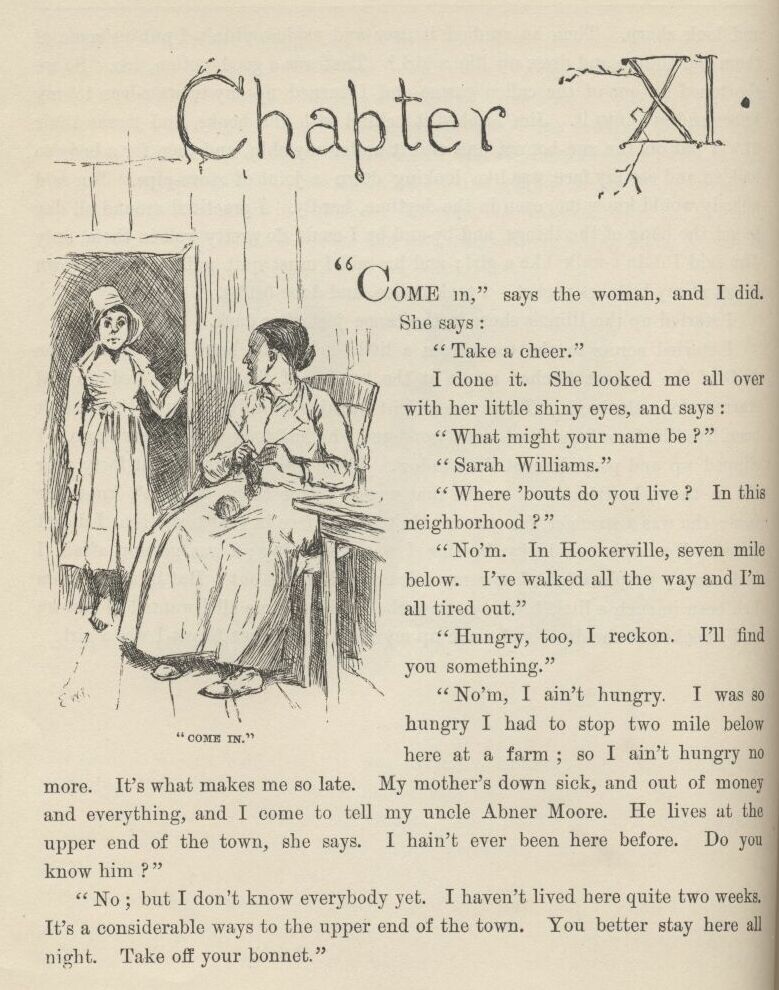
CHAPTER XI.
“Come in,” says the woman, and I did. She says: “Take a cheer.”
I done it. She looked me all over with her little shiny eyes, and says:
“What might your name be?”
“Sarah Williams.”
“Where ’bouts do you live? In this neighborhood?”
“No’m. In Hookerville, seven mile below. I’ve walked all the way and I’m alltired out.”
“Hungry, too, I reckon. I’ll find you something.”
“No’m, I ain’t hungry. I was so hungry I had to stop two miles below here at afarm; so I ain’t hungry no more. It’s what makes me so late. My mother’s downsick, and out of money and everything, and I come to tell my uncle Abner Moore.He lives at the upper end of the town, she says. I hain’t ever been herebefore. Do you know him?”
“No; but I don’t know everybody yet. I haven’t lived here quite two weeks. It’sa considerable ways to the upper end of the town. You better stay here allnight. Take off your bonnet.”
“No,” I says; “I’ll rest a while, I reckon, and go on. I ain’t afeared of thedark.”
She said she wouldn’t let me go by myself, but her husband would be inby-and-by, maybe in a hour and a half, and she’d send him along with me. Thenshe got to talking about her husband, and about her relations up the river, andher relations down the river, and about how much better off they used to was,and how they didn’t know but they’d made a mistake coming to our town, insteadof letting well alone—and so on and so on, till I was afeard Ihad madea mistake coming to her to find out what was going on in the town; butby-and-by she dropped on to pap and the murder, and then I was pretty willingto let her clatter right along. She told about me and Tom Sawyer finding thesix thousand dollars (only she got it ten) and all about pap and what a hardlot he was, and what a hard lot I was, and at last she got down to where I wasmurdered. I says:
“Who done it? We’ve heard considerable about these goings on down inHookerville, but we don’t know who ’twas that killed Huck Finn.”
“Well, I reckon there’s a right smart chance of people herethat’d liketo know who killed him. Some think old Finn done it himself.”
“No—is that so?”
“Most everybody thought it at first. He’ll never know how nigh he come togetting lynched. But before night they changed around and judged it was done bya runaway nigger named Jim.”
“Why he—”
I stopped. I reckoned I better keep still. She run on, and never noticed I hadput in at all:
“The nigger run off the very night Huck Finn was killed. So there’s a rewardout for him—three hundred dollars. And there’s a reward out for old Finn,too—two hundred dollars. You see, he come to town the morning after the murder,and told about it, and was out with ’em on the ferry-boat hunt, and right awayafter he up and left. Before night they wanted to lynch him, but he was gone,you see. Well, next day they found out the nigger was gone; they found out hehadn’t ben seen sence ten o’clock the night the murder was done. So then theyput it on him, you see; and while they was full of it, next day, back comes oldFinn, and went boo-hooing to Judge Thatcher to get money to hunt for the niggerall over Illinois with. The judge gave him some, and that evening he got drunk,and was around till after midnight with a couple of mighty hard-lookingstrangers, and then went off with them. Well, he hain’t come back sence, andthey ain’t looking for him back till this thing blows over a little, for peoplethinks now that he killed his boy and fixed things so folks would think robbersdone it, and then he’d get Huck’s money without having to bother a long timewith a lawsuit. People do say he warn’t any too good to do it. Oh, he’s sly, Ireckon. If he don’t come back for a year he’ll be all right. You can’t proveanything on him, you know; everything will be quieted down then, and he’ll walkin Huck’s money as easy as nothing.”
“Yes, I reckon so, ’m. I don’t see nothing in the way of it. Has everybody quitthinking the nigger done it?”
“Oh, no, not everybody. A good many thinks he done it. But they’ll get thenigger pretty soon now, and maybe they can scare it out of him.”
“Why, are they after him yet?”
“Well, you’re innocent, ain’t you! Does three hundred dollars lay around everyday for people to pick up? Some folks think the nigger ain’t far from here. I’mone of them—but I hain’t talked it around. A few days ago I was talking with anold couple that lives next door in the log shanty, and they happened to sayhardly anybody ever goes to that island over yonder that they call Jackson’sIsland. Don’t anybody live there? says I. No, nobody, says they. I didn’t sayany more, but I done some thinking. I was pretty near certain I’d seen smokeover there, about the head of the island, a day or two before that, so I saysto myself, like as not that nigger’s hiding over there; anyway, says I, it’sworth the trouble to give the place a hunt. I hain’t seen any smoke sence, so Ireckon maybe he’s gone, if it was him; but husband’s going over to see—him andanother man. He was gone up the river; but he got back to-day, and I told himas soon as he got here two hours ago.”

I had got so uneasy I couldn’t set still. I had to do something with my hands;so I took up a needle off of the table and went to threading it. My handsshook, and I was making a bad job of it. When the woman stopped talking Ilooked up, and she was looking at me pretty curious and smiling a little. I putdown the needle and thread, and let on to be interested—and I was, too—andsays:
“Three hundred dollars is a power of money. I wish my mother could get it. Isyour husband going over there to-night?”
“Oh, yes. He went up-town with the man I was telling you of, to get a boat andsee if they could borrow another gun. They’ll go over after midnight.”
“Couldn’t they see better if they was to wait till daytime?”
“Yes. And couldn’t the nigger see better, too? After midnight he’ll likely beasleep, and they can slip around through the woods and hunt up his camp fireall the better for the dark, if he’s got one.”
“I didn’t think of that.”
The woman kept looking at me pretty curious, and I didn’t feel a bitcomfortable. Pretty soon she says,
“What did you say your name was, honey?”
“M—Mary Williams.”
Somehow it didn’t seem to me that I said it was Mary before, so I didn’t lookup—seemed to me I said it was Sarah; so I felt sort of cornered, and wasafeared maybe I was looking it, too. I wished the woman would say somethingmore; the longer she set still the uneasier I was. But now she says:
“Honey, I thought you said it was Sarah when you first come in?”
“Oh, yes’m, I did. Sarah Mary Williams. Sarah’s my first name. Some calls meSarah, some calls me Mary.”
“Oh, that’s the way of it?”
“Yes’m.”
I was feeling better then, but I wished I was out of there, anyway. I couldn’tlook up yet.
Well, the woman fell to talking about how hard times was, and how poor they hadto live, and how the rats was as free as if they owned the place, and so forthand so on, and then I got easy again. She was right about the rats. You’d seeone stick his nose out of a hole in the corner every little while. She said shehad to have things handy to throw at them when she was alone, or they wouldn’tgive her no peace. She showed me a bar of lead twisted up into a knot, and saidshe was a good shot with it generly, but she’d wrenched her arm a day or twoago, and didn’t know whether she could throw true now. But she watched for achance, and directly banged away at a rat; but she missed him wide, and said“Ouch!” it hurt her arm so. Then she told me to try for the next one. I wantedto be getting away before the old man got back, but of course I didn’t let on.I got the thing, and the first rat that showed his nose I let drive, and ifhe’d a stayed where he was he’d a been a tolerable sick rat. She said that wasfirst-rate, and she reckoned I would hive the next one. She went and got thelump of lead and fetched it back, and brought along a hank of yarn which shewanted me to help her with. I held up my two hands and she put the hank overthem, and went on talking about her and her husband’s matters. But she brokeoff to say:
“Keep your eye on the rats. You better have the lead in your lap, handy.”
So she dropped the lump into my lap just at that moment, and I clapped my legstogether on it and she went on talking. But only about a minute. Then she tookoff the hank and looked me straight in the face, and very pleasant, and says:
“Come, now, what’s your real name?”
“Wh—what, mum?”
“What’s your real name? Is it Bill, or Tom, or Bob?—or what is it?”
I reckon I shook like a leaf, and I didn’t know hardly what to do. But I says:
“Please to don’t poke fun at a poor girl like me, mum. If I’m in the way here,I’ll—”
“No, you won’t. Set down and stay where you are. I ain’t going to hurt you, andI ain’t going to tell on you, nuther. You just tell me your secret, and trustme. I’ll keep it; and, what’s more, I’ll help you. So’ll my old man if you wanthim to. You see, you’re a runaway ’prentice, that’s all. It ain’t anything.There ain’t no harm in it. You’ve been treated bad, and you made up your mindto cut. Bless you, child, I wouldn’t tell on you. Tell me all about it now,that’s a good boy.”
So I said it wouldn’t be no use to try to play it any longer, and I would justmake a clean breast and tell her everything, but she musn’t go back on herpromise. Then I told her my father and mother was dead, and the law had boundme out to a mean old farmer in the country thirty mile back from the river, andhe treated me so bad I couldn’t stand it no longer; he went away to be gone acouple of days, and so I took my chance and stole some of his daughter’s oldclothes and cleared out, and I had been three nights coming the thirty miles. Itraveled nights, and hid daytimes and slept, and the bag of bread and meat Icarried from home lasted me all the way, and I had a-plenty. I said I believedmy uncle Abner Moore would take care of me, and so that was why I struck outfor this town of Goshen.
“Goshen, child? This ain’t Goshen. This is St. Petersburg. Goshen’s ten milefurther up the river. Who told you this was Goshen?”
“Why, a man I met at daybreak this morning, just as I was going to turn intothe woods for my regular sleep. He told me when the roads forked I must takethe right hand, and five mile would fetch me to Goshen.”
“He was drunk, I reckon. He told you just exactly wrong.”
“Well, he did act like he was drunk, but it ain’t no matter now. I got to bemoving along. I’ll fetch Goshen before daylight.”
“Hold on a minute. I’ll put you up a snack to eat. You might want it.”
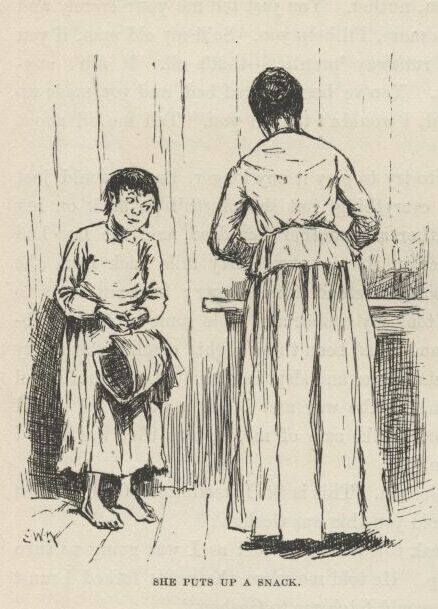
So she put me up a snack, and says:
“Say, when a cow’s laying down, which end of her gets up first? Answer upprompt now—don’t stop to study over it. Which end gets up first?”
“The hind end, mum.”
“Well, then, a horse?”
“The for’rard end, mum.”
“Which side of a tree does the moss grow on?”
“North side.”
“If fifteen cows is browsing on a hillside, how many of them eats with theirheads pointed the same direction?”
“The whole fifteen, mum.”
“Well, I reckon you havelived in the country. I thought maybe you wastrying to hocus me again. What’s your real name, now?”
“George Peters, mum.”
“Well, try to remember it, George. Don’t forget and tell me it’s Elexanderbefore you go, and then get out by saying it’s George Elexander when I catchyou. And don’t go about women in that old calico. You do a girl tolerable poor,but you might fool men, maybe. Bless you, child, when you set out to thread aneedle don’t hold the thread still and fetch the needle up to it; hold theneedle still and poke the thread at it; that’s the way a woman most alwaysdoes, but a man always does t’other way. And when you throw at a rat oranything, hitch yourself up a tiptoe and fetch your hand up over your head asawkward as you can, and miss your rat about six or seven foot. Throwstiff-armed from the shoulder, like there was a pivot there for it to turn on,like a girl; not from the wrist and elbow, with your arm out to one side, likea boy. And, mind you, when a girl tries to catch anything in her lap she throwsher knees apart; she don’t clap them together, the way you did when you catchedthe lump of lead. Why, I spotted you for a boy when you was threading theneedle; and I contrived the other things just to make certain. Now trot alongto your uncle, Sarah Mary Williams George Elexander Peters, and if you get intotrouble you send word to Mrs. Judith Loftus, which is me, and I’ll do what Ican to get you out of it. Keep the river road all the way, and next time youtramp take shoes and socks with you. The river road’s a rocky one, and yourfeet’ll be in a condition when you get to Goshen, I reckon.”
I went up the bank about fifty yards, and then I doubled on my tracks andslipped back to where my canoe was, a good piece below the house. I jumped in,and was off in a hurry. I went up-stream far enough to make the head of theisland, and then started across. I took off the sun-bonnet, for I didn’t wantno blinders on then. When I was about the middle I heard the clock begin tostrike, so I stops and listens; the sound come faint over the water butclear—eleven. When I struck the head of the island I never waited to blow,though I was most winded, but I shoved right into the timber where my old campused to be, and started a good fire there on a high and dry spot.
Then I jumped in the canoe and dug out for our place, a mile and a half below,as hard as I could go. I landed, and slopped through the timber and up theridge and into the cavern. There Jim laid, sound asleep on the ground. I rousedhim out and says:
“Git up and hump yourself, Jim! There ain’t a minute to lose. They’re afterus!”
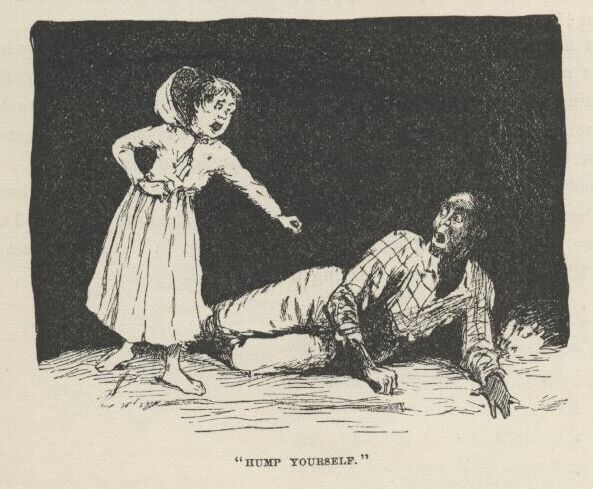
Jim never asked no questions, he never said a word; but the way he worked forthe next half an hour showed about how he was scared. By that time everythingwe had in the world was on our raft, and she was ready to be shoved out fromthe willow cove where she was hid. We put out the camp fire at the cavern thefirst thing, and didn’t show a candle outside after that.
I took the canoe out from the shore a little piece, and took a look; but ifthere was a boat around I couldn’t see it, for stars and shadows ain’t good tosee by. Then we got out the raft and slipped along down in the shade, past thefoot of the island dead still—never saying a word.
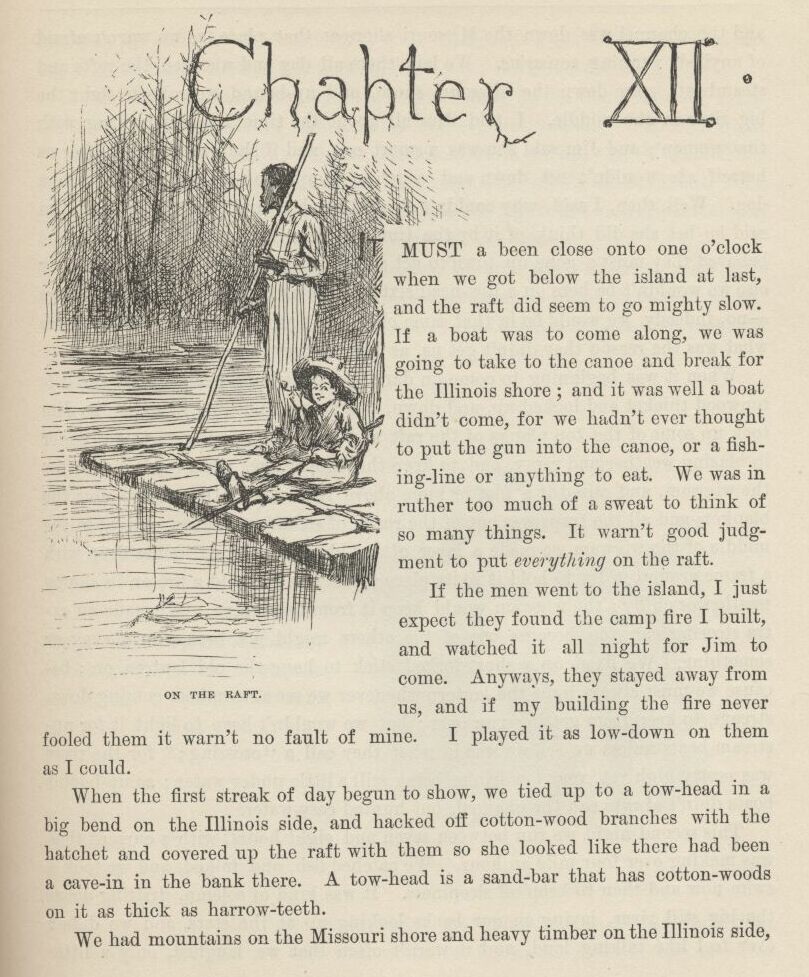
CHAPTER XII.
It must a been close on to one o’clock when we got below the island at last,and the raft did seem to go mighty slow. If a boat was to come along we wasgoing to take to the canoe and break for the Illinois shore; and it was well aboat didn’t come, for we hadn’t ever thought to put the gun in the canoe, or afishing-line, or anything to eat. We was in ruther too much of a sweat to thinkof so many things. It warn’t good judgment to put everythingon theraft.
If the men went to the island I just expect they found the camp fire I built,and watched it all night for Jim to come. Anyways, they stayed away from us,and if my building the fire never fooled them it warn’t no fault of mine. Iplayed it as low down on them as I could.
When the first streak of day began to show we tied up to a tow-head in a bigbend on the Illinois side, and hacked off cottonwood branches with the hatchet,and covered up the raft with them so she looked like there had been a cave-inin the bank there. A tow-head is a sandbar that has cottonwoods on it as thickas harrow-teeth.
We had mountains on the Missouri shore and heavy timber on the Illinois side,and the channel was down the Missouri shore at that place, so we warn’t afraidof anybody running across us. We laid there all day, and watched the rafts andsteamboats spin down the Missouri shore, and up-bound steamboats fight the bigriver in the middle. I told Jim all about the time I had jabbering with thatwoman; and Jim said she was a smart one, and if she was to start after usherself shewouldn’t set down and watch a camp fire—no, sir, she’d fetcha dog. Well, then, I said, why couldn’t she tell her husband to fetch a dog?Jim said he bet she did think of it by the time the men was ready to start, andhe believed they must a gone up-town to get a dog and so they lost all thattime, or else we wouldn’t be here on a tow-head sixteen or seventeen mile belowthe village—no, indeedy, we would be in that same old town again. So I said Ididn’t care what was the reason they didn’t get us as long as they didn’t.
When it was beginning to come on dark we poked our heads out of the cottonwoodthicket, and looked up and down and across; nothing in sight; so Jim took upsome of the top planks of the raft and built a snug wigwam to get under inblazing weather and rainy, and to keep the things dry. Jim made a floor for thewigwam, and raised it a foot or more above the level of the raft, so now theblankets and all the traps was out of reach of steamboat waves. Right in themiddle of the wigwam we made a layer of dirt about five or six inches deep witha frame around it for to hold it to its place; this was to build a fire on insloppy weather or chilly; the wigwam would keep it from being seen. We made anextra steering-oar, too, because one of the others might get broke on a snag orsomething. We fixed up a short forked stick to hang the old lantern on, becausewe must always light the lantern whenever we see a steamboat comingdown-stream, to keep from getting run over; but we wouldn’t have to light itfor up-stream boats unless we see we was in what they call a “crossing”; forthe river was pretty high yet, very low banks being still a little under water;so up-bound boats didn’t always run the channel, but hunted easy water.
This second night we run between seven and eight hours, with a current that wasmaking over four mile an hour. We catched fish and talked, and we took a swimnow and then to keep off sleepiness. It was kind of solemn, drifting down thebig, still river, laying on our backs looking up at the stars, and we didn’tever feel like talking loud, and it warn’t often that we laughed—only a littlekind of a low chuckle. We had mighty good weather as a general thing, andnothing ever happened to us at all—that night, nor the next, nor the next.
Every night we passed towns, some of them away up on black hillsides, nothingbut just a shiny bed of lights; not a house could you see. The fifth night wepassed St. Louis, and it was like the whole world lit up. In St. Petersburgthey used to say there was twenty or thirty thousand people in St. Louis, but Inever believed it till I see that wonderful spread of lights at two o’clockthat still night. There warn’t a sound there; everybody was asleep.
Every night now I used to slip ashore towards ten o’clock at some littlevillage, and buy ten or fifteen cents’ worth of meal or bacon or other stuff toeat; and sometimes I lifted a chicken that warn’t roosting comfortable, andtook him along. Pap always said, take a chicken when you get a chance, becauseif you don’t want him yourself you can easy find somebody that does, and a gooddeed ain’t ever forgot. I never see pap when he didn’t want the chickenhimself, but that is what he used to say, anyway.
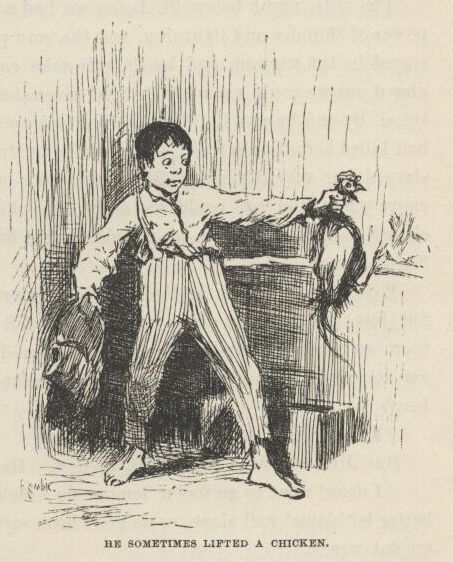
Mornings before daylight I slipped into cornfields and borrowed a watermelon,or a mushmelon, or a punkin, or some new corn, or things of that kind. Papalways said it warn’t no harm to borrow things if you was meaning to pay themback some time; but the widow said it warn’t anything but a soft name forstealing, and no decent body would do it. Jim said he reckoned the widow waspartly right and pap was partly right; so the best way would be for us to pickout two or three things from the list and say we wouldn’t borrow them anymore—then he reckoned it wouldn’t be no harm to borrow the others. So we talkedit over all one night, drifting along down the river, trying to make up ourminds whether to drop the watermelons, or the cantelopes, or the mushmelons, orwhat. But towards daylight we got it all settled satisfactory, and concluded todrop crabapples and p’simmons. We warn’t feeling just right before that, but itwas all comfortable now. I was glad the way it come out, too, becausecrabapples ain’t ever good, and the p’simmons wouldn’t be ripe for two or threemonths yet.
We shot a water-fowl, now and then, that got up too early in the morning ordidn’t go to bed early enough in the evening. Take it all round, we livedpretty high.
The fifth night below St. Louis we had a big storm after midnight, with a powerof thunder and lightning, and the rain poured down in a solid sheet. We stayedin the wigwam and let the raft take care of itself. When the lightning glaredout we could see a big straight river ahead, and high, rocky bluffs on bothsides. By-and-by says I, “Hel-lo, Jim, looky yonder!” It was a steamboatthat had killed herself on a rock. We was drifting straight down for her. Thelightning showed her very distinct. She was leaning over, with part of herupper deck above water, and you could see every little chimbly-guy clean andclear, and a chair by the big bell, with an old slouch hat hanging on the backof it, when the flashes come.
Well, it being away in the night and stormy, and all so mysterious-like, I feltjust the way any other boy would a felt when I see that wreck laying there somournful and lonesome in the middle of the river. I wanted to get aboard of herand slink around a little, and see what there was there. So I says:
“Le’s land on her, Jim.”
But Jim was dead against it at first. He says:
“I doan’ want to go fool’n ’long er no wrack. We’s doin’ blame’ well, en webetter let blame’ well alone, as de good book says. Like as not dey’s awatchman on dat wrack.”
“Watchman your grandmother,” I says; “there ain’t nothing to watch but thetexas and the pilot-house; and do you reckon anybody’s going to resk his lifefor a texas and a pilot-house such a night as this, when it’s likely to breakup and wash off down the river any minute?” Jim couldn’t say nothing to that,so he didn’t try. “And besides,” I says, “we might borrow something worthhaving out of the captain’s stateroom. Seegars, Ibet you—and cost fivecents apiece, solid cash. Steamboat captains is always rich, and get sixtydollars a month, and theydon’t care a cent what a thing costs, youknow, long as they want it. Stick a candle in your pocket; I can’t rest, Jim,till we give her a rummaging. Do you reckon Tom Sawyer would ever go by thisthing? Not for pie, he wouldn’t. He’d call it an adventure—that’s what he’dcall it; and he’d land on that wreck if it was his last act. And wouldn’t hethrow style into it?—wouldn’t he spread himself, nor nothing? Why, you’d thinkit was Christopher C’lumbus discovering Kingdom-Come. I wish Tom Sawyerwashere.”
Jim he grumbled a little, but give in. He said we mustn’t talk any more than wecould help, and then talk mighty low. The lightning showed us the wreck againjust in time, and we fetched the stabboard derrick, and made fast there.
The deck was high out here. We went sneaking down the slope of it to labboard,in the dark, towards the texas, feeling our way slow with our feet, andspreading our hands out to fend off the guys, for it was so dark we couldn’tsee no sign of them. Pretty soon we struck the forward end of the skylight, andclumb on to it; and the next step fetched us in front of the captain’s door,which was open, and by Jimminy, away down through the texas-hall we see alight! and all in the same second we seem to hear low voices in yonder!
Jim whispered and said he was feeling powerful sick, and told me to come along.I says, all right, and was going to start for the raft; but just then I heard avoice wail out and say:
“Oh, please don’t, boys; I swear I won’t ever tell!”
Another voice said, pretty loud:
“It’s a lie, Jim Turner. You’ve acted this way before. You always want more’nyour share of the truck, and you’ve always got it, too, because you’ve swore ’tif you didn’t you’d tell. But this time you’ve said it jest one time too many.You’re the meanest, treacherousest hound in this country.”
By this time Jim was gone for the raft. I was just a-biling with curiosity; andI says to myself, Tom Sawyer wouldn’t back out now, and so I won’t either; I’ma-going to see what’s going on here. So I dropped on my hands and knees in thelittle passage, and crept aft in the dark till there warn’t but one stateroombetwixt me and the cross-hall of the texas. Then in there I see a man stretchedon the floor and tied hand and foot, and two men standing over him, and one ofthem had a dim lantern in his hand, and the other one had a pistol. This onekept pointing the pistol at the man’s head on the floor, and saying:
“I’d liketo! And I orter, too—a mean skunk!”
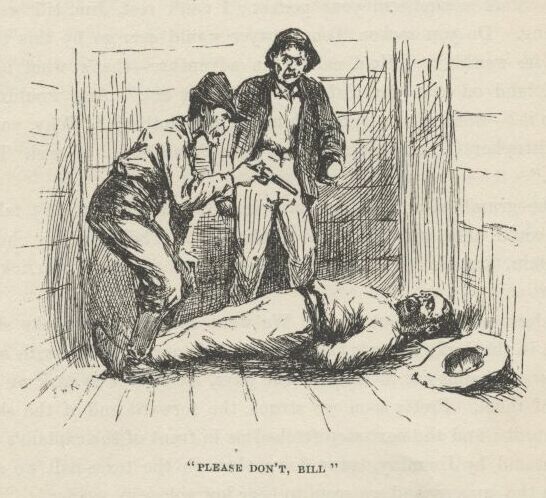
The man on the floor would shrivel up and say, “Oh, please don’t, Bill; Ihain’t ever goin’ to tell.”
And every time he said that the man with the lantern would laugh and say:
“’Deed you ain’t!You never said no truer thing ’n that, you bet you.”And once he said: “Hear him beg! and yit if we hadn’t got the best of him andtied him he’d a killed us both. And what for?Jist for noth’n. Jistbecause we stood on our rights—that’s what for. But I lay you ain’ta-goin’ to threaten nobody any more, Jim Turner. Put upthat pistol,Bill.”
Bill says:
“I don’t want to, Jake Packard. I’m for killin’ him—and didn’t he kill oldHatfield jist the same way—and don’t he deserve it?”
“But I don’t wanthim killed, and I’ve got my reasons for it.”
“Bless yo’ heart for them words, Jake Packard! I’ll never forgit you long’s Ilive!” says the man on the floor, sort of blubbering.
Packard didn’t take no notice of that, but hung up his lantern on a nail andstarted towards where I was there in the dark, and motioned Bill to come. Icrawfished as fast as I could about two yards, but the boat slanted so that Icouldn’t make very good time; so to keep from getting run over and catched Icrawled into a stateroom on the upper side. The man came a-pawing along in thedark, and when Packard got to my stateroom, he says:
“Here—come in here.”
And in he come, and Bill after him. But before they got in I was up in theupper berth, cornered, and sorry I come. Then they stood there, with theirhands on the ledge of the berth, and talked. I couldn’t see them, but I couldtell where they was by the whisky they’d been having. I was glad I didn’t drinkwhisky; but it wouldn’t made much difference anyway, because most of the timethey couldn’t a treed me because I didn’t breathe. I was too scared. And,besides, a body couldn’tbreathe and hear such talk. They talked low andearnest. Bill wanted to kill Turner. He says:
“He’s said he’ll tell, and he will. If we was to give both our shares to himnowit wouldn’t make no difference after the row and the way we’veserved him. Shore’s you’re born, he’ll turn State’s evidence; now you hearme. I’m for putting him out of his troubles.”
“So’m I,” says Packard, very quiet.
“Blame it, I’d sorter begun to think you wasn’t. Well, then, that’s all right.Le’s go and do it.”
“Hold on a minute; I hain’t had my say yit. You listen to me. Shooting’s good,but there’s quieter ways if the thing’s gotto be done. But whatIsay is this: it ain’t good sense to go court’n around after a halterif you can git at what you’re up to in some way that’s jist as good and at thesame time don’t bring you into no resks. Ain’t that so?”
“You bet it is. But how you goin’ to manage it this time?”
“Well, my idea is this: we’ll rustle around and gather up whatever pickinswe’ve overlooked in the staterooms, and shove for shore and hide the truck.Then we’ll wait. Now I say it ain’t a-goin’ to be more’n two hours befo’ thiswrack breaks up and washes off down the river. See? He’ll be drownded, andwon’t have nobody to blame for it but his own self. I reckon that’s aconsiderble sight better ’n killin’ of him. I’m unfavorable to killin’ a man aslong as you can git aroun’ it; it ain’t good sense, it ain’t good morals. Ain’tI right?”

“Yes, I reck’n you are. But s’pose she don’tbreak up and wash off?”
“Well, we can wait the two hours anyway and see, can’t we?”
“All right, then; come along.”
So they started, and I lit out, all in a cold sweat, and scrambled forward. Itwas dark as pitch there; but I said, in a kind of a coarse whisper, “Jim!” andhe answered up, right at my elbow, with a sort of a moan, and I says:
“Quick, Jim, it ain’t no time for fooling around and moaning; there’s a gang ofmurderers in yonder, and if we don’t hunt up their boat and set her driftingdown the river so these fellows can’t get away from the wreck there’s one of’em going to be in a bad fix. But if we find their boat we can put allof ’em in a bad fix—for the Sheriff ’ll get ’em. Quick—hurry! I’ll hunt thelabboard side, you hunt the stabboard. You start at the raft, and—”
“Oh, my lordy, lordy! Raf’?Dey ain’ no raf’ no mo’; she done brokeloose en gone I—en here we is!”
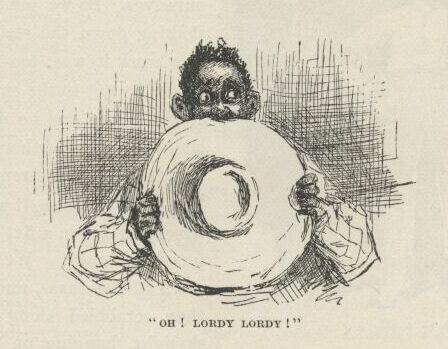
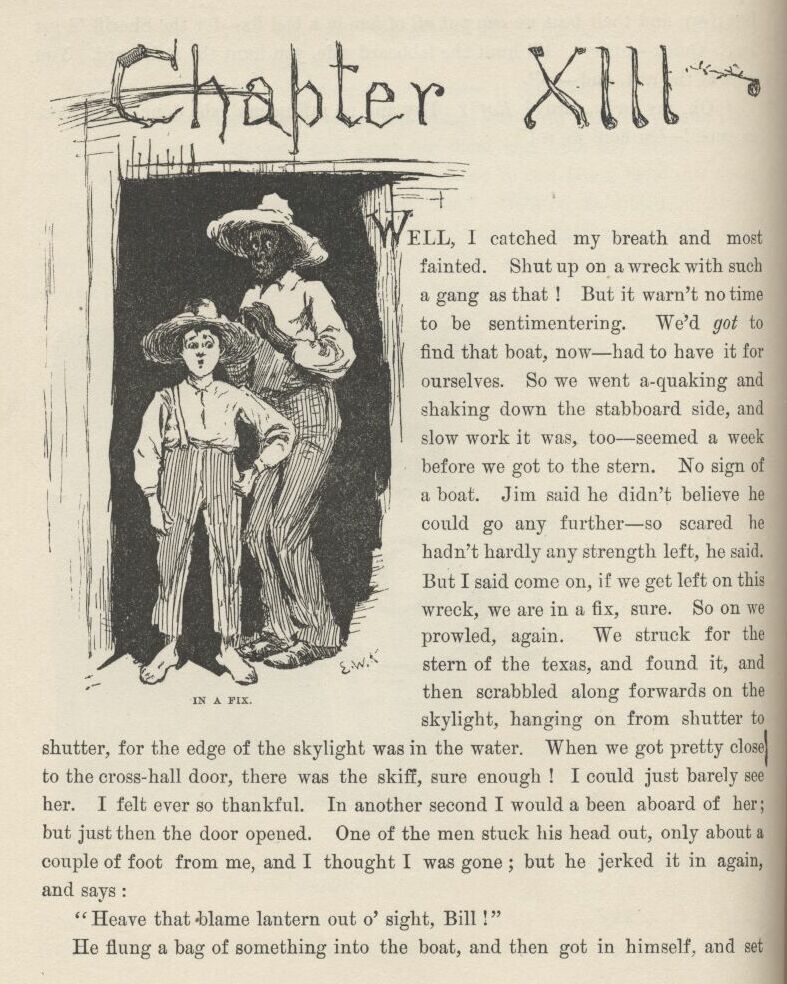
CHAPTER XIII.
Well, I catched my breath and most fainted. Shut up on a wreck with such a gangas that! But it warn’t no time to be sentimentering. We’d gotto findthat boat now—had to have it for ourselves. So we went a-quaking and shakingdown the stabboard side, and slow work it was, too—seemed a week before we gotto the stern. No sign of a boat. Jim said he didn’t believe he could go anyfurther—so scared he hadn’t hardly any strength left, he said. But I said, comeon, if we get left on this wreck we are in a fix, sure. So on we prowled again.We struck for the stern of the texas, and found it, and then scrabbled alongforwards on the skylight, hanging on from shutter to shutter, for the edge ofthe skylight was in the water. When we got pretty close to the cross-hall door,there was the skiff, sure enough! I could just barely see her. I felt ever sothankful. In another second I would a been aboard of her, but just then thedoor opened. One of the men stuck his head out only about a couple of foot fromme, and I thought I was gone; but he jerked it in again, and says:
“Heave that blame lantern out o’ sight, Bill!”
He flung a bag of something into the boat, and then got in himself and setdown. It was Packard. Then Bill hecome out and got in. Packard says, ina low voice:
“All ready—shove off!”
I couldn’t hardly hang on to the shutters, I was so weak. But Bill says:
“Hold on—’d you go through him?”
“No. Didn’t you?”
“No. So he’s got his share o’ the cash yet.”
“Well, then, come along; no use to take truck and leave money.”
“Say, won’t he suspicion what we’re up to?”
“Maybe he won’t. But we got to have it anyway. Come along.”
So they got out and went in.
The door slammed to because it was on the careened side; and in a half second Iwas in the boat, and Jim come tumbling after me. I out with my knife and cutthe rope, and away we went!
We didn’t touch an oar, and we didn’t speak nor whisper, nor hardly evenbreathe. We went gliding swift along, dead silent, past the tip of thepaddle-box, and past the stern; then in a second or two more we was a hundredyards below the wreck, and the darkness soaked her up, every last sign of her,and we was safe, and knowed it.
When we was three or four hundred yards down-stream we see the lantern showlike a little spark at the texas door for a second, and we knowed by that thatthe rascals had missed their boat, and was beginning to understand that theywas in just as much trouble now as Jim Turner was.
Then Jim manned the oars, and we took out after our raft. Now was the firsttime that I begun to worry about the men—I reckon I hadn’t had time to before.I begun to think how dreadful it was, even for murderers, to be in such a fix.I says to myself, there ain’t no telling but I might come to be a murderermyself yet, and then how would Ilike it? So says I to Jim:
“The first light we see we’ll land a hundred yards below it or above it, in aplace where it’s a good hiding-place for you and the skiff, and then I’ll goand fix up some kind of a yarn, and get somebody to go for that gang and getthem out of their scrape, so they can be hung when their time comes.”
But that idea was a failure; for pretty soon it begun to storm again, and thistime worse than ever. The rain poured down, and never a light showed; everybodyin bed, I reckon. We boomed along down the river, watching for lights andwatching for our raft. After a long time the rain let up, but the cloudsstayed, and the lightning kept whimpering, and by-and-by a flash showed us ablack thing ahead, floating, and we made for it.
It was the raft, and mighty glad was we to get aboard of it again. We seen alight now away down to the right, on shore. So I said I would go for it. Theskiff was half full of plunder which that gang had stole there on the wreck. Wehustled it on to the raft in a pile, and I told Jim to float along down, andshow a light when he judged he had gone about two mile, and keep it burningtill I come; then I manned my oars and shoved for the light. As I got downtowards it, three or four more showed—up on a hillside. It was a village. Iclosed in above the shore light, and laid on my oars and floated. As I went by,I see it was a lantern hanging on the jackstaff of a double-hull ferry-boat. Iskimmed around for the watchman, a-wondering whereabouts he slept; andby-and-by I found him roosting on the bitts, forward, with his head downbetween his knees. I gave his shoulder two or three little shoves, and begun tocry.
He stirred up, in a kind of a startlish way; but when he see it was only me, hetook a good gap and stretch, and then he says:
“Hello, what’s up? Don’t cry, bub. What’s the trouble?”
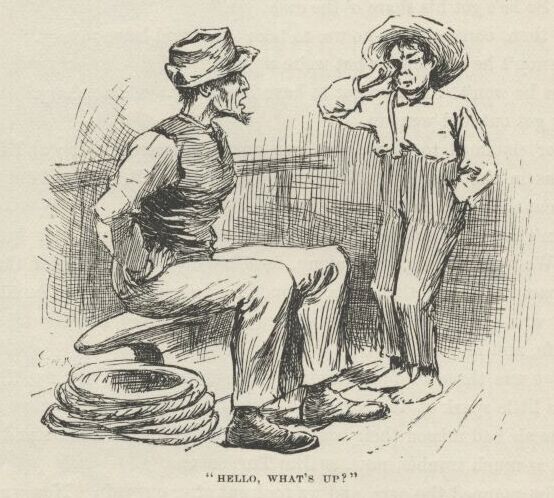
I says:
“Pap, and mam, and sis, and—”
Then I broke down. He says:
“Oh, dang it now, don’ttake on so; we all has to have our troubles, andthis’n ’ll come out all right. What’s the matter with ’em?”
“They’re—they’re—are you the watchman of the boat?”
“Yes,” he says, kind of pretty-well-satisfied like. “I’m the captain and theowner and the mate and the pilot and watchman and head deck-hand; and sometimesI’m the freight and passengers. I ain’t as rich as old Jim Hornback, and Ican’t be so blame’ generous and good to Tom, Dick and Harry as what he is, andslam around money the way he does; but I’ve told him a many a time ’t Iwouldn’t trade places with him; for, says I, a sailor’s life’s the life for me,and I’m derned if I’dlive two mile out o’ town, where there ain’tnothing ever goin’ on, not for all his spondulicks and as much more on top ofit. Says I—”
I broke in and says:
“They’re in an awful peck of trouble, and—”
“Whois?”
“Why, pap and mam and sis and Miss Hooker; and if you’d take your ferry-boat andgo up there—”
“Up where? Where are they?”
“On the wreck.”
“What wreck?”
“Why, there ain’t but one.”
“What, you don’t mean the Walter Scott?”
“Yes.”
“Good land! what are they doin’ there, for gracious sakes?”
“Well, they didn’t go there a-purpose.”
“I bet they didn’t! Why, great goodness, there ain’t no chance for ’em if theydon’t git off mighty quick! Why, how in the nation did they ever git into sucha scrape?”
“Easy enough. Miss Hooker was a-visiting up there to the town—”
“Yes, Booth’s Landing—go on.”
“She was a-visiting there at Booth’s Landing, and just in the edge of theevening she started over with her nigger woman in the horse-ferry to stay allnight at her friend’s house, Miss What-you-may-call-her I disremember hername—and they lost their steering-oar, and swung around and went a-floatingdown, stern first, about two mile, and saddle-baggsed on the wreck, and theferryman and the nigger woman and the horses was all lost, but Miss Hooker shemade a grab and got aboard the wreck. Well, about an hour after dark we comealong down in our trading-scow, and it was so dark we didn’t notice the wrecktill we was right on it; and so wesaddle-baggsed; but all of us wassaved but Bill Whipple—and oh, he wasthe best cretur!—I most wish’t ithad been me, I do.”
“My George! It’s the beatenest thing I ever struck. And thenwhat didyou all do?”
“Well, we hollered and took on, but it’s so wide there we couldn’t make nobodyhear. So pap said somebody got to get ashore and get help somehow. I was theonly one that could swim, so I made a dash for it, and Miss Hooker she said ifI didn’t strike help sooner, come here and hunt up her uncle, and he’d fix thething. I made the land about a mile below, and been fooling along ever since,trying to get people to do something, but they said, ‘What, in such a night andsuch a current? There ain’t no sense in it; go for the steam ferry.’ Now ifyou’ll go and—”
“By Jackson, I’d liketo, and, blame it, I don’t know but I will; butwho in the dingnation’s a-going’ to payfor it? Do you reckon your pap—”
“Why that’sall right. Miss Hooker she tole me, particular, thather uncle Hornback—”
“Great guns! is heher uncle? Looky here, you break for that light overyonder-way, and turn out west when you git there, and about a quarter of a mileout you’ll come to the tavern; tell ’em to dart you out to Jim Hornback’s, andhe’ll foot the bill. And don’t you fool around any, because he’ll want to knowthe news. Tell him I’ll have his niece all safe before he can get to town. Humpyourself, now; I’m a-going up around the corner here to roust out my engineer.”
I struck for the light, but as soon as he turned the corner I went back and gotinto my skiff and bailed her out, and then pulled up shore in the easy waterabout six hundred yards, and tucked myself in among some woodboats; for Icouldn’t rest easy till I could see the ferry-boat start. But take it allaround, I was feeling ruther comfortable on accounts of taking all this troublefor that gang, for not many would a done it. I wished the widow knowed aboutit. I judged she would be proud of me for helping these rapscallions, becauserapscallions and dead beats is the kind the widow and good people takes themost interest in.
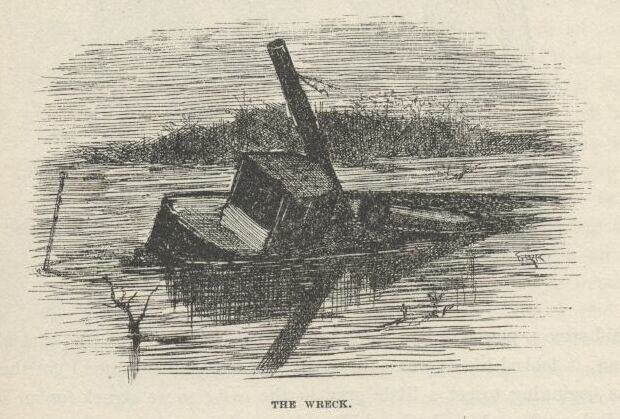
Well, before long, here comes the wreck, dim and dusky, sliding along down! Akind of cold shiver went through me, and then I struck out for her. She wasvery deep, and I see in a minute there warn’t much chance for anybody beingalive in her. I pulled all around her and hollered a little, but there wasn’tany answer; all dead still. I felt a little bit heavy-hearted about the gang,but not much, for I reckoned if they could stand it, I could.
Then here comes the ferry-boat; so I shoved for the middle of the river on along down-stream slant; and when I judged I was out of eye-reach, I laid on myoars, and looked back and see her go and smell around the wreck for MissHooker’s remainders, because the captain would know her uncle Hornback wouldwant them; and then pretty soon the ferry-boat give it up and went for theshore, and I laid into my work and went a-booming down the river.
It did seem a powerful long time before Jim’s light showed up; and when it didshow, it looked like it was a thousand mile off. By the time I got there the skywas beginning to get a little gray in the east; so we struck for an island, andhid the raft, and sunk the skiff, and turned in and slept like dead people.
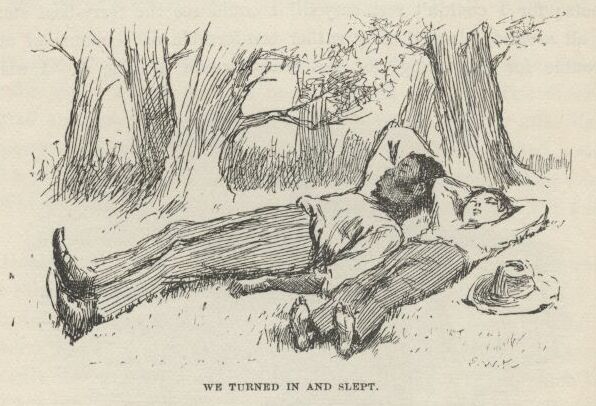

CHAPTER XIV.
By-and-by, when we got up, we turned over the truck the gang had stole off ofthe wreck, and found boots, and blankets, and clothes, and all sorts of otherthings, and a lot of books, and a spyglass, and three boxes of seegars. Wehadn’t ever been this rich before in neither of our lives. The seegars wasprime. We laid off all the afternoon in the woods talking, and me reading thebooks, and having a general good time. I told Jim all about what happenedinside the wreck and at the ferry-boat, and I said these kinds of things wasadventures; but he said he didn’t want no more adventures. He said that when Iwent in the texas and he crawled back to get on the raft and found her gone, henearly died; because he judged it was all up with him, anyway it could befixed; for if he didn’t get saved he would get drownded; and if he did getsaved, whoever saved him would send him back home so as to get the reward, andthen Miss Watson would sell him South, sure. Well, he was right; he was mostalways right; he had an uncommon level head, for a nigger.
I read considerable to Jim about kings and dukes and earls and such, and howgaudy they dressed, and how much style they put on, and called each other yourmajesty, and your grace, and your lordship, and so on, ’stead of mister; andJim’s eyes bugged out, and he was interested. He says:
“I didn’ know dey was so many un um. I hain’t hearn ’bout none un um, skasely,but ole King Sollermun, onless you counts dem kings dat’s in a pack er k’yards.How much do a king git?”
“Get?” I says; “why, they get a thousand dollars a month if they want it; theycan have just as much as they want; everything belongs to them.”
“Ain’dat gay? En what dey got to do, Huck?”
“Theydon’t do nothing! Why, how you talk! They just set around.”
“No; is dat so?”
“Of course it is. They just set around—except, maybe, when there’s a war; thenthey go to the war. But other times they just lazy around; or go hawking—justhawking and sp— Sh!—d’ you hear a noise?”
We skipped out and looked; but it warn’t nothing but the flutter of asteamboat’s wheel away down, coming around the point; so we come back.
“Yes,” says I, “and other times, when things is dull, they fuss with theparlyment; and if everybody don’t go just so he whacks their heads off. Butmostly they hang round the harem.”
“Roun’ de which?”
“Harem.”
“What’s de harem?”
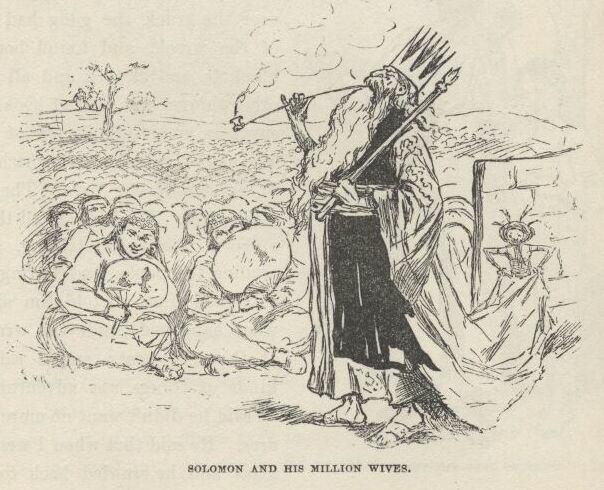
“The place where he keeps his wives. Don’t you know about the harem? Solomonhad one; he had about a million wives.”
“Why, yes, dat’s so; I—I’d done forgot it. A harem’s a bo’d’n-house, I reck’n.Mos’ likely dey has rackety times in de nussery. En I reck’n de wives quarrelsconsidable; en dat ’crease de racket. Yit dey say Sollermun de wises’ man datever live’. I doan’ take no stock in dat. Bekase why: would a wise man want tolive in de mids’ er sich a blim-blammin’ all de time? No—’deed he wouldn’t. Awise man ’ud take en buil’ a biler-factry; en den he could shet downdebiler-factry when he want to res’.”
“Well, but he wasthe wisest man, anyway; because the widow she told meso, her own self.”
“I doan k’yer what de widder say, he warn’tno wise man nuther. He hadsome er de dad-fetchedes’ ways I ever see. Does you know ’bout dat chile dat he’uz gwyne to chop in two?”
“Yes, the widow told me all about it.”
“Well, den! Warn’ dat de beatenes’ notion in de worl’? You jes’ take enlook at it a minute. Dah’s de stump, dah—dat’s one er de women; heah’syou—dat’s de yuther one; I’s Sollermun; en dish yer dollar bill’s de chile.Bofe un you claims it. What does I do? Does I shin aroun’ mongs’ de neighborsen fine out which un you de bill dob’long to, en han’ it over to deright one, all safe en soun’, de way dat anybody dat had any gumption would?No; I take en whack de bill in two, en give half un it to you, en deyuther half to de yuther woman. Dat’s de way Sollermun was gwyne to do wid dechile. Now I want to ast you: what’s de use er dat half a bill?—can’t buynoth’n wid it. En what use is a half a chile? I wouldn’ give a dern for amillion un um.”
“But hang it, Jim, you’ve clean missed the point—blame it, you’ve missed it athousand mile.”
“Who? Me? Go ’long. Doan’ talk to me’bout yo’ pints. I reck’n I knowssense when I sees it; en dey ain’ no sense in sich doin’s as dat. De ’sputewarn’t ’bout a half a chile, de ’spute was ’bout a whole chile; en de man datthink he kin settle a ’spute ’bout a whole chile wid a half a chile doan’ knowenough to come in out’n de rain. Doan’ talk to me ’bout Sollermun, Huck, Iknows him by de back.”

“But I tell you you don’t get the point.”
“Blame de point! I reck’n I knows what I knows. En mine you, de realpint is down furder—it’s down deeper. It lays in de way Sollermun was raised.You take a man dat’s got on’y one or two chillen; is dat man gwyne to bewaseful o’ chillen? No, he ain’t; he can’t ’ford it. Heknow how tovalue ’em. But you take a man dat’s got ’bout five million chillen runnin’roun’ de house, en it’s diffunt. Heas soon chop a chile in two as acat. Dey’s plenty mo’. A chile er two, mo’ er less, warn’t no consekens toSollermun, dad fatch him!”
I never see such a nigger. If he got a notion in his head once, there warn’t nogetting it out again. He was the most down on Solomon of any nigger I ever see.So I went to talking about other kings, and let Solomon slide. I told aboutLouis Sixteenth that got his head cut off in France long time ago; and abouthis little boy the dolphin, that would a been a king, but they took and shuthim up in jail, and some say he died there.
“Po’ little chap.”
“But some says he got out and got away, and come to America.”
“Dat’s good! But he’ll be pooty lonesome—dey ain’ no kings here, is dey, Huck?”
“No.”
“Den he cain’t git no situation. What he gwyne to do?”
“Well, I don’t know. Some of them gets on the police, and some of them learnspeople how to talk French.”
“Why, Huck, doan’ de French people talk de same way we does?”
“No, Jim; you couldn’t understand a word they said—not a single word.”
“Well, now, I be ding-busted! How do dat come?”
“Idon’t know; but it’s so. I got some of their jabber out of a book.S’pose a man was to come to you and say Polly-voo-franzy—what would youthink?”
“I wouldn’ think nuff’n; I’d take en bust him over de head—dat is, if he warn’twhite. I wouldn’t ’low no nigger to call me dat.”
“Shucks, it ain’t calling you anything. It’s only saying, do you know how totalk French?”
“Well, den, why couldn’t he sayit?”
“Why, he isa-saying it. That’s a Frenchman’s wayof saying it.”
“Well, it’s a blame ridicklous way, en I doan’ want to hear no mo’ ’bout it.Dey ain’ no sense in it.”
“Looky here, Jim; does a cat talk like we do?”
“No, a cat don’t.”
“Well, does a cow?”
“No, a cow don’t, nuther.”
“Does a cat talk like a cow, or a cow talk like a cat?”
“No, dey don’t.”
“It’s natural and right for ’em to talk different from each other, ain’t it?”
“’Course.”
“And ain’t it natural and right for a cat and a cow to talk different fromus?”
“Why, mos’ sholy it is.”
“Well, then, why ain’t it natural and right for a Frenchmanto talkdifferent from us? You answer me that.”
“Is a cat a man, Huck?”
“No.”
“Well, den, dey ain’t no sense in a cat talkin’ like a man. Is a cow a man?—eris a cow a cat?”
“No, she ain’t either of them.”
“Well, den, she ain’t got no business to talk like either one er the yuther of’em. Is a Frenchman a man?”
“Yes.”
“Well, den! Dad blame it, why doan’ he talklike a man? Youanswer me dat!”
I see it warn’t no use wasting words—you can’t learn a nigger to argue. So Iquit.
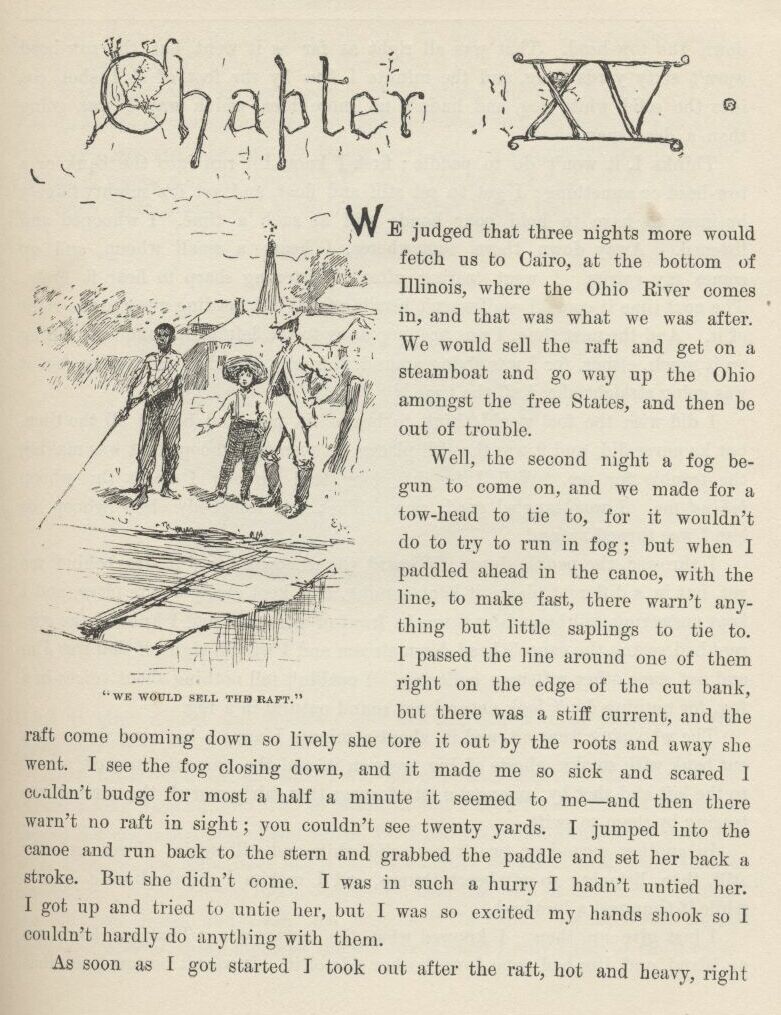
CHAPTER XV.
We judged that three nights more would fetch us to Cairo, at the bottom ofIllinois, where the Ohio River comes in, and that was what we was after. Wewould sell the raft and get on a steamboat and go way up the Ohio amongst thefree States, and then be out of trouble.
Well, the second night a fog begun to come on, and we made for a tow-head to tieto, for it wouldn’t do to try to run in a fog; but when I paddled ahead in thecanoe, with the line to make fast, there warn’t anything but little saplings totie to. I passed the line around one of them right on the edge of the cut bank,but there was a stiff current, and the raft come booming down so lively shetore it out by the roots and away she went. I see the fog closing down, and itmade me so sick and scared I couldn’t budge for most a half a minute it seemedto me—and then there warn’t no raft in sight; you couldn’t see twenty yards. Ijumped into the canoe and run back to the stern, and grabbed the paddle and sether back a stroke. But she didn’t come. I was in such a hurry I hadn’t untiedher. I got up and tried to untie her, but I was so excited my hands shook so Icouldn’t hardly do anything with them.
As soon as I got started I took out after the raft, hot and heavy, right downthe tow-head. That was all right as far as it went, but the tow-head warn’t sixtyyards long, and the minute I flew by the foot of it I shot out into the solidwhite fog, and hadn’t no more idea which way I was going than a dead man.
Thinks I, it won’t do to paddle; first I know I’ll run into the bank or atow-head or something; I got to set still and float, and yet it’s mighty fidgetybusiness to have to hold your hands still at such a time. I whooped andlistened. Away down there somewheres I hears a small whoop, and up comes myspirits. I went tearing after it, listening sharp to hear it again. The nexttime it come, I see I warn’t heading for it, but heading away to the right ofit. And the next time I was heading away to the left of it—and not gaining onit much either, for I was flying around, this way and that and t’other, but itwas going straight ahead all the time.
I did wish the fool would think to beat a tin pan, and beat it all the time,but he never did, and it was the still places between the whoops that wasmaking the trouble for me. Well, I fought along, and directly I hears the whoopbehindme. I was tangled good now. That was somebody else’s whoop, orelse I was turned around.
I throwed the paddle down. I heard the whoop again; it was behind me yet, butin a different place; it kept coming, and kept changing its place, and I keptanswering, till by-and-by it was in front of me again, and I knowed the currenthad swung the canoe’s head down-stream, and I was all right if that was Jim andnot some other raftsman hollering. I couldn’t tell nothing about voices in afog, for nothing don’t look natural nor sound natural in a fog.
The whooping went on, and in about a minute I come a-booming down on a cut bankwith smoky ghosts of big trees on it, and the current throwed me off to theleft and shot by, amongst a lot of snags that fairly roared, the current wastearing by them so swift.
In another second or two it was solid white and still again. I set perfectlystill then, listening to my heart thump, and I reckon I didn’t draw a breathwhile it thumped a hundred.
I just give up then. I knowed what the matter was. That cut bank was an island,and Jim had gone down t’other side of it. It warn’t no tow-head that you couldfloat by in ten minutes. It had the big timber of a regular island; it might befive or six miles long and more than half a mile wide.
I kept quiet, with my ears cocked, about fifteen minutes, I reckon. I wasfloating along, of course, four or five miles an hour; but you don’t ever thinkof that. No, you feellike you are laying dead still on the water; andif a little glimpse of a snag slips by you don’t think to yourself how fastyou’regoing, but you catch your breath and think, my! how that snag’stearing along. If you think it ain’t dismal and lonesome out in a fog that wayby yourself in the night, you try it once—you’ll see.
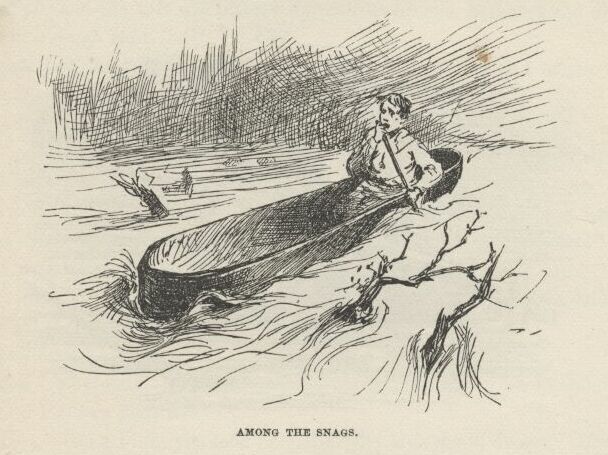
Next, for about a half an hour, I whoops now and then; at last I hears theanswer a long ways off, and tries to follow it, but I couldn’t do it, anddirectly I judged I’d got into a nest of tow-heads, for I had little dimglimpses of them on both sides of me—sometimes just a narrow channel between,and some that I couldn’t see I knowed was there because I’d hear the wash ofthe current against the old dead brush and trash that hung over the banks.Well, I warn’t long loosing the whoops down amongst the tow-heads; and I onlytried to chase them a little while, anyway, because it was worse than chasing aJack-o’-lantern. You never knowed a sound dodge around so, and swap places soquick and so much.
I had to claw away from the bank pretty lively four or five times, to keep fromknocking the islands out of the river; and so I judged the raft must be buttinginto the bank every now and then, or else it would get further ahead and clearout of hearing—it was floating a little faster than what I was.
Well, I seemed to be in the open river again by-and-by, but I couldn’t hear nosign of a whoop nowheres. I reckoned Jim had fetched up on a snag, maybe, andit was all up with him. I was good and tired, so I laid down in the canoe andsaid I wouldn’t bother no more. I didn’t want to go to sleep, of course; but Iwas so sleepy I couldn’t help it; so I thought I would take jest one littlecat-nap.

But I reckon it was more than a cat-nap, for when I waked up the stars wasshining bright, the fog was all gone, and I was spinning down a big bend sternfirst. First I didn’t know where I was; I thought I was dreaming; and whenthings began to come back to me they seemed to come up dim out of last week.
It was a monstrous big river here, with the tallest and the thickest kind oftimber on both banks; just a solid wall, as well as I could see by the stars. Ilooked away down-stream, and seen a black speck on the water. I took after it;but when I got to it it warn’t nothing but a couple of sawlogs made fasttogether. Then I see another speck, and chased that; then another, and thistime I was right. It was the raft.
When I got to it Jim was setting there with his head down between his knees,asleep, with his right arm hanging over the steering-oar. The other oar wassmashed off, and the raft was littered up with leaves and branches and dirt. Soshe’d had a rough time.
I made fast and laid down under Jim’s nose on the raft, and began to gap, andstretch my fists out against Jim, and says:
“Hello, Jim, have I been asleep? Why didn’t you stir me up?”
“Goodness gracious, is dat you, Huck? En you ain’ dead—you ain’ drownded—you’sback agin? It’s too good for true, honey, it’s too good for true. Lemme look atyou chile, lemme feel o’ you. No, you ain’ dead! you’s back agin, ’live ensoun’, jis de same ole Huck—de same ole Huck, thanks to goodness!”
“What’s the matter with you, Jim? You been a-drinking?”
“Drinkin’? Has I ben a-drinkin’? Has I had a chance to be a-drinkin’?”
“Well, then, what makes you talk so wild?”
“How does I talk wild?”
“How?Why, hain’t you been talking about my coming back, and all thatstuff, as if I’d been gone away?”
“Huck—Huck Finn, you look me in de eye; look me in de eye. Hain’tyouben gone away?”
“Gone away? Why, what in the nation do you mean? Ihain’t been goneanywheres. Where would I go to?”
“Well, looky here, boss, dey’s sumf’n wrong, dey is. Is I me, or whoisI? Is I heah, or whah isI? Now dat’s what I wants to know.”
“Well, I think you’re here, plain enough, but I think you’re a tangle-headedold fool, Jim.”
“I is, is I? Well, you answer me dis: Didn’t you tote out de line in de canoefer to make fas’ to de tow-head?”
“No, I didn’t. What tow-head? I hain’t see no tow-head.”
“You hain’t seen no tow-head? Looky here, didn’t de line pull loose en de raf’go a-hummin’ down de river, en leave you en de canoe behine in de fog?”
“What fog?”
“Why, defog!—de fog dat’s been aroun’ all night. En didn’t you whoop,en didn’t I whoop, tell we got mix’ up in de islands en one un us got los’ ent’other one was jis’ as good as los’, ’kase he didn’ know whah he wuz? Endidn’t I bust up agin a lot er dem islands en have a turrible time en mos’ gitdrownded? Now ain’ dat so, boss—ain’t it so? You answer me dat.”
“Well, this is too many for me, Jim. I hain’t seen no fog, nor no islands, norno troubles, nor nothing. I been setting here talking with you all night tillyou went to sleep about ten minutes ago, and I reckon I done the same. Youcouldn’t a got drunk in that time, so of course you’ve been dreaming.”
“Dad fetch it, how is I gwyne to dream all dat in ten minutes?”
“Well, hang it all, you did dream it, because there didn’t any of it happen.”
“But, Huck, it’s all jis’ as plain to me as—”
“It don’t make no difference how plain it is; there ain’t nothing in it. Iknow, because I’ve been here all the time.”
Jim didn’t say nothing for about five minutes, but set there studying over it.Then he says:
“Well, den, I reck’n I did dream it, Huck; but dog my cats ef it ain’t depowerfullest dream I ever see. En I hain’t ever had no dream b’fo’ dat’s tiredme like dis one.”
“Oh, well, that’s all right, because a dream does tire a body like everythingsometimes. But this one was a staving dream; tell me all about it, Jim.”
So Jim went to work and told me the whole thing right through, just as ithappened, only he painted it up considerable. Then he said he must start in and“’terpret” it, because it was sent for a warning. He said the first tow-headstood for a man that would try to do us some good, but the current was anotherman that would get us away from him. The whoops was warnings that would come tous every now and then, and if we didn’t try hard to make out to understand themthey’d just take us into bad luck, ’stead of keeping us out of it. The lot oftow-heads was troubles we was going to get into with quarrelsome people and allkinds of mean folks, but if we minded our business and didn’t talk back andaggravate them, we would pull through and get out of the fog and into the bigclear river, which was the free States, and wouldn’t have no more trouble.
It had clouded up pretty dark just after I got on to the raft, but it wasclearing up again now.
“Oh, well, that’s all interpreted well enough as far as it goes, Jim,” I says;“but what does thesethings stand for?”
It was the leaves and rubbish on the raft and the smashed oar. You could seethem first-rate now.
Jim looked at the trash, and then looked at me, and back at the trash again. Hehad got the dream fixed so strong in his head that he couldn’t seem to shake itloose and get the facts back into its place again right away. But when he didget the thing straightened around he looked at me steady without ever smiling,and says:
“What do dey stan’ for? I’se gwyne to tell you. When I got all wore out widwork, en wid de callin’ for you, en went to sleep, my heart wuz mos’ brokebekase you wuz los’, en I didn’ k’yer no’ mo’ what become er me en de raf’. Enwhen I wake up en fine you back agin, all safe en soun’, de tears come, en Icould a got down on my knees en kiss yo’ foot, I’s so thankful. En all you wuzthinkin’ ’bout wuz how you could make a fool uv ole Jim wid a lie. Dat truckdah is trash;en trash is what people is dat puts dirt on de head er deyfren’s en makes ’em ashamed.”
Then he got up slow and walked to the wigwam, and went in there without sayinganything but that. But that was enough. It made me feel so mean I could almostkissed hisfoot to get him to take it back.
It was fifteen minutes before I could work myself up to go and humble myself toa nigger; but I done it, and I warn’t ever sorry for it afterwards, neither. Ididn’t do him no more mean tricks, and I wouldn’t done that one if I’d a knowedit would make him feel that way.
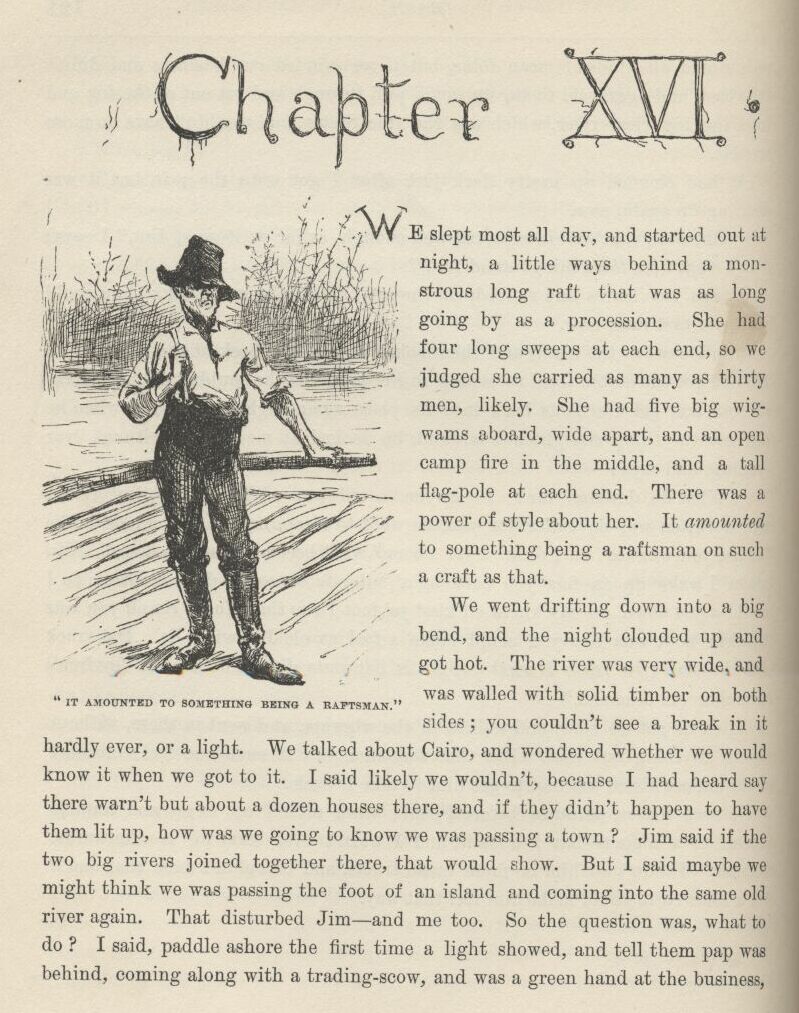
CHAPTER XVI.
We slept most all day, and started out at night, a little ways behind amonstrous long raft that was as long going by as a procession. She had fourlong sweeps at each end, so we judged she carried as many as thirty men,likely. She had five big wigwams aboard, wide apart, and an open camp fire inthe middle, and a tall flag-pole at each end. There was a power of style abouther. It amountedto something being a raftsman on such a craft as that.
We went drifting down into a big bend, and the night clouded up and got hot.The river was very wide, and was walled with solid timber on both sides; youcouldn’t see a break in it hardly ever, or a light. We talked about Cairo, andwondered whether we would know it when we got to it. I said likely we wouldn’t,because I had heard say there warn’t but about a dozen houses there, and ifthey didn’t happen to have them lit up, how was we going to know we was passinga town? Jim said if the two big rivers joined together there, that would show.But I said maybe we might think we was passing the foot of an island and cominginto the same old river again. That disturbed Jim—and me too. So the questionwas, what to do? I said, paddle ashore the first time a light showed, and tellthem pap was behind, coming along with a trading-scow, and was a green hand atthe business, and wanted to know how far it was to Cairo. Jim thought it was agood idea, so we took a smoke on it and waited.
There warn’t nothing to do now but to look out sharp for the town, and not passit without seeing it. He said he’d be mighty sure to see it, because he’d be afree man the minute he seen it, but if he missed it he’d be in a slave countryagain and no more show for freedom. Every little while he jumps up and says:
“Dah she is?”
But it warn’t. It was Jack-o’-lanterns, or lightning bugs; so he set downagain, and went to watching, same as before. Jim said it made him all overtrembly and feverish to be so close to freedom. Well, I can tell you it made meall over trembly and feverish, too, to hear him, because I begun to get itthrough my head that he wasmost free—and who was to blame for it? Why,me. I couldn’t get that out of my conscience, no how nor no way. It gotto troubling me so I couldn’t rest; I couldn’t stay still in one place. Ithadn’t ever come home to me before, what this thing was that I was doing. Butnow it did; and it stayed with me, and scorched me more and more. I tried tomake out to myself that Iwarn’t to blame, because Ididn’t runJim off from his rightful owner; but it warn’t no use, conscience up and says,every time, “But you knowed he was running for his freedom, and you could apaddled ashore and told somebody.” That was so—I couldn’t get around thatnoway. That was where it pinched. Conscience says to me, “What had poor MissWatson done to you that you could see her nigger go off right under your eyesand never say one single word? What did that poor old woman do to you that youcould treat her so mean? Why, she tried to learn you your book, she tried tolearn you your manners, she tried to be good to you every way she knowed how.That’swhat she done.”
I got to feeling so mean and so miserable I most wished I was dead. I fidgetedup and down the raft, abusing myself to myself, and Jim was fidgeting up anddown past me. We neither of us could keep still. Every time he danced aroundand says, “Dah’s Cairo!” it went through me like a shot, and I thought if itwasCairo I reckoned I would die of miserableness.
Jim talked out loud all the time while I was talking to myself. He was sayinghow the first thing he would do when he got to a free State he would go tosaving up money and never spend a single cent, and when he got enough he wouldbuy his wife, which was owned on a farm close to where Miss Watson lived; andthen they would both work to buy the two children, and if their master wouldn’tsell them, they’d get an Ab’litionist to go and steal them.
It most froze me to hear such talk. He wouldn’t ever dared to talk such talk inhis life before. Just see what a difference it made in him the minute he judgedhe was about free. It was according to the old saying, “Give a nigger an inchand he’ll take an ell.” Thinks I, this is what comes of my not thinking. Herewas this nigger, which I had as good as helped to run away, coming right outflat-footed and saying he would steal his children—children that belonged to aman I didn’t even know; a man that hadn’t ever done me no harm.
I was sorry to hear Jim say that, it was such a lowering of him. My consciencegot to stirring me up hotter than ever, until at last I says to it, “Let up onme—it ain’t too late yet—I’ll paddle ashore at the first light and tell.” Ifelt easy and happy and light as a feather right off. All my troubles was gone.I went to looking out sharp for a light, and sort of singing to myself.By-and-by one showed. Jim sings out:
“We’s safe, Huck, we’s safe! Jump up and crack yo’ heels! Dat’s de good oleCairo at las’, I jis knows it!”
I says:
“I’ll take the canoe and go and see, Jim. It mightn’t be, you know.”
He jumped and got the canoe ready, and put his old coat in the bottom for me toset on, and give me the paddle; and as I shoved off, he says:
“Pooty soon I’ll be a-shout’n’ for joy, en I’ll say, it’s all on accounts o’Huck; I’s a free man, en I couldn’t ever ben free ef it hadn’ ben for Huck;Huck done it. Jim won’t ever forgit you, Huck; you’s de bes’ fren’ Jim’s everhad; en you’s de onlyfren’ ole Jim’s got now.”
I was paddling off, all in a sweat to tell on him; but when he says this, itseemed to kind of take the tuck all out of me. I went along slow then, and Iwarn’t right down certain whether I was glad I started or whether I warn’t.When I was fifty yards off, Jim says:
“Dah you goes, de ole true Huck; de on’y white genlman dat ever kep’ hispromise to ole Jim.”
Well, I just felt sick. But I says, I gotto do it—I can’t getoutof it. Right then along comes a skiff with two men in it with guns,and they stopped and I stopped. One of them says:
“What’s that yonder?”
“A piece of a raft,” I says.
“Do you belong on it?”
“Yes, sir.”
“Any men on it?”
“Only one, sir.”
“Well, there’s five niggers run off to-night up yonder, above the head of thebend. Is your man white or black?”
I didn’t answer up prompt. I tried to, but the words wouldn’t come. I tried fora second or two to brace up and out with it, but I warn’t man enough—hadn’t thespunk of a rabbit. I see I was weakening; so I just give up trying, and up andsays:
“He’s white.”
“I reckon we’ll go and see for ourselves.”
“I wish you would,” says I, “because it’s pap that’s there, and maybe you’dhelp me tow the raft ashore where the light is. He’s sick—and so is mam andMary Ann.”
“Oh, the devil! we’re in a hurry, boy. But I s’pose we’ve got to. Come, buckleto your paddle, and let’s get along.”
I buckled to my paddle and they laid to their oars. When we had made a strokeor two, I says:
“Pap’ll be mighty much obleeged to you, I can tell you. Everybody goes awaywhen I want them to help me tow the raft ashore, and I can’t do it by myself.”
“Well, that’s infernal mean. Odd, too. Say, boy, what’s the matter with yourfather?”
“It’s the—a—the—well, it ain’t anything much.”
They stopped pulling. It warn’t but a mighty little ways to the raft now. Onesays:
“Boy, that’s a lie. What isthe matter with your pap? Answer up squarenow, and it’ll be the better for you.”
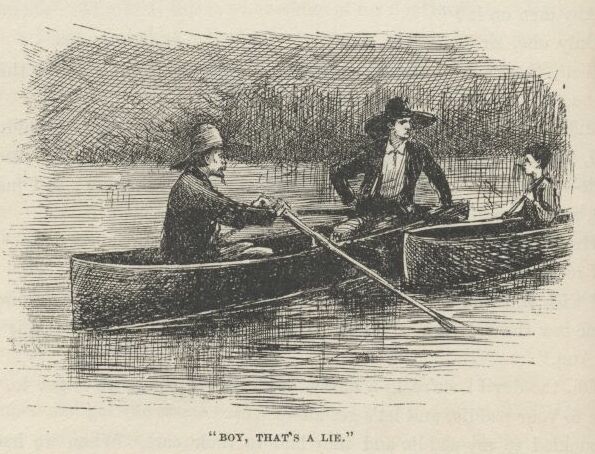
“I will, sir, I will, honest—but don’t leave us, please. It’sthe—the—gentlemen, if you’ll only pull ahead, and let me heave you theheadline, you won’t have to come a-near the raft—please do.”
“Set her back, John, set her back!” says one. They backed water. “Keep away,boy—keep to looard. Confound it, I just expect the wind has blowed it to us.Your pap’s got the small-pox, and you know it precious well. Why didn’t youcome out and say so? Do you want to spread it all over?”
“Well,” says I, a-blubbering, “I’ve told everybody before, and they just wentaway and left us.”
“Poor devil, there’s something in that. We are right down sorry for you, butwe—well, hang it, we don’t want the small-pox, you see. Look here, I’ll tellyou what to do. Don’t you try to land by yourself, or you’ll smash everythingto pieces. You float along down about twenty miles, and you’ll come to a townon the left-hand side of the river. It will be long after sun-up then, and whenyou ask for help you tell them your folks are all down with chills and fever.Don’t be a fool again, and let people guess what is the matter. Now we’retrying to do you a kindness; so you just put twenty miles between us, that’s agood boy. It wouldn’t do any good to land yonder where the light is—it’s only awood-yard. Say, I reckon your father’s poor, and I’m bound to say he’s inpretty hard luck. Here, I’ll put a twenty-dollar gold piece on this board, andyou get it when it floats by. I feel mighty mean to leave you; but my kingdom!it won’t do to fool with small-pox, don’t you see?”
“Hold on, Parker,” says the other man, “here’s a twenty to put on the board forme. Good-bye, boy; you do as Mr. Parker told you, and you’ll be all right.”
“That’s so, my boy—good-bye, good-bye. If you see any runaway niggers you gethelp and nab them, and you can make some money by it.”
“Good-bye, sir,” says I; “I won’t let no runaway niggers get by me if I canhelp it.”
They went off and I got aboard the raft, feeling bad and low, because I knowedvery well I had done wrong, and I see it warn’t no use for me to try to learnto do right; a body that don’t get startedright when he’s little ain’tgot no show—when the pinch comes there ain’t nothing to back him up and keephim to his work, and so he gets beat. Then I thought a minute, and says tomyself, hold on; s’pose you’d a done right and give Jim up, would you feltbetter than what you do now? No, says I, I’d feel bad—I’d feel just the sameway I do now. Well, then, says I, what’s the use you learning to do right whenit’s troublesome to do right and ain’t no trouble to do wrong, and the wages isjust the same? I was stuck. I couldn’t answer that. So I reckoned I wouldn’tbother no more about it, but after this always do whichever come handiest atthe time.
I went into the wigwam; Jim warn’t there. I looked all around; he warn’tanywhere. I says:
“Jim!”
“Here I is, Huck. Is dey out o’ sight yit? Don’t talk loud.”
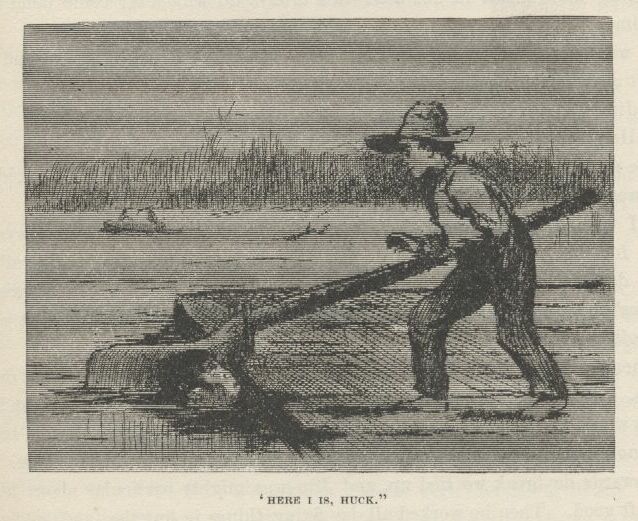
He was in the river under the stern oar, with just his nose out. I told himthey were out of sight, so he come aboard. He says:
“I was a-listenin’ to all de talk, en I slips into de river en was gwyne toshove for sho’ if dey come aboard. Den I was gwyne to swim to de raf’ agin whendey was gone. But lawsy, how you did fool ’em, Huck! Dat wuzde smartes’dodge! I tell you, chile, I ’speck it save’ ole Jim—ole Jim ain’t going toforgit you for dat, honey.”
Then we talked about the money. It was a pretty good raise—twenty dollarsapiece. Jim said we could take deck passage on a steamboat now, and the moneywould last us as far as we wanted to go in the free States. He said twenty milemore warn’t far for the raft to go, but he wished we was already there.
Towards daybreak we tied up, and Jim was mighty particular about hiding theraft good. Then he worked all day fixing things in bundles, and getting allready to quit rafting.
That night about ten we hove in sight of the lights of a town away down in aleft-hand bend.
I went off in the canoe to ask about it. Pretty soon I found a man out in theriver with a skiff, setting a trot-line. I ranged up and says:
“Mister, is that town Cairo?”
“Cairo? no. You must be a blame’ fool.”
“What town is it, mister?”
“If you want to know, go and find out. If you stay here botherin’ around me forabout a half a minute longer you’ll get something you won’t want.”
I paddled to the raft. Jim was awful disappointed, but I said never mind, Cairowould be the next place, I reckoned.
We passed another town before daylight, and I was going out again; but it washigh ground, so I didn’t go. No high ground about Cairo, Jim said. I had forgotit. We laid up for the day on a tow-head tolerable close to the left-hand bank.I begun to suspicion something. So did Jim. I says:
“Maybe we went by Cairo in the fog that night.”
He says:
“Doan’ le’s talk about it, Huck. Po’ niggers can’t have no luck. I awluz’spected dat rattlesnake-skin warn’t done wid its work.”
“I wish I’d never seen that snake-skin, Jim—I do wish I’d never laid eyes onit.”
“It ain’t yo’ fault, Huck; you didn’ know. Don’t you blame yo’self ’bout it.”
When it was daylight, here was the clear Ohio water inshore, sure enough, andoutside was the old regular Muddy! So it was all up with Cairo.
We talked it all over. It wouldn’t do to take to the shore; we couldn’t takethe raft up the stream, of course. There warn’t no way but to wait for dark,and start back in the canoe and take the chances. So we slept all day amongstthe cottonwood thicket, so as to be fresh for the work, and when we went backto the raft about dark the canoe was gone!
We didn’t say a word for a good while. There warn’t anything to say. We bothknowed well enough it was some more work of the rattlesnake-skin; so what wasthe use to talk about it? It would only look like we was finding fault, andthat would be bound to fetch more bad luck—and keep on fetching it, too, tillwe knowed enough to keep still.
By-and-by we talked about what we better do, and found there warn’t no way butjust to go along down with the raft till we got a chance to buy a canoe to goback in. We warn’t going to borrow it when there warn’t anybody around, the waypap would do, for that might set people after us.
So we shoved out after dark on the raft.
Anybody that don’t believe yet that it’s foolishness to handle a snake-skin,after all that that snake-skin done for us, will believe it now if they read onand see what more it done for us.
The place to buy canoes is off of rafts laying up at shore. But we didn’t seeno rafts laying up; so we went along during three hours and more. Well, thenight got gray and ruther thick, which is the next meanest thing to fog. Youcan’t tell the shape of the river, and you can’t see no distance. It got to bevery late and still, and then along comes a steamboat up the river. We lit thelantern, and judged she would see it. Up-stream boats didn’t generly come closeto us; they go out and follow the bars and hunt for easy water under the reefs;but nights like this they bull right up the channel against the whole river.
We could hear her pounding along, but we didn’t see her good till she wasclose. She aimed right for us. Often they do that and try to see how close theycan come without touching; sometimes the wheel bites off a sweep, and then thepilot sticks his head out and laughs, and thinks he’s mighty smart. Well, hereshe comes, and we said she was going to try and shave us; but she didn’t seemto be sheering off a bit. She was a big one, and she was coming in a hurry,too, looking like a black cloud with rows of glow-worms around it; but all of asudden she bulged out, big and scary, with a long row of wide-open furnacedoors shining like red-hot teeth, and her monstrous bows and guards hangingright over us. There was a yell at us, and a jingling of bells to stop theengines, a powwow of cussing, and whistling of steam—and as Jim went overboardon one side and I on the other, she come smashing straight through the raft.
I dived—and I aimed to find the bottom, too, for a thirty-foot wheel had got togo over me, and I wanted it to have plenty of room. I could always stay underwater a minute; this time I reckon I stayed under a minute and a half. Then Ibounced for the top in a hurry, for I was nearly busting. I popped out to myarmpits and blowed the water out of my nose, and puffed a bit. Of course therewas a booming current; and of course that boat started her engines again tenseconds after she stopped them, for they never cared much for raftsmen; so nowshe was churning along up the river, out of sight in the thick weather, thoughI could hear her.
I sung out for Jim about a dozen times, but I didn’t get any answer; so Igrabbed a plank that touched me while I was “treading water,” and struck outfor shore, shoving it ahead of me. But I made out to see that the drift of thecurrent was towards the left-hand shore, which meant that I was in a crossing;so I changed off and went that way.
It was one of these long, slanting, two-mile crossings; so I was a good longtime in getting over. I made a safe landing, and clumb up the bank. I couldn’tsee but a little ways, but I went poking along over rough ground for a quarterof a mile or more, and then I run across a big old-fashioned double log-housebefore I noticed it. I was going to rush by and get away, but a lot of dogsjumped out and went to howling and barking at me, and I knowed better than tomove another peg.

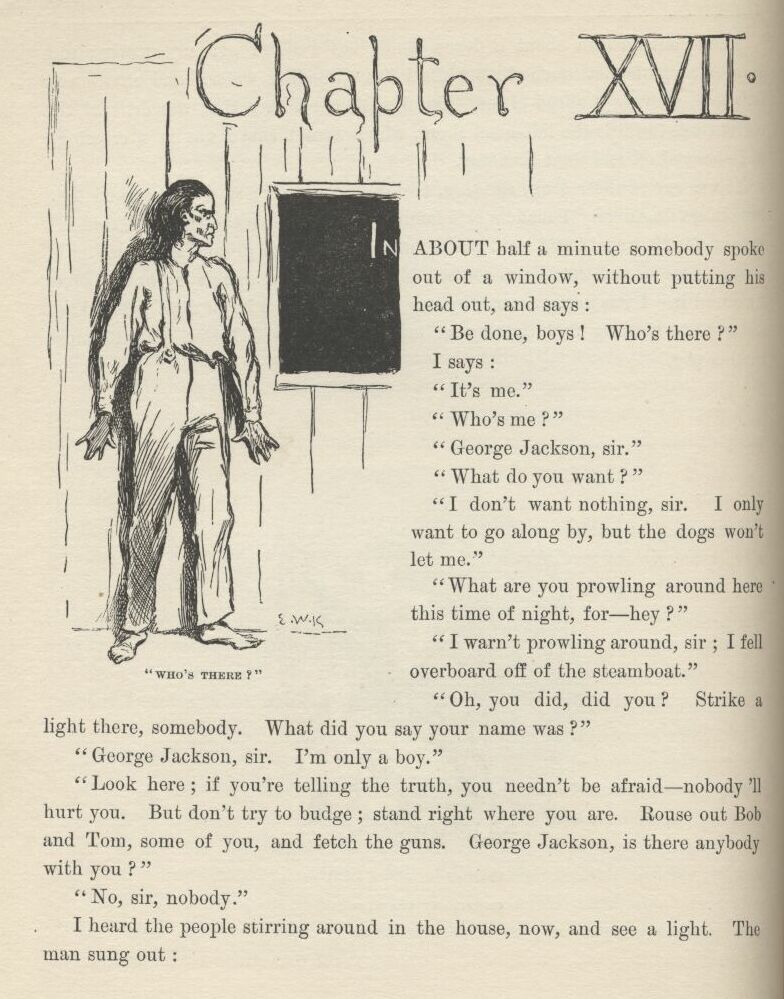
CHAPTER XVII.
In about a minute somebody spoke out of a window without putting his head out,and says:
“Be done, boys! Who’s there?”
I says:
“It’s me.”
“Who’s me?”
“George Jackson, sir.”
“What do you want?”
“I don’t want nothing, sir. I only want to go along by, but the dogs won’t letme.”
“What are you prowling around here this time of night for—hey?”
“I warn’t prowling around, sir, I fell overboard off of the steamboat.”
“Oh, you did, did you? Strike a light there, somebody. What did you say yourname was?”
“George Jackson, sir. I’m only a boy.”
“Look here, if you’re telling the truth you needn’t be afraid—nobody’ll hurtyou. But don’t try to budge; stand right where you are. Rouse out Bob and Tom,some of you, and fetch the guns. George Jackson, is there anybody with you?”
“No, sir, nobody.”
I heard the people stirring around in the house now, and see a light. The mansung out:
“Snatch that light away, Betsy, you old fool—ain’t you got any sense? Put it onthe floor behind the front door. Bob, if you and Tom are ready, take yourplaces.”
“All ready.”
“Now, George Jackson, do you know the Shepherdsons?”
“No, sir; I never heard of them.”
“Well, that may be so, and it mayn’t. Now, all ready. Step forward, GeorgeJackson. And mind, don’t you hurry—come mighty slow. If there’s anybody withyou, let him keep back—if he shows himself he’ll be shot. Come along now. Comeslow; push the door open yourself—just enough to squeeze in, d’ you hear?”
I didn’t hurry; I couldn’t if I’d a wanted to. I took one slow step at a timeand there warn’t a sound, only I thought I could hear my heart. The dogs wereas still as the humans, but they followed a little behind me. When I got to thethree log doorsteps I heard them unlocking and unbarring and unbolting. I putmy hand on the door and pushed it a little and a little more till somebodysaid, “There, that’s enough—put your head in.” I done it, but I judged theywould take it off.
The candle was on the floor, and there they all was, looking at me, and me atthem, for about a quarter of a minute: Three big men with guns pointed at me,which made me wince, I tell you; the oldest, gray and about sixty, the othertwo thirty or more—all of them fine and handsome—and the sweetest oldgray-headed lady, and back of her two young women which I couldn’t see rightwell. The old gentleman says:
“There; I reckon it’s all right. Come in.”
As soon as I was in the old gentleman he locked the door and barred it andbolted it, and told the young men to come in with their guns, and they all wentin a big parlor that had a new rag carpet on the floor, and got together in acorner that was out of the range of the front windows—there warn’t none on theside. They held the candle, and took a good look at me, and all said, “Why,heain’t a Shepherdson—no, there ain’t any Shepherdson about him.” Thenthe old man said he hoped I wouldn’t mind being searched for arms, because hedidn’t mean no harm by it—it was only to make sure. So he didn’t pry into mypockets, but only felt outside with his hands, and said it was all right. Hetold me to make myself easy and at home, and tell all about myself; but the oldlady says:
“Why, bless you, Saul, the poor thing’s as wet as he can be; and don’t youreckon it may be he’s hungry?”
“True for you, Rachel—I forgot.”
So the old lady says:
“Betsy” (this was a nigger woman), “you fly around and get him something to eatas quick as you can, poor thing; and one of you girls go and wake up Buck andtell him—oh, here he is himself. Buck, take this little stranger and get thewet clothes off from him and dress him up in some of yours that’s dry.”
Buck looked about as old as me—thirteen or fourteen or along there, though hewas a little bigger than me. He hadn’t on anything but a shirt, and he was veryfrowzy-headed. He came in gaping and digging one fist into his eyes, and he wasdragging a gun along with the other one. He says:
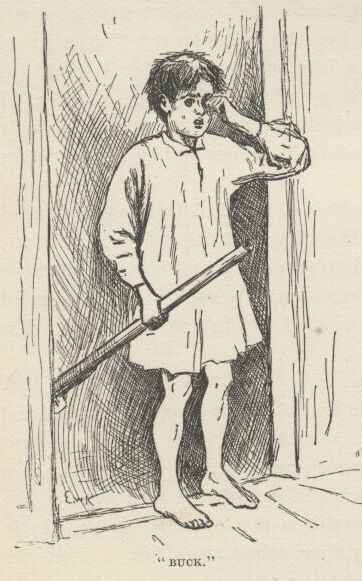
“Ain’t they no Shepherdsons around?”
They said, no, ’twas a false alarm.
“Well,” he says, “if they’d a ben some, I reckon I’d a got one.”
They all laughed, and Bob says:
“Why, Buck, they might have scalped us all, you’ve been so slow in coming.”
“Well, nobody come after me, and it ain’t right I’m always kept down; I don’tget no show.”
“Never mind, Buck, my boy,” says the old man, “you’ll have show enough, all ingood time, don’t you fret about that. Go ’long with you now, and do as yourmother told you.”
When we got up-stairs to his room he got me a coarse shirt and a roundabout andpants of his, and I put them on. While I was at it he asked me what my namewas, but before I could tell him he started to tell me about a bluejay and ayoung rabbit he had catched in the woods day before yesterday, and he asked mewhere Moses was when the candle went out. I said I didn’t know; I hadn’t heardabout it before, no way.
“Well, guess,” he says.
“How’m I going to guess,” says I, “when I never heard tell of it before?”
“But you can guess, can’t you? It’s just as easy.”
“Whichcandle?” I says.
“Why, any candle,” he says.
“I don’t know where he was,” says I; “where was he?”
“Why, he was in the dark!That’s where he was!”
“Well, if you knowed where he was, what did you ask me for?”
“Why, blame it, it’s a riddle, don’t you see? Say, how long are you going tostay here? You got to stay always. We can just have booming times—they don’thave no school now. Do you own a dog? I’ve got a dog—and he’ll go in the riverand bring out chips that you throw in. Do you like to comb up Sundays, and allthat kind of foolishness? You bet I don’t, but ma she makes me. Confound theseole britches! I reckon I’d better put ’em on, but I’d ruther not, it’s so warm.Are you all ready? All right. Come along, old hoss.”
Cold corn-pone, cold corn-beef, butter and buttermilk—that is what they had forme down there, and there ain’t nothing better that ever I’ve come across yet.Buck and his ma and all of them smoked cob pipes, except the nigger woman,which was gone, and the two young women. They all smoked and talked, and I eatand talked. The young women had quilts around them, and their hair down theirbacks. They all asked me questions, and I told them how pap and me and all thefamily was living on a little farm down at the bottom of Arkansaw, and mysister Mary Ann run off and got married and never was heard of no more, andBill went to hunt them and he warn’t heard of no more, and Tom and Mort died,and then there warn’t nobody but just me and pap left, and he was just trimmeddown to nothing, on account of his troubles; so when he died I took what therewas left, because the farm didn’t belong to us, and started up the river, deckpassage, and fell overboard; and that was how I come to be here. So they said Icould have a home there as long as I wanted it. Then it was most daylight andeverybody went to bed, and I went to bed with Buck, and when I waked up in themorning, drat it all, I had forgot what my name was. So I laid there about anhour trying to think, and when Buck waked up I says:
“Can you spell, Buck?”
“Yes,” he says.
“I bet you can’t spell my name,” says I.
“I bet you what you dare I can,” says he.
“All right,” says I, “go ahead.”
“G-e-o-r-g-e J-a-x-o-n—there now,” he says.
“Well,” says I, “you done it, but I didn’t think you could. It ain’t no slouchof a name to spell—right off without studying.”
I set it down, private, because somebody might want meto spell it next,and so I wanted to be handy with it and rattle it off like I was used to it.
It was a mighty nice family, and a mighty nice house, too. I hadn’t seen nohouse out in the country before that was so nice and had so much style. Itdidn’t have an iron latch on the front door, nor a wooden one with a buckskinstring, but a brass knob to turn, the same as houses in town. There warn’t nobed in the parlor, nor a sign of a bed; but heaps of parlors in towns has bedsin them. There was a big fireplace that was bricked on the bottom, and thebricks was kept clean and red by pouring water on them and scrubbing them withanother brick; sometimes they wash them over with red water-paint that theycall Spanish-brown, same as they do in town. They had big brass dog-irons thatcould hold up a saw-log. There was a clock on the middle of the mantelpiece,with a picture of a town painted on the bottom half of the glass front, and around place in the middle of it for the sun, and you could see the pendulumswinging behind it. It was beautiful to hear that clock tick; and sometimeswhen one of these peddlers had been along and scoured her up and got her ingood shape, she would start in and strike a hundred and fifty before she gottuckered out. They wouldn’t took any money for her.
Well, there was a big outlandish parrot on each side of the clock, made out ofsomething like chalk, and painted up gaudy. By one of the parrots was a catmade of crockery, and a crockery dog by the other; and when you pressed down onthem they squeaked, but didn’t open their mouths nor look different norinterested. They squeaked through underneath. There was a couple of bigwild-turkey-wing fans spread out behind those things. On the table in themiddle of the room was a kind of a lovely crockery basket that had apples andoranges and peaches and grapes piled up in it, which was much redder andyellower and prettier than real ones is, but they warn’t real because you couldsee where pieces had got chipped off and showed the white chalk, or whatever itwas, underneath.
This table had a cover made out of beautiful oilcloth, with a red and bluespread-eagle painted on it, and a painted border all around. It come all theway from Philadelphia, they said. There was some books, too, piled up perfectlyexact, on each corner of the table. One was a big family Bible full ofpictures. One was Pilgrim’s Progress, about a man that left his family, itdidn’t say why. I read considerable in it now and then. The statements wasinteresting, but tough. Another was Friendship’s Offering, full of beautifulstuff and poetry; but I didn’t read the poetry. Another was Henry Clay’sSpeeches, and another was Dr. Gunn’s Family Medicine, which told you all aboutwhat to do if a body was sick or dead. There was a hymn book, and a lot ofother books. And there was nice split-bottom chairs, and perfectly sound,too—not bagged down in the middle and busted, like an old basket.
They had pictures hung on the walls—mainly Washingtons and Lafayettes, andbattles, and Highland Marys, and one called “Signing the Declaration.” Therewas some that they called crayons, which one of the daughters which was deadmade her own self when she was only fifteen years old. They was different fromany pictures I ever see before—blacker, mostly, than is common. One was a womanin a slim black dress, belted small under the armpits, with bulges like acabbage in the middle of the sleeves, and a large black scoop-shovel bonnetwith a black veil, and white slim ankles crossed about with black tape, andvery wee black slippers, like a chisel, and she was leaning pensive on atombstone on her right elbow, under a weeping willow, and her other handhanging down her side holding a white handkerchief and a reticule, andunderneath the picture it said “Shall I Never See Thee More Alas.” Another onewas a young lady with her hair all combed up straight to the top of her head,and knotted there in front of a comb like a chair-back, and she was crying intoa handkerchief and had a dead bird laying on its back in her other hand withits heels up, and underneath the picture it said “I Shall Never Hear Thy SweetChirrup More Alas.” There was one where a young lady was at a window looking upat the moon, and tears running down her cheeks; and she had an open letter inone hand with black sealing wax showing on one edge of it, and she was mashinga locket with a chain to it against her mouth, and underneath the picture itsaid “And Art Thou Gone Yes Thou Art Gone Alas.” These was all nice pictures, Ireckon, but I didn’t somehow seem to take to them, because if ever I was down alittle they always give me the fan-tods. Everybody was sorry she died, becauseshe had laid out a lot more of these pictures to do, and a body could see bywhat she had done what they had lost. But I reckoned that with her dispositionshe was having a better time in the graveyard. She was at work on what theysaid was her greatest picture when she took sick, and every day and every nightit was her prayer to be allowed to live till she got it done, but she never gotthe chance. It was a picture of a young woman in a long white gown, standing onthe rail of a bridge all ready to jump off, with her hair all down her back,and looking up to the moon, with the tears running down her face, and she hadtwo arms folded across her breast, and two arms stretched out in front, and twomore reaching up towards the moon—and the idea was to see which pair would lookbest, and then scratch out all the other arms; but, as I was saying, she diedbefore she got her mind made up, and now they kept this picture over the headof the bed in her room, and every time her birthday come they hung flowers onit. Other times it was hid with a little curtain. The young woman in thepicture had a kind of a nice sweet face, but there was so many arms it made herlook too spidery, seemed to me.
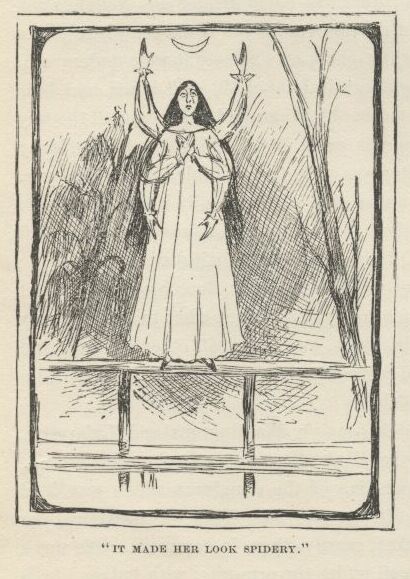
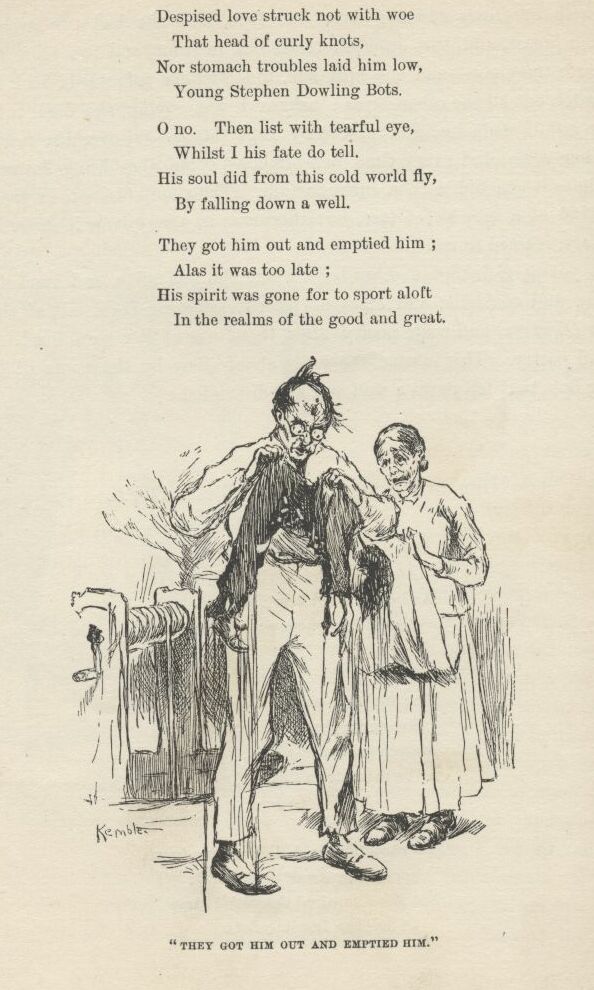
This young girl kept a scrap-book when she was alive, and used to pasteobituaries and accidents and cases of patient suffering in it out of thePresbyterian Observer, and write poetry after them out of her own head.It was very good poetry. This is what she wrote about a boy by the name ofStephen Dowling Bots that fell down a well and was drownded:
ODE TO STEPHEN DOWLING BOTS, DEC’D
And did young Stephen sicken,
And did young Stephen die?
And did the sad hearts thicken,
And did the mourners cry?
No; such was not the fate of
Young Stephen Dowling Bots;
Though sad hearts round him thickened,
’Twas not from sickness’ shots.
No whooping-cough did rack his frame,
Nor measles drear with spots;
Not these impaired the sacred name
Of Stephen Dowling Bots.
Despised love struck not with woe
That head of curly knots,
Nor stomach troubles laid him low,
Young Stephen Dowling Bots.
O no. Then list with tearful eye,
Whilst I his fate do tell.
His soul did from this cold world fly
By falling down a well.
They got him out and emptied him;
Alas it was too late;
His spirit was gone for to sport aloft
In the realms of the good and great.
If Emmeline Grangerford could make poetry like that before she was fourteen,there ain’t no telling what she could a done by-and-by. Buck said she couldrattle off poetry like nothing. She didn’t ever have to stop to think. He saidshe would slap down a line, and if she couldn’t find anything to rhyme with itwould just scratch it out and slap down another one, and go ahead. She warn’tparticular; she could write about anything you choose to give her to writeabout just so it was sadful. Every time a man died, or a woman died, or a childdied, she would be on hand with her “tribute” before he was cold. She calledthem tributes. The neighbors said it was the doctor first, then Emmeline, thenthe undertaker—the undertaker never got in ahead of Emmeline but once, and thenshe hung fire on a rhyme for the dead person’s name, which was Whistler. Shewarn’t ever the same after that; she never complained, but she kinder pinedaway and did not live long. Poor thing, many’s the time I made myself go up tothe little room that used to be hers and get out her poor old scrap-book andread in it when her pictures had been aggravating me and I had soured on her alittle. I liked all that family, dead ones and all, and warn’t going to letanything come between us. Poor Emmeline made poetry about all the dead peoplewhen she was alive, and it didn’t seem right that there warn’t nobody to makesome about her now she was gone; so I tried to sweat out a verse or two myself,but I couldn’t seem to make it go somehow. They kept Emmeline’s room trim andnice, and all the things fixed in it just the way she liked to have them whenshe was alive, and nobody ever slept there. The old lady took care of the roomherself, though there was plenty of niggers, and she sewed there a good dealand read her Bible there mostly.
Well, as I was saying about the parlor, there was beautiful curtains on thewindows: white, with pictures painted on them of castles with vines all downthe walls, and cattle coming down to drink. There was a little old piano, too,that had tin pans in it, I reckon, and nothing was ever so lovely as to hearthe young ladies sing “The Last Link is Broken” and play “The Battle of Prague”on it. The walls of all the rooms was plastered, and most had carpets on thefloors, and the whole house was whitewashed on the outside.
It was a double house, and the big open place betwixt them was roofed andfloored, and sometimes the table was set there in the middle of the day, and itwas a cool, comfortable place. Nothing couldn’t be better. And warn’t thecooking good, and just bushels of it too!
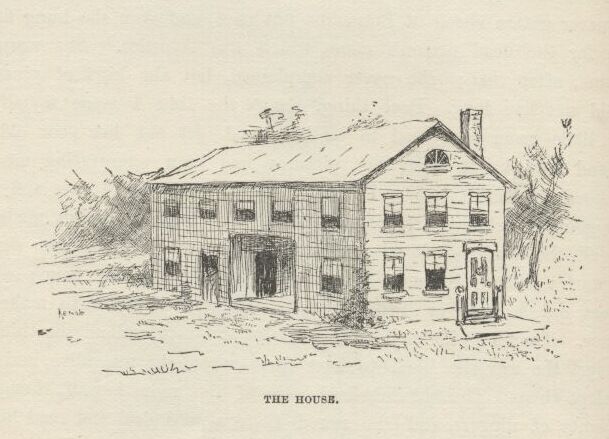
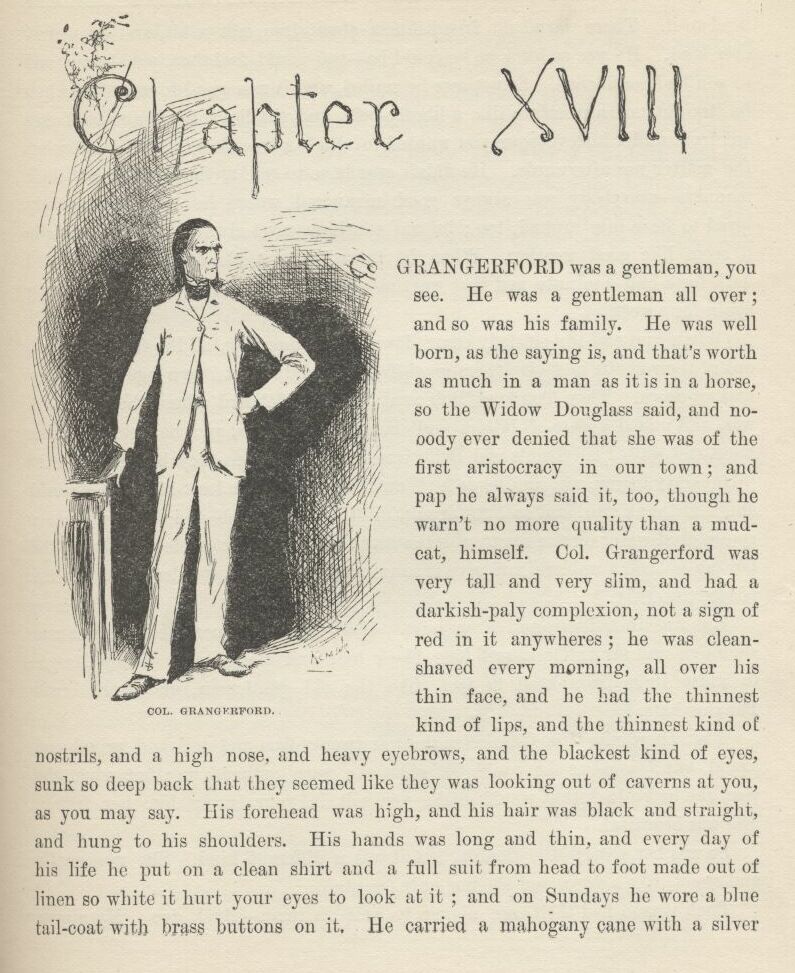
CHAPTER XVIII.
Col. Grangerford was a gentleman, you see. He was a gentleman all over; and sowas his family. He was well born, as the saying is, and that’s worth as much ina man as it is in a horse, so the Widow Douglas said, and nobody ever deniedthat she was of the first aristocracy in our town; and pap he always said it,too, though he warn’t no more quality than a mudcat himself. Col. Grangerfordwas very tall and very slim, and had a darkish-paly complexion, not a sign ofred in it anywheres; he was clean shaved every morning all over his thin face,and he had the thinnest kind of lips, and the thinnest kind of nostrils, and ahigh nose, and heavy eyebrows, and the blackest kind of eyes, sunk so deep backthat they seemed like they was looking out of caverns at you, as you may say.His forehead was high, and his hair was black and straight and hung to hisshoulders. His hands was long and thin, and every day of his life he put on aclean shirt and a full suit from head to foot made out of linen so white ithurt your eyes to look at it; and on Sundays he wore a blue tail-coat withbrass buttons on it. He carried a mahogany cane with a silver head to it. Therewarn’t no frivolishness about him, not a bit, and he warn’t ever loud. He wasas kind as he could be—you could feel that, you know, and so you hadconfidence. Sometimes he smiled, and it was good to see; but when hestraightened himself up like a liberty-pole, and the lightning begun to flickerout from under his eyebrows, you wanted to climb a tree first, and find outwhat the matter was afterwards. He didn’t ever have to tell anybody to mindtheir manners—everybody was always good-mannered where he was. Everybody lovedto have him around, too; he was sunshine most always—I mean he made it seemlike good weather. When he turned into a cloudbank it was awful dark for half aminute, and that was enough; there wouldn’t nothing go wrong again for a week.
When him and the old lady come down in the morning all the family got up out oftheir chairs and give them good-day, and didn’t set down again till they hadset down. Then Tom and Bob went to the sideboard where the decanter was, andmixed a glass of bitters and handed it to him, and he held it in his hand andwaited till Tom’s and Bob’s was mixed, and then they bowed and said, “Our dutyto you, sir, and madam;” and theybowed the least bit in the world andsaid thank you, and so they drank, all three, and Bob and Tom poured a spoonfulof water on the sugar and the mite of whisky or apple brandy in the bottom oftheir tumblers, and give it to me and Buck, and we drank to the old people too.
Bob was the oldest and Tom next—tall, beautiful men with very broad shouldersand brown faces, and long black hair and black eyes. They dressed in whitelinen from head to foot, like the old gentleman, and wore broad Panama hats.
Then there was Miss Charlotte; she was twenty-five, and tall and proud andgrand, but as good as she could be when she warn’t stirred up; but when she was,she had a look that would make you wilt in your tracks, like her father. Shewas beautiful.
So was her sister, Miss Sophia, but it was a different kind. She was gentle andsweet like a dove, and she was only twenty.
Each person had their own nigger to wait on them—Buck too. My nigger had amonstrous easy time, because I warn’t used to having anybody do anything forme, but Buck’s was on the jump most of the time.
This was all there was of the family now, but there used to be more—three sons;they got killed; and Emmeline that died.
The old gentleman owned a lot of farms and over a hundred niggers. Sometimes astack of people would come there, horseback, from ten or fifteen mile around,and stay five or six days, and have such junketings round about and on theriver, and dances and picnics in the woods daytimes, and balls at the housenights. These people was mostly kinfolks of the family. The men brought theirguns with them. It was a handsome lot of quality, I tell you.
There was another clan of aristocracy around there—five or six families—mostlyof the name of Shepherdson. They was as high-toned and well born and rich andgrand as the tribe of Grangerfords. The Shepherdsons and Grangerfords used thesame steamboat landing, which was about two mile above our house; so sometimeswhen I went up there with a lot of our folks I used to see a lot of theShepherdsons there on their fine horses.
One day Buck and me was away out in the woods hunting, and heard a horsecoming. We was crossing the road. Buck says:
“Quick! Jump for the woods!”
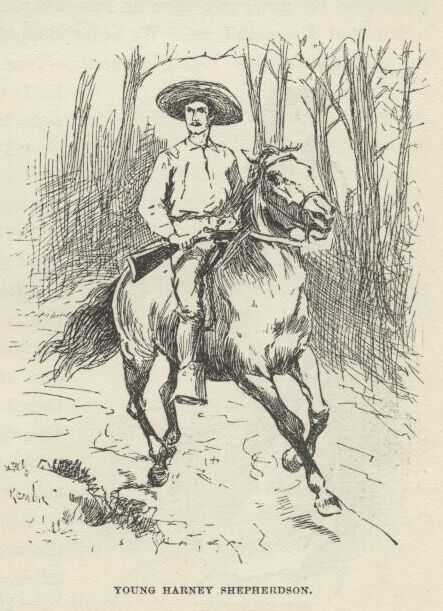
We done it, and then peeped down the woods through the leaves. Pretty soon asplendid young man come galloping down the road, setting his horse easy andlooking like a soldier. He had his gun across his pommel. I had seen himbefore. It was young Harney Shepherdson. I heard Buck’s gun go off at my ear,and Harney’s hat tumbled off from his head. He grabbed his gun and rodestraight to the place where we was hid. But we didn’t wait. We started throughthe woods on a run. The woods warn’t thick, so I looked over my shoulder tododge the bullet, and twice I seen Harney cover Buck with his gun; and then herode away the way he come—to get his hat, I reckon, but I couldn’t see. Wenever stopped running till we got home. The old gentleman’s eyes blazed aminute—’twas pleasure, mainly, I judged—then his face sort of smoothed down,and he says, kind of gentle:
“I don’t like that shooting from behind a bush. Why didn’t you step into theroad, my boy?”
“The Shepherdsons don’t, father. They always take advantage.”
Miss Charlotte she held her head up like a queen while Buck was telling histale, and her nostrils spread and her eyes snapped. The two young men lookeddark, but never said nothing. Miss Sophia she turned pale, but the color comeback when she found the man warn’t hurt.

Soon as I could get Buck down by the corn-cribs under the trees by ourselves, Isays:
“Did you want to kill him, Buck?”
“Well, I bet I did.”
“What did he do to you?”
“Him? He never done nothing to me.”
“Well, then, what did you want to kill him for?”
“Why, nothing—only it’s on account of the feud.”
“What’s a feud?”
“Why, where was you raised? Don’t you know what a feud is?”
“Never heard of it before—tell me about it.”
“Well,” says Buck, “a feud is this way. A man has a quarrel with another man,and kills him; then that other man’s brother kills him;then the otherbrothers, on both sides, goes for one another; then the cousinschipin—and by-and-by everybody’s killed off, and there ain’t no more feud. But it’skind of slow, and takes a long time.”
“Has this one been going on long, Buck?”
“Well, I should reckon!It started thirty year ago, or som’ers alongthere. There was trouble ’bout something, and then a lawsuit to settle it; andthe suit went agin one of the men, and so he up and shot the man that won thesuit—which he would naturally do, of course. Anybody would.”
“What was the trouble about, Buck?—land?”
“I reckon maybe—I don’t know.”
“Well, who done the shooting? Was it a Grangerford or a Shepherdson?”
“Laws, how do Iknow? It was so long ago.”
“Don’t anybody know?”
“Oh, yes, pa knows, I reckon, and some of the other old people; but they don’tknow now what the row was about in the first place.”
“Has there been many killed, Buck?”
“Yes; right smart chance of funerals. But they don’t always kill. Pa’s got afew buckshot in him; but he don’t mind it ’cuz he don’t weigh much, anyway.Bob’s been carved up some with a bowie, and Tom’s been hurt once or twice.”
“Has anybody been killed this year, Buck?”
“Yes; we got one and they got one. ’Bout three months ago my cousin Bud,fourteen year old, was riding through the woods on t’other side of the river,and didn’t have no weapon with him, which was blame’ foolishness, and in alonesome place he hears a horse a-coming behind him, and sees old BaldyShepherdson a-linkin’ after him with his gun in his hand and his white haira-flying in the wind; and ’stead of jumping off and taking to the brush, Bud’lowed he could out-run him; so they had it, nip and tuck, for five mile ormore, the old man a-gaining all the time; so at last Bud seen it warn’t anyuse, so he stopped and faced around so as to have the bullet holes in front,you know, and the old man he rode up and shot him down. But he didn’t git muchchance to enjoy his luck, for inside of a week our folks laid himout.”
“I reckon that old man was a coward, Buck.”
“I reckon he warn’ta coward. Not by a blame’ sight. There ain’t acoward amongst them Shepherdsons—not a one. And there ain’t no cowards amongstthe Grangerfords either. Why, that old man kep’ up his end in a fight one dayfor half an hour against three Grangerfords, and come out winner. They was alla-horseback; he lit off of his horse and got behind a little woodpile, and kep’his horse before him to stop the bullets; but the Grangerfords stayed on theirhorses and capered around the old man, and peppered away at him, and hepeppered away at them. Him and his horse both went home pretty leaky andcrippled, but the Grangerfords had to be fetchedhome—and one of ’em wasdead, and another died the next day. No, sir; if a body’s out hunting forcowards he don’t want to fool away any time amongst them Shepherdsons, becuzthey don’t breed any of that kind.”
Next Sunday we all went to church, about three mile, everybody a-horseback. Themen took their guns along, so did Buck, and kept them between their knees orstood them handy against the wall. The Shepherdsons done the same. It waspretty ornery preaching—all about brotherly love, and such-like tiresomeness;but everybody said it was a good sermon, and they all talked it over goinghome, and had such a powerful lot to say about faith and good works and freegrace and preforeordestination, and I don’t know what all, that it did seem tome to be one of the roughest Sundays I had run across yet.
About an hour after dinner everybody was dozing around, some in their chairsand some in their rooms, and it got to be pretty dull. Buck and a dog wasstretched out on the grass in the sun sound asleep. I went up to our room, andjudged I would take a nap myself. I found that sweet Miss Sophia standing inher door, which was next to ours, and she took me in her room and shut the doorvery soft, and asked me if I liked her, and I said I did; and she asked me if Iwould do something for her and not tell anybody, and I said I would. Then shesaid she’d forgot her Testament, and left it in the seat at church between twoother books, and would I slip out quiet and go there and fetch it to her, andnot say nothing to nobody. I said I would. So I slid out and slipped off up theroad, and there warn’t anybody at the church, except maybe a hog or two, forthere warn’t any lock on the door, and hogs likes a puncheon floor insummer-time because it’s cool. If you notice, most folks don’t go to churchonly when they’ve got to; but a hog is different.

Says I to myself, something’s up; it ain’t natural for a girl to be in such asweat about a Testament. So I give it a shake, and out drops a little piece ofpaper with “Half-past two” wrote on it with a pencil. I ransacked it,but couldn’t find anything else. I couldn’t make anything out of that, so I putthe paper in the book again, and when I got home and upstairs there was MissSophia in her door waiting for me. She pulled me in and shut the door; then shelooked in the Testament till she found the paper, and as soon as she read itshe looked glad; and before a body could think she grabbed me and give me asqueeze, and said I was the best boy in the world, and not to tell anybody. Shewas mighty red in the face for a minute, and her eyes lighted up, and it madeher powerful pretty. I was a good deal astonished, but when I got my breath Iasked her what the paper was about, and she asked me if I had read it, and Isaid no, and she asked me if I could read writing, and I told her “no, onlycoarse-hand,” and then she said the paper warn’t anything but a book-mark tokeep her place, and I might go and play now.
I went off down to the river, studying over this thing, and pretty soon Inoticed that my nigger was following along behind. When we was out of sight ofthe house he looked back and around a second, and then comes a-running, andsays:
“Mars Jawge, if you’ll come down into de swamp I’ll show you a whole stack o’water-moccasins.”
Thinks I, that’s mighty curious; he said that yesterday. He oughter know a bodydon’t love water-moccasins enough to go around hunting for them. What is he upto, anyway? So I says:
“All right; trot ahead.”
I followed a half a mile; then he struck out over the swamp, and waded ankledeep as much as another half-mile. We come to a little flat piece of land whichwas dry and very thick with trees and bushes and vines, and he says:
“You shove right in dah jist a few steps, Mars Jawge; dah’s whah dey is. I’sseed ’m befo’; I don’t k’yer to see ’em no mo’.”
Then he slopped right along and went away, and pretty soon the trees hid him. Ipoked into the place a-ways and come to a little open patch as big as a bedroomall hung around with vines, and found a man laying there asleep—and, by jings,it was my old Jim!
I waked him up, and I reckoned it was going to be a grand surprise to him tosee me again, but it warn’t. He nearly cried he was so glad, but he warn’tsurprised. Said he swum along behind me that night, and heard me yell everytime, but dasn’t answer, because he didn’t want nobody to pick himupand take him into slavery again. Says he:
“I got hurt a little, en couldn’t swim fas’, so I wuz a considable ways behineyou towards de las’; when you landed I reck’ned I could ketch up wid you on delan’ ’dout havin’ to shout at you, but when I see dat house I begin to go slow.I ’uz off too fur to hear what dey say to you—I wuz ’fraid o’ de dogs; but whenit ’uz all quiet agin, I knowed you’s in de house, so I struck out for de woodsto wait for day. Early in de mawnin’ some er de niggers come along, gwyne to defields, en dey tuk me en showed me dis place, whah de dogs can’t track me onaccounts o’ de water, en dey brings me truck to eat every night, en tells mehow you’s a-gitt’n along.”
“Why didn’t you tell my Jack to fetch me here sooner, Jim?”
“Well, ’twarn’t no use to ’sturb you, Huck, tell we could do sumfn—but we’s allright now. I ben a-buyin’ pots en pans en vittles, as I got a chanst, ena-patchin’ up de raf’ nights when—”
“Whatraft, Jim?”
“Our ole raf’.”
“You mean to say our old raft warn’t smashed all to flinders?”
“No, she warn’t. She was tore up a good deal—one en’ of her was; but dey warn’tno great harm done, on’y our traps was mos’ all los’. Ef we hadn’ dive’ so deepen swum so fur under water, en de night hadn’ ben so dark, en we warn’t sosk’yerd, en ben sich punkin-heads, as de sayin’ is, we’d a seed de raf’. Butit’s jis’ as well we didn’t, ’kase now she’s all fixed up agin mos’ as good asnew, en we’s got a new lot o’ stuff, in de place o’ what ’uz los’.”
“Why, how did you get hold of the raft again, Jim—did you catch her?”
“How I gwyne to ketch her en I out in de woods? No; some er de niggers foun’her ketched on a snag along heah in de ben’, en dey hid her in a crick ’mongstde willows, en dey wuz so much jawin’ ’bout which un ’um she b’long to de mos’dat I come to heah ’bout it pooty soon, so I ups en settles de trouble bytellin’ ’um she don’t b’long to none uv um, but to you en me; en I ast ’m ifdey gwyne to grab a young white genlman’s propaty, en git a hid’n for it? Den Igin ’m ten cents apiece, en dey ’uz mighty well satisfied, en wisht some mo’raf’s ’ud come along en make ’m rich agin. Dey’s mighty good to me, deseniggers is, en whatever I wants ’m to do fur me, I doan’ have to ast ’m twice,honey. Dat Jack’s a good nigger, en pooty smart.”
“Yes, he is. He ain’t ever told me you was here; told me to come, and he’d showme a lot of water-moccasins. If anything happens heain’t mixed up init. He can say he never seen us together, and it’ll be the truth.”
I don’t want to talk much about the next day. I reckon I’ll cut it prettyshort. I waked up about dawn, and was a-going to turn over and go to sleepagain, when I noticed how still it was—didn’t seem to be anybody stirring. Thatwarn’t usual. Next I noticed that Buck was up and gone. Well, I gets up,a-wondering, and goes down stairs—nobody around; everything as still as amouse. Just the same outside. Thinks I, what does it mean? Down by thewood-pile I comes across my Jack, and says:
“What’s it all about?”
Says he:
“Don’t you know, Mars Jawge?”
“No,” says I, “I don’t.”
“Well, den, Miss Sophia’s run off! ’deed she has. She run off in de night sometime—nobody don’t know jis’ when; run off to get married to dat young HarneyShepherdson, you know—leastways, so dey ’spec. De fambly foun’ it out ’bouthalf an hour ago—maybe a little mo’—en’ I tellyou dey warn’t no timelos’. Sich another hurryin’ up guns en hosses younever see! De womenfolks has gone for to stir up de relations, en ole Mars Saul en de boys tuckdey guns en rode up de river road for to try to ketch dat young man en kill him’fo’ he kin git acrost de river wid Miss Sophia. I reck’n dey’s gwyne to bemighty rough times.”
“Buck went off ’thout waking me up.”
“Well, I reck’n he did!Dey warn’t gwyne to mix you up in it. Mars Buckhe loaded up his gun en ’lowed he’s gwyne to fetch home a Shepherdson or bust.Well, dey’ll be plenty un ’m dah, I reck’n, en you bet you he’ll fetch one efhe gits a chanst.”
I took up the river road as hard as I could put. By-and-by I begin to hear gunsa good ways off. When I come in sight of the log store and the woodpile wherethe steamboats lands, I worked along under the trees and brush till I got to agood place, and then I clumb up into the forks of a cottonwood that was out ofreach, and watched. There was a wood-rank four foot high a little ways in frontof the tree, and first I was going to hide behind that; but maybe it wasluckier I didn’t.
There was four or five men cavorting around on their horses in the open placebefore the log store, cussing and yelling, and trying to get at a couple ofyoung chaps that was behind the wood-rank alongside of the steamboat landing;but they couldn’t come it. Every time one of them showed himself on the riverside of the woodpile he got shot at. The two boys was squatting back to backbehind the pile, so they could watch both ways.

By-and-by the men stopped cavorting around and yelling. They started ridingtowards the store; then up gets one of the boys, draws a steady bead over thewood-rank, and drops one of them out of his saddle. All the men jumped off oftheir horses and grabbed the hurt one and started to carry him to the store;and that minute the two boys started on the run. They got half way to the treeI was in before the men noticed. Then the men see them, and jumped on theirhorses and took out after them. They gained on the boys, but it didn’t do nogood, the boys had too good a start; they got to the woodpile that was in frontof my tree, and slipped in behind it, and so they had the bulge on the menagain. One of the boys was Buck, and the other was a slim young chap aboutnineteen years old.
The men ripped around awhile, and then rode away. As soon as they was out ofsight I sung out to Buck and told him. He didn’t know what to make of my voicecoming out of the tree at first. He was awful surprised. He told me to watchout sharp and let him know when the men come in sight again; said they was upto some devilment or other—wouldn’t be gone long. I wished I was out of thattree, but I dasn’t come down. Buck begun to cry and rip, and ’lowed that himand his cousin Joe (that was the other young chap) would make up for this dayyet. He said his father and his two brothers was killed, and two or three ofthe enemy. Said the Shepherdsons laid for them in ambush. Buck said his fatherand brothers ought to waited for their relations—the Shepherdsons was toostrong for them. I asked him what was become of young Harney and Miss Sophia.He said they’d got across the river and was safe. I was glad of that; but theway Buck did take on because he didn’t manage to kill Harney that day he shotat him—I hain’t ever heard anything like it.
All of a sudden, bang! bang! bang! goes three or four guns—the men had slippedaround through the woods and come in from behind without their horses! The boysjumped for the river—both of them hurt—and as they swum down the current themen run along the bank shooting at them and singing out, “Kill them, killthem!” It made me so sick I most fell out of the tree. I ain’t a-going to tellallthat happened—it would make me sick again if I was to do that. Iwished I hadn’t ever come ashore that night to see such things. I ain’t evergoing to get shut of them—lots of times I dream about them.
I stayed in the tree till it begun to get dark, afraid to come down. SometimesI heard guns away off in the woods; and twice I seen little gangs of men galloppast the log store with guns; so I reckoned the trouble was still a-going on. Iwas mighty downhearted; so I made up my mind I wouldn’t ever go anear thathouse again, because I reckoned I was to blame, somehow. I judged that thatpiece of paper meant that Miss Sophia was to meet Harney somewheres athalf-past two and run off; and I judged I ought to told her father about thatpaper and the curious way she acted, and then maybe he would a locked her up,and this awful mess wouldn’t ever happened.
When I got down out of the tree, I crept along down the river bank a piece, andfound the two bodies laying in the edge of the water, and tugged at them till Igot them ashore; then I covered up their faces, and got away as quick as Icould. I cried a little when I was covering up Buck’s face, for he was mightygood to me.
It was just dark now. I never went near the house, but struck through the woodsand made for the swamp. Jim warn’t on his island, so I tramped off in a hurryfor the crick, and crowded through the willows, red-hot to jump aboard and getout of that awful country. The raft was gone! My souls, but I was scared! Icouldn’t get my breath for most a minute. Then I raised a yell. A voice nottwenty-five foot from me says:
“Good lan’! is dat you, honey? Doan’ make no noise.”
It was Jim’s voice—nothing ever sounded so good before. I run along the bank apiece and got aboard, and Jim he grabbed me and hugged me, he was so glad tosee me. He says:
“Laws bless you, chile, I ’uz right down sho’ you’s dead agin. Jack’s beenheah; he say he reck’n you’s ben shot, kase you didn’ come home no mo’; so I’sjes’ dis minute a startin’ de raf’ down towards de mouf er de crick, so’s to beall ready for to shove out en leave soon as Jack comes agin en tells me forcertain you isdead. Lawsy, I’s mighty glad to git you back agin,honey.”
I says:
“All right—that’s mighty good; they won’t find me, and they’ll think I’ve beenkilled, and floated down the river—there’s something up there that’ll helpthem think so—so don’t you lose no time, Jim, but just shove off for the bigwater as fast as ever you can.”
I never felt easy till the raft was two mile below there and out in the middleof the Mississippi. Then we hung up our signal lantern, and judged that we wasfree and safe once more. I hadn’t had a bite to eat since yesterday, so Jim hegot out some corn-dodgers and buttermilk, and pork and cabbage and greens—thereain’t nothing in the world so good when it’s cooked right—and whilst I eat mysupper we talked, and had a good time. I was powerful glad to get away from thefeuds, and so was Jim to get away from the swamp. We said there warn’t no homelike a raft, after all. Other places do seem so cramped up and smothery, but araft don’t. You feel mighty free and easy and comfortable on a raft.

CHAPTER XIX.
Two or three days and nights went by; I reckon I might say they swum by, theyslid along so quiet and smooth and lovely. Here is the way we put in the time.It was a monstrous big river down there—sometimes a mile and a half wide; werun nights, and laid up and hid daytimes; soon as night was most gone westopped navigating and tied up—nearly always in the dead water under a tow-head;and then cut young cottonwoods and willows, and hid the raft with them. Then weset out the lines. Next we slid into the river and had a swim, so as to freshenup and cool off; then we set down on the sandy bottom where the water was aboutknee deep, and watched the daylight come. Not a sound anywheres—perfectlystill—just like the whole world was asleep, only sometimes the bullfrogsa-cluttering, maybe. The first thing to see, looking away over the water, was akind of dull line—that was the woods on t’other side; you couldn’t make nothingelse out; then a pale place in the sky; then more paleness spreading around;then the river softened up away off, and warn’t black any more, but gray; youcould see little dark spots drifting along ever so far away—trading scows, andsuch things; and long black streaks—rafts; sometimes you could hear a sweepscreaking; or jumbled up voices, it was so still, and sounds come so far; andby-and-by you could see a streak on the water which you know by the look of thestreak that there’s a snag there in a swift current which breaks on it andmakes that streak look that way; and you see the mist curl up off of the water,and the east reddens up, and the river, and you make out a log-cabin in theedge of the woods, away on the bank on t’other side of the river, being awoodyard, likely, and piled by them cheats so you can throw a dog through itanywheres; then the nice breeze springs up, and comes fanning you from overthere, so cool and fresh and sweet to smell on account of the woods and theflowers; but sometimes not that way, because they’ve left dead fish layingaround, gars and such, and they do get pretty rank; and next you’ve got thefull day, and everything smiling in the sun, and the song-birds just going it!
A little smoke couldn’t be noticed now, so we would take some fish off of thelines and cook up a hot breakfast. And afterwards we would watch thelonesomeness of the river, and kind of lazy along, and by-and-by lazy off tosleep. Wake up by-and-by, and look to see what done it, and maybe see asteamboat coughing along up-stream, so far off towards the other side youcouldn’t tell nothing about her only whether she was a stern-wheel orside-wheel; then for about an hour there wouldn’t be nothing to hear nornothing to see—just solid lonesomeness. Next you’d see a raft sliding by, awayoff yonder, and maybe a galoot on it chopping, because they’re most alwaysdoing it on a raft; you’d see the axe flash and come down—you don’t hearnothing; you see that axe go up again, and by the time it’s above the man’shead then you hear the k’chunk!—it had took all that time to come overthe water. So we would put in the day, lazying around, listening to thestillness. Once there was a thick fog, and the rafts and things that went bywas beating tin pans so the steamboats wouldn’t run over them. A scow or a raftwent by so close we could hear them talking and cussing and laughing—heard themplain; but we couldn’t see no sign of them; it made you feel crawly; it waslike spirits carrying on that way in the air. Jim said he believed it wasspirits; but I says:
“No; spirits wouldn’t say, ‘Dern the dern fog.’”
Soon as it was night out we shoved; when we got her out to about the middle welet her alone, and let her float wherever the current wanted her to; then welit the pipes, and dangled our legs in the water, and talked about all kinds ofthings—we was always naked, day and night, whenever the mosquitoes would letus—the new clothes Buck’s folks made for me was too good to be comfortable, andbesides I didn’t go much on clothes, nohow.
Sometimes we’d have that whole river all to ourselves for the longest time.Yonder was the banks and the islands, across the water; and maybe a spark—whichwas a candle in a cabin window; and sometimes on the water you could see aspark or two—on a raft or a scow, you know; and maybe you could hear a fiddleor a song coming over from one of them crafts. It’s lovely to live on a raft.We had the sky up there, all speckled with stars, and we used to lay on ourbacks and look up at them, and discuss about whether they was made or only justhappened. Jim he allowed they was made, but I allowed they happened; I judgedit would have took too long to makeso many. Jim said the moon could alaidthem; well, that looked kind of reasonable, so I didn’t say nothingagainst it, because I’ve seen a frog lay most as many, so of course it could bedone. We used to watch the stars that fell, too, and see them streak down. Jimallowed they’d got spoiled and was hove out of the nest.
Once or twice of a night we would see a steamboat slipping along in the dark,and now and then she would belch a whole world of sparks up out of herchimbleys, and they would rain down in the river and look awful pretty; thenshe would turn a corner and her lights would wink out and her powwow shut offand leave the river still again; and by-and-by her waves would get to us, along time after she was gone, and joggle the raft a bit, and after that youwouldn’t hear nothing for you couldn’t tell how long, except maybe frogs orsomething.
After midnight the people on shore went to bed, and then for two or three hoursthe shores was black—no more sparks in the cabin windows. These sparks was ourclock—the first one that showed again meant morning was coming, so we hunted aplace to hide and tie up right away.
One morning about daybreak I found a canoe and crossed over a chute to the mainshore—it was only two hundred yards—and paddled about a mile up a crick amongstthe cypress woods, to see if I couldn’t get some berries. Just as I was passinga place where a kind of a cowpath crossed the crick, here comes a couple of mentearing up the path as tight as they could foot it. I thought I was a goner,for whenever anybody was after anybody I judged it was me—or maybe Jim.I was about to dig out from there in a hurry, but they was pretty close to methen, and sung out and begged me to save their lives—said they hadn’t beendoing nothing, and was being chased for it—said there was men and dogsa-coming. They wanted to jump right in, but I says:
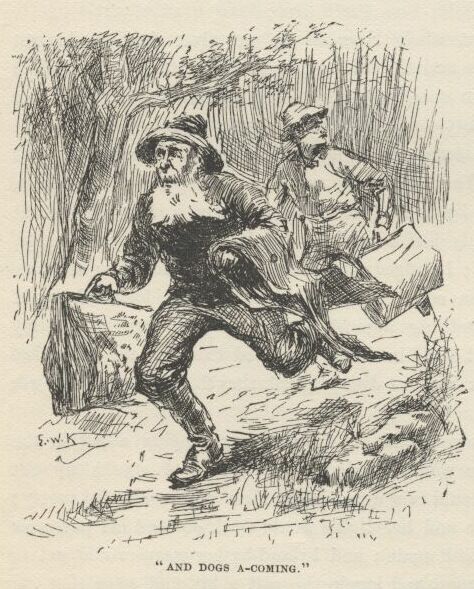
“Don’t you do it. I don’t hear the dogs and horses yet; you’ve got time tocrowd through the brush and get up the crick a little ways; then you take tothe water and wade down to me and get in—that’ll throw the dogs off the scent.”
They done it, and soon as they was aboard I lit out for our tow-head, and inabout five or ten minutes we heard the dogs and the men away off, shouting. Weheard them come along towards the crick, but couldn’t see them; they seemed tostop and fool around a while; then, as we got further and further away all thetime, we couldn’t hardly hear them at all; by the time we had left a mile ofwoods behind us and struck the river, everything was quiet, and we paddled overto the tow-head and hid in the cottonwoods and was safe.
One of these fellows was about seventy or upwards, and had a bald head and verygray whiskers. He had an old battered-up slouch hat on, and a greasy bluewoollen shirt, and ragged old blue jeans britches stuffed into his boot-tops,and home-knit galluses—no, he only had one. He had an old long-tailed bluejeans coat with slick brass buttons flung over his arm, and both of them hadbig, fat, ratty-looking carpet-bags.
The other fellow was about thirty, and dressed about as ornery. After breakfastwe all laid off and talked, and the first thing that come out was that thesechaps didn’t know one another.
“What got you into trouble?” says the baldhead to t’other chap.
“Well, I’d been selling an article to take the tartar off the teeth—and it doestake it off, too, and generly the enamel along with it—but I stayed about onenight longer than I ought to, and was just in the act of sliding out when I ranacross you on the trail this side of town, and you told me they were coming,and begged me to help you to get off. So I told you I was expecting troublemyself, and would scatter out withyou. That’s the whole yarn—what’syourn?
“Well, I’d ben a-runnin’ a little temperance revival thar, ’bout a week, andwas the pet of the women folks, big and little, for I was makin’ it mighty warmfor the rummies, I tellyou, and takin’ as much as five or six dollars anight—ten cents a head, children and niggers free—and business a-growin’ allthe time, when somehow or another a little report got around last night that Ihad a way of puttin’ in my time with a private jug on the sly. A nigger roustedme out this mornin’, and told me the people was getherin’ on the quiet withtheir dogs and horses, and they’d be along pretty soon and give me ’bout halfan hour’s start, and then run me down if they could; and if they got me they’dtar and feather me and ride me on a rail, sure. I didn’t wait for nobreakfast—I warn’t hungry.”
“Old man,” said the young one, “I reckon we might double-team it together; whatdo you think?”
“I ain’t undisposed. What’s your line—mainly?”
“Jour printer by trade; do a little in patent medicines; theater-actor—tragedy,you know; take a turn to mesmerism and phrenology when there’s a chance; teachsinging-geography school for a change; sling a lecture sometimes—oh, I do lotsof things—most anything that comes handy, so it ain’t work. What’s your lay?”
“I’ve done considerble in the doctoring way in my time. Layin’ on o’ hands ismy best holt—for cancer and paralysis, and sich things; and I k’n tell afortune pretty good when I’ve got somebody along to find out the facts for me.Preachin’s my line, too, and workin’ camp-meetin’s, and missionaryin’ around.”
Nobody never said anything for a while; then the young man hove a sigh andsays:
“Alas!”
“What ’re you alassin’ about?” says the baldhead.
“To think I should have lived to be leading such a life, and be degraded downinto such company.” And he begun to wipe the corner of his eye with a rag.
“Dern your skin, ain’t the company good enough for you?” says the baldhead,pretty pert and uppish.
“Yes, it isgood enough for me; it’s as good as I deserve; for whofetched me so low when I was so high? Idid myself. I don’t blameyou, gentlemen—far from it; I don’t blame anybody. I deserve it all. Letthe cold world do its worst; one thing I know—there’s a grave somewhere for me.The world may go on just as it’s always done, and take everything from me—lovedones, property, everything; but it can’t take that. Some day I’ll lie down init and forget it all, and my poor broken heart will be at rest.” He went ona-wiping.
“Drot your pore broken heart,” says the baldhead; “what are you heaving yourpore broken heart at usf’r? Wehain’t done nothing.”
“No, I know you haven’t. I ain’t blaming you, gentlemen. I brought myselfdown—yes, I did it myself. It’s right I should suffer—perfectly right—I don’tmake any moan.”
“Brought you down from whar? Whar was you brought down from?”
“Ah, you would not believe me; the world never believes—let it pass—’tis nomatter. The secret of my birth—”
“The secret of your birth! Do you mean to say—”
“Gentlemen,” says the young man, very solemn, “I will reveal it to you, for Ifeel I may have confidence in you. By rights I am a duke!”
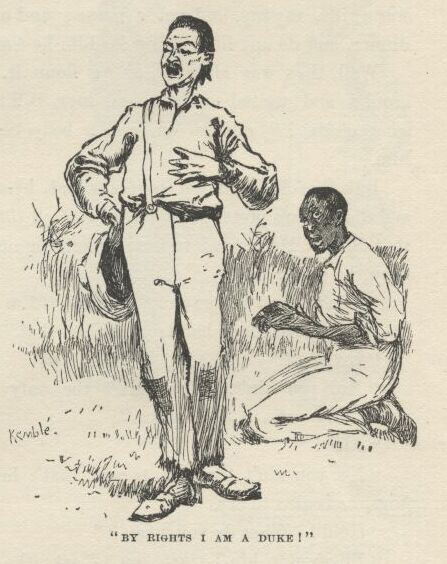
Jim’s eyes bugged out when he heard that; and I reckon mine did, too. Then thebaldhead says: “No! you can’t mean it?”
“Yes. My great-grandfather, eldest son of the Duke of Bridgewater, fled to thiscountry about the end of the last century, to breathe the pure air of freedom;married here, and died, leaving a son, his own father dying about the sametime. The second son of the late duke seized the titles and estates—the infantreal duke was ignored. I am the lineal descendant of that infant—I am therightful Duke of Bridgewater; and here am I, forlorn, torn from my high estate,hunted of men, despised by the cold world, ragged, worn, heart-broken, anddegraded to the companionship of felons on a raft!”
Jim pitied him ever so much, and so did I. We tried to comfort him, but he saidit warn’t much use, he couldn’t be much comforted; said if we was a mind toacknowledge him, that would do him more good than most anything else; so wesaid we would, if he would tell us how. He said we ought to bow when we spoketo him, and say “Your Grace,” or “My Lord,” or “Your Lordship”—and he wouldn’tmind it if we called him plain “Bridgewater,” which, he said, was a titleanyway, and not a name; and one of us ought to wait on him at dinner, and doany little thing for him he wanted done.
Well, that was all easy, so we done it. All through dinner Jim stood around andwaited on him, and says, “Will yo’ Grace have some o’ dis or some o’ dat?” andso on, and a body could see it was mighty pleasing to him.
But the old man got pretty silent by-and-by—didn’t have much to say, and didn’tlook pretty comfortable over all that petting that was going on around thatduke. He seemed to have something on his mind. So, along in the afternoon, hesays:
“Looky here, Bilgewater,” he says, “I’m nation sorry for you, but you ain’t theonly person that’s had troubles like that.”
“No?”
“No you ain’t. You ain’t the only person that’s ben snaked down wrongfullyout’n a high place.”
“Alas!”
“No, you ain’t the only person that’s had a secret of his birth.” And, byjings, hebegins to cry.
“Hold! What do you mean?”
“Bilgewater, kin I trust you?” says the old man, still sort of sobbing.
“To the bitter death!” He took the old man by the hand and squeezed it, andsays, “That secret of your being: speak!”
“Bilgewater, I am the late Dauphin!”
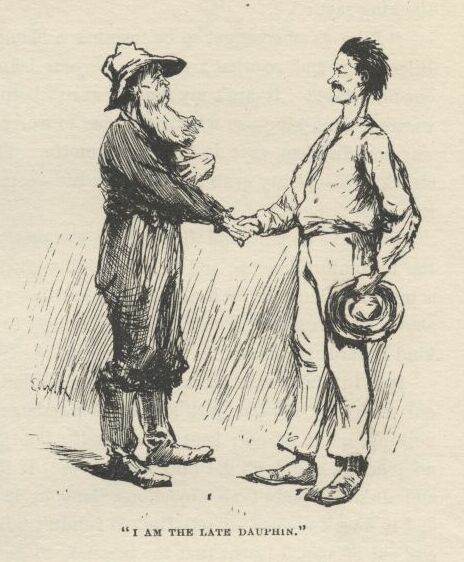
You bet you, Jim and me stared this time. Then the duke says:
“You are what?”
“Yes, my friend, it is too true—your eyes is lookin’ at this very moment on thepore disappeared Dauphin, Looy the Seventeen, son of Looy the Sixteen and MarryAntonette.”
“You! At your age! No! You mean you’re the late Charlemagne; you must be six orseven hundred years old, at the very least.”
“Trouble has done it, Bilgewater, trouble has done it; trouble has brung thesegray hairs and this premature balditude. Yes, gentlemen, you see before you, inblue jeans and misery, the wanderin’, exiled, trampled-on, and sufferin’rightful King of France.”
Well, he cried and took on so that me and Jim didn’t know hardly what to do, wewas so sorry—and so glad and proud we’d got him with us, too. So we set in,like we done before with the duke, and tried to comfort him. But he saidit warn’t no use, nothing but to be dead and done with it all could do him anygood; though he said it often made him feel easier and better for a while ifpeople treated him according to his rights, and got down on one knee to speakto him, and always called him “Your Majesty,” and waited on him first at meals,and didn’t set down in his presence till he asked them. So Jim and me set tomajestying him, and doing this and that and t’other for him, and standing uptill he told us we might set down. This done him heaps of good, and so he gotcheerful and comfortable. But the duke kind of soured on him, and didn’t look abit satisfied with the way things was going; still, the king acted realfriendly towards him, and said the duke’s great-grandfather and all the otherDukes of Bilgewater was a good deal thought of by hisfather, and wasallowed to come to the palace considerable; but the duke stayed huffy a goodwhile, till by-and-by the king says:
“Like as not we got to be together a blamed long time on this h-yer raft,Bilgewater, and so what’s the use o’ your bein’ sour? It’ll only make thingsoncomfortable. It ain’t my fault I warn’t born a duke, it ain’t your fault youwarn’t born a king—so what’s the use to worry? Make the best o’ things the wayyou find ’em, says I—that’s my motto. This ain’t no bad thing that we’ve struckhere—plenty grub and an easy life—come, give us your hand, Duke, and le’s allbe friends.”
The duke done it, and Jim and me was pretty glad to see it. It took away allthe uncomfortableness and we felt mighty good over it, because it would a beena miserable business to have any unfriendliness on the raft; for what you want,above all things, on a raft, is for everybody to be satisfied, and feel rightand kind towards the others.
It didn’t take me long to make up my mind that these liars warn’t no kings nordukes at all, but just low-down humbugs and frauds. But I never said nothing,never let on; kept it to myself; it’s the best way; then you don’t have noquarrels, and don’t get into no trouble. If they wanted us to call them kingsand dukes, I hadn’t no objections, ’long as it would keep peace in the family;and it warn’t no use to tell Jim, so I didn’t tell him. If I never learntnothing else out of pap, I learnt that the best way to get along with his kindof people is to let them have their own way.

CHAPTER XX.
They asked us considerable many questions; wanted to know what we covered upthe raft that way for, and laid by in the daytime instead of running—was Jim arunaway nigger? Says I:
“Goodness sakes, would a runaway nigger run south?”
No, they allowed he wouldn’t. I had to account for things some way, so I says:
“My folks was living in Pike County, in Missouri, where I was born, and theyall died off but me and pa and my brother Ike. Pa, he ’lowed he’d break up andgo down and live with Uncle Ben, who’s got a little one-horse place on theriver, forty-four mile below Orleans. Pa was pretty poor, and had some debts;so when he’d squared up there warn’t nothing left but sixteen dollars and ournigger, Jim. That warn’t enough to take us fourteen hundred mile, deck passagenor no other way. Well, when the river rose pa had a streak of luck one day; heketched this piece of a raft; so we reckoned we’d go down to Orleans on it.Pa’s luck didn’t hold out; a steamboat run over the forrard corner of the raftone night, and we all went overboard and dove under the wheel; Jim and me comeup all right, but pa was drunk, and Ike was only four years old, so they nevercome up no more. Well, for the next day or two we had considerable trouble,because people was always coming out in skiffs and trying to take Jim away fromme, saying they believed he was a runaway nigger. We don’t run daytimes no morenow; nights they don’t bother us.”
The duke says:
“Leave me alone to cipher out a way so we can run in the daytime if we want to.I’ll think the thing over—I’ll invent a plan that’ll fix it. We’ll let it alonefor to-day, because of course we don’t want to go by that town yonder indaylight—it mightn’t be healthy.”
Towards night it begun to darken up and look like rain; the heat lightning wassquirting around low down in the sky, and the leaves was beginning to shiver—itwas going to be pretty ugly, it was easy to see that. So the duke and the kingwent to overhauling our wigwam, to see what the beds was like. My bed was astraw tick better than Jim’s, which was a corn-shuck tick; there’s always cobsaround about in a shuck tick, and they poke into you and hurt; and when youroll over the dry shucks sound like you was rolling over in a pile of deadleaves; it makes such a rustling that you wake up. Well, the duke allowed hewould take my bed; but the king allowed he wouldn’t. He says:
“I should a reckoned the difference in rank would a sejested to you that acorn-shuck bed warn’t just fitten for me to sleep on. Your Grace’ll take theshuck bed yourself.”
Jim and me was in a sweat again for a minute, being afraid there was going tobe some more trouble amongst them; so we was pretty glad when the duke says:
“’Tis my fate to be always ground into the mire under the iron heel ofoppression. Misfortune has broken my once haughty spirit; I yield, I submit;’tis my fate. I am alone in the world—let me suffer; I can bear it.”
We got away as soon as it was good and dark. The king told us to stand well outtowards the middle of the river, and not show a light till we got a long waysbelow the town. We come in sight of the little bunch of lights by-and-by—thatwas the town, you know—and slid by, about a half a mile out, all right. When wewas three-quarters of a mile below we hoisted up our signal lantern; and aboutten o’clock it come on to rain and blow and thunder and lighten likeeverything; so the king told us to both stay on watch till the weather gotbetter; then him and the duke crawled into the wigwam and turned in for thenight. It was my watch below till twelve, but I wouldn’t a turned in anyway ifI’d had a bed, because a body don’t see such a storm as that every day in theweek, not by a long sight. My souls, how the wind did scream along! And everysecond or two there’d come a glare that lit up the white-caps for a half a milearound, and you’d see the islands looking dusty through the rain, and the treesthrashing around in the wind; then comes a h-whack!—bum! bum!bumble-umble-um-bum-bum-bum-bum—and the thunder would go rumbling and grumblingaway, and quit—and then ripcomes another flash and another sockdolager.The waves most washed me off the raft sometimes, but I hadn’t any clothes on,and didn’t mind. We didn’t have no trouble about snags; the lightning wasglaring and flittering around so constant that we could see them plenty soonenough to throw her head this way or that and miss them.
I had the middle watch, you know, but I was pretty sleepy by that time, so Jimhe said he would stand the first half of it for me; he was always mighty goodthat way, Jim was. I crawled into the wigwam, but the king and the duke hadtheir legs sprawled around so there warn’t no show for me; so I laid outside—Ididn’t mind the rain, because it was warm, and the waves warn’t running so highnow. About two they come up again, though, and Jim was going to call me; but hechanged his mind, because he reckoned they warn’t high enough yet to do anyharm; but he was mistaken about that, for pretty soon all of a sudden alongcomes a regular ripper and washed me overboard. It most killed Jim a-laughing.He was the easiest nigger to laugh that ever was, anyway.
I took the watch, and Jim he laid down and snored away; and by-and-by the stormlet up for good and all; and the first cabin-light that showed, I rousted himout and we slid the raft into hiding quarters for the day.
The king got out an old ratty deck of cards after breakfast, and him and theduke played seven-up a while, five cents a game. Then they got tired of it, andallowed they would “lay out a campaign,” as they called it. The duke went downinto his carpet-bag, and fetched up a lot of little printed bills and read themout loud. One bill said, “The celebrated Dr. Armand de Montalban, of Paris,”would “lecture on the Science of Phrenology” at such and such a place, on theblank day of blank, at ten cents admission, and “furnish charts of character attwenty-five cents apiece.” The duke said that was him. In another billhe was the “world-renowned Shakespearian tragedian, Garrick the Younger, ofDrury Lane, London.” In other bills he had a lot of other names and done otherwonderful things, like finding water and gold with a “divining-rod,”“dissipating witch spells,” and so on. By-and-by he says:
“But the histrionic muse is the darling. Have you ever trod the boards,Royalty?”
“No,” says the king.
“You shall, then, before you’re three days older, Fallen Grandeur,” says theduke. “The first good town we come to we’ll hire a hall and do the sword fightin Richard III. and the balcony scene in Romeo and Juliet. How does that strikeyou?”
“I’m in, up to the hub, for anything that will pay, Bilgewater; but, you see, Idon’t know nothing about play-actin’, and hain’t ever seen much of it. I wastoo small when pap used to have ’em at the palace. Do you reckon you can learnme?”
“Easy!”
“All right. I’m jist a-freezn’ for something fresh, anyway. Le’s commence rightaway.”
So the duke he told him all about who Romeo was and who Juliet was, and said hewas used to being Romeo, so the king could be Juliet.
“But if Juliet’s such a young gal, duke, my peeled head and my white whiskersis goin’ to look oncommon odd on her, maybe.”
“No, don’t you worry; these country jakes won’t ever think of that. Besides,you know, you’ll be in costume, and that makes all the difference in the world;Juliet’s in a balcony, enjoying the moonlight before she goes to bed, and she’sgot on her night-gown and her ruffled nightcap. Here are the costumes for theparts.”
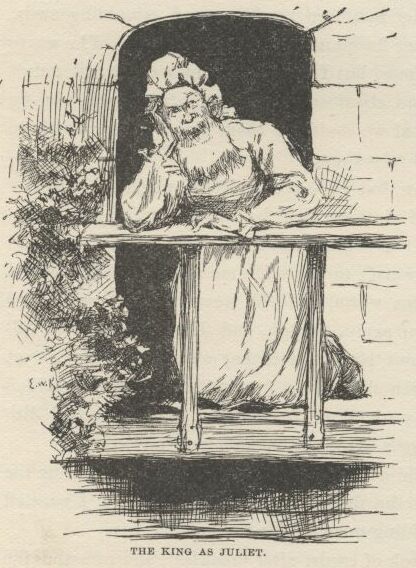
He got out two or three curtain-calico suits, which he said was meedyevil armorfor Richard III. and t’other chap, and a long white cotton nightshirt and aruffled nightcap to match. The king was satisfied; so the duke got out his bookand read the parts over in the most splendid spread-eagle way, prancing aroundand acting at the same time, to show how it had got to be done; then he givethe book to the king and told him to get his part by heart.
There was a little one-horse town about three mile down the bend, and afterdinner the duke said he had ciphered out his idea about how to run in daylightwithout it being dangersome for Jim; so he allowed he would go down to the townand fix that thing. The king allowed he would go, too, and see if he couldn’tstrike something. We was out of coffee, so Jim said I better go along with themin the canoe and get some.
When we got there there warn’t nobody stirring; streets empty, and perfectlydead and still, like Sunday. We found a sick nigger sunning himself in a backyard, and he said everybody that warn’t too young or too sick or too old wasgone to camp-meeting, about two mile back in the woods. The king got thedirections, and allowed he’d go and work that camp-meeting for all it wasworth, and I might go, too.
The duke said what he was after was a printing-office. We found it; a littlebit of a concern, up over a carpenter shop—carpenters and printers all gone tothe meeting, and no doors locked. It was a dirty, littered-up place, and hadink marks, and handbills with pictures of horses and runaway niggers on them,all over the walls. The duke shed his coat and said he was all right now. So meand the king lit out for the camp-meeting.
We got there in about a half an hour fairly dripping, for it was a most awfulhot day. There was as much as a thousand people there from twenty mile around.The woods was full of teams and wagons, hitched everywheres, feeding out of thewagon-troughs and stomping to keep off the flies. There was sheds made out ofpoles and roofed over with branches, where they had lemonade and gingerbread tosell, and piles of watermelons and green corn and such-like truck.
The preaching was going on under the same kinds of sheds, only they was biggerand held crowds of people. The benches was made out of outside slabs of logs,with holes bored in the round side to drive sticks into for legs. They didn’thave no backs. The preachers had high platforms to stand on at one end of thesheds. The women had on sun-bonnets; and some had linsey-woolsey frocks, somegingham ones, and a few of the young ones had on calico. Some of the young menwas barefooted, and some of the children didn’t have on any clothes but just atow-linen shirt. Some of the old women was knitting, and some of the youngfolks was courting on the sly.
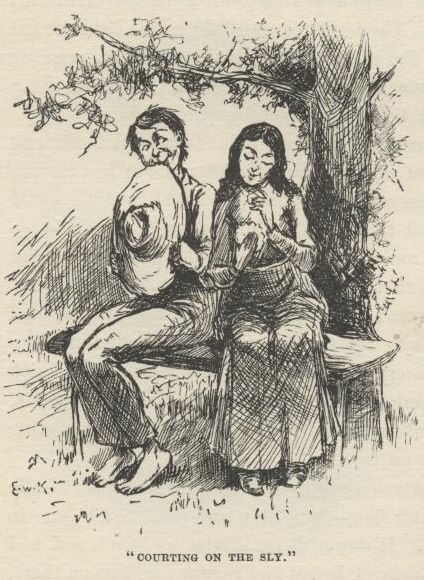
The first shed we come to the preacher was lining out a hymn. He lined out twolines, everybody sung it, and it was kind of grand to hear it, there was somany of them and they done it in such a rousing way; then he lined out two morefor them to sing—and so on. The people woke up more and more, and sung louderand louder; and towards the end some begun to groan, and some begun to shout.Then the preacher begun to preach, and begun in earnest, too; and went weavingfirst to one side of the platform and then the other, and then a-leaning downover the front of it, with his arms and his body going all the time, andshouting his words out with all his might; and every now and then he would holdup his Bible and spread it open, and kind of pass it around this way and that,shouting, “It’s the brazen serpent in the wilderness! Look upon it and live!”And people would shout out, “Glory!—A-a-men!” And so he went on, and thepeople groaning and crying and saying amen:
“Oh, come to the mourners’ bench! come, black with sin! (amen!) come,sick and sore! (amen!) come, lame and halt and blind! (amen!)come, pore and needy, sunk in shame! (a-a-men!) come, all that’s wornand soiled and suffering!—come with a broken spirit! come with a contriteheart! come in your rags and sin and dirt! the waters that cleanse is free, thedoor of heaven stands open—oh, enter in and be at rest!” (a-a-men! glory,glory hallelujah!)
And so on. You couldn’t make out what the preacher said any more, on account ofthe shouting and crying. Folks got up everywheres in the crowd, and workedtheir way just by main strength to the mourners’ bench, with the tears runningdown their faces; and when all the mourners had got up there to the frontbenches in a crowd, they sung and shouted and flung themselves down on thestraw, just crazy and wild.
Well, the first I knowed the king got a-going, and you could hear him overeverybody; and next he went a-charging up on to the platform, and the preacherhe begged him to speak to the people, and he done it. He told them he was apirate—been a pirate for thirty years out in the Indian Ocean—and his crew wasthinned out considerable last spring in a fight, and he was home now to takeout some fresh men, and thanks to goodness he’d been robbed last night and putashore off of a steamboat without a cent, and he was glad of it; it was theblessedest thing that ever happened to him, because he was a changed man now,and happy for the first time in his life; and, poor as he was, he was going tostart right off and work his way back to the Indian Ocean, and put in the restof his life trying to turn the pirates into the true path; for he could do itbetter than anybody else, being acquainted with all pirate crews in that ocean;and though it would take him a long time to get there without money, he wouldget there anyway, and every time he convinced a pirate he would say to him,“Don’t you thank me, don’t you give me no credit; it all belongs to them dearpeople in Pokeville camp-meeting, natural brothers and benefactors of the race,and that dear preacher there, the truest friend a pirate ever had!”
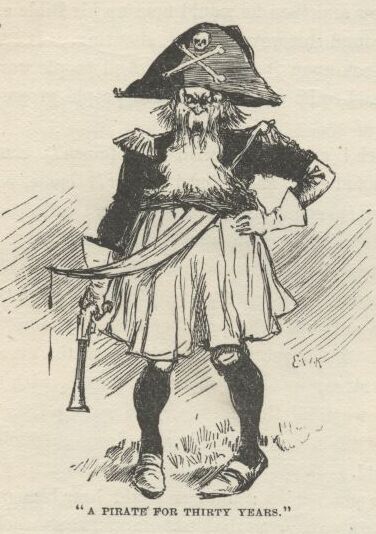
And then he busted into tears, and so did everybody. Then somebody sings out,“Take up a collection for him, take up a collection!” Well, a half a dozen madea jump to do it, but somebody sings out, “Let himpass the hat around!”Then everybody said it, the preacher too.
So the king went all through the crowd with his hat swabbing his eyes, andblessing the people and praising them and thanking them for being so good tothe poor pirates away off there; and every little while the prettiest kind ofgirls, with the tears running down their cheeks, would up and ask him would helet them kiss him for to remember him by; and he always done it; and some ofthem he hugged and kissed as many as five or six times—and he was invited tostay a week; and everybody wanted him to live in their houses, and said they’dthink it was an honor; but he said as this was the last day of the camp-meetinghe couldn’t do no good, and besides he was in a sweat to get to the IndianOcean right off and go to work on the pirates.
When we got back to the raft and he come to count up he found he had collectedeighty-seven dollars and seventy-five cents. And then he had fetched away athree-gallon jug of whisky, too, that he found under a wagon when he wasstarting home through the woods. The king said, take it all around, it laidover any day he’d ever put in in the missionarying line. He said it warn’t nouse talking, heathens don’t amount to shucks alongside of pirates to work acamp-meeting with.
The duke was thinking he’dbeen doing pretty well till the king come toshow up, but after that he didn’t think so so much. He had set up and printedoff two little jobs for farmers in that printing-office—horse bills—and tookthe money, four dollars. And he had got in ten dollars’ worth of advertisementsfor the paper, which he said he would put in for four dollars if they would payin advance—so they done it. The price of the paper was two dollars a year, buthe took in three subscriptions for half a dollar apiece on condition of thempaying him in advance; they were going to pay in cordwood and onions as usual,but he said he had just bought the concern and knocked down the price as low ashe could afford it, and was going to run it for cash. He set up a little pieceof poetry, which he made, himself, out of his own head—three verses—kind ofsweet and saddish—the name of it was, “Yes, crush, cold world, this breakingheart”—and he left that all set up and ready to print in the paper, and didn’tcharge nothing for it. Well, he took in nine dollars and a half, and said he’ddone a pretty square day’s work for it.
Then he showed us another little job he’d printed and hadn’t charged for,because it was for us. It had a picture of a runaway nigger with a bundle on astick over his shoulder, and “$200 reward” under it. The reading was all aboutJim, and just described him to a dot. It said he run away from St. Jacques’plantation, forty mile below New Orleans, last winter, and likely went north,and whoever would catch him and send him back he could have the reward andexpenses.
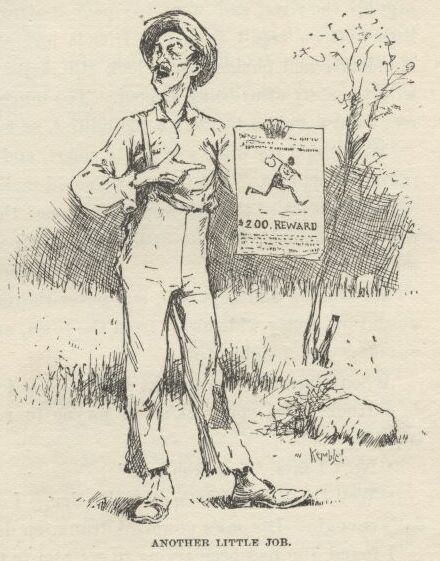
“Now,” says the duke, “after to-night we can run in the daytime if we want to.Whenever we see anybody coming we can tie Jim hand and foot with a rope, andlay him in the wigwam and show this handbill and say we captured him up theriver, and were too poor to travel on a steamboat, so we got this little rafton credit from our friends and are going down to get the reward. Handcuffs andchains would look still better on Jim, but it wouldn’t go well with the storyof us being so poor. Too much like jewelry. Ropes are the correct thing—we mustpreserve the unities, as we say on the boards.”
We all said the duke was pretty smart, and there couldn’t be no trouble aboutrunning daytimes. We judged we could make miles enough that night to get out ofthe reach of the powwow we reckoned the duke’s work in the printing office wasgoing to make in that little town; then we could boom right along if we wantedto.
We laid low and kept still, and never shoved out till nearly ten o’clock; thenwe slid by, pretty wide away from the town, and didn’t hoist our lantern tillwe was clear out of sight of it.
When Jim called me to take the watch at four in the morning, he says:
“Huck, does you reck’n we gwyne to run acrost any mo’ kings on dis trip?”
“No,” I says, “I reckon not.”
“Well,” says he, “dat’s all right, den. I doan’ mine one er two kings, butdat’s enough. Dis one’s powerful drunk, en de duke ain’ much better.”
I found Jim had been trying to get him to talk French, so he could hear what itwas like; but he said he had been in this country so long, and had so muchtrouble, he’d forgot it.

CHAPTER XXI.
It was after sun-up now, but we went right on and didn’t tie up. The king andthe duke turned out by-and-by looking pretty rusty; but after they’d jumpedoverboard and took a swim it chippered them up a good deal. After breakfast theking he took a seat on the corner of the raft, and pulled off his boots androlled up his britches, and let his legs dangle in the water, so as to becomfortable, and lit his pipe, and went to getting his Romeo and Juliet byheart. When he had got it pretty good, him and the duke begun to practice ittogether. The duke had to learn him over and over again how to say everyspeech; and he made him sigh, and put his hand on his heart, and after a whilehe said he done it pretty well; “only,” he says, “you mustn’t bellow outRomeo!that way, like a bull—you must say it soft and sick andlanguishy, so—R-o-o-meo! that is the idea; for Juliet’s a dear sweet mere childof a girl, you know, and she doesn’t bray like a jackass.”
Well, next they got out a couple of long swords that the duke made out of oaklaths, and begun to practice the sword fight—the duke called himself RichardIII.; and the way they laid on and pranced around the raft was grand to see.But by-and-by the king tripped and fell overboard, and after that they took arest, and had a talk about all kinds of adventures they’d had in other timesalong the river.
After dinner the duke says:
“Well, Capet, we’ll want to make this a first-class show, you know, so I guesswe’ll add a little more to it. We want a little something to answer encoreswith, anyway.”
“What’s onkores, Bilgewater?”
The duke told him, and then says:
“I’ll answer by doing the Highland fling or the sailor’s hornpipe; andyou—well, let me see—oh, I’ve got it—you can do Hamlet’s soliloquy.”
“Hamlet’s which?”
“Hamlet’s soliloquy, you know; the most celebrated thing in Shakespeare. Ah,it’s sublime, sublime! Always fetches the house. I haven’t got it in thebook—I’ve only got one volume—but I reckon I can piece it out from memory. I’lljust walk up and down a minute, and see if I can call it back fromrecollection’s vaults.”
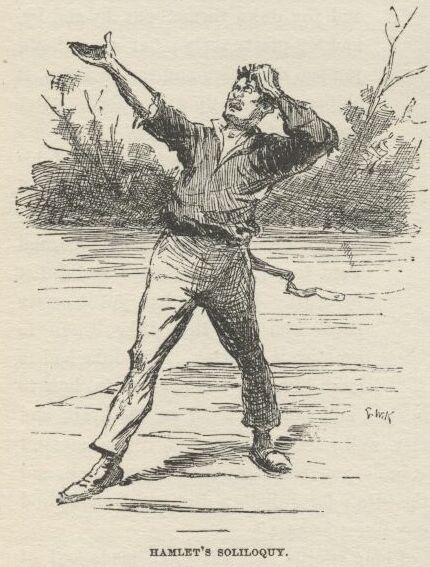
So he went to marching up and down, thinking, and frowning horrible every nowand then; then he would hoist up his eyebrows; next he would squeeze his handon his forehead and stagger back and kind of moan; next he would sigh, and nexthe’d let on to drop a tear. It was beautiful to see him. By-and-by he got it.He told us to give attention. Then he strikes a most noble attitude, with oneleg shoved forwards, and his arms stretched away up, and his head tilted back,looking up at the sky; and then he begins to rip and rave and grit his teeth;and after that, all through his speech, he howled, and spread around, andswelled up his chest, and just knocked the spots out of any acting everIsee before. This is the speech—I learned it, easy enough, while he waslearning it to the king:
To be, or not to be; that is the bare bodkin
That makes calamity of so long life;
For who would fardels bear, till Birnam Wood do come to Dunsinane,
But that the fear of something after death
Murders the innocent sleep,
Great nature’s second course,
And makes us rather sling the arrows of outrageous fortune
Than fly to others that we know not of.
There’s the respect must give us pause:
Wake Duncan with thy knocking! I would thou couldst;
For who would bear the whips and scorns of time,
The oppressor’s wrong, the proud man’s contumely,
The law’s delay, and the quietus which his pangs might take.
In the dead waste and middle of the night, when churchyards yawn
In customary suits of solemn black,
But that the undiscovered country from whose bourne no traveler returns,
Breathes forth contagion on the world,
And thus the native hue of resolution, like the poor cat i’ the adage,
Is sicklied o’er with care.
And all the clouds that lowered o’er our housetops,
With this regard their currents turn awry,
And lose the name of action.
’Tis a consummation devoutly to be wished.
But soft you, the fair Ophelia:
Ope not thy ponderous and marble jaws.
But get thee to a nunnery—go!
Well, the old man he liked that speech, and he mighty soon got it so he coulddo it first rate. It seemed like he was just born for it; and when he had hishand in and was excited, it was perfectly lovely the way he would rip and tearand rair up behind when he was getting it off.
The first chance we got, the duke he had some show bills printed; and afterthat, for two or three days as we floated along, the raft was a most uncommonlively place, for there warn’t nothing but sword-fighting and rehearsing—as theduke called it—going on all the time. One morning, when we was pretty well downthe State of Arkansaw, we come in sight of a little one-horse town in a bigbend; so we tied up about three-quarters of a mile above it, in the mouth of acrick which was shut in like a tunnel by the cypress trees, and all of us butJim took the canoe and went down there to see if there was any chance in thatplace for our show.
We struck it mighty lucky; there was going to be a circus there that afternoon,and the country people was already beginning to come in, in all kinds of oldshackly wagons, and on horses. The circus would leave before night, so our showwould have a pretty good chance. The duke he hired the court house, and we wentaround and stuck up our bills. They read like this:
Shaksperean Revival!!!
Wonderful Attraction!
For One Night Only!
The world renowned tragedians,
David Garrick the younger, of Drury Lane Theatre, London,
and
Edmund Kean the elder, of the Royal Haymarket Theatre,
Whitechapel, Pudding Lane, Piccadilly, London, and the
Royal Continental Theatres, in their sublime
Shaksperean Spectacle entitled
The Balcony Scene
in
Romeo and Juliet!!!
Romeo...................................... Mr. Garrick.
Juliet..................................... Mr. Kean.
Assisted by the whole strength of the company!
New costumes, new scenery, new appointments!
Also:
The thrilling, masterly, and blood-curdling
Broad-sword conflict
In Richard III.!!!
Richard III................................ Mr. Garrick.
Richmond................................... Mr. Kean.
also:
(by special request,)
Hamlet’s Immortal Soliloquy!!
By the Illustrious Kean!
Done by him 300 consecutive nights in Paris!
For One Night Only,
On account of imperative European engagements!
Admission 25 cents; children and servants, 10 cents.
Then we went loafing around the town. The stores and houses was most all oldshackly dried-up frame concerns that hadn’t ever been painted; they was set upthree or four foot above ground on stilts, so as to be out of reach of thewater when the river was overflowed. The houses had little gardens around them,but they didn’t seem to raise hardly anything in them but jimpson weeds, andsunflowers, and ash-piles, and old curled-up boots and shoes, and pieces ofbottles, and rags, and played-out tin-ware. The fences was made of differentkinds of boards, nailed on at different times; and they leaned every which-way,and had gates that didn’t generly have but one hinge—a leather one. Some of thefences had been whitewashed, some time or another, but the duke said it was inClumbus’s time, like enough. There was generly hogs in the garden, and peopledriving them out.
All the stores was along one street. They had white domestic awnings in front,and the country people hitched their horses to the awning-posts. There wasempty drygoods boxes under the awnings, and loafers roosting on them all daylong, whittling them with their Barlow knives; and chawing tobacco, and gapingand yawning and stretching—a mighty ornery lot. They generly had on yellowstraw hats most as wide as an umbrella, but didn’t wear no coats norwaistcoats, they called one another Bill, and Buck, and Hank, and Joe, andAndy, and talked lazy and drawly, and used considerable many cuss words. Therewas as many as one loafer leaning up against every awning-post, and he mostalways had his hands in his britches-pockets, except when he fetched them outto lend a chaw of tobacco or scratch. What a body was hearing amongst them allthe time was:
“Gimme a chaw ’v tobacker, Hank.”
“Cain’t; I hain’t got but one chaw left. Ask Bill.”
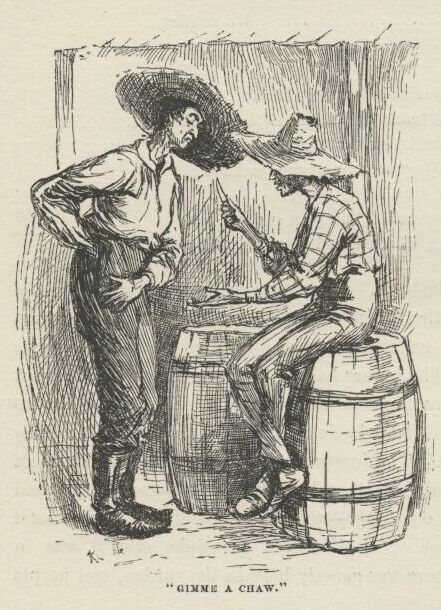
Maybe Bill he gives him a chaw; maybe he lies and says he ain’t got none. Someof them kinds of loafers never has a cent in the world, nor a chaw of tobaccoof their own. They get all their chawing by borrowing; they say to a fellow, “Iwisht you’d len’ me a chaw, Jack, I jist this minute give Ben Thompson the lastchaw I had”—which is a lie pretty much everytime; it don’t fool nobody but astranger; but Jack ain’t no stranger, so he says:
“Yougive him a chaw, did you? So did your sister’s cat’s grandmother.You pay me back the chaws you’ve awready borry’d off’n me, Lafe Buckner, thenI’ll loan you one or two ton of it, and won’t charge you no back intrust,nuther.”
“Well, I didpay you back some of it wunst.”
“Yes, you did—’bout six chaws. You borry’d store tobacker and paid backnigger-head.”
Store tobacco is flat black plug, but these fellows mostly chaws the naturalleaf twisted. When they borrow a chaw they don’t generly cut it off with aknife, but set the plug in between their teeth, and gnaw with their teeth andtug at the plug with their hands till they get it in two; then sometimes theone that owns the tobacco looks mournful at it when it’s handed back, and says,sarcastic:
“Here, gimme the chaw, and you take the plug.”
All the streets and lanes was just mud; they warn’t nothing else butmud—mud as black as tar and nigh about a foot deep in some places, and two orthree inches deep in allthe places. The hogs loafed and grunted aroundeverywheres. You’d see a muddy sow and a litter of pigs come lazying along thestreet and whollop herself right down in the way, where folks had to walkaround her, and she’d stretch out and shut her eyes and wave her ears whilstthe pigs was milking her, and look as happy as if she was on salary. And prettysoon you’d hear a loafer sing out, “Hi! soboy! sick him, Tige!” andaway the sow would go, squealing most horrible, with a dog or two swinging toeach ear, and three or four dozen more a-coming; and then you would see all theloafers get up and watch the thing out of sight, and laugh at the fun and lookgrateful for the noise. Then they’d settle back again till there was a dogfight. There couldn’t anything wake them up all over, and make them happy allover, like a dog fight—unless it might be putting turpentine on a stray dog andsetting fire to him, or tying a tin pan to his tail and see him run himself todeath.
On the river front some of the houses was sticking out over the bank, and theywas bowed and bent, and about ready to tumble in. The people had moved out ofthem. The bank was caved away under one corner of some others, and that cornerwas hanging over. People lived in them yet, but it was dangersome, becausesometimes a strip of land as wide as a house caves in at a time. Sometimes abelt of land a quarter of a mile deep will start in and cave along and cavealong till it all caves into the river in one summer. Such a town as that hasto be always moving back, and back, and back, because the river’s alwaysgnawing at it.
The nearer it got to noon that day the thicker and thicker was the wagons andhorses in the streets, and more coming all the time. Families fetched theirdinners with them from the country, and eat them in the wagons. There wasconsiderable whisky drinking going on, and I seen three fights. By-and-bysomebody sings out:
“Here comes old Boggs!—in from the country for his little old monthly drunk;here he comes, boys!”
All the loafers looked glad; I reckoned they was used to having fun out ofBoggs. One of them says:
“Wonder who he’s a-gwyne to chaw up this time. If he’d a-chawed up all the menhe’s ben a-gwyne to chaw up in the last twenty year he’d have considerableruputation now.”
Another one says, “I wisht old Boggs ’d threaten me, ’cuz then I’d know Iwarn’t gwyne to die for a thousan’ year.”
Boggs comes a-tearing along on his horse, whooping and yelling like an Injun,and singing out:
“Cler the track, thar. I’m on the waw-path, and the price uv coffins is a-gwyneto raise.”

He was drunk, and weaving about in his saddle; he was over fifty year old, andhad a very red face. Everybody yelled at him and laughed at him and sassed him,and he sassed back, and said he’d attend to them and lay them out in theirregular turns, but he couldn’t wait now because he’d come to town to kill oldColonel Sherburn, and his motto was, “Meat first, and spoon vittles to top offon.”
He see me, and rode up and says:
“Whar’d you come f’m, boy? You prepared to die?”
Then he rode on. I was scared, but a man says:
“He don’t mean nothing; he’s always a-carryin’ on like that when he’s drunk.He’s the best naturedest old fool in Arkansaw—never hurt nobody, drunk norsober.”
Boggs rode up before the biggest store in town, and bent his head down so hecould see under the curtain of the awning and yells:
“Come out here, Sherburn! Come out and meet the man you’ve swindled. You’re thehoun’ I’m after, and I’m a-gwyne to have you, too!”
And so he went on, calling Sherburn everything he could lay his tongue to, andthe whole street packed with people listening and laughing and going on.By-and-by a proud-looking man about fifty-five—and he was a heap the bestdressed man in that town, too—steps out of the store, and the crowd drops backon each side to let him come. He says to Boggs, mighty ca’m and slow—he says:
“I’m tired of this, but I’ll endure it till one o’clock. Till one o’clock,mind—no longer. If you open your mouth against me only once after that time youcan’t travel so far but I will find you.”
Then he turns and goes in. The crowd looked mighty sober; nobody stirred, andthere warn’t no more laughing. Boggs rode off blackguarding Sherburn as loud ashe could yell, all down the street; and pretty soon back he comes and stopsbefore the store, still keeping it up. Some men crowded around him and tried toget him to shut up, but he wouldn’t; they told him it would be one o’clock inabout fifteen minutes, and so he mustgo home—he must go right away. Butit didn’t do no good. He cussed away with all his might, and throwed his hatdown in the mud and rode over it, and pretty soon away he went a-raging downthe street again, with his gray hair a-flying. Everybody that could get achance at him tried their best to coax him off of his horse so they could lockhim up and get him sober; but it warn’t no use—up the street he would tearagain, and give Sherburn another cussing. By-and-by somebody says:
“Go for his daughter!—quick, go for his daughter; sometimes he’ll listen toher. If anybody can persuade him, she can.”
So somebody started on a run. I walked down street a ways and stopped. In aboutfive or ten minutes here comes Boggs again, but not on his horse. He wasa-reeling across the street towards me, bare-headed, with a friend on bothsides of him a-holt of his arms and hurrying him along. He was quiet, andlooked uneasy; and he warn’t hanging back any, but was doing some of thehurrying himself. Somebody sings out:
“Boggs!”
I looked over there to see who said it, and it was that Colonel Sherburn. Hewas standing perfectly still in the street, and had a pistol raised in hisright hand—not aiming it, but holding it out with the barrel tilted up towardsthe sky. The same second I see a young girl coming on the run, and two men withher. Boggs and the men turned round to see who called him, and when they seethe pistol the men jumped to one side, and the pistol-barrel come down slow andsteady to a level—both barrels cocked. Boggs throws up both of his hands andsays, “O Lord, don’t shoot!” Bang! goes the first shot, and he staggers back,clawing at the air—bang! goes the second one, and he tumbles backwards ontothe ground, heavy and solid, with his arms spread out. That young girl screamedout and comes rushing, and down she throws herself on her father, crying, andsaying, “Oh, he’s killed him, he’s killed him!” The crowd closed up aroundthem, and shouldered and jammed one another, with their necks stretched, tryingto see, and people on the inside trying to shove them back and shouting, “Back,back! give him air, give him air!”
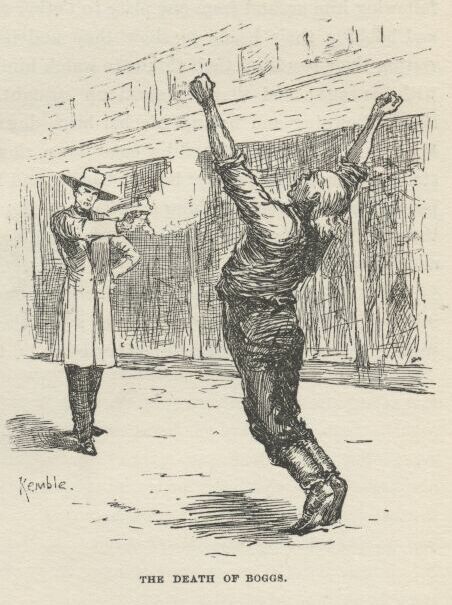
Colonel Sherburn he tossed his pistol onto the ground, and turned around onhis heels and walked off.
They took Boggs to a little drug store, the crowd pressing around just thesame, and the whole town following, and I rushed and got a good place at thewindow, where I was close to him and could see in. They laid him on the floorand put one large Bible under his head, and opened another one and spread it onhis breast; but they tore open his shirt first, and I seen where one of thebullets went in. He made about a dozen long gasps, his breast lifting the Bibleup when he drawed in his breath, and letting it down again when he breathed itout—and after that he laid still; he was dead. Then they pulled his daughteraway from him, screaming and crying, and took her off. She was about sixteen,and very sweet and gentle-looking, but awful pale and scared.
Well, pretty soon the whole town was there, squirming and scrouging and pushingand shoving to get at the window and have a look, but people that had theplaces wouldn’t give them up, and folks behind them was saying all the time,“Say, now, you’ve looked enough, you fellows; ’tain’t right and ’tain’t fairfor you to stay thar all the time, and never give nobody a chance; other folkshas their rights as well as you.”
There was considerable jawing back, so I slid out, thinking maybe there wasgoing to be trouble. The streets was full, and everybody was excited. Everybodythat seen the shooting was telling how it happened, and there was a big crowdpacked around each one of these fellows, stretching their necks and listening.One long, lanky man, with long hair and a big white fur stovepipe hat on theback of his head, and a crooked-handled cane, marked out the places on theground where Boggs stood and where Sherburn stood, and the people following himaround from one place to t’other and watching everything he done, and bobbingtheir heads to show they understood, and stooping a little and resting theirhands on their thighs to watch him mark the places on the ground with his cane;and then he stood up straight and stiff where Sherburn had stood, frowning andhaving his hat-brim down over his eyes, and sung out, “Boggs!” and then fetchedhis cane down slow to a level, and says “Bang!” staggered backwards, says“Bang!” again, and fell down flat on his back. The people that had seen thething said he done it perfect; said it was just exactly the way it allhappened. Then as much as a dozen people got out their bottles and treated him.
Well, by-and-by somebody said Sherburn ought to be lynched. In about a minuteeverybody was saying it; so away they went, mad and yelling, and snatching downevery clothes-line they come to, to do the hanging with.
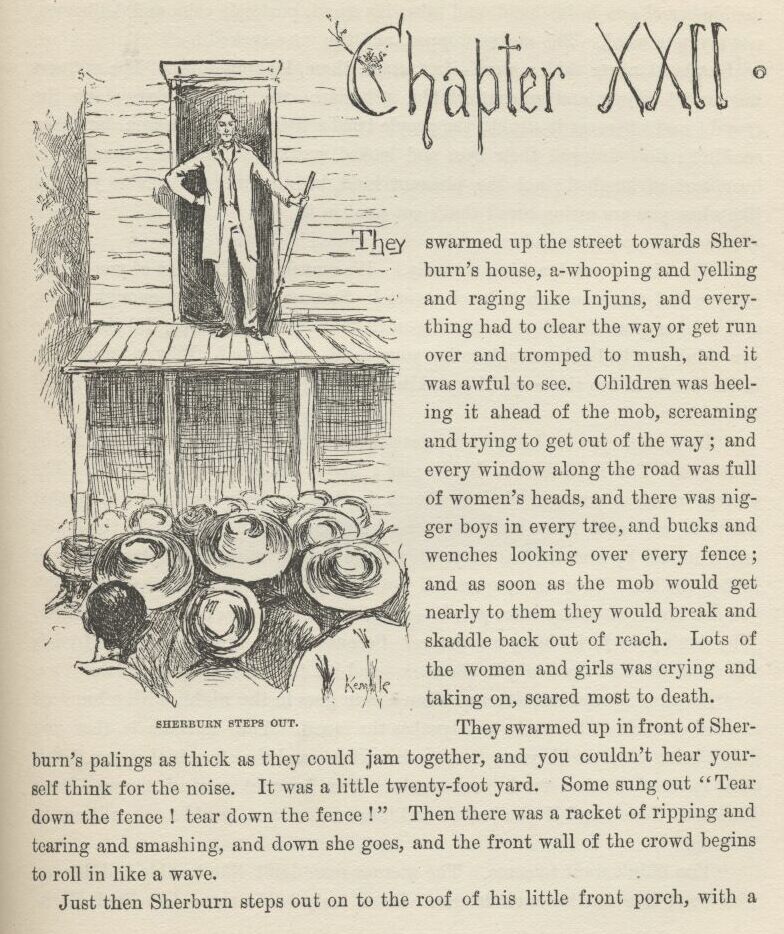
CHAPTER XXII.
They swarmed up towards Sherburn’s house, a-whooping and raging like Injuns,and everything had to clear the way or get run over and tromped to mush, and itwas awful to see. Children was heeling it ahead of the mob, screaming andtrying to get out of the way; and every window along the road was full ofwomen’s heads, and there was nigger boys in every tree, and bucks and wencheslooking over every fence; and as soon as the mob would get nearly to them theywould break and skaddle back out of reach. Lots of the women and girls wascrying and taking on, scared most to death.
They swarmed up in front of Sherburn’s palings as thick as they could jamtogether, and you couldn’t hear yourself think for the noise. It was a littletwenty-foot yard. Some sung out “Tear down the fence! tear down the fence!”Then there was a racket of ripping and tearing and smashing, and down she goes,and the front wall of the crowd begins to roll in like a wave.
Just then Sherburn steps out on to the roof of his little front porch, with adouble-barrel gun in his hand, and takes his stand, perfectly ca’m anddeliberate, not saying a word. The racket stopped, and the wave sucked back.
Sherburn never said a word—just stood there, looking down. The stillness wasawful creepy and uncomfortable. Sherburn run his eye slow along the crowd; andwherever it struck the people tried a little to out-gaze him, but theycouldn’t; they dropped their eyes and looked sneaky. Then pretty soon Sherburnsort of laughed; not the pleasant kind, but the kind that makes you feel likewhen you are eating bread that’s got sand in it.
Then he says, slow and scornful:
“The idea of youlynching anybody! It’s amusing. The idea of youthinking you had pluck enough to lynch a man!Because you’re braveenough to tar and feather poor friendless cast-out women that come along here,did that make you think you had grit enough to lay your hands on a man?Why, a man’ssafe in the hands of ten thousand of your kind—as long asit’s daytime and you’re not behind him.
“Do I know you? I know you clear through. I was born and raised in the South,and I’ve lived in the North; so I know the average all around. The averageman’s a coward. In the North he lets anybody walk over him that wants to, andgoes home and prays for a humble spirit to bear it. In the South one man all byhimself, has stopped a stage full of men in the daytime, and robbed the lot.Your newspapers call you a brave people so much that you think you arebraver than any other people—whereas you’re just asbrave, and nobraver. Why don’t your juries hang murderers? Because they’re afraid the man’sfriends will shoot them in the back, in the dark—and it’s just what theywoulddo.
“So they always acquit; and then a mangoes in the night, with a hundredmasked cowards at his back and lynches the rascal. Your mistake is, that youdidn’t bring a man with you; that’s one mistake, and the other is that youdidn’t come in the dark and fetch your masks. You brought partof aman—Buck Harkness, there—and if you hadn’t had him to start you, you’d a takenit out in blowing.
“You didn’t want to come. The average man don’t like trouble and danger.Youdon’t like trouble and danger. But if only halfa man—likeBuck Harkness, there—shouts ‘Lynch him! lynch him!’ you’re afraid to backdown—afraid you’ll be found out to be what you are—cowards—and so youraise a yell, and hang yourselves on to that half-a-man’s coat-tail, and comeraging up here, swearing what big things you’re going to do. The pitifulestthing out is a mob; that’s what an army is—a mob; they don’t fight with couragethat’s born in them, but with courage that’s borrowed from their mass, and fromtheir officers. But a mob without any manat the head of it isbeneathpitifulness. Now the thing for youto do is to droop yourtails and go home and crawl in a hole. If any real lynching’s going to be done,it will be done in the dark, Southern fashion; and when they come they’ll bringtheir masks, and fetch a manalong. Now leave—and take yourhalf-a-man with you”—tossing his gun up across his left arm and cocking it whenhe says this.
The crowd washed back sudden, and then broke all apart, and went tearing offevery which way, and Buck Harkness he heeled it after them, looking tolerablecheap. I could a staid if I wanted to, but I didn’t want to.
I went to the circus and loafed around the back side till the watchman went by,and then dived in under the tent. I had my twenty-dollar gold piece and someother money, but I reckoned I better save it, because there ain’t no tellinghow soon you are going to need it, away from home and amongst strangers thatway. You can’t be too careful. I ain’t opposed to spending money on circuseswhen there ain’t no other way, but there ain’t no use in wastingit onthem.

It was a real bully circus. It was the splendidest sight that ever was whenthey all come riding in, two and two, a gentleman and lady, side by side, themen just in their drawers and undershirts, and no shoes nor stirrups, andresting their hands on their thighs easy and comfortable—there must a beentwenty of them—and every lady with a lovely complexion, and perfectlybeautiful, and looking just like a gang of real sure-enough queens, and dressedin clothes that cost millions of dollars, and just littered with diamonds. Itwas a powerful fine sight; I never see anything so lovely. And then one by onethey got up and stood, and went a-weaving around the ring so gentle and wavyand graceful, the men looking ever so tall and airy and straight, with theirheads bobbing and skimming along, away up there under the tent-roof, and everylady’s rose-leafy dress flapping soft and silky around her hips, and shelooking like the most loveliest parasol.
And then faster and faster they went, all of them dancing, first one foot outin the air and then the other, the horses leaning more and more, and thering-master going round and round the center-pole, cracking his whip andshouting “Hi!—hi!” and the clown cracking jokes behind him; and by-and-by allhands dropped the reins, and every lady put her knuckles on her hips and everygentleman folded his arms, and then how the horses did lean over and humpthemselves! And so one after the other they all skipped off into the ring, andmade the sweetest bow I ever see, and then scampered out, and everybody clappedtheir hands and went just about wild.
Well, all through the circus they done the most astonishing things; and all thetime that clown carried on so it most killed the people. The ring-mastercouldn’t ever say a word to him but he was back at him quick as a wink with thefunniest things a body ever said; and how he ever couldthink of so manyof them, and so sudden and so pat, was what I couldn’t noway understand. Why, Icouldn’t a thought of them in a year. And by-and-by a drunk man tried to getinto the ring—said he wanted to ride; said he could ride as well as anybodythat ever was. They argued and tried to keep him out, but he wouldn’t listen,and the whole show come to a standstill. Then the people begun to holler at himand make fun of him, and that made him mad, and he begun to rip and tear; sothat stirred up the people, and a lot of men begun to pile down off of thebenches and swarm towards the ring, saying, “Knock him down! throw him out!”and one or two women begun to scream. So, then, the ring-master he made a littlespeech, and said he hoped there wouldn’t be no disturbance, and if the manwould promise he wouldn’t make no more trouble he would let him ride if hethought he could stay on the horse. So everybody laughed and said all right,and the man got on. The minute he was on, the horse begun to rip and tear andjump and cavort around, with two circus men hanging on to his bridle trying tohold him, and the drunk man hanging on to his neck, and his heels flying in theair every jump, and the whole crowd of people standing up shouting and laughingtill tears rolled down. And at last, sure enough, all the circus men could do,the horse broke loose, and away he went like the very nation, round and roundthe ring, with that sot laying down on him and hanging to his neck, with firstone leg hanging most to the ground on one side, and then t’other one on t’otherside, and the people just crazy. It warn’t funny to me, though; I was all of atremble to see his danger. But pretty soon he struggled up astraddle andgrabbed the bridle, a-reeling this way and that; and the next minute he sprungup and dropped the bridle and stood! and the horse a-going like a house afiretoo. He just stood up there, a-sailing around as easy and comfortable as if hewarn’t ever drunk in his life—and then he begun to pull off his clothes andsling them. He shed them so thick they kind of clogged up the air, andaltogether he shed seventeen suits. And, then, there he was, slim and handsome,and dressed the gaudiest and prettiest you ever saw, and he lit into that horsewith his whip and made him fairly hum—and finally skipped off, and made his bowand danced off to the dressing-room, and everybody just a-howling with pleasureand astonishment.
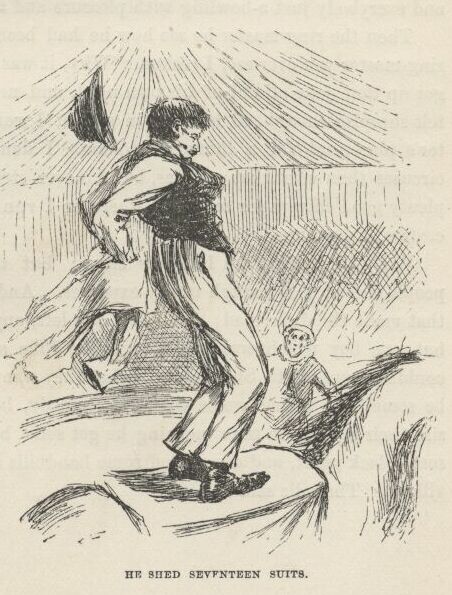
Then the ring-master he see how he had been fooled, and he wasthesickest ring-master you ever see, I reckon. Why, it was one of his own men! Hehad got up that joke all out of his own head, and never let on to nobody. Well,I felt sheepish enough to be took in so, but I wouldn’t a been in thatring-master’s place, not for a thousand dollars. I don’t know; there may bebullier circuses than what that one was, but I never struck them yet. Anyways,it was plenty good enough for me;and wherever I run across it, it canhave all of mycustom every time.
Well, that night we had ourshow; but there warn’t only about twelvepeople there—just enough to pay expenses. And they laughed all the time, andthat made the duke mad; and everybody left, anyway, before the show was over,but one boy which was asleep. So the duke said these Arkansaw lunkheadscouldn’t come up to Shakespeare; what they wanted was low comedy—and maybesomething ruther worse than low comedy, he reckoned. He said he could sizetheir style. So next morning he got some big sheets of wrapping paper and someblack paint, and drawed off some handbills, and stuck them up all over thevillage. The bills said:
AT THE COURT HOUSE!
FOR 3 NIGHTS ONLY!
The World-Renowned Tragedians
DAVID GARRICK THE YOUNGER!
AND
EDMUND KEAN THE ELDER!
Of the London and Continental
Theatres,
In their Thrilling Tragedy of
THE KING’S CAMELOPARD
OR
THE ROYAL NONESUCH!!!
Admission 50 cents.
Then at the bottom was the biggest line of all—which said:
LADIES AND CHILDREN NOT ADMITTED.
“There,” says he, “if that line don’t fetch them, I dont know Arkansaw!”
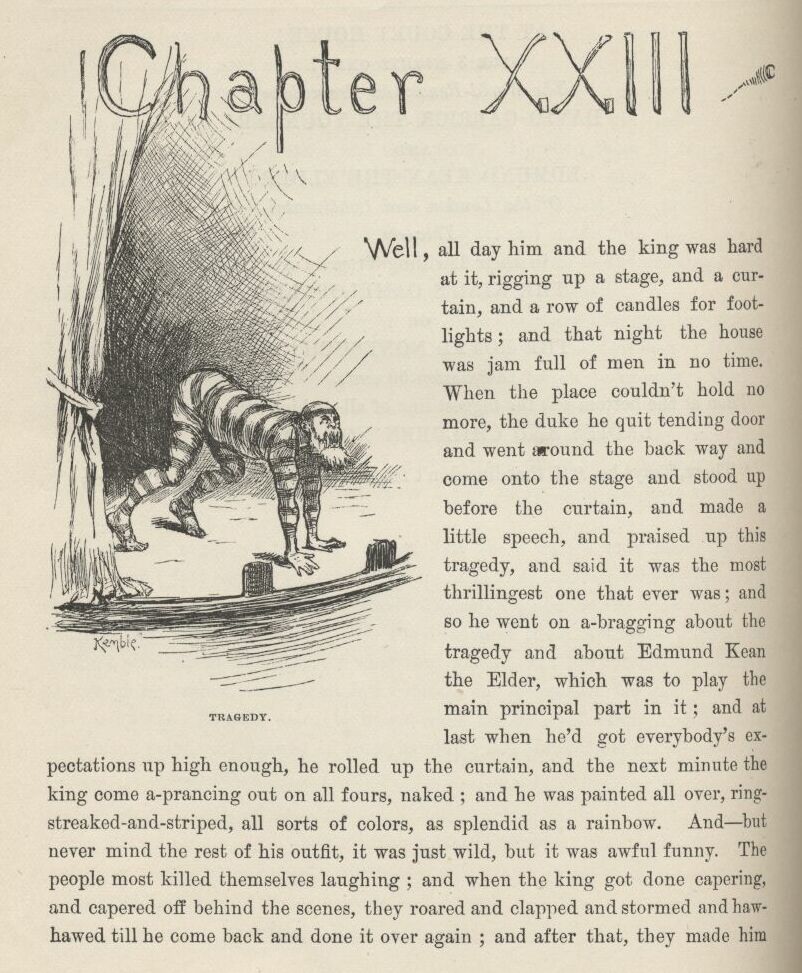
CHAPTER XXIII.
Well, all day him and the king was hard at it, rigging up a stage and a curtainand a row of candles for footlights; and that night the house was jam full ofmen in no time. When the place couldn’t hold no more, the duke he quit tendingdoor and went around the back way and come on to the stage and stood up beforethe curtain and made a little speech, and praised up this tragedy, and said itwas the most thrillingest one that ever was; and so he went on a-bragging aboutthe tragedy, and about Edmund Kean the Elder, which was to play the mainprincipal part in it; and at last when he’d got everybody’s expectations uphigh enough, he rolled up the curtain, and the next minute the king comea-prancing out on all fours, naked; and he was painted all over,ring-streaked-and-striped, all sorts of colors, as splendid as a rainbow.And—but never mind the rest of his outfit; it was just wild, but it was awfulfunny. The people most killed themselves laughing; and when the king got donecapering and capered off behind the scenes, they roared and clapped and stormedand haw-hawed till he come back and done it over again, and after that theymade him do it another time. Well, it would make a cow laugh to see the shinesthat old idiot cut.
Then the duke he lets the curtain down, and bows to the people, and says thegreat tragedy will be performed only two nights more, on accounts of pressingLondon engagements, where the seats is all sold already for it in Drury Lane;and then he makes them another bow, and says if he has succeeded in pleasingthem and instructing them, he will be deeply obleeged if they will mention itto their friends and get them to come and see it.
Twenty people sings out:
“What, is it over? Is that all?”
The duke says yes. Then there was a fine time. Everybody sings out, “Sold!” androse up mad, and was a-going for that stage and them tragedians. But a big,fine looking man jumps up on a bench and shouts:
“Hold on! Just a word, gentlemen.” They stopped to listen. “We are sold—mightybadly sold. But we don’t want to be the laughing stock of this whole town, Ireckon, and never hear the last of this thing as long as we live. No.What we want is to go out of here quiet, and talk this show up, and sell therestof the town! Then we’ll all be in the same boat. Ain’t thatsensible?” (“You bet it is!—the jedge is right!” everybody sings out.) “Allright, then—not a word about any sell. Go along home, and advise everybody tocome and see the tragedy.”
Next day you couldn’t hear nothing around that town but how splendid that showwas. House was jammed again that night, and we sold this crowd the same way.When me and the king and the duke got home to the raft we all had a supper; andby-and-by, about midnight, they made Jim and me back her out and float her downthe middle of the river, and fetch her in and hide her about two mile belowtown.
The third night the house was crammed again—and they warn’t new-comers thistime, but people that was at the show the other two nights. I stood by the dukeat the door, and I see that every man that went in had his pockets bulging, orsomething muffled up under his coat—and I see it warn’t no perfumery, neither,not by a long sight. I smelt sickly eggs by the barrel, and rotten cabbages,and such things; and if I know the signs of a dead cat being around, and I betI do, there was sixty-four of them went in. I shoved in there for a minute, butit was too various for me; I couldn’t stand it. Well, when the place couldn’thold no more people the duke he give a fellow a quarter and told him to tenddoor for him a minute, and then he started around for the stage door, I afterhim; but the minute we turned the corner and was in the dark he says:
“Walk fast now till you get away from the houses, and then shin for the raftlike the dickens was after you!”
I done it, and he done the same. We struck the raft at the same time, and inless than two seconds we was gliding down stream, all dark and still, andedging towards the middle of the river, nobody saying a word. I reckoned thepoor king was in for a gaudy time of it with the audience, but nothing of thesort; pretty soon he crawls out from under the wigwam, and says:
“Well, how’d the old thing pan out this time, duke?”
He hadn’t been up town at all.
We never showed a light till we was about ten mile below the village. Then welit up and had a supper, and the king and the duke fairly laughed their bonesloose over the way they’d served them people. The duke says:
“Greenhorns, flatheads! Iknew the first house would keep mum and letthe rest of the town get roped in; and I knew they’d lay for us the thirdnight, and consider it was theirturn now. Well, it istheirturn, and I’d give something to know how much they’d take for it. Iwouldjust like to know how they’re putting in their opportunity. Theycan turn it into a picnic if they want to—they brought plenty provisions.”
Them rapscallions took in four hundred and sixty-five dollars in that threenights. I never see money hauled in by the wagon-load like that before.By-and-by, when they was asleep and snoring, Jim says:

“Don’t it s’prise you de way dem kings carries on, Huck?”
“No,” I says, “it don’t.”
“Why don’t it, Huck?”
“Well, it don’t, because it’s in the breed. I reckon they’re all alike.”
“But, Huck, dese kings o’ ourn is reglar rapscallions; dat’s jist what dey is;dey’s reglar rapscallions.”
“Well, that’s what I’m a-saying; all kings is mostly rapscallions, as fur as Ican make out.”
“Is dat so?”
“You read about them once—you’ll see. Look at Henry the Eight; this’n ’s aSunday-school Superintendent to him. And look at Charles Second, andLouis Fourteen, and Louis Fifteen, and James Second, and Edward Second, andRichard Third, and forty more; besides all them Saxon heptarchies that used torip around so in old times and raise Cain. My, you ought to seen old Henry theEight when he was in bloom. He wasa blossom. He used to marry a newwife every day, and chop off her head next morning. And he would do it just asindifferent as if he was ordering up eggs. ‘Fetch up Nell Gwynn,’ he says. Theyfetch her up. Next morning, ‘Chop off her head!’ And they chop it off. ‘Fetchup Jane Shore,’ he says; and up she comes. Next morning, ‘Chop off herhead’—and they chop it off. ‘Ring up Fair Rosamun.’ Fair Rosamun answers thebell. Next morning, ‘Chop off her head.’ And he made every one of them tell hima tale every night; and he kept that up till he had hogged a thousand and onetales that way, and then he put them all in a book, and called it DomesdayBook—which was a good name and stated the case. You don’t know kings, Jim, butI know them; and this old rip of ourn is one of the cleanest I’ve struck inhistory. Well, Henry he takes a notion he wants to get up some trouble withthis country. How does he go at it—give notice?—give the country a show? No.All of a sudden he heaves all the tea in Boston Harbor overboard, and whacksout a declaration of independence, and dares them to come on. That washisstyle—he never give anybody a chance. He had suspicions of hisfather, the Duke of Wellington. Well, what did he do? Ask him to show up?No—drownded him in a butt of mamsey, like a cat. S’pose people left moneylaying around where he was—what did he do? He collared it. S’pose he contractedto do a thing, and you paid him, and didn’t set down there and see that he doneit—what did he do? He always done the other thing. S’pose he opened hismouth—what then? If he didn’t shut it up powerful quick he’d lose a lie everytime. That’s the kind of a bug Henry was; and if we’d a had him along ’stead ofour kings he’d a fooled that town a heap worse than ourn done. I don’t say thatourn is lambs, because they ain’t, when you come right down to the cold facts;but they ain’t nothing to thatold ram, anyway. All I say is, kings iskings, and you got to make allowances. Take them all around, they’re a mightyornery lot. It’s the way they’re raised.”
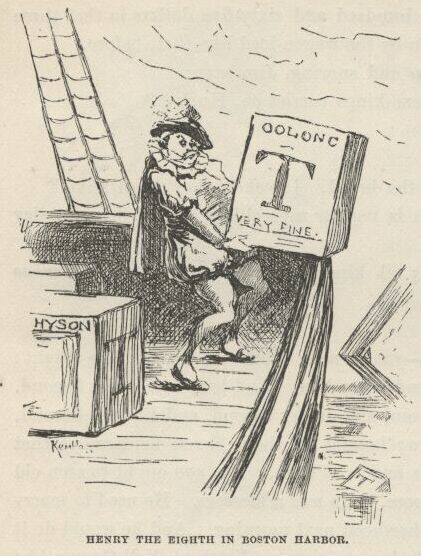
“But dis one do smellso like de nation, Huck.”
“Well, they all do, Jim. Wecan’t help the way a king smells; historydon’t tell no way.”
“Now de duke, he’s a tolerble likely man in some ways.”
“Yes, a duke’s different. But not very different. This one’s a middling hardlot for a duke. When he’s drunk, there ain’t no near-sighted man could tell himfrom a king.”
“Well, anyways, I doan’ hanker for no mo’ un um, Huck. Dese is all I kinstan’.”
“It’s the way I feel, too, Jim. But we’ve got them on our hands, and we got toremember what they are, and make allowances. Sometimes I wish we could hear ofa country that’s out of kings.”
What was the use to tell Jim these warn’t real kings and dukes? It wouldn’t adone no good; and, besides, it was just as I said: you couldn’t tell them fromthe real kind.
I went to sleep, and Jim didn’t call me when it was my turn. He often donethat. When I waked up just at daybreak, he was sitting there with his head downbetwixt his knees, moaning and mourning to himself. I didn’t take notice norlet on. I knowed what it was about. He was thinking about his wife and hischildren, away up yonder, and he was low and homesick; because he hadn’t everbeen away from home before in his life; and I do believe he cared just as muchfor his people as white folks does for their’n. It don’t seem natural, but Ireckon it’s so. He was often moaning and mourning that way nights, when hejudged I was asleep, and saying, “Po’ little ’Lizabeth! po’ little Johnny! it’smighty hard; I spec’ I ain’t ever gwyne to see you no mo’, no mo’!” He was amighty good nigger, Jim was.
But this time I somehow got to talking to him about his wife and young ones;and by-and-by he says:
“What makes me feel so bad dis time ’uz bekase I hear sumpn over yonder on debank like a whack, er a slam, while ago, en it mine me er de time I treat mylittle ’Lizabeth so ornery. She warn’t on’y ’bout fo’ year ole, en she tuck desk’yarlet fever, en had a powful rough spell; but she got well, en one day shewas a-stannin’ aroun’, en I says to her, I says:
“‘Shet de do’.’
“She never done it; jis’ stood dah, kiner smilin’ up at me. It make me mad; enI says agin, mighty loud, I says:
“‘Doan’ you hear me?—shet de do’!’
“She jis stood de same way, kiner smilin’ up. I was a-bilin’! I says:
“‘I lay I makeyou mine!’
“En wid dat I fetch’ her a slap side de head dat sont her a-sprawlin’. Den Iwent into de yuther room, en ’uz gone ’bout ten minutes; en when I come backdah was dat do’ a-stannin’ open yit, en dat chile stannin’ mos’ right init, a-lookin’ down and mournin’, en de tears runnin’ down. My, but I wuzmad! I was a-gwyne for de chile, but jis’ den—it was a do’ dat openinnerds—jis’ den, ’long come de wind en slam it to, behine de chile,ker-blam!—en my lan’, de chile never move’! My breff mos’ hop outer me;en I feel so—so—I doan’ know howI feel. I crope out, all a-tremblin’,en crope aroun’ en open de do’ easy en slow, en poke my head in behine dechile, sof’ en still, en all uv a sudden I says pow!jis’ as loud as Icould yell. She never budge!Oh, Huck, I bust out a-cryin’ en grab herup in my arms, en say, ‘Oh, de po’ little thing! De Lord God Amighty fogive po’ole Jim, kaze he never gwyne to fogive hisself as long’s he live!’ Oh, she wasplumb deef en dumb, Huck, plumb deef en dumb—en I’d ben a-treat’n her so!”
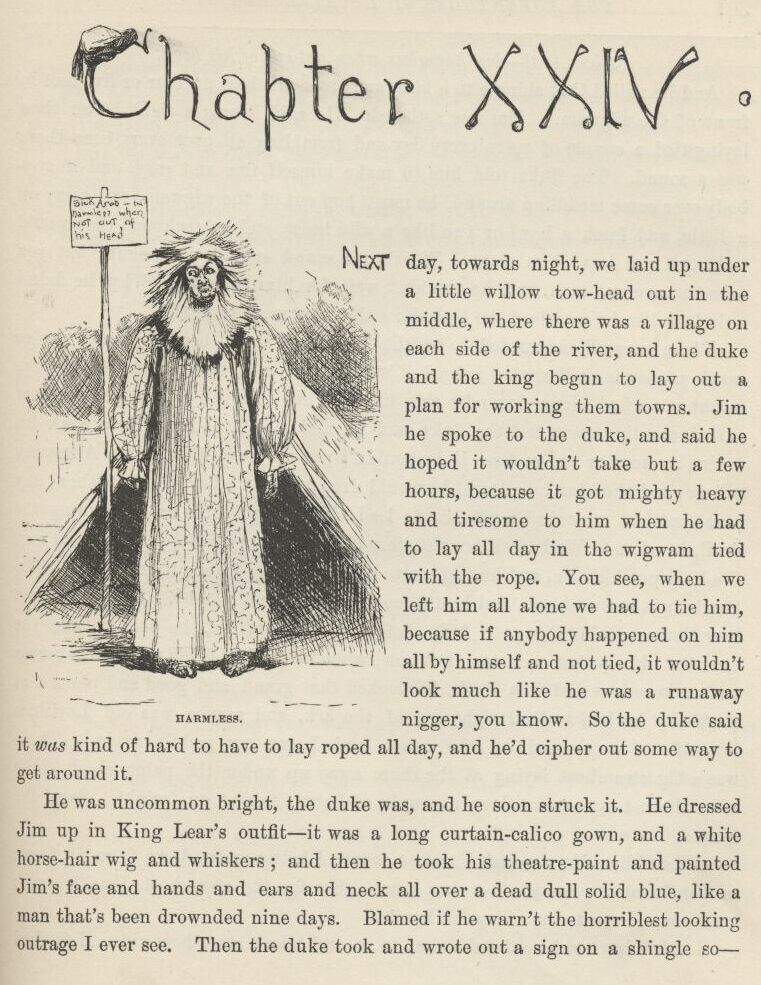
CHAPTER XXIV.
Next day, towards night, we laid up under a little willow tow-head out in themiddle, where there was a village on each side of the river, and the duke andthe king begun to lay out a plan for working them towns. Jim he spoke to theduke, and said he hoped it wouldn’t take but a few hours, because it got mightyheavy and tiresome to him when he had to lay all day in the wigwam tied withthe rope. You see, when we left him all alone we had to tie him, because ifanybody happened on to him all by himself and not tied it wouldn’t look muchlike he was a runaway nigger, you know. So the duke said it waskind ofhard to have to lay roped all day, and he’d cipher out some way to get aroundit.
He was uncommon bright, the duke was, and he soon struck it. He dressed Jim upin King Lear’s outfit—it was a long curtain-calico gown, and a white horse-hairwig and whiskers; and then he took his theater paint and painted Jim’s face andhands and ears and neck all over a dead, dull, solid blue, like a man that’sbeen drownded nine days. Blamed if he warn’t the horriblest looking outrage Iever see. Then the duke took and wrote out a sign on a shingle so:
Sick Arab—but harmless when not out of his head.
And he nailed that shingle to a lath, and stood the lath up four or five footin front of the wigwam. Jim was satisfied. He said it was a sight better thanlying tied a couple of years every day, and trembling all over every time therewas a sound. The duke told him to make himself free and easy, and if anybodyever come meddling around, he must hop out of the wigwam, and carry on alittle, and fetch a howl or two like a wild beast, and he reckoned they wouldlight out and leave him alone. Which was sound enough judgment; but you takethe average man, and he wouldn’t wait for him to howl. Why, he didn’t only looklike he was dead, he looked considerable more than that.
These rapscallions wanted to try the Nonesuch again, because there was so muchmoney in it, but they judged it wouldn’t be safe, because maybe the news mighta worked along down by this time. They couldn’t hit no project that suitedexactly; so at last the duke said he reckoned he’d lay off and work his brainsan hour or two and see if he couldn’t put up something on the Arkansaw village;and the king he allowed he would drop over to t’other village without any plan,but just trust in Providence to lead him the profitable way—meaning the devil,I reckon. We had all bought store clothes where we stopped last; and now theking put his’n on, and he told me to put mine on. I done it, of course. Theking’s duds was all black, and he did look real swell and starchy. I neverknowed how clothes could change a body before. Why, before, he looked like theorneriest old rip that ever was; but now, when he’d take off his new whitebeaver and make a bow and do a smile, he looked that grand and good and piousthat you’d say he had walked right out of the ark, and maybe was old Leviticushimself. Jim cleaned up the canoe, and I got my paddle ready. There was a bigsteamboat laying at the shore away up under the point, about three mile abovethe town—been there a couple of hours, taking on freight. Says the king:
“Seein’ how I’m dressed, I reckon maybe I better arrive down from St. Louis orCincinnati, or some other big place. Go for the steamboat, Huckleberry; we’llcome down to the village on her.”
I didn’t have to be ordered twice to go and take a steamboat ride. I fetchedthe shore a half a mile above the village, and then went scooting along thebluff bank in the easy water. Pretty soon we come to a nice innocent-lookingyoung country jake setting on a log swabbing the sweat off of his face, for itwas powerful warm weather; and he had a couple of big carpet-bags by him.
“Run her nose in shore,” says the king. I done it. “Wher’ you bound for, youngman?”
“For the steamboat; going to Orleans.”
“Git aboard,” says the king. “Hold on a minute, my servant ’ll he’p you withthem bags. Jump out and he’p the gentleman, Adolphus”—meaning me, I see.
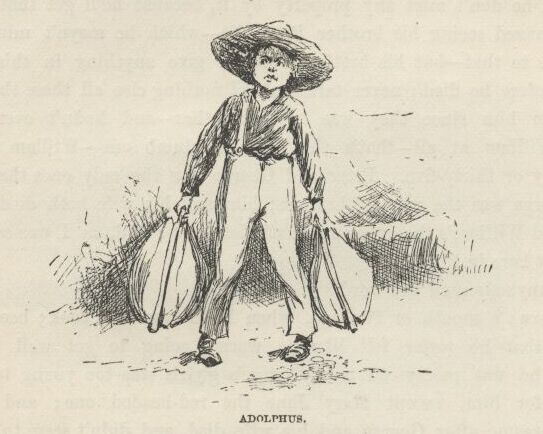
I done so, and then we all three started on again. The young chap was mightythankful; said it was tough work toting his baggage such weather. He asked theking where he was going, and the king told him he’d come down the river andlanded at the other village this morning, and now he was going up a few mile tosee an old friend on a farm up there. The young fellow says:
“When I first see you I says to myself, ‘It’s Mr. Wilks, sure, and he comemighty near getting here in time.’ But then I says again, ‘No, I reckon itain’t him, or else he wouldn’t be paddling up the river.’ You ain’thim,are you?”
“No, my name’s Blodgett—Elexander Blodgett—ReverendElexander Blodgett,I s’pose I must say, as I’m one o’ the Lord’s poor servants. But still I’m jistas able to be sorry for Mr. Wilks for not arriving in time, all the same, ifhe’s missed anything by it—which I hope he hasn’t.”
“Well, he don’t miss any property by it, because he’ll get that all right; buthe’s missed seeing his brother Peter die—which he mayn’t mind, nobody can tellas to that—but his brother would a give anything in this world to seehimbefore he died; never talked about nothing else all these threeweeks; hadn’t seen him since they was boys together—and hadn’t ever seen hisbrother William at all—that’s the deef and dumb one—William ain’t more thanthirty or thirty-five. Peter and George were the only ones that come out here;George was the married brother; him and his wife both died last year. Harveyand William’s the only ones that’s left now; and, as I was saying, they haven’tgot here in time.”
“Did anybody send ’em word?”
“Oh, yes; a month or two ago, when Peter was first took; because Peter saidthen that he sorter felt like he warn’t going to get well this time. You see,he was pretty old, and George’s g’yirls was too young to be much company forhim, except Mary Jane, the red-headed one; and so he was kinder lonesome afterGeorge and his wife died, and didn’t seem to care much to live. He mostdesperately wanted to see Harvey—and William, too, for that matter—because hewas one of them kind that can’t bear to make a will. He left a letter behindfor Harvey, and said he’d told in it where his money was hid, and how he wantedthe rest of the property divided up so George’s g’yirls would be all right—forGeorge didn’t leave nothing. And that letter was all they could get him to puta pen to.”
“Why do you reckon Harvey don’t come? Wher’ does he live?”
“Oh, he lives in England—Sheffield—preaches there—hasn’t ever been in thiscountry. He hasn’t had any too much time—and besides he mightn’t a got theletter at all, you know.”
“Too bad, too bad he couldn’t a lived to see his brothers, poor soul. You goingto Orleans, you say?”
“Yes, but that ain’t only a part of it. I’m going in a ship, next Wednesday,for Ryo Janeero, where my uncle lives.”
“It’s a pretty long journey. But it’ll be lovely; wisht I was a-going. Is MaryJane the oldest? How old is the others?”
“Mary Jane’s nineteen, Susan’s fifteen, and Joanna’s about fourteen—that’s theone that gives herself to good works and has a hare-lip.”
“Poor things! to be left alone in the cold world so.”
“Well, they could be worse off. Old Peter had friends, and they ain’t going tolet them come to no harm. There’s Hobson, the Babtis’ preacher; and Deacon LotHovey, and Ben Rucker, and Abner Shackleford, and Levi Bell, the lawyer; andDr. Robinson, and their wives, and the widow Bartley, and—well, there’s a lotof them; but these are the ones that Peter was thickest with, and used to writeabout sometimes, when he wrote home; so Harvey ’ll know where to look forfriends when he gets here.”
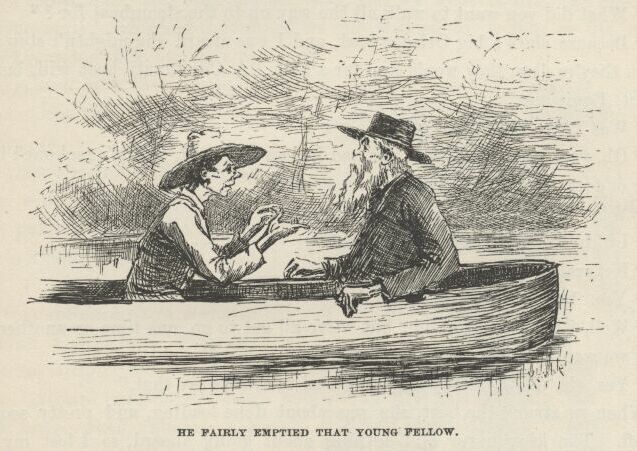
Well, the old man went on asking questions till he just fairly emptied thatyoung fellow. Blamed if he didn’t inquire about everybody and everything inthat blessed town, and all about the Wilkses; and about Peter’s business—whichwas a tanner; and about George’s—which was a carpenter; and aboutHarvey’s—which was a dissentering minister; and so on, and so on. Then he says:
“What did you want to walk all the way up to the steamboat for?”
“Because she’s a big Orleans boat, and I was afeard she mightn’t stop there.When they’re deep they won’t stop for a hail. A Cincinnati boat will, but thisis a St. Louis one.”
“Was Peter Wilks well off?”
“Oh, yes, pretty well off. He had houses and land, and it’s reckoned he leftthree or four thousand in cash hid up som’ers.”
“When did you say he died?”
“I didn’t say, but it was last night.”
“Funeral to-morrow, likely?”
“Yes, ’bout the middle of the day.”
“Well, it’s all terrible sad; but we’ve all got to go, one time or another. Sowhat we want to do is to be prepared; then we’re all right.”
“Yes, sir, it’s the best way. Ma used to always say that.”
When we struck the boat she was about done loading, and pretty soon she gotoff. The king never said nothing about going aboard, so I lost my ride, afterall. When the boat was gone the king made me paddle up another mile to alonesome place, and then he got ashore and says:
“Now hustle back, right off, and fetch the duke up here, and the newcarpet-bags. And if he’s gone over to t’other side, go over there and git him.And tell him to git himself up regardless. Shove along, now.”
I see what hewas up to; but I never said nothing, of course. When I gotback with the duke we hid the canoe, and then they set down on a log, and theking told him everything, just like the young fellow had said it—every lastword of it. And all the time he was a-doing it he tried to talk like anEnglishman; and he done it pretty well, too, for a slouch. I can’t imitate him,and so I ain’t a-going to try to; but he really done it pretty good. Then hesays:
“How are you on the deef and dumb, Bilgewater?”
The duke said, leave him alone for that; said he had played a deef and dumbperson on the histronic boards. So then they waited for a steamboat.
About the middle of the afternoon a couple of little boats come along, but theydidn’t come from high enough up the river; but at last there was a big one, andthey hailed her. She sent out her yawl, and we went aboard, and she was fromCincinnati; and when they found we only wanted to go four or five mile they wasbooming mad, and gave us a cussing, and said they wouldn’t land us. But theking was ca’m. He says:
“If gentlemen kin afford to pay a dollar a mile apiece to be took on and putoff in a yawl, a steamboat kin afford to carry ’em, can’t it?”
So they softened down and said it was all right; and when we got to the villagethey yawled us ashore. About two dozen men flocked down when they see the yawla-coming, and when the king says:
“Kin any of you gentlemen tell me wher’ Mr. Peter Wilks lives?” they give aglance at one another, and nodded their heads, as much as to say, “What d’ Itell you?” Then one of them says, kind of soft and gentle:
“I’m sorry sir, but the best we can do is to tell you where he didliveyesterday evening.”
Sudden as winking the ornery old cretur went all to smash, and fell up againstthe man, and put his chin on his shoulder, and cried down his back, and says:
“Alas, alas, our poor brother—gone, and we never got to see him; oh, it’s too,toohard!”
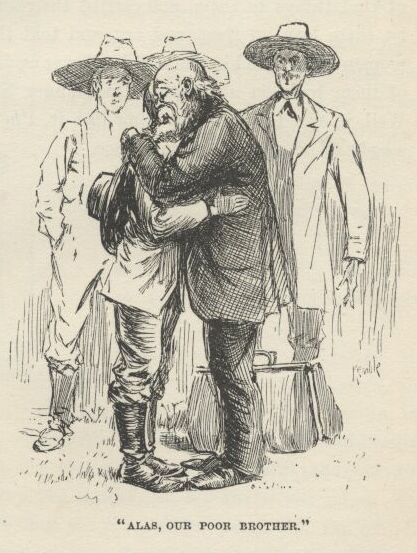
Then he turns around, blubbering, and makes a lot of idiotic signs to the dukeon his hands, and blamed if hedidn’t drop a carpet-bag and bust outa-crying. If they warn’t the beatenest lot, them two frauds, that ever Istruck.
Well, the men gathered around and sympathized with them, and said all sorts ofkind things to them, and carried their carpet-bags up the hill for them, andlet them lean on them and cry, and told the king all about his brother’s lastmoments, and the king he told it all over again on his hands to the duke, andboth of them took on about that dead tanner like they’d lost the twelvedisciples. Well, if ever I struck anything like it, I’m a nigger. It was enoughto make a body ashamed of the human race.
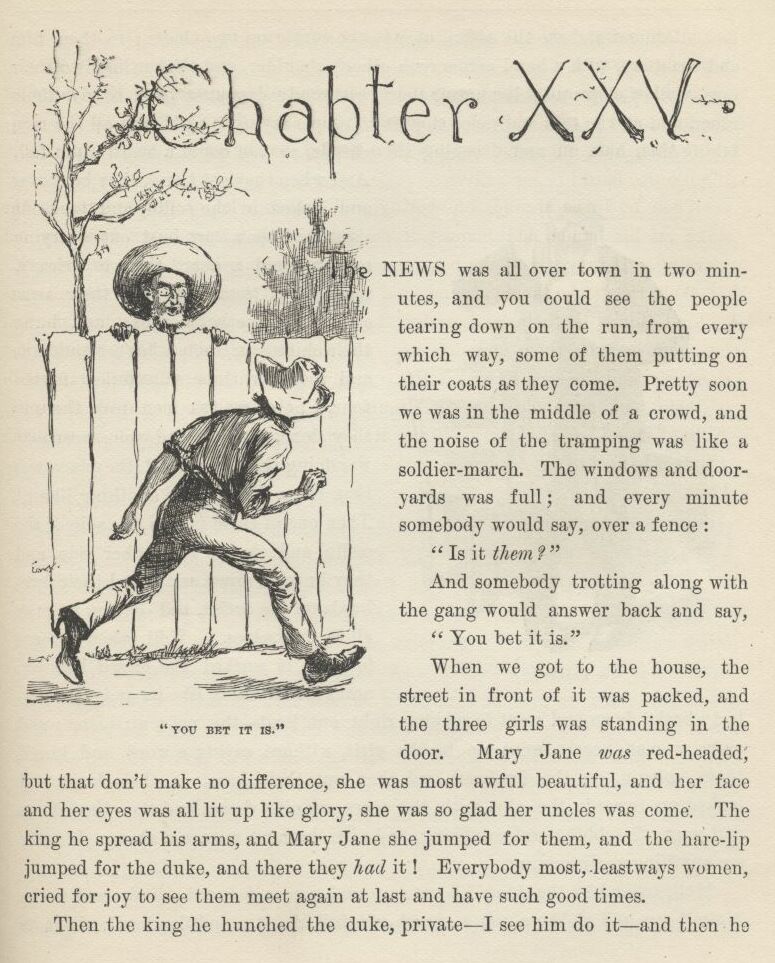
CHAPTER XXV.
The news was all over town in two minutes, and you could see the people tearingdown on the run from every which way, some of them putting on their coats asthey come. Pretty soon we was in the middle of a crowd, and the noise of thetramping was like a soldier march. The windows and dooryards was full; andevery minute somebody would say, over a fence:
“Is it them?”
And somebody trotting along with the gang would answer back and say:
“You bet it is.”
When we got to the house the street in front of it was packed, and the threegirls was standing in the door. Mary Jane wasred-headed, but that don’tmake no difference, she was most awful beautiful, and her face and her eyes wasall lit up like glory, she was so glad her uncles was come. The king he spreadhis arms, and Mary Jane she jumped for them, and the hare-lip jumped for theduke, and there they hadit! Everybody most, leastways women, cried forjoy to see them meet again at last and have such good times.
Then the king he hunched the duke private—I see him do it—and then he lookedaround and see the coffin, over in the corner on two chairs; so then him andthe duke, with a hand across each other’s shoulder, and t’other hand to theireyes, walked slow and solemn over there, everybody dropping back to give themroom, and all the talk and noise stopping, people saying “Sh!” and all the mentaking their hats off and drooping their heads, so you could a heard a pinfall. And when they got there they bent over and looked in the coffin, and tookone sight, and then they bust out a-crying so you could a heard them toOrleans, most; and then they put their arms around each other’s necks, and hungtheir chins over each other’s shoulders; and then for three minutes, or maybefour, I never see two men leak the way they done. And, mind you, everybody wasdoing the same; and the place was that damp I never see anything like it. Thenone of them got on one side of the coffin, and t’other on t’other side, andthey kneeled down and rested their foreheads on the coffin, and let on to prayall to themselves. Well, when it come to that it worked the crowd like younever see anything like it, and everybody broke down and went to sobbing rightout loud—the poor girls, too; and every woman, nearly, went up to the girls,without saying a word, and kissed them, solemn, on the forehead, and then puttheir hand on their head, and looked up towards the sky, with the tears runningdown, and then busted out and went off sobbing and swabbing, and give the nextwoman a show. I never see anything so disgusting.
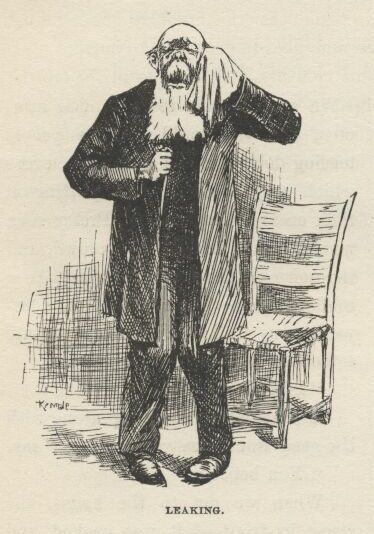
Well, by-and-by the king he gets up and comes forward a little, and workshimself up and slobbers out a speech, all full of tears and flapdoodle aboutits being a sore trial for him and his poor brother to lose the diseased, andto miss seeing diseased alive after the long journey of four thousand mile, butit’s a trial that’s sweetened and sanctified to us by this dear sympathy andthese holy tears, and so he thanks them out of his heart and out of hisbrother’s heart, because out of their mouths they can’t, words being too weakand cold, and all that kind of rot and slush, till it was just sickening; andthen he blubbers out a pious goody-goody Amen, and turns himself loose and goesto crying fit to bust.
And the minute the words were out of his mouth somebody over in the crowdstruck up the doxolojer, and everybody joined in with all their might, and itjust warmed you up and made you feel as good as church letting out. Musicisa good thing; and after all that soul-butter and hogwash I never seeit freshen up things so, and sound so honest and bully.
Then the king begins to work his jaw again, and says how him and his nieceswould be glad if a few of the main principal friends of the family would takesupper here with them this evening, and help set up with the ashes of thediseased; and says if his poor brother laying yonder could speak he knows whohe would name, for they was names that was very dear to him, and mentionedoften in his letters; and so he will name the same, to wit, as follows,vizz.:—Rev. Mr. Hobson, and Deacon Lot Hovey, and Mr. Ben Rucker, and AbnerShackleford, and Levi Bell, and Dr. Robinson, and their wives, and the widowBartley.
Rev. Hobson and Dr. Robinson was down to the end of the town a-huntingtogether—that is, I mean the doctor was shipping a sick man to t’other world,and the preacher was pinting him right. Lawyer Bell was away up to Louisvilleon business. But the rest was on hand, and so they all come and shook handswith the king and thanked him and talked to him; and then they shook hands withthe duke and didn’t say nothing, but just kept a-smiling and bobbing theirheads like a passel of sapheads whilst he made all sorts of signs with hishands and said “Goo-goo—goo-goo-goo” all the time, like a baby that can’t talk.
So the king he blattered along, and managed to inquire about pretty mucheverybody and dog in town, by his name, and mentioned all sorts of littlethings that happened one time or another in the town, or to George’s family, orto Peter. And he always let on that Peter wrote him the things; but that was alie: he got every blessed one of them out of that young flathead that we canoedup to the steamboat.
Then Mary Jane she fetched the letter her father left behind, and the king heread it out loud and cried over it. It give the dwelling-house and threethousand dollars, gold, to the girls; and it give the tanyard (which was doinga good business), along with some other houses and land (worth about seventhousand), and three thousand dollars in gold to Harvey and William, and toldwhere the six thousand cash was hid down cellar. So these two frauds saidthey’d go and fetch it up, and have everything square and above-board; and toldme to come with a candle. We shut the cellar door behind us, and when theyfound the bag they spilt it out on the floor, and it was a lovely sight, allthem yaller-boys. My, the way the king’s eyes did shine! He slaps the duke onthe shoulder and says:
“Oh, thisain’t bully nor noth’n! Oh, no, I reckon not! Why,Bilji, it beats the Nonesuch, don’tit?”
The duke allowed it did. They pawed the yaller-boys, and sifted them throughtheir fingers and let them jingle down on the floor; and the king says:
“It ain’t no use talkin’; bein’ brothers to a rich dead man and representativesof furrin heirs that’s got left is the line for you and me, Bilge. Thish yercomes of trust’n to Providence. It’s the best way, in the long run. I’ve tried’em all, and ther’ ain’t no better way.”
Most everybody would a been satisfied with the pile, and took it on trust; butno, they must count it. So they counts it, and it comes out four hundred andfifteen dollars short. Says the king:
“Dern him, I wonder what he done with that four hundred and fifteen dollars?”
They worried over that awhile, and ransacked all around for it. Then the dukesays:
“Well, he was a pretty sick man, and likely he made a mistake—I reckon that’sthe way of it. The best way’s to let it go, and keep still about it. We canspare it.”
“Oh, shucks, yes, we can spareit. I don’t k’yer noth’n ’bout that—it’sthe countI’m thinkin’ about. We want to be awful square and open andabove-board here, you know. We want to lug this h-yer money up stairs and countit before everybody—then ther’ ain’t noth’n suspicious. But when the dead mansays ther’s six thous’n dollars, you know, we don’t want to—”
“Hold on,” says the duke. “Le’s make up the deffisit,” and he begun to haul outyaller-boys out of his pocket.
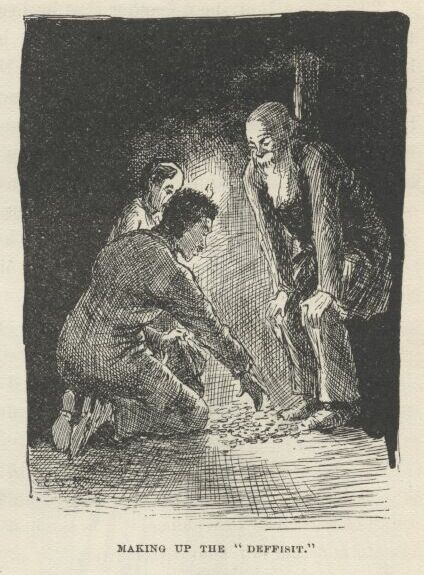
“It’s a most amaz’n’ good idea, duke—you havegot a rattlin’ clever headon you,” says the king. “Blest if the old Nonesuch ain’t a heppin’ us outagin,” and hebegun to haul out yaller-jackets and stack them up.
It most busted them, but they made up the six thousand clean and clear.
“Say,” says the duke, “I got another idea. Le’s go up stairs and count thismoney, and then take and give it to the girls.”
“Good land, duke, lemme hug you! It’s the most dazzling idea ’at ever a manstruck. You have cert’nly got the most astonishin’ head I ever see. Oh, this isthe boss dodge, ther’ ain’t no mistake ’bout it. Let ’em fetch along theirsuspicions now if they want to—this’ll lay ’em out.”
When we got up-stairs everybody gethered around the table, and the king hecounted it and stacked it up, three hundred dollars in a pile—twenty elegantlittle piles. Everybody looked hungry at it, and licked their chops. Then theyraked it into the bag again, and I see the king begin to swell himself up foranother speech. He says:
“Friends all, my poor brother that lays yonder has done generous by them that’sleft behind in the vale of sorrers. He has done generous by these yer poorlittle lambs that he loved and sheltered, and that’s left fatherless andmotherless. Yes, and we that knowed him knows that he would a done moregenerous by ’em if he hadn’t ben afeard o’ woundin’ his dear William and me.Now, wouldn’the? Ther’ ain’t no question ’bout it in mymind.Well, then, what kind o’ brothers would it be that ’d stand in his way at secha time? And what kind o’ uncles would it be that ’d rob—yes, rob—sechpoor sweet lambs as these ’at he loved so at sech a time? If I know William—andI thinkI do—he—well, I’ll jest ask him.” He turns around and begins tomake a lot of signs to the duke with his hands, and the duke he looks at himstupid and leather-headed a while; then all of a sudden he seems to catch hismeaning, and jumps for the king, goo-gooing with all his might for joy, andhugs him about fifteen times before he lets up. Then the king says, “I knowedit; I reckon that’ll convince anybody the way hefeels about it.Here, Mary Jane, Susan, Joanner, take the money—take it all. It’s thegift of him that lays yonder, cold but joyful.”
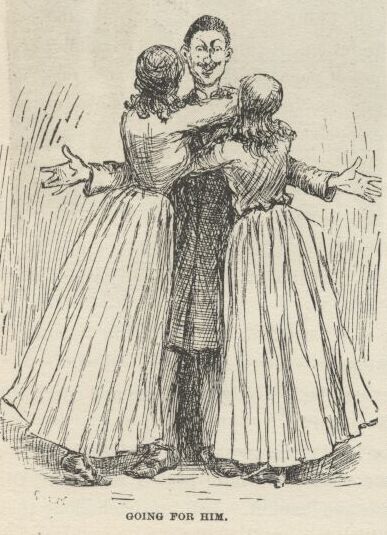
Mary Jane she went for him, Susan and the hare-lip went for the duke, and thensuch another hugging and kissing I never see yet. And everybody crowded up withthe tears in their eyes, and most shook the hands off of them frauds, sayingall the time:
“You deargood souls!—how lovely!—how couldyou!”
Well, then, pretty soon all hands got to talking about the diseased again, andhow good he was, and what a loss he was, and all that; and before long a bigiron-jawed man worked himself in there from outside, and stood a-listening andlooking, and not saying anything; and nobody saying anything to him either,because the king was talking and they was all busy listening. The king wassaying—in the middle of something he’d started in on—
“—they bein’ partickler friends o’ the diseased. That’s why they’re invitedhere this evenin’; but tomorrow we want allto come—everybody; for herespected everybody, he liked everybody, and so it’s fitten that his funeralorgies sh’d be public.”
And so he went a-mooning on and on, liking to hear himself talk, and everylittle while he fetched in his funeral orgies again, till the duke he couldn’tstand it no more; so he writes on a little scrap of paper, “obsequies,you old fool,” and folds it up, and goes to goo-gooing and reaching it overpeople’s heads to him. The king he reads it and puts it in his pocket, andsays:
“Poor William, afflicted as he is, his heart’saluz right. Asks me toinvite everybody to come to the funeral—wants me to make ’em all welcome. Buthe needn’t a worried—it was jest what I was at.”
Then he weaves along again, perfectly ca’m, and goes to dropping in his funeralorgies again every now and then, just like he done before. And when he done itthe third time he says:
“I say orgies, not because it’s the common term, because it ain’t—obsequiesbein’ the common term—but because orgies is the right term. Obsequies ain’tused in England no more now—it’s gone out. We say orgies now in England. Orgiesis better, because it means the thing you’re after more exact. It’s a wordthat’s made up out’n the Greek orgo, outside, open, abroad; and theHebrew jeesum, to plant, cover up; hence inter.So, you see,funeral orgies is an open er public funeral.”
He was the worstI ever struck. Well, the iron-jawed man he laughedright in his face. Everybody was shocked. Everybody says, “Why, doctor!”and Abner Shackleford says:
“Why, Robinson, hain’t you heard the news? This is Harvey Wilks.”
The king he smiled eager, and shoved out his flapper, and says:
“Isit my poor brother’s dear good friend and physician? I—”
“Keep your hands off of me!” says the doctor. “Youtalk like anEnglishman, don’tyou? It’s the worst imitation I ever heard. YouPeter Wilks’s brother! You’re a fraud, that’s what you are!”
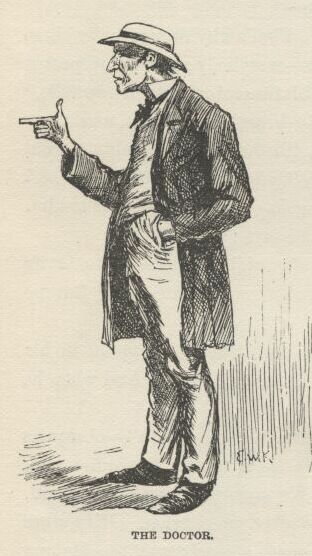
Well, how they all took on! They crowded around the doctor and tried to quiethim down, and tried to explain to him and tell him how Harvey ’d showed inforty ways that he wasHarvey, and knowed everybody by name, and thenames of the very dogs, and begged and beggedhim not to hurt Harvey’sfeelings and the poor girl’s feelings, and all that. But it warn’t no use; hestormed right along, and said any man that pretended to be an Englishman andcouldn’t imitate the lingo no better than what he did was a fraud and a liar.The poor girls was hanging to the king and crying; and all of a sudden thedoctor ups and turns on them. He says:
“I was your father’s friend, and I’m your friend; and I warn you asafriend, and an honest one that wants to protect you and keep you out of harmand trouble, to turn your backs on that scoundrel and have nothing to do withhim, the ignorant tramp, with his idiotic Greek and Hebrew, as he calls it. Heis the thinnest kind of an impostor—has come here with a lot of empty names andfacts which he picked up somewheres, and you take them for proofs, andare helped to fool yourselves by these foolish friends here, who ought to knowbetter. Mary Jane Wilks, you know me for your friend, and for your unselfishfriend, too. Now listen to me; turn this pitiful rascal out—I begyou todo it. Will you?”
Mary Jane straightened herself up, and my, but she was handsome! She says:
“Hereis my answer.” She hove up the bag of money and put it in theking’s hands, and says, “Take this six thousand dollars, and invest for me andmy sisters any way you want to, and don’t give us no receipt for it.”
Then she put her arm around the king on one side, and Susan and the hare-lipdone the same on the other. Everybody clapped their hands and stomped on thefloor like a perfect storm, whilst the king held up his head and smiled proud.The doctor says:
“All right; I wash myhands of the matter. But I warn you all that atime ’s coming when you’re going to feel sick whenever you think of this day.”And away he went.
“All right, doctor,” says the king, kinder mocking him; “we’ll try and get ’emto send for you;” which made them all laugh, and they said it was a prime goodhit.
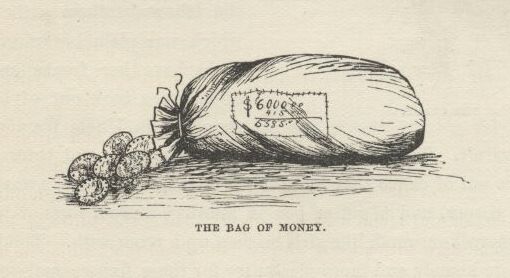
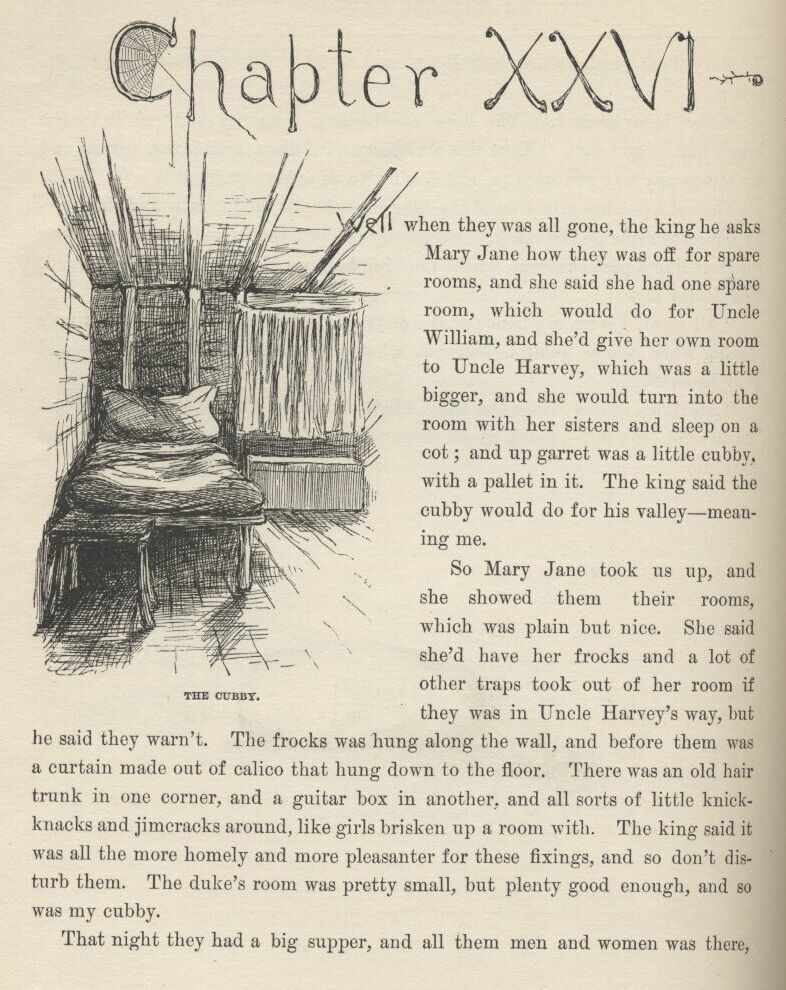
CHAPTER XXVI.
Well, when they was all gone the king he asks Mary Jane how they was off forspare rooms, and she said she had one spare room, which would do for UncleWilliam, and she’d give her own room to Uncle Harvey, which was a littlebigger, and she would turn into the room with her sisters and sleep on a cot;and up garret was a little cubby, with a pallet in it. The king said the cubbywould do for his valley—meaning me.
So Mary Jane took us up, and she showed them their rooms, which was plain butnice. She said she’d have her frocks and a lot of other traps took out of herroom if they was in Uncle Harvey’s way, but he said they warn’t. The frocks washung along the wall, and before them was a curtain made out of calico that hungdown to the floor. There was an old hair trunk in one corner, and a guitar-boxin another, and all sorts of little knickknacks and jimcracks around, likegirls brisken up a room with. The king said it was all the more homely and morepleasanter for these fixings, and so don’t disturb them. The duke’s room waspretty small, but plenty good enough, and so was my cubby.
That night they had a big supper, and all them men and women was there, and Istood behind the king and the duke’s chairs and waited on them, and the niggerswaited on the rest. Mary Jane she set at the head of the table, with Susanalongside of her, and said how bad the biscuits was, and how mean the preserveswas, and how ornery and tough the fried chickens was—and all that kind of rot,the way women always do for to force out compliments; and the people all knowedeverything was tiptop, and said so—said “How doyou get biscuits tobrown so nice?” and “Where, for the land’s sake, didyou get theseamaz’n pickles?” and all that kind of humbug talky-talk, just the way peoplealways does at a supper, you know.
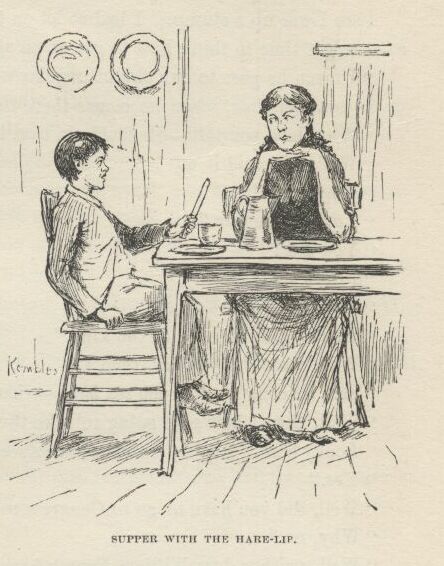
And when it was all done me and the hare-lip had supper in the kitchen off ofthe leavings, whilst the others was helping the niggers clean up the things.The hare-lip she got to pumping me about England, and blest if I didn’t thinkthe ice was getting mighty thin sometimes. She says:
“Did you ever see the king?”
“Who? William Fourth? Well, I bet I have—he goes to our church.” I knowed hewas dead years ago, but I never let on. So when I says he goes to our church,she says:
“What—regular?”
“Yes—regular. His pew’s right over opposite ourn—on t’other side the pulpit.”
“I thought he lived in London?”
“Well, he does. Where wouldhe live?”
“But I thought youlived in Sheffield?”
I see I was up a stump. I had to let on to get choked with a chicken bone, soas to get time to think how to get down again. Then I says:
“I mean he goes to our church regular when he’s in Sheffield. That’s only inthe summer time, when he comes there to take the sea baths.”
“Why, how you talk—Sheffield ain’t on the sea.”
“Well, who said it was?”
“Why, you did.”
“I didn’tnuther.”
“You did!”
“I didn’t.”
“You did.”
“I never said nothing of the kind.”
“Well, what didyou say, then?”
“Said he come to take the sea baths—that’s what I said.”
“Well, then, how’s he going to take the sea baths if it ain’t on the sea?”
“Looky here,” I says; “did you ever see any Congress-water?”
“Yes.”
“Well, did you have to go to Congress to get it?”
“Why, no.”
“Well, neither does William Fourth have to go to the sea to get a sea bath.”
“How does he get it, then?”
“Gets it the way people down here gets Congress-water—in barrels. There in thepalace at Sheffield they’ve got furnaces, and he wants his water hot. Theycan’t bile that amount of water away off there at the sea. They haven’t got noconveniences for it.”
“Oh, I see, now. You might a said that in the first place and saved time.”
When she said that I see I was out of the woods again, and so I was comfortableand glad. Next, she says:
“Do you go to church, too?”
“Yes—regular.”
“Where do you set?”
“Why, in our pew.”
“Whosepew?”
“Why, ourn—your Uncle Harvey’s.”
“His’n? What does hewant with a pew?”
“Wants it to set in. What did you reckonhe wanted with it?”
“Why, I thought he’d be in the pulpit.”
Rot him, I forgot he was a preacher. I see I was up a stump again, so I playedanother chicken bone and got another think. Then I says:
“Blame it, do you suppose there ain’t but one preacher to a church?”
“Why, what do they want with more?”
“What!—to preach before a king? I never did see such a girl as you. They don’thave no less than seventeen.”
“Seventeen! My land! Why, I wouldn’t set out such a string as that, not if Inevergot to glory. It must take ’em a week.”
“Shucks, they don’t allof ’em preach the same day—only oneof’em.”
“Well, then, what does the rest of ’em do?”
“Oh, nothing much. Loll around, pass the plate—and one thing or another. Butmainly they don’t do nothing.”
“Well, then, what are they for?”
“Why, they’re for style. Don’t you know nothing?”
“Well, I don’t wantto know no such foolishness as that. How is servantstreated in England? Do they treat ’em better ’n we treat our niggers?”
“No!A servant ain’t nobody there. They treat them worse than dogs.”
“Don’t they give ’em holidays, the way we do, Christmas and New Year’s week,and Fourth of July?”
“Oh, just listen! A body could tell youhain’t ever been to England bythat. Why, Hare-l—why, Joanna, they never see a holiday from year’s end toyear’s end; never go to the circus, nor theater, nor nigger shows, nornowheres.”
“Nor church?”
“Nor church.”
“But youalways went to church.”
Well, I was gone up again. I forgot I was the old man’s servant. But nextminute I whirled in on a kind of an explanation how a valley was different froma common servant and hadto go to church whether he wanted to or not,and set with the family, on account of its being the law. But I didn’t do itpretty good, and when I got done I see she warn’t satisfied. She says:
“Honest injun, now, hain’t you been telling me a lot of lies?”

“Honest injun,” says I.
“None of it at all?”
“None of it at all. Not a lie in it,” says I.
“Lay your hand on this book and say it.”
I see it warn’t nothing but a dictionary, so I laid my hand on it and said it.So then she looked a little better satisfied, and says:
“Well, then, I’ll believe some of it; but I hope to gracious if I’ll believethe rest.”
“What is it you won’t believe, Joe?” says Mary Jane, stepping in with Susanbehind her. “It ain’t right nor kind for you to talk so to him, and him astranger and so far from his people. How would you like to be treated so?”
“That’s always your way, Maim—always sailing in to help somebody before they’rehurt. I hain’t done nothing to him. He’s told some stretchers, I reckon, and Isaid I wouldn’t swallow it all; and that’s every bit and grain I didsay. I reckon he can stand a little thing like that, can’t he?”
“I don’t care whether ’twas little or whether ’twas big; he’s here in our houseand a stranger, and it wasn’t good of you to say it. If you was in his place itwould make you feel ashamed; and so you oughtn’t to say a thing to anotherperson that will make themfeel ashamed.”
“Why, Mam, he said—”
“It don’t make no difference what he said—that ain’t the thing. Thething is for you to treat him kind, and not be saying things to make himremember he ain’t in his own country and amongst his own folks.”
I says to myself, thisis a girl that I’m letting that old reptile robher of her money!
Then Susan shewaltzed in; and if you’ll believe me, she did giveHare-lip hark from the tomb!
Says I to myself, and this is anotherone that I’m letting him rob herof her money!
Then Mary Jane she took another inning, and went in sweet and lovelyagain—which was her way; but when she got done there warn’t hardly anythingleft o’ poor Hare-lip. So she hollered.
“All right, then,” says the other girls; “you just ask his pardon.”
She done it, too; and she done it beautiful. She done it so beautiful it wasgood to hear; and I wished I could tell her a thousand lies, so she could do itagain.
I says to myself, this is anotherone that I’m letting him rob her ofher money. And when she got through they all jest laid theirselves out to makeme feel at home and know I was amongst friends. I felt so ornery and low downand mean that I says to myself, my mind’s made up; I’ll hive that money forthem or bust.
So then I lit out—for bed, I said, meaning some time or another. When I got bymyself I went to thinking the thing over. I says to myself, shall I go to thatdoctor, private, and blow on these frauds? No—that won’t do. He might tell whotold him; then the king and the duke would make it warm for me. Shall I go,private, and tell Mary Jane? No—I dasn’t do it. Her face would give them ahint, sure; they’ve got the money, and they’d slide right out and get away withit. If she was to fetch in help I’d get mixed up in the business before it wasdone with, I judge. No; there ain’t no good way but one. I got to steal thatmoney, somehow; and I got to steal it some way that they won’t suspicion that Idone it. They’ve got a good thing here, and they ain’t a-going to leave tillthey’ve played this family and this town for all they’re worth, so I’ll find achance time enough. I’ll steal it and hide it; and by-and-by, when I’m awaydown the river, I’ll write a letter and tell Mary Jane where it’s hid. But Ibetter hive it tonight if I can, because the doctor maybe hasn’t let up as muchas he lets on he has; he might scare them out of here yet.
So, thinks I, I’ll go and search them rooms. Upstairs the hall was dark, but Ifound the duke’s room, and started to paw around it with my hands; but Irecollected it wouldn’t be much like the king to let anybody else take care ofthat money but his own self; so then I went to his room and begun to paw aroundthere. But I see I couldn’t do nothing without a candle, and I dasn’t lightone, of course. So I judged I’d got to do the other thing—lay for them andeavesdrop. About that time I hears their footsteps coming, and was going toskip under the bed; I reached for it, but it wasn’t where I thought it wouldbe; but I touched the curtain that hid Mary Jane’s frocks, so I jumped inbehind that and snuggled in amongst the gowns, and stood there perfectly still.
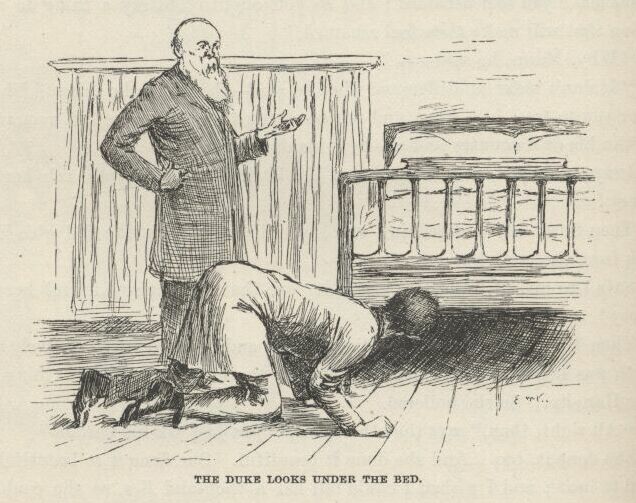
They come in and shut the door; and the first thing the duke done was to getdown and look under the bed. Then I was glad I hadn’t found the bed when Iwanted it. And yet, you know, it’s kind of natural to hide under the bed whenyou are up to anything private. They sets down then, and the king says:
“Well, what is it? And cut it middlin’ short, because it’s better for us to bedown there a-whoopin’ up the mournin’ than up here givin’ ’em a chance to talkus over.”
“Well, this is it, Capet. I ain’t easy; I ain’t comfortable. That doctor layson my mind. I wanted to know your plans. I’ve got a notion, and I think it’s asound one.”
“What is it, duke?”
“That we better glide out of this before three in the morning, and clip it downthe river with what we’ve got. Specially, seeing we got it so easy—givenback to us, flung at our heads, as you may say, when of course we allowed tohave to steal it back. I’m for knocking off and lighting out.”
That made me feel pretty bad. About an hour or two ago it would a been a littledifferent, but now it made me feel bad and disappointed. The king rips out andsays:
“What! And not sell out the rest o’ the property? March off like a passel offools and leave eight or nine thous’n’ dollars’ worth o’ property layin’ aroundjest sufferin’ to be scooped in?—and all good, salable stuff, too.”
The duke he grumbled; said the bag of gold was enough, and he didn’t want to gono deeper—didn’t want to rob a lot of orphans of everythingthey had.
“Why, how you talk!” says the king. “We sha’n’t rob ’em of nothing at all butjest this money. The people that buysthe property is the suff’rers;because as soon ’s it’s found out ’at we didn’t own it—which won’t be longafter we’ve slid—the sale won’t be valid, and it’ll all go back to the estate.These yer orphans ’ll git their house back agin, and that’s enough forthem;they’re young and spry, and k’n easy earn a livin’. Theyain’t a-goin to suffer. Why, jest think—there’s thous’n’s and thous’n’s thatain’t nigh so well off. Bless you, theyain’t got noth’n’ to complainof.”
Well, the king he talked him blind; so at last he give in, and said all right,but said he believed it was blamed foolishness to stay, and that doctor hangingover them. But the king says:
“Cuss the doctor! What do we k’yer for him?Hain’t we got all the foolsin town on our side? And ain’t that a big enough majority in any town?”
So they got ready to go down stairs again. The duke says:
“I don’t think we put that money in a good place.”
That cheered me up. I’d begun to think I warn’t going to get a hint of no kindto help me. The king says:
“Why?”
“Because Mary Jane ’ll be in mourning from this out; and first you know thenigger that does up the rooms will get an order to box these duds up and put’em away; and do you reckon a nigger can run across money and not borrow someof it?”
“Your head’s level agin, duke,” says the king; and he comes a-fumbling underthe curtain two or three foot from where I was. I stuck tight to the wall andkept mighty still, though quivery; and I wondered what them fellows would sayto me if they catched me; and I tried to think what I’d better do if they didcatch me. But the king he got the bag before I could think more than about ahalf a thought, and he never suspicioned I was around. They took and shoved thebag through a rip in the straw tick that was under the feather-bed, and crammedit in a foot or two amongst the straw and said it was all right now, because anigger only makes up the feather-bed, and don’t turn over the straw tick onlyabout twice a year, and so it warn’t in no danger of getting stole now.

But I knowed better. I had it out of there before they was half-way downstairs. I groped along up to my cubby, and hid it there till I could get achance to do better. I judged I better hide it outside of the house somewheres,because if they missed it they would give the house a good ransacking: I knowedthat very well. Then I turned in, with my clothes all on; but I couldn’t a goneto sleep if I’d a wanted to, I was in such a sweat to get through with thebusiness. By-and-by I heard the king and the duke come up; so I rolled off mypallet and laid with my chin at the top of my ladder, and waited to see ifanything was going to happen. But nothing did.
So I held on till all the late sounds had quit and the early ones hadn’t begunyet; and then I slipped down the ladder.
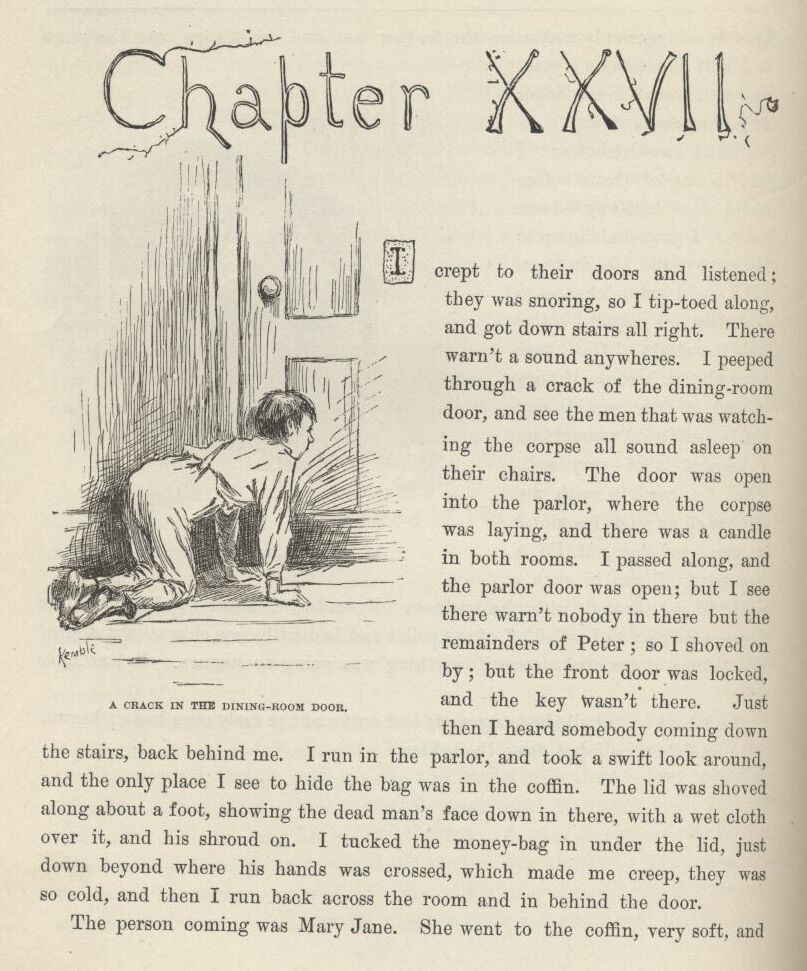
CHAPTER XXVII.
I crept to their doors and listened; they was snoring. So I tiptoed along, andgot down stairs all right. There warn’t a sound anywheres. I peeped through acrack of the dining-room door, and see the men that was watching the corpse allsound asleep on their chairs. The door was open into the parlor, where thecorpse was laying, and there was a candle in both rooms. I passed along, andthe parlor door was open; but I see there warn’t nobody in there but theremainders of Peter; so I shoved on by; but the front door was locked, and thekey wasn’t there. Just then I heard somebody coming down the stairs, backbehind me. I run in the parlor and took a swift look around, and the only placeI see to hide the bag was in the coffin. The lid was shoved along about a foot,showing the dead man’s face down in there, with a wet cloth over it, and hisshroud on. I tucked the money-bag in under the lid, just down beyond where hishands was crossed, which made me creep, they was so cold, and then I run backacross the room and in behind the door.
The person coming was Mary Jane. She went to the coffin, very soft, and kneeleddown and looked in; then she put up her handkerchief, and I see she begun tocry, though I couldn’t hear her, and her back was to me. I slid out, and as Ipassed the dining-room I thought I’d make sure them watchers hadn’t seen me; soI looked through the crack, and everything was all right. They hadn’t stirred.
I slipped up to bed, feeling ruther blue, on accounts of the thing playing outthat way after I had took so much trouble and run so much resk about it. SaysI, if it could stay where it is, all right; because when we get down the rivera hundred mile or two I could write back to Mary Jane, and she could dig him upagain and get it; but that ain’t the thing that’s going to happen; the thingthat’s going to happen is, the money ’ll be found when they come to screw onthe lid. Then the king ’ll get it again, and it ’ll be a long day before hegives anybody another chance to smouch it from him. Of course I wantedto slide down and get it out of there, but I dasn’t try it. Every minute it wasgetting earlier now, and pretty soon some of them watchers would begin to stir,and I might get catched—catched with six thousand dollars in my hands thatnobody hadn’t hired me to take care of. I don’t wish to be mixed up in no suchbusiness as that, I says to myself.
When I got down stairs in the morning the parlor was shut up, and the watcherswas gone. There warn’t nobody around but the family and the widow Bartley andour tribe. I watched their faces to see if anything had been happening, but Icouldn’t tell.
Towards the middle of the day the undertaker come with his man, and they setthe coffin in the middle of the room on a couple of chairs, and then set allour chairs in rows, and borrowed more from the neighbors till the hall and theparlor and the dining-room was full. I see the coffin lid was the way it wasbefore, but I dasn’t go to look in under it, with folks around.
Then the people begun to flock in, and the beats and the girls took seats inthe front row at the head of the coffin, and for a half an hour the peoplefiled around slow, in single rank, and looked down at the dead man’s face aminute, and some dropped in a tear, and it was all very still and solemn, onlythe girls and the beats holding handkerchiefs to their eyes and keeping theirheads bent, and sobbing a little. There warn’t no other sound but the scrapingof the feet on the floor and blowing noses—because people always blows themmore at a funeral than they do at other places except church.
When the place was packed full the undertaker he slid around in his blackgloves with his softy soothering ways, putting on the last touches, and gettingpeople and things all ship-shape and comfortable, and making no more sound thana cat. He never spoke; he moved people around, he squeezed in late ones, heopened up passageways, and done it with nods, and signs with his hands. Then hetook his place over against the wall. He was the softest, glidingest,stealthiest man I ever see; and there warn’t no more smile to him than there isto a ham.
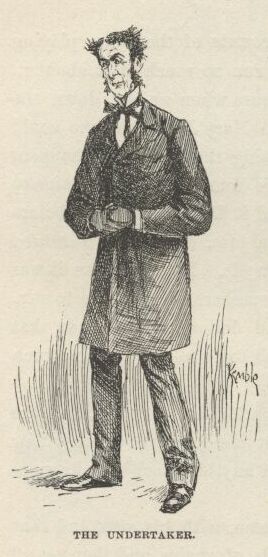
They had borrowed a melodeum—a sick one; and when everything was ready a youngwoman set down and worked it, and it was pretty skreeky and colicky, andeverybody joined in and sung, and Peter was the only one that had a good thing,according to my notion. Then the Reverend Hobson opened up, slow and solemn,and begun to talk; and straight off the most outrageous row busted out in thecellar a body ever heard; it was only one dog, but he made a most powerfulracket, and he kept it up right along; the parson he had to stand there, overthe coffin, and wait—you couldn’t hear yourself think. It was right downawkward, and nobody didn’t seem to know what to do. But pretty soon they seethat long-legged undertaker make a sign to the preacher as much as to say,“Don’t you worry—just depend on me.” Then he stooped down and begun to glidealong the wall, just his shoulders showing over the people’s heads. So heglided along, and the powwow and racket getting more and more outrageous allthe time; and at last, when he had gone around two sides of the room, hedisappears down cellar. Then in about two seconds we heard a whack, and the doghe finished up with a most amazing howl or two, and then everything was deadstill, and the parson begun his solemn talk where he left off. In a minute ortwo here comes this undertaker’s back and shoulders gliding along the wallagain; and so he glided and glided around three sides of the room, and thenrose up, and shaded his mouth with his hands, and stretched his neck outtowards the preacher, over the people’s heads, and says, in a kind of a coarsewhisper, “He had a rat!” Then he drooped down and glided along the wallagain to his place. You could see it was a great satisfaction to the people,because naturally they wanted to know. A little thing like that don’t costnothing, and it’s just the little things that makes a man to be looked up toand liked. There warn’t no more popular man in town than what that undertakerwas.
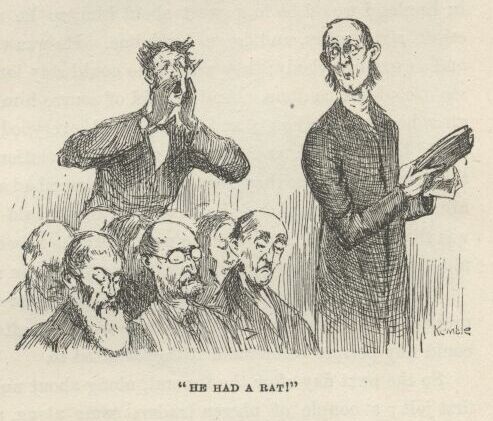
Well, the funeral sermon was very good, but pison long and tiresome; and thenthe king he shoved in and got off some of his usual rubbage, and at last thejob was through, and the undertaker begun to sneak up on the coffin with hisscrew-driver. I was in a sweat then, and watched him pretty keen. But he nevermeddled at all; just slid the lid along as soft as mush, and screwed it downtight and fast. So there I was! I didn’t know whether the money was in there ornot. So, says I, s’pose somebody has hogged that bag on the sly?—now how doIknow whether to write to Mary Jane or not? S’pose she dug him up anddidn’t find nothing, what would she think of me? Blame it, I says, I might gethunted up and jailed; I’d better lay low and keep dark, and not write at all;the thing’s awful mixed now; trying to better it, I’ve worsened it a hundredtimes, and I wish to goodness I’d just let it alone, dad fetch the wholebusiness!
They buried him, and we come back home, and I went to watching faces again—Icouldn’t help it, and I couldn’t rest easy. But nothing come of it; the facesdidn’t tell me nothing.
The king he visited around in the evening, and sweetened everybody up, and madehimself ever so friendly; and he give out the idea that his congregation overin England would be in a sweat about him, so he must hurry and settle up theestate right away and leave for home. He was very sorry he was so pushed, andso was everybody; they wished he could stay longer, but they said they couldsee it couldn’t be done. And he said of course him and William would take thegirls home with them; and that pleased everybody too, because then the girlswould be well fixed and amongst their own relations; and it pleased the girls,too—tickled them so they clean forgot they ever had a trouble in the world; andtold him to sell out as quick as he wanted to, they would be ready. Them poorthings was that glad and happy it made my heart ache to see them getting fooledand lied to so, but I didn’t see no safe way for me to chip in and change thegeneral tune.
Well, blamed if the king didn’t bill the house and the niggers and all theproperty for auction straight off—sale two days after the funeral; but anybodycould buy private beforehand if they wanted to.
So the next day after the funeral, along about noon-time, the girls’ joy gotthe first jolt. A couple of nigger traders come along, and the king sold themthe niggers reasonable, for three-day drafts as they called it, and away theywent, the two sons up the river to Memphis, and their mother down the river toOrleans. I thought them poor girls and them niggers would break their heartsfor grief; they cried around each other, and took on so it most made me downsick to see it. The girls said they hadn’t ever dreamed of seeing the familyseparated or sold away from the town. I can’t ever get it out of my memory, thesight of them poor miserable girls and niggers hanging around each other’snecks and crying; and I reckon I couldn’t a stood it all, but would a had tobust out and tell on our gang if I hadn’t knowed the sale warn’t no account andthe niggers would be back home in a week or two.
The thing made a big stir in the town, too, and a good many come out flatfootedand said it was scandalous to separate the mother and the children that way. Itinjured the frauds some; but the old fool he bulled right along, spite of allthe duke could say or do, and I tell you the duke was powerful uneasy.
Next day was auction day. About broad day in the morning the king and the dukecome up in the garret and woke me up, and I see by their look that there wastrouble. The king says:
“Was you in my room night before last?”
“No, your majesty”—which was the way I always called him when nobody but ourgang warn’t around.
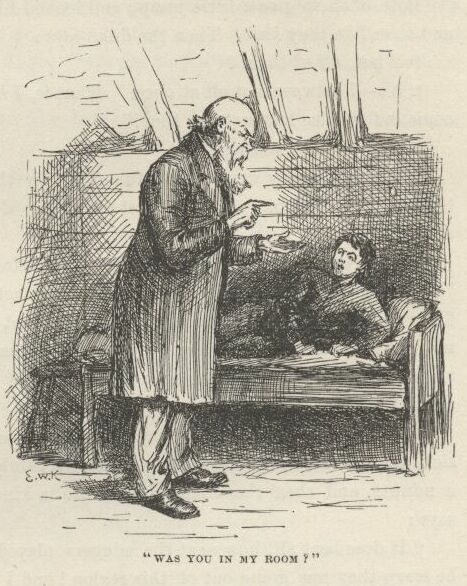
“Was you in there yisterday er last night?”
“No, your majesty.”
“Honor bright, now—no lies.”
“Honor bright, your majesty, I’m telling you the truth. I hain’t been a-nearyour room since Miss Mary Jane took you and the duke and showed it to you.”
The duke says:
“Have you seen anybody else go in there?”
“No, your grace, not as I remember, I believe.”
“Stop and think.”
I studied awhile and see my chance; then I says:
“Well, I see the niggers go in there several times.”
Both of them gave a little jump, and looked like they hadn’t ever expected it,and then like they had. Then the duke says:
“What, allof them?”
“No—leastways, not all at once—that is, I don’t think I ever see them all comeoutat once but just one time.”
“Hello! When was that?”
“It was the day we had the funeral. In the morning. It warn’t early, because Ioverslept. I was just starting down the ladder, and I see them.”
“Well, go on, goon! What did they do? How’d they act?”
“They didn’t do nothing. And they didn’t act anyway much, as fur as I see. Theytiptoed away; so I seen, easy enough, that they’d shoved in there to do up yourmajesty’s room, or something, s’posing you was up; and found you warn’tup, and so they was hoping to slide out of the way of trouble without wakingyou up, if they hadn’t already waked you up.”
“Great guns, thisis a go!” says the king; and both of them lookedpretty sick and tolerable silly. They stood there a-thinking and scratchingtheir heads a minute, and the duke he bust into a kind of a little raspychuckle, and says:
“It does beat all how neat the niggers played their hand. They let on to besorrythey was going out of this region! And I believed they wassorry, and so did you, and so did everybody. Don’t ever tell meany morethat a nigger ain’t got any histrionic talent. Why, the way they played thatthing it would fool anybody. In my opinion, there’s a fortune in ’em. IfI had capital and a theater, I wouldn’t want a better lay-out than that—andhere we’ve gone and sold ’em for a song. Yes, and ain’t privileged to sing thesong yet. Say, where isthat song—that draft?”
“In the bank for to be collected. Where wouldit be?”
“Well, that’sall right then, thank goodness.”
Says I, kind of timid-like:
“Is something gone wrong?”
The king whirls on me and rips out:
“None o’ your business! You keep your head shet, and mind y’r own affairs—ifyou got any. Long as you’re in this town don’t you forgit that—youhear?” Then he says to the duke, “We got to jest swaller it and say noth’n’:mum’s the word for us.”
As they was starting down the ladder the duke he chuckles again, and says:
“Quick sales andsmall profits! It’s a good business—yes.”
v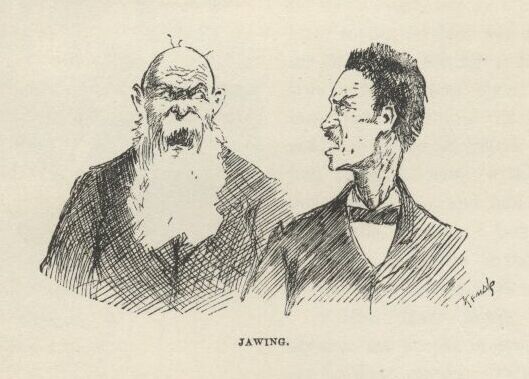
The king snarls around on him and says:
“I was trying to do for the best in sellin’ ’em out so quick. If the profitshas turned out to be none, lackin’ considable, and none to carry, is it myfault any more’n it’s yourn?”
“Well, they’dbe in this house yet and we wouldn’tif I could agot my advice listened to.”
The king sassed back as much as was safe for him, and then swapped around andlit into meagain. He give me down the banks for not coming andtellinghim I see the niggers come out of his room acting that way—saidany fool would a knowedsomething was up. And then waltzed in and cussedhimselfawhile, and said it all come of him not laying late and takinghis natural rest that morning, and he’d be blamed if he’d ever do it again. Sothey went off a-jawing; and I felt dreadful glad I’d worked it all off on tothe niggers, and yet hadn’t done the niggers no harm by it.
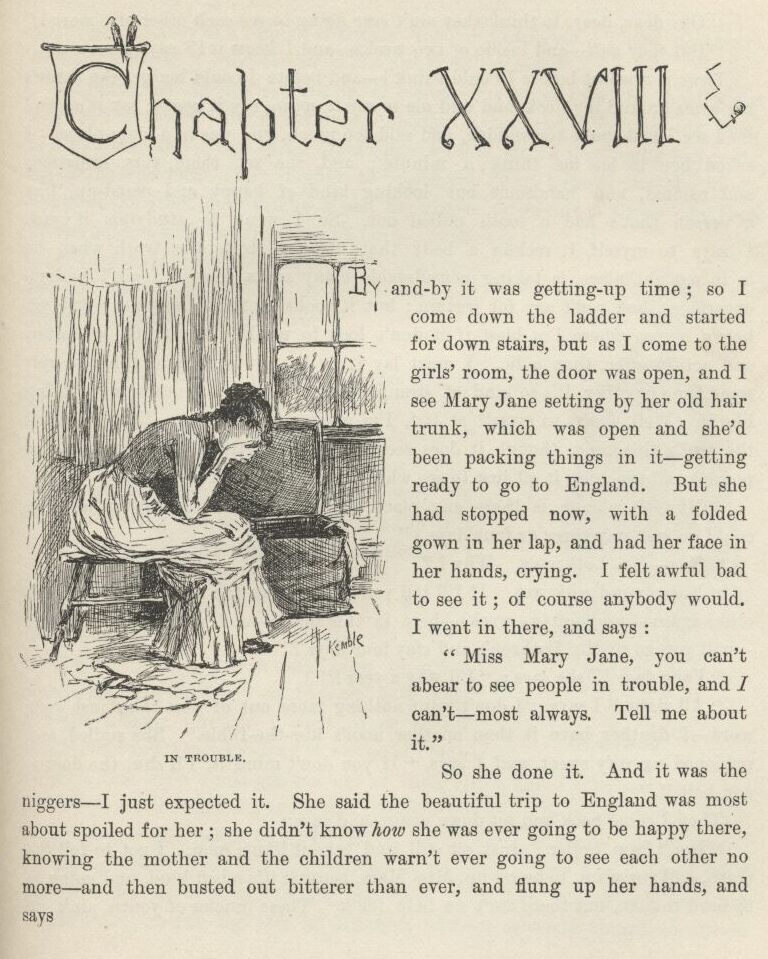
CHAPTER XXVIII.
By-and-by it was getting-up time. So I come down the ladder and started fordown-stairs; but as I come to the girls’ room the door was open, and I see MaryJane setting by her old hair trunk, which was open and she’d been packingthings in it—getting ready to go to England. But she had stopped now with afolded gown in her lap, and had her face in her hands, crying. I felt awful badto see it; of course anybody would. I went in there and says:
“Miss Mary Jane, you can’t a-bear to see people in trouble, and Ican’t—most always. Tell me about it.”
So she done it. And it was the niggers—I just expected it. She said thebeautiful trip to England was most about spoiled for her; she didn’t knowhowshe was ever going to be happy there, knowing the mother and thechildren warn’t ever going to see each other no more—and then busted outbitterer than ever, and flung up her hands, and says:
“Oh, dear, dear, to think they ain’t evergoing to see each other anymore!”
“But they will—and inside of two weeks—and I knowit!” says I.
Laws, it was out before I could think! And before I could budge she throws herarms around my neck and told me to say it again, say it again,say it again!
I see I had spoke too sudden and said too much, and was in a close place. Iasked her to let me think a minute; and she set there, very impatient andexcited and handsome, but looking kind of happy and eased-up, like a personthat’s had a tooth pulled out. So I went to studying it out. I says to myself,I reckon a body that ups and tells the truth when he is in a tight place istaking considerable many resks, though I ain’t had no experience, and can’t sayfor certain; but it looks so to me, anyway; and yet here’s a case where I’mblest if it don’t look to me like the truth is better and actuly saferthan a lie. I must lay it by in my mind, and think it over some time or other,it’s so kind of strange and unregular. I never see nothing like it. Well, Isays to myself at last, I’m a-going to chance it; I’ll up and tell the truththis time, though it does seem most like setting down on a kag of powder andtouching it off just to see where you’ll go to. Then I says:
“Miss Mary Jane, is there any place out of town a little ways where you couldgo and stay three or four days?”
“Yes; Mr. Lothrop’s. Why?”
“Never mind why yet. If I’ll tell you how I know the niggers will see eachother again inside of two weeks—here in this house—and provehow I knowit—will you go to Mr. Lothrop’s and stay four days?”
“Four days!” she says; “I’ll stay a year!”
“All right,” I says, “I don’t want nothing more out of youthan justyour word—I druther have it than another man’s kiss-the-Bible.” She smiled andreddened up very sweet, and I says, “If you don’t mind it, I’ll shut thedoor—and bolt it.”
Then I come back and set down again, and says:
“Don’t you holler. Just set still and take it like a man. I got to tell thetruth, and you want to brace up, Miss Mary, because it’s a bad kind, and goingto be hard to take, but there ain’t no help for it. These uncles of yourn ain’tno uncles at all; they’re a couple of frauds—regular dead-beats. There, nowwe’re over the worst of it, you can stand the rest middling easy.”
It jolted her up like everything, of course; but I was over the shoal waternow, so I went right along, her eyes a-blazing higher and higher all the time,and told her every blame thing, from where we first struck that young foolgoing up to the steamboat, clear through to where she flung herself on to theking’s breast at the front door and he kissed her sixteen or seventeentimes—and then up she jumps, with her face afire like sunset, and says:
“The brute! Come, don’t waste a minute—not a second—we’ll have themtarred and feathered, and flung in the river!”
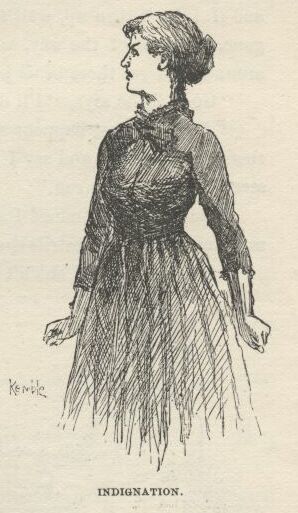
Says I:
“Cert’nly. But do you mean beforeyou go to Mr. Lothrop’s, or—”
“Oh,” she says, “what am I thinkingabout!” she says, and set right downagain. “Don’t mind what I said—please don’t—you won’t,now, willyou?” Laying her silky hand on mine in that kind of a way that I said I woulddie first. “I never thought, I was so stirred up,” she says; “now go on, and Iwon’t do so any more. You tell me what to do, and whatever you say I’ll do it.”
“Well,” I says, “it’s a rough gang, them two frauds, and I’m fixed so I got totravel with them a while longer, whether I want to or not—I druther not tellyou why; and if you was to blow on them this town would get me out of theirclaws, and I’d be all right; but there’d be another person that you don’t knowabout who’d be in big trouble. Well, we got to save him, hain’t we? Ofcourse. Well, then, we won’t blow on them.”
Saying them words put a good idea in my head. I see how maybe I could get meand Jim rid of the frauds; get them jailed here, and then leave. But I didn’twant to run the raft in the daytime without anybody aboard to answer questionsbut me; so I didn’t want the plan to begin working till pretty late to-night. Isays:
“Miss Mary Jane, I’ll tell you what we’ll do, and you won’t have to stay at Mr.Lothrop’s so long, nuther. How fur is it?”
“A little short of four miles—right out in the country, back here.”
“Well, that’ll answer. Now you go along out there, and lay low till nine orhalf-past to-night, and then get them to fetch you home again—tell them you’vethought of something. If you get here before eleven put a candle in thiswindow, and if I don’t turn up wait tilleleven, and thenif Idon’t turn up it means I’m gone, and out of the way, and safe. Then you comeout and spread the news around, and get these beats jailed.”
“Good,” she says, “I’ll do it.”
“And if it just happens so that I don’t get away, but get took up along withthem, you must up and say I told you the whole thing beforehand, and you muststand by me all you can.”
“Stand by you! indeed I will. They sha’n’t touch a hair of your head!” shesays, and I see her nostrils spread and her eyes snap when she said it, too.
“If I get away I sha’n’t be here,” I says, “to prove these rapscallions ain’tyour uncles, and I couldn’t do it if I washere. I could swear they wasbeats and bummers, that’s all, though that’s worth something. Well, there’sothers can do that better than what I can, and they’re people that ain’t goingto be doubted as quick as I’d be. I’ll tell you how to find them. Gimme apencil and a piece of paper. There—‘Royal Nonesuch, Bricksville.’ Put itaway, and don’t lose it. When the court wants to find out something about thesetwo, let them send up to Bricksville and say they’ve got the men that playedthe Royal Nonesuch, and ask for some witnesses—why, you’ll have that entiretown down here before you can hardly wink, Miss Mary. And they’ll comea-biling, too.”

I judged we had got everything fixed about right now. So I says:
“Just let the auction go right along, and don’t worry. Nobody don’t have to payfor the things they buy till a whole day after the auction on accounts of theshort notice, and they ain’t going out of this till they get that money; andthe way we’ve fixed it the sale ain’t going to count, and they ain’t going togetno money. It’s just like the way it was with the niggers—it warn’tno sale, and the niggers will be back before long. Why, they can’t collect themoney for the niggersyet—they’re in the worst kind of a fix, MissMary.”
“Well,” she says, “I’ll run down to breakfast now, and then I’ll start straightfor Mr. Lothrop’s.”
“’Deed, thatain’t the ticket, Miss Mary Jane,” I says, “by no manner ofmeans; go beforebreakfast.”
“Why?”
“What did you reckon I wanted you to go at all for, Miss Mary?”
“Well, I never thought—and come to think, I don’t know. What was it?”
“Why, it’s because you ain’t one of these leather-face people. I don’t want nobetter book than what your face is. A body can set down and read it off likecoarse print. Do you reckon you can go and face your uncles when they come tokiss you good-morning, and never—”
“There, there, don’t! Yes, I’ll go before breakfast—I’ll be glad to. And leavemy sisters with them?”
“Yes; never mind about them. They’ve got to stand it yet a while. They mightsuspicion something if all of you was to go. I don’t want you to see them, noryour sisters, nor nobody in this town; if a neighbor was to ask how is youruncles this morning your face would tell something. No, you go right along,Miss Mary Jane, and I’ll fix it with all of them. I’ll tell Miss Susan to giveyour love to your uncles and say you’ve went away for a few hours for to get alittle rest and change, or to see a friend, and you’ll be back to-night orearly in the morning.”
“Gone to see a friend is all right, but I won’t have my love given to them.”
“Well, then, it sha’n’t be.” It was well enough to tell herso—no harmin it. It was only a little thing to do, and no trouble; and it’s the littlethings that smooths people’s roads the most, down here below; it would makeMary Jane comfortable, and it wouldn’t cost nothing. Then I says: “There’s onemore thing—that bag of money.”
“Well, they’ve got that; and it makes me feel pretty silly to think howthey got it.”
“No, you’re out, there. They hain’t got it.”
“Why, who’s got it?”
“I wish I knowed, but I don’t. I hadit, because I stole it from them;and I stole it to give to you; and I know where I hid it, but I’m afraid itain’t there no more. I’m awful sorry, Miss Mary Jane, I’m just as sorry as Ican be; but I done the best I could; I did honest. I come nigh getting caught,and I had to shove it into the first place I come to, and run—and it warn’t agood place.”
“Oh, stop blaming yourself—it’s too bad to do it, and I won’t allow it—youcouldn’t help it; it wasn’t your fault. Where did you hide it?”
I didn’t want to set her to thinking about her troubles again; and I couldn’tseem to get my mouth to tell her what would make her see that corpse laying inthe coffin with that bag of money on his stomach. So for a minute I didn’t saynothing; then I says:
“I’d ruther not tellyou where I put it, Miss Mary Jane, if you don’tmind letting me off; but I’ll write it for you on a piece of paper, and you canread it along the road to Mr. Lothrop’s, if you want to. Do you reckon that’lldo?”
“Oh, yes.”
So I wrote: “I put it in the coffin. It was in there when you was crying there,away in the night. I was behind the door, and I was mighty sorry for you, MissMary Jane.”
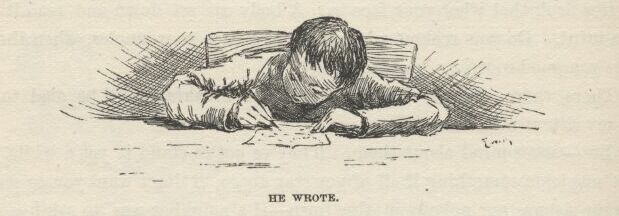
It made my eyes water a little to remember her crying there all by herself inthe night, and them devils laying there right under her own roof, shaming herand robbing her; and when I folded it up and give it to her I see the watercome into her eyes, too; and she shook me by the hand, hard, and says:
“Good-bye. I’m going to do everything just as you’ve told me; and if Idon’t ever see you again, I sha’n’t ever forget you and I’ll think of you amany and a many a time, and I’ll prayfor you, too!”—and she was gone.
Pray for me! I reckoned if she knowed me she’d take a job that was more nearerher size. But I bet she done it, just the same—she was just that kind. She hadthe grit to pray for Judus if she took the notion—there warn’t no back-down toher, I judge. You may say what you want to, but in my opinion she had more sandin her than any girl I ever see; in my opinion she was just full of sand. Itsounds like flattery, but it ain’t no flattery. And when it comes to beauty—andgoodness, too—she lays over them all. I hain’t ever seen her since that timethat I see her go out of that door; no, I hain’t ever seen her since, but Ireckon I’ve thought of her a many and a many a million times, and of her sayingshe would pray for me; and if ever I’d a thought it would do any good for me topray for her, blamed if I wouldn’t a done it or bust.
Well, Mary Jane she lit out the back way, I reckon; because nobody see her go.When I struck Susan and the hare-lip, I says:
“What’s the name of them people over on t’other side of the river that you allgoes to see sometimes?”
They says:
“There’s several; but it’s the Proctors, mainly.”
“That’s the name,” I says; “I most forgot it. Well, Miss Mary Jane she told meto tell you she’s gone over there in a dreadful hurry—one of them’s sick.”
“Which one?”
“I don’t know; leastways, I kinder forget; but I thinks it’s—”
“Sakes alive, I hope it ain’t Hanner?”
“I’m sorry to say it,” I says, “but Hanner’s the very one.”
“My goodness, and she so well only last week! Is she took bad?”
“It ain’t no name for it. They set up with her all night, Miss Mary Jane said,and they don’t think she’ll last many hours.”
“Only think of that, now! What’s the matter with her?”
I couldn’t think of anything reasonable, right off that way, so I says:
“Mumps.”
“Mumps your granny! They don’t set up with people that’s got the mumps.”
“They don’t, don’t they? You better bet they do with thesemumps. Thesemumps is different. It’s a new kind, Miss Mary Jane said.”
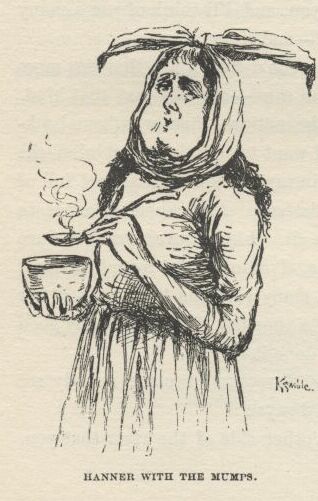
“How’s it a new kind?”
“Because it’s mixed up with other things.”
“What other things?”
“Well, measles, and whooping-cough, and erysiplas, and consumption, and yallerjanders, and brain-fever, and I don’t know what all.”
“My land! And they call it the mumps?”
“That’s what Miss Mary Jane said.”
“Well, what in the nation do they call it the mumpsfor?”
“Why, because it isthe mumps. That’s what it starts with.”
“Well, ther’ ain’t no sense in it. A body might stump his toe, and take pison,and fall down the well, and break his neck, and bust his brains out, andsomebody come along and ask what killed him, and some numskull up and say,‘Why, he stumped his toe.’ Would ther’ be any sense in that? No.And ther’ ain’t no sense in this, nuther. Is it ketching?”
“Is it ketching?Why, how you talk. Is a harrowcatching—in thedark? If you don’t hitch on to one tooth, you’re bound to on another, ain’tyou? And you can’t get away with that tooth without fetching the whole harrowalong, can you? Well, these kind of mumps is a kind of a harrow, as you maysay—and it ain’t no slouch of a harrow, nuther, you come to get it hitched ongood.”
“Well, it’s awful, Ithink,” says the hare-lip. “I’ll go to Uncle Harvey and—”
“Oh, yes,” I says, “I would. Of courseI would. I wouldn’t loseno time.”
“Well, why wouldn’t you?”
“Just look at it a minute, and maybe you can see. Hain’t your uncles obleegd toget along home to England as fast as they can? And do you reckon they’d be meanenough to go off and leave you to go all that journey by yourselves? Youknow they’ll wait for you. So fur, so good. Your uncle Harvey’s a preacher,ain’t he? Very well, then; is a preachergoing to deceive a steamboatclerk? is he going to deceive a ship clerk?—so as to get them to letMiss Mary Jane go aboard? Now youknow he ain’t. What willhe do,then? Why, he’ll say, ‘It’s a great pity, but my church matters has got to getalong the best way they can; for my niece has been exposed to the dreadfulpluribus-unum mumps, and so it’s my bounden duty to set down here and wait thethree months it takes to show on her if she’s got it.’ But never mind, if youthink it’s best to tell your uncle Harvey—”
“Shucks, and stay fooling around here when we could all be having good times inEngland whilst we was waiting to find out whether Mary Jane’s got it or not?Why, you talk like a muggins.”
“Well, anyway, maybe you’d better tell some of the neighbors.”
“Listen at that, now. You do beat all for natural stupidness. Can’t youseethat they’dgo and tell? Ther’ ain’t no way but just to nottell anybody at all.”
“Well, maybe you’re right—yes, I judge you areright.”
“But I reckon we ought to tell Uncle Harvey she’s gone out a while, anyway, sohe won’t be uneasy about her?”
“Yes, Miss Mary Jane she wanted you to do that. She says, ‘Tell them to giveUncle Harvey and William my love and a kiss, and say I’ve run over the river tosee Mr.’—Mr.—what isthe name of that rich family your uncle Peter usedto think so much of?—I mean the one that—”
“Why, you must mean the Apthorps, ain’t it?”
“Of course; bother them kind of names, a body can’t ever seem to remember them,half the time, somehow. Yes, she said, say she has run over for to ask theApthorps to be sure and come to the auction and buy this house, because sheallowed her uncle Peter would ruther they had it than anybody else; and she’sgoing to stick to them till they say they’ll come, and then, if she ain’t tootired, she’s coming home; and if she is, she’ll be home in the morning anyway.She said, don’t say nothing about the Proctors, but only about theApthorps—which’ll be perfectly true, because she isgoing there tospeak about their buying the house; I know it, because she told me so herself.”
“All right,” they said, and cleared out to lay for their uncles, and give themthe love and the kisses, and tell them the message.
Everything was all right now. The girls wouldn’t say nothing because theywanted to go to England; and the king and the duke would ruther Mary Jane wasoff working for the auction than around in reach of Doctor Robinson. I feltvery good; I judged I had done it pretty neat—I reckoned Tom Sawyer couldn’t adone it no neater himself. Of course he would a throwed more style into it, butI can’t do that very handy, not being brung up to it.
Well, they held the auction in the public square, along towards the end of theafternoon, and it strung along, and strung along, and the old man he was onhand and looking his level pisonest, up there longside of the auctioneer, andchipping in a little Scripture now and then, or a little goody-goody saying ofsome kind, and the duke he was around goo-gooing for sympathy all he knowedhow, and just spreading himself generly.
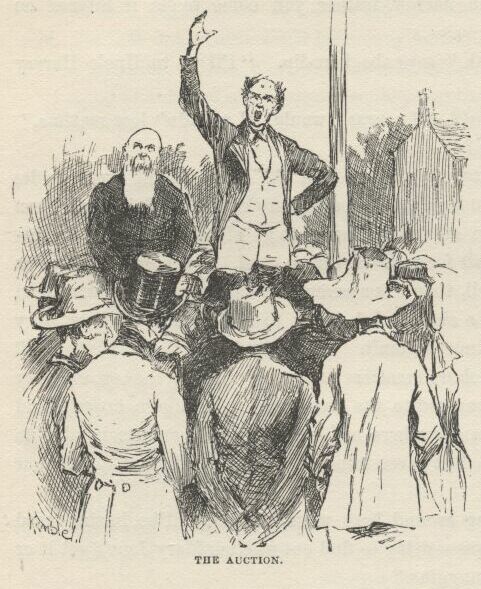
But by-and-by the thing dragged through, and everything was sold—everything buta little old trifling lot in the graveyard. So they’d got to work thatoff—I never see such a girafft as the king was for wanting to swalloweverything. Well, whilst they was at it a steamboat landed, and in abouttwo minutes up comes a crowd a-whooping and yelling and laughing and carryingon, and singing out:
“Here’syour opposition line! here’s your two sets o’ heirs to old PeterWilks—and you pays your money and you takes your choice!”
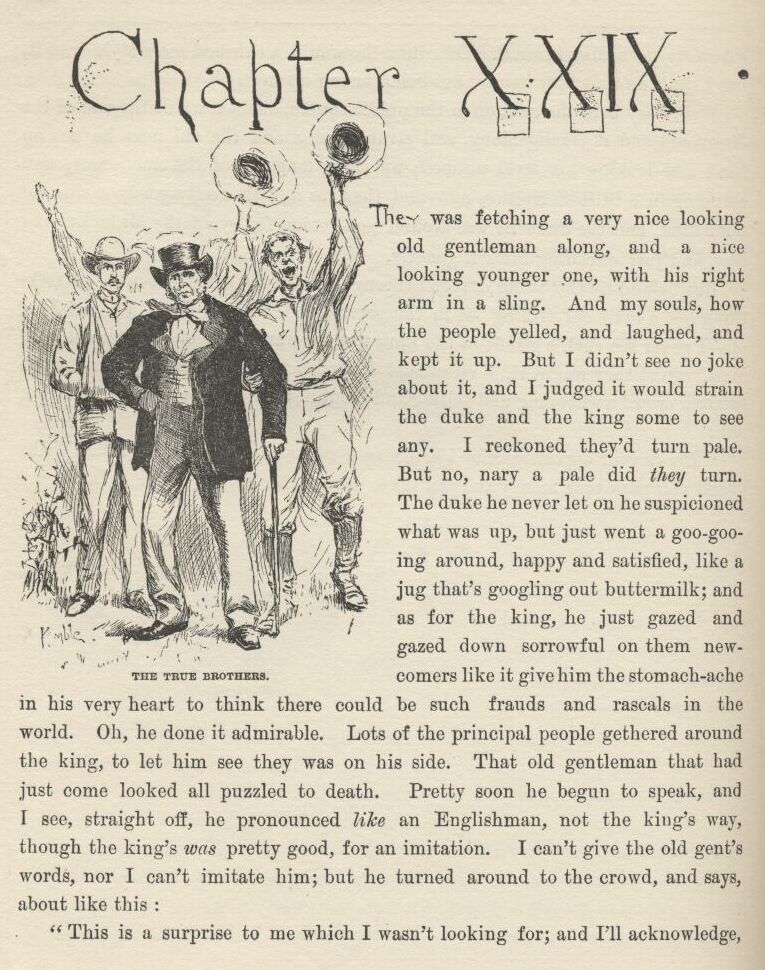
CHAPTER XXIX.
They was fetching a very nice-looking old gentleman along, and a nice-lookingyounger one, with his right arm in a sling. And, my souls, how the peopleyelled and laughed, and kept it up. But I didn’t see no joke about it, and Ijudged it would strain the duke and the king some to see any. I reckoned they’dturn pale. But no, nary a pale did theyturn. The duke he never let onhe suspicioned what was up, but just went a goo-gooing around, happy andsatisfied, like a jug that’s googling out buttermilk; and as for the king, hejust gazed and gazed down sorrowful on them new-comers like it give him thestomach-ache in his very heart to think there could be such frauds and rascalsin the world. Oh, he done it admirable. Lots of the principal people getheredaround the king, to let him see they was on his side. That old gentleman thathad just come looked all puzzled to death. Pretty soon he begun to speak, and Isee straight off he pronounced likean Englishman—not the king’s way,though the king’s waspretty good for an imitation. I can’t give the oldgent’s words, nor I can’t imitate him; but he turned around to the crowd, andsays, about like this:
“This is a surprise to me which I wasn’t looking for; and I’ll acknowledge,candid and frank, I ain’t very well fixed to meet it and answer it; for mybrother and me has had misfortunes; he’s broke his arm, and our baggage got putoff at a town above here last night in the night by a mistake. I am PeterWilks’ brother Harvey, and this is his brother William, which can’t hear norspeak—and can’t even make signs to amount to much, now’t he’s only got one handto work them with. We are who we say we are; and in a day or two, when I getthe baggage, I can prove it. But up till then I won’t say nothing more, but goto the hotel and wait.”
So him and the new dummy started off; and the king he laughs, and blethers out:
“Broke his arm—verylikely, ain’tit?—and very convenient, too,for a fraud that’s got to make signs, and ain’t learnt how. Lost their baggage!That’s mightygood!—and mighty ingenious—under thecircumstances!”
So he laughed again; and so did everybody else, except three or four, or maybehalf a dozen. One of these was that doctor; another one was a sharp-lookinggentleman, with a carpet-bag of the old-fashioned kind made out ofcarpet-stuff, that had just come off of the steamboat and was talking to him ina low voice, and glancing towards the king now and then and nodding theirheads—it was Levi Bell, the lawyer that was gone up to Louisville; and anotherone was a big rough husky that come along and listened to all the old gentlemansaid, and was listening to the king now. And when the king got done this huskyup and says:
“Say, looky here; if you are Harvey Wilks, when’d you come to this town?”
“The day before the funeral, friend,” says the king.
“But what time o’ day?”
“In the evenin’—’bout an hour er two before sundown.”
“How’dyou come?”
“I come down on the Susan Powell from Cincinnati.”
“Well, then, how’d you come to be up at the Pint in the mornin’—in acanoe?”
“I warn’t up at the Pint in the mornin’.”
“It’s a lie.”
Several of them jumped for him and begged him not to talk that way to an oldman and a preacher.
“Preacher be hanged, he’s a fraud and a liar. He was up at the Pint thatmornin’. I live up there, don’t I? Well, I was up there, and he was up there. Iseehim there. He come in a canoe, along with Tim Collins and a boy.”
The doctor he up and says:
“Would you know the boy again if you was to see him, Hines?”
“I reckon I would, but I don’t know. Why, yonder he is, now. I know himperfectly easy.”
It was me he pointed at. The doctor says:
“Neighbors, I don’t know whether the new couple is frauds or not; but ifthesetwo ain’t frauds, I am an idiot, that’s all. I think it’s our dutyto see that they don’t get away from here till we’ve looked into this thing.Come along, Hines; come along, the rest of you. We’ll take these fellows to thetavern and affront them with t’other couple, and I reckon we’ll find outsomethingbefore we get through.”
It was nuts for the crowd, though maybe not for the king’s friends; so we allstarted. It was about sundown. The doctor he led me along by the hand, and wasplenty kind enough, but he never let gomy hand.
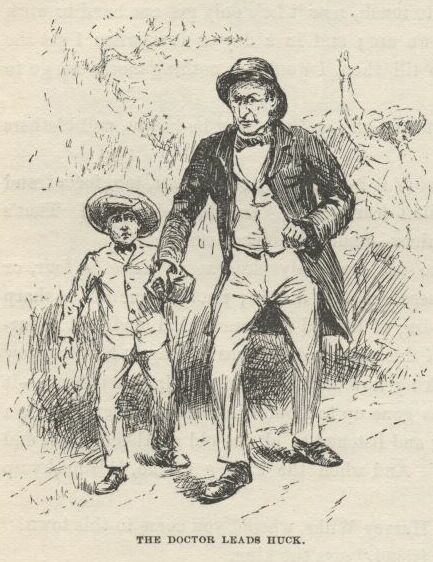
We all got in a big room in the hotel, and lit up some candles, and fetched inthe new couple. First, the doctor says:
“I don’t wish to be too hard on these two men, but Ithink they’refrauds, and they may have complices that we don’t know nothing about. If theyhave, won’t the complices get away with that bag of gold Peter Wilks left? Itain’t unlikely. If these men ain’t frauds, they won’t object to sending forthat money and letting us keep it till they prove they’re all right—ain’t thatso?”
Everybody agreed to that. So I judged they had our gang in a pretty tight placeright at the outstart. But the king he only looked sorrowful, and says:
“Gentlemen, I wish the money was there, for I ain’t got no disposition to throwanything in the way of a fair, open, out-and-out investigation o’ this misablebusiness; but, alas, the money ain’t there; you k’n send and see, if you wantto.”
“Where is it, then?”
“Well, when my niece give it to me to keep for her I took and hid it inside o’the straw tick o’ my bed, not wishin’ to bank it for the few days we’d be here,and considerin’ the bed a safe place, we not bein’ used to niggers, andsuppos’n’ ’em honest, like servants in England. The niggers stole it the verynext mornin’ after I had went down stairs; and when I sold ’em I hadn’t missedthe money yit, so they got clean away with it. My servant here k’n tell you’bout it, gentlemen.”
The doctor and several said “Shucks!” and I see nobody didn’t altogetherbelieve him. One man asked me if I see the niggers steal it. I said no, but Isee them sneaking out of the room and hustling away, and I never thoughtnothing, only I reckoned they was afraid they had waked up my master and wastrying to get away before he made trouble with them. That was all they askedme. Then the doctor whirls on me and says:
“Are youEnglish, too?”
I says yes; and him and some others laughed, and said, “Stuff!”
Well, then they sailed in on the general investigation, and there we had it, upand down, hour in, hour out, and nobody never said a word about supper, norever seemed to think about it—and so they kept it up, and kept it up; and itwasthe worst mixed-up thing you ever see. They made the king tell hisyarn, and they made the old gentleman tell his’n; and anybody but a lot ofprejudiced chuckleheads would a seenthat the old gentleman was spinningtruth and t’other one lies. And by-and-by they had me up to tell what I knowed.The king he give me a left-handed look out of the corner of his eye, and so Iknowed enough to talk on the right side. I begun to tell about Sheffield, andhow we lived there, and all about the English Wilkses, and so on; but I didn’tget pretty fur till the doctor begun to laugh; and Levi Bell, the lawyer, says:
“Set down, my boy; I wouldn’t strain myself if I was you. I reckon you ain’tused to lying, it don’t seem to come handy; what you want is practice. You doit pretty awkward.”
I didn’t care nothing for the compliment, but I was glad to be let off, anyway.
The doctor he started to say something, and turns and says:
“If you’d been in town at first, Levi Bell—” The king broke in and reached outhis hand, and says:
“Why, is this my poor dead brother’s old friend that he’s wrote so oftenabout?”
The lawyer and him shook hands, and the lawyer smiled and looked pleased, andthey talked right along awhile, and then got to one side and talked low; and atlast the lawyer speaks up and says:
“That’ll fix it. I’ll take the order and send it, along with your brother’s,and then they’ll know it’s all right.”
So they got some paper and a pen, and the king he set down and twisted his headto one side, and chawed his tongue, and scrawled off something; and then theygive the pen to the duke—and then for the first time the duke looked sick. Buthe took the pen and wrote. So then the lawyer turns to the new old gentlemanand says:
“You and your brother please write a line or two and sign your names.”
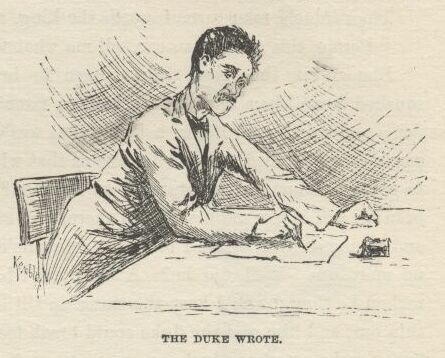
The old gentleman wrote, but nobody couldn’t read it. The lawyer lookedpowerful astonished, and says:
“Well, it beats me”—and snaked a lot of old letters out of his pocket,and examined them, and then examined the old man’s writing, and thenthemagain; and then says: “These old letters is from Harvey Wilks; andhere’s thesetwo handwritings, and anybody can see theydidn’twrite them” (the king and the duke looked sold and foolish, I tell you, to seehow the lawyer had took them in), “and here’s thisold gentleman’s handwriting, and anybody can tell, easy enough, hedidn’t write them—factis, the scratches he makes ain’t properly writingat all. Now, here’ssome letters from—”
The new old gentleman says:
“If you please, let me explain. Nobody can read my hand but my brother there—sohe copies for me. It’s hishand you’ve got there, not mine.”
“Well!” says the lawyer, “this isa state of things. I’ve gotsome of William’s letters, too; so if you’ll get him to write a line or so wecan com—”
“He can’twrite with his left hand,” says the old gentleman. “If hecould use his right hand, you would see that he wrote his own letters and minetoo. Look at both, please—they’re by the same hand.”
The lawyer done it, and says:
“I believe it’s so—and if it ain’t so, there’s a heap stronger resemblance thanI’d noticed before, anyway. Well, well, well! I thought we was right on thetrack of a solution, but it’s gone to grass, partly. But anyway, onething is proved—thesetwo ain’t either of ’em Wilkses”—and he wagged hishead towards the king and the duke.
Well, what do you think? That muleheaded old fool wouldn’t give in then!Indeed he wouldn’t. Said it warn’t no fair test. Said his brother William wasthe cussedest joker in the world, and hadn’t triedto write—hesee William was going to play one of his jokes the minute he put the pen topaper. And so he warmed up and went warbling and warbling right along till hewas actuly beginning to believe what he was saying himself;but prettysoon the new gentleman broke in, and says:
“I’ve thought of something. Is there anybody here that helped to lay out mybr—helped to lay out the late Peter Wilks for burying?”
“Yes,” says somebody, “me and Ab Turner done it. We’re both here.”
Then the old man turns towards the king, and says:
“Perhaps this gentleman can tell me what was tattooed on his breast?”
Blamed if the king didn’t have to brace up mighty quick, or he’d a squshed downlike a bluff bank that the river has cut under, it took him so sudden; and,mind you, it was a thing that was calculated to make most anybodysqushto get fetched such a solid one as that without any notice, because how washegoing to know what was tattooed on the man? He whitened a little; hecouldn’t help it; and it was mighty still in there, and everybody bending alittle forwards and gazing at him. Says I to myself, Nowhe’ll throw upthe sponge—there ain’t no more use. Well, did he? A body can’t hardly believeit, but he didn’t. I reckon he thought he’d keep the thing up till he tiredthem people out, so they’d thin out, and him and the duke could break loose andget away. Anyway, he set there, and pretty soon he begun to smile, and says:
“Mf! It’s a verytough question, ain’tit! Yes, sir, I k’ntell you what’s tattooed on his breast. It’s jest a small, thin, bluearrow—that’s what it is; and if you don’t look clost, you can’t see it.Nowwhat do you say—hey?”
Well, Inever see anything like that old blister for clean out-and-outcheek.
The new old gentleman turns brisk towards Ab Turner and his pard, and his eyelights up like he judged he’d got the king thistime, and says:
“There—you’ve heard what he said! Was there any such mark on Peter Wilks’breast?”
Both of them spoke up and says:
“We didn’t see no such mark.”
“Good!” says the old gentleman. “Now, what you didsee on his breast wasa small dim P, and a B (which is an initial he dropped when he was young), anda W, with dashes between them, so: P—B—W”—and he marked them that way on apiece of paper. “Come, ain’t that what you saw?”
Both of them spoke up again, and says:
“No, we didn’t. We never seen any marks at all.”
Well, everybody wasin a state of mind now, and they sings out:
“The whole bilin’ of ’m ’s frauds! Le’s duck ’em! le’s drown ’em! le’sride ’em on a rail!” and everybody was whooping at once, and there was arattling powwow. But the lawyer he jumps on the table and yells, and says:
“Gentlemen—gentlemen!Hear me just a word—just a singleword—ifyou PLEASE! There’s one way yet—let’s go and dig up the corpseand look.”
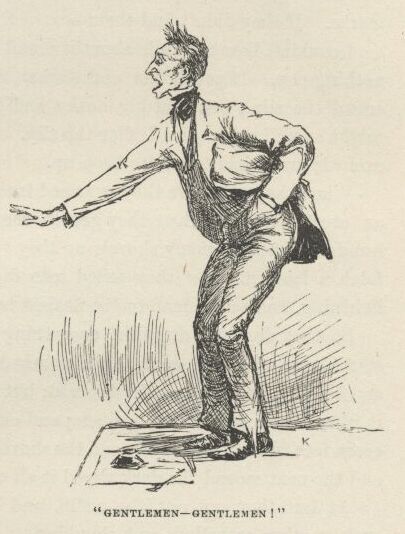
That took them.
“Hooray!” they all shouted, and was starting right off; but the lawyer and thedoctor sung out:
“Hold on, hold on! Collar all these four men and the boy, and fetch themalong, too!”
“We’ll do it!” they all shouted; “and if we don’t find them marks we’ll lynchthe whole gang!”
I wasscared, now, I tell you. But there warn’t no getting away, youknow. They gripped us all, and marched us right along, straight for thegraveyard, which was a mile and a half down the river, and the whole town atour heels, for we made noise enough, and it was only nine in the evening.
As we went by our house I wished I hadn’t sent Mary Jane out of town; becausenow if I could tip her the wink she’d light out and save me, and blow on ourdead-beats.
Well, we swarmed along down the river road, just carrying on like wildcats; andto make it more scary the sky was darking up, and the lightning beginning towink and flitter, and the wind to shiver amongst the leaves. This was the mostawful trouble and most dangersome I ever was in; and I was kinder stunned;everything was going so different from what I had allowed for; stead of beingfixed so I could take my own time if I wanted to, and see all the fun, and haveMary Jane at my back to save me and set me free when the close-fit come, herewas nothing in the world betwixt me and sudden death but just themtattoo-marks. If they didn’t find them—
I couldn’t bear to think about it; and yet, somehow, I couldn’t think aboutnothing else. It got darker and darker, and it was a beautiful time to give thecrowd the slip; but that big husky had me by the wrist—Hines—and a body mightas well try to give Goliar the slip. He dragged me right along, he was soexcited, and I had to run to keep up.
When they got there they swarmed into the graveyard and washed over it like anoverflow. And when they got to the grave they found they had about a hundredtimes as many shovels as they wanted, but nobody hadn’t thought to fetch alantern. But they sailed into digging anyway by the flicker of the lightning,and sent a man to the nearest house, a half a mile off, to borrow one.
So they dug and dug like everything; and it got awful dark, and the rainstarted, and the wind swished and swushed along, and the lightning come briskerand brisker, and the thunder boomed; but them people never took no notice ofit, they was so full of this business; and one minute you could see everythingand every face in that big crowd, and the shovelfuls of dirt sailing up out ofthe grave, and the next second the dark wiped it all out, and you couldn’t seenothing at all.
At last they got out the coffin and begun to unscrew the lid, and then suchanother crowding and shouldering and shoving as there was, to scrouge in andget a sight, you never see; and in the dark, that way, it was awful. Hines hehurt my wrist dreadful pulling and tugging so, and I reckon he clean forgot Iwas in the world, he was so excited and panting.
All of a sudden the lightning let go a perfect sluice of white glare, andsomebody sings out:
“By the living jingo, here’s the bag of gold on his breast!”
Hines let out a whoop, like everybody else, and dropped my wrist and give a bigsurge to bust his way in and get a look, and the way I lit out and shinned forthe road in the dark there ain’t nobody can tell.
I had the road all to myself, and I fairly flew—leastways, I had it all tomyself except the solid dark, and the now-and-then glares, and the buzzing ofthe rain, and the thrashing of the wind, and the splitting of the thunder; andsure as you are born I did clip it along!
When I struck the town I see there warn’t nobody out in the storm, so I neverhunted for no back streets, but humped it straight through the main one; andwhen I begun to get towards our house I aimed my eye and set it. No lightthere; the house all dark—which made me feel sorry and disappointed, I didn’tknow why. But at last, just as I was sailing by, flashcomes the lightin Mary Jane’s window! and my heart swelled up sudden, like to bust; and thesame second the house and all was behind me in the dark, and wasn’t ever goingto be before me no more in this world. She wasthe best girl I ever see,and had the most sand.
The minute I was far enough above the town to see I could make the tow-head, Ibegun to look sharp for a boat to borrow, and the first time the lightningshowed me one that wasn’t chained I snatched it and shoved. It was a canoe, andwarn’t fastened with nothing but a rope. The tow-head was a rattling bigdistance off, away out there in the middle of the river, but I didn’t lose notime; and when I struck the raft at last I was so fagged I would a just laiddown to blow and gasp if I could afforded it. But I didn’t. As I sprung aboardI sung out:
“Out with you, Jim, and set her loose! Glory be to goodness, we’re shut ofthem!”

Jim lit out, and was a-coming for me with both arms spread, he was so full ofjoy; but when I glimpsed him in the lightning my heart shot up in my mouth andI went overboard backwards; for I forgot he was old King Lear and a drowndedA-rab all in one, and it most scared the livers and lights out of me. But Jimfished me out, and was going to hug me and bless me, and so on, he was so gladI was back and we was shut of the king and the duke, but I says:
“Not now; have it for breakfast, have it for breakfast! Cut loose and let herslide!”
So in two seconds away we went a-sliding down the river, and it didseemso good to be free again and all by ourselves on the big river, and nobody tobother us. I had to skip around a bit, and jump up and crack my heels a fewtimes—I couldn’t help it; but about the third crack I noticed a sound that Iknowed mighty well, and held my breath and listened and waited; and sureenough, when the next flash busted out over the water, here they come!—and justa-laying to their oars and making their skiff hum! It was the king and theduke.
So I wilted right down on to the planks then, and give up; and it was all Icould do to keep from crying.

CHAPTER XXX.
When they got aboard the king went for me, and shook me by the collar, andsays:
“Tryin’ to give us the slip, was ye, you pup! Tired of our company, hey?”
I says:
“No, your majesty, we warn’t—pleasedon’t, your majesty!”
“Quick, then, and tell us what wasyour idea, or I’ll shake the insidesout o’ you!”
“Honest, I’ll tell you everything just as it happened, your majesty. The manthat had a-holt of me was very good to me, and kept saying he had a boy aboutas big as me that died last year, and he was sorry to see a boy in such adangerous fix; and when they was all took by surprise by finding the gold, andmade a rush for the coffin, he lets go of me and whispers, ‘Heel it now, orthey’ll hang ye, sure!’ and I lit out. It didn’t seem no good for metostay—Icouldn’t do nothing, and I didn’t want to be hung if I could getaway. So I never stopped running till I found the canoe; and when I got here Itold Jim to hurry, or they’d catch me and hang me yet, and said I was afeardyou and the duke wasn’t alive now, and I was awful sorry, and so was Jim, andwas awful glad when we see you coming; you may ask Jim if I didn’t.”
Jim said it was so; and the king told him to shut up, and said, “Oh, yes, it’smightylikely!” and shook me up again, and said he reckoned he’d drowndme. But the duke says:
“Leggo the boy, you old idiot! Would youa done any different? Did youinquire around for himwhen you got loose? Idon’t remember it.”
So the king let go of me, and begun to cuss that town and everybody in it. Butthe duke says:
“You better a blame sight give yourselfa good cussing, for you’re theone that’s entitled to it most. You hain’t done a thing from the start that hadany sense in it, except coming out so cool and cheeky with that imaginaryblue-arrow mark. That wasbright—it was right down bully; and it was thething that saved us. For if it hadn’t been for that, they’d a jailed us tillthem Englishmen’s baggage come—and then—the penitentiary, you bet! But thattrick took ’em to the graveyard, and the gold done us a still bigger kindness;for if the excited fools hadn’t let go all holts and made that rush to get alook, we’d a slept in our cravats to-night—cravats warranted to wear,too—longer than we’dneed ’em.”
They was still a minute—thinking; then the king says, kind of absent-mindedlike:
“Mf! And we reckoned the niggersstole it!”
That made me squirm!
“Yes,” says the duke, kinder slow and deliberate and sarcastic, “Wedid.”
After about a half a minute the king drawls out:
“Leastways, Idid.”
The duke says, the same way:
“On the contrary, Idid.”
The king kind of ruffles up, and says:
“Looky here, Bilgewater, what’r you referrin’ to?”
The duke says, pretty brisk:
“When it comes to that, maybe you’ll let me ask, what was youreferringto?”
“Shucks!” says the king, very sarcastic; “but Idon’t know—maybe you wasasleep, and didn’t know what you was about.”
The duke bristles up now, and says:
“Oh, let upon this cussed nonsense; do you take me for a blame’ fool?Don’t you reckon Iknow who hid that money in that coffin?”
“Yes, sir! I know you doknow, because you done it yourself!”
“It’s a lie!”—and the duke went for him. The king sings out:
“Take y’r hands off!—leggo my throat!—I take it all back!”

The duke says:
“Well, you just own up, first, that you didhide that money there,intending to give me the slip one of these days, and come back and dig it up,and have it all to yourself.”
“Wait jest a minute, duke—answer me this one question, honest and fair; if youdidn’t put the money there, say it, and I’ll b’lieve you, and take backeverything I said.”
“You old scoundrel, I didn’t, and you know I didn’t. There, now!”
“Well, then, I b’lieve you. But answer me only jest this one more—nowdon’tgit mad; didn’t you have it in your mind to hook the money andhide it?”
The duke never said nothing for a little bit; then he says:
“Well, I don’t care if I did, I didn’t doit, anyway. But you notonly had it in mind to do it, but you doneit.”
“I wisht I never die if I done it, duke, and that’s honest. I won’t say Iwarn’t goin’ to do it, because I was;but you—I mean somebody—got inahead o’ me.”
“It’s a lie! You done it, and you got to sayyou done it, or—”
The king began to gurgle, and then he gasps out:
“’Nough!—I own up!”
I was very glad to hear him say that; it made me feel much more easier thanwhat I was feeling before. So the duke took his hands off and says:
“If you ever deny it again I’ll drown you. It’s wellfor you to setthere and blubber like a baby—it’s fitten for you, after the way you’ve acted.I never see such an old ostrich for wanting to gobble everything—and Ia-trusting you all the time, like you was my own father. You ought to beenashamed of yourself to stand by and hear it saddled on to a lot of poorniggers, and you never say a word for ’em. It makes me feel ridiculous to thinkI was soft enough to believethat rubbage. Cuss you, I can see now whyyou was so anxious to make up the deffisit—you wanted to get what money I’d gotout of the Nonesuch and one thing or another, and scoop it all!”
The king says, timid, and still a-snuffling:
“Why, duke, it was you that said make up the deffisit; it warn’t me.”
“Dry up! I don’t want to hear no moreout of you!” says the duke. “Andnowyou see what you gotby it. They’ve got all their own moneyback, and all of ournbut a shekel or two besides. G’long to bed,and don’t you deffersit meno more deffersits, long ’s youlive!”
So the king sneaked into the wigwam and took to his bottle for comfort, andbefore long the duke tackled hisbottle; and so in about a half an hourthey was as thick as thieves again, and the tighter they got, the lovinger theygot, and went off a-snoring in each other’s arms. They both got powerfulmellow, but I noticed the king didn’t get mellow enough to forget to rememberto not deny about hiding the money-bag again. That made me feel easy andsatisfied. Of course when they got to snoring we had a long gabble, and I toldJim everything.
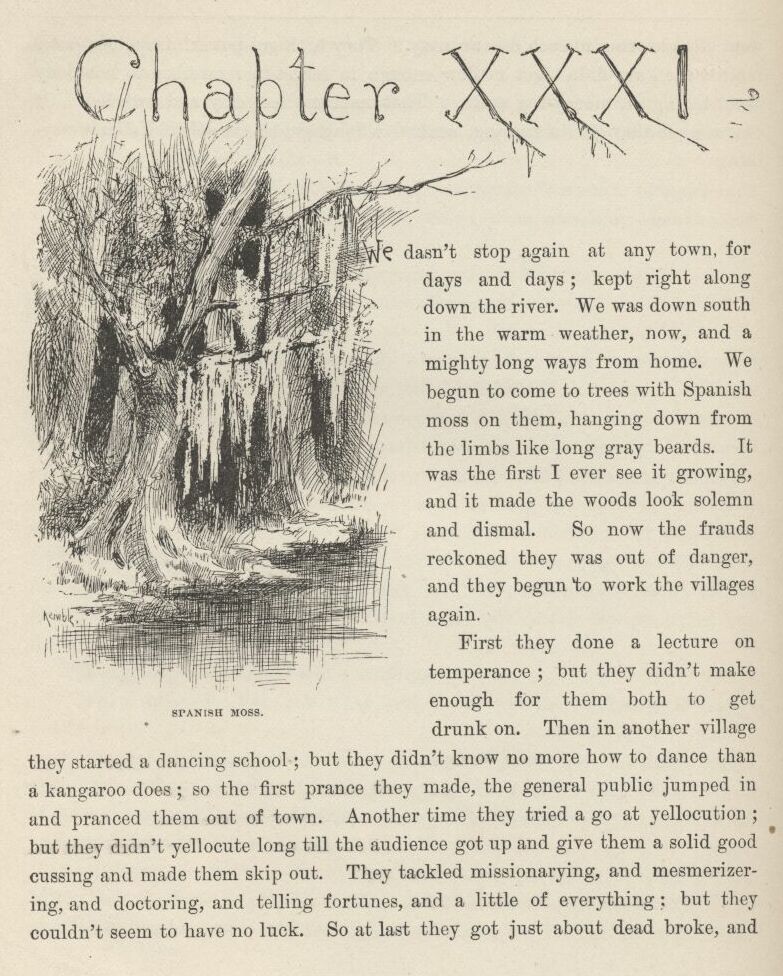
CHAPTER XXXI.
We dasn’t stop again at any town for days and days; kept right along down theriver. We was down south in the warm weather now, and a mighty long ways fromhome. We begun to come to trees with Spanish moss on them, hanging down fromthe limbs like long, gray beards. It was the first I ever see it growing, andit made the woods look solemn and dismal. So now the frauds reckoned they wasout of danger, and they begun to work the villages again.
First they done a lecture on temperance; but they didn’t make enough for themboth to get drunk on. Then in another village they started a dancing-school;but they didn’t know no more how to dance than a kangaroo does; so the firstprance they made the general public jumped in and pranced them out of town.Another time they tried to go at yellocution; but they didn’t yellocute longtill the audience got up and give them a solid good cussing, and made them skipout. They tackled missionarying, and mesmerizing, and doctoring, and tellingfortunes, and a little of everything; but they couldn’t seem to have no luck.So at last they got just about dead broke, and laid around the raft as shefloated along, thinking and thinking, and never saying nothing, by the half aday at a time, and dreadful blue and desperate.
And at last they took a change and begun to lay their heads together in thewigwam and talk low and confidential two or three hours at a time. Jim and megot uneasy. We didn’t like the look of it. We judged they was studying up somekind of worse deviltry than ever. We turned it over and over, and at last wemade up our minds they was going to break into somebody’s house or store, orwas going into the counterfeit-money business, or something. So then we waspretty scared, and made up an agreement that we wouldn’t have nothing in theworld to do with such actions, and if we ever got the least show we would givethem the cold shake and clear out and leave them behind. Well, early onemorning we hid the raft in a good, safe place about two mile below a little bitof a shabby village named Pikesville, and the king he went ashore and told usall to stay hid whilst he went up to town and smelt around to see if anybodyhad got any wind of the Royal Nonesuch there yet. (“House to rob, youmean,” says I to myself; “and when you get through robbing it you’llcome back here and wonder what has become of me and Jim and the raft—and you’llhave to take it out in wondering.”) And he said if he warn’t back by midday theduke and me would know it was all right, and we was to come along.
So we stayed where we was. The duke he fretted and sweated around, and was in amighty sour way. He scolded us for everything, and we couldn’t seem to donothing right; he found fault with every little thing. Something was a-brewing,sure. I was good and glad when midday come and no king; we could have a change,anyway—and maybe a chance for thechange on top of it. So me and theduke went up to the village, and hunted around there for the king, andby-and-by we found him in the back room of a little low doggery, very tight,and a lot of loafers bullyragging him for sport, and he a-cussing anda-threatening with all his might, and so tight he couldn’t walk, and couldn’tdo nothing to them. The duke he begun to abuse him for an old fool, and theking begun to sass back, and the minute they was fairly at it I lit out andshook the reefs out of my hind legs, and spun down the river road like a deer,for I see our chance; and I made up my mind that it would be a long day beforethey ever see me and Jim again. I got down there all out of breath but loadedup with joy, and sung out:
“Set her loose, Jim! we’re all right now!”
But there warn’t no answer, and nobody come out of the wigwam. Jim was gone! Iset up a shout—and then another—and then another one; and run this way and thatin the woods, whooping and screeching; but it warn’t no use—old Jim was gone.Then I set down and cried; I couldn’t help it. But I couldn’t set still long.Pretty soon I went out on the road, trying to think what I better do, and I runacross a boy walking, and asked him if he’d seen a strange nigger dressed soand so, and he says:
“Yes.”
“Whereabouts?” says I.
“Down to Silas Phelps’ place, two mile below here. He’s a runaway nigger, andthey’ve got him. Was you looking for him?”
“You bet I ain’t! I run across him in the woods about an hour or two ago, andhe said if I hollered he’d cut my livers out—and told me to lay down and staywhere I was; and I done it. Been there ever since; afeard to come out.”
“Well,” he says, “you needn’t be afeard no more, becuz they’ve got him. He runoff f’m down South, som’ers.”
“It’s a good job they got him.”
“Well, I reckon!There’s two hunderd dollars reward on him. It’s likepicking up money out’n the road.”
“Yes, it is—and Icould a had it if I’d been big enough; I see himfirst. Who nailed him?”

“It was an old fellow—a stranger—and he sold out his chance in him for fortydollars, becuz he’s got to go up the river and can’t wait. Think o’ that, now!You bet I’dwait, if it was seven year.”
“That’s me, every time,” says I. “But maybe his chance ain’t worth no more thanthat, if he’ll sell it so cheap. Maybe there’s something ain’t straight aboutit.”
“But it is, though—straight as a string. I see the handbill myself. Ittells all about him, to a dot—paints him like a picture, and tells theplantation he’s frum, below Newrleans. No-sirree-bob, they ain’tno trouble ’bout thatspeculation, you bet you. Say, gimme a chawtobacker, won’t ye?”
I didn’t have none, so he left. I went to the raft, and set down in the wigwamto think. But I couldn’t come to nothing. I thought till I wore my head sore,but I couldn’t see no way out of the trouble. After all this long journey, andafter all we’d done for them scoundrels, here it was all come to nothing,everything all busted up and ruined, because they could have the heart to serveJim such a trick as that, and make him a slave again all his life, and amongststrangers, too, for forty dirty dollars.
Once I said to myself it would be a thousand times better for Jim to be a slaveat home where his family was, as long as he’d gotto be a slave, and soI’d better write a letter to Tom Sawyer and tell him to tell Miss Watson wherehe was. But I soon give up that notion for two things: she’d be mad anddisgusted at his rascality and ungratefulness for leaving her, and so she’dsell him straight down the river again; and if she didn’t, everybody naturallydespises an ungrateful nigger, and they’d make Jim feel it all the time, and sohe’d feel ornery and disgraced. And then think of me!It would get allaround that Huck Finn helped a nigger to get his freedom; and if I was ever tosee anybody from that town again I’d be ready to get down and lick his bootsfor shame. That’s just the way: a person does a low-down thing, and then hedon’t want to take no consequences of it. Thinks as long as he can hide it, itain’t no disgrace. That was my fix exactly. The more I studied about this, themore my conscience went to grinding me, and the more wicked and low-down andornery I got to feeling. And at last, when it hit me all of a sudden that herewas the plain hand of Providence slapping me in the face and letting me know mywickedness was being watched all the time from up there in heaven, whilst I wasstealing a poor old woman’s nigger that hadn’t ever done me no harm, and nowwas showing me there’s One that’s always on the lookout, and ain’t a-going toallow no such miserable doings to go only just so fur and no further, I mostdropped in my tracks I was so scared. Well, I tried the best I could to kindersoften it up somehow for myself by saying I was brung up wicked, and so Iwarn’t so much to blame; but something inside of me kept saying, “There was theSunday-school, you could a gone to it; and if you’d a done it they’d a learntyou there that people that acts as I’d been acting about that nigger goes toeverlasting fire.”
It made me shiver. And I about made up my mind to pray, and see if I couldn’ttry to quit being the kind of a boy I was and be better. So I kneeled down. Butthe words wouldn’t come. Why wouldn’t they? It warn’t no use to try and hide itfrom Him. Nor from me, neither. I knowed very well why they wouldn’tcome. It was because my heart warn’t right; it was because I warn’t square; itwas because I was playing double. I was letting onto give up sin, butaway inside of me I was holding on to the biggest one of all. I was trying tomake my mouth sayI would do the right thing and the clean thing, and goand write to that nigger’s owner and tell where he was; but deep down in me Iknowed it was a lie, and He knowed it. You can’t pray a lie—I found that out.
So I was full of trouble, full as I could be; and didn’t know what to do. Atlast I had an idea; and I says, I’ll go and write the letter—and thensee if I can pray. Why, it was astonishing, the way I felt as light as afeather right straight off, and my troubles all gone. So I got a piece of paperand a pencil, all glad and excited, and set down and wrote:
Miss Watson, your runaway nigger Jim is down here two mile below Pikesville,and Mr. Phelps has got him and he will give him up for the reward if you send.
HUCK FINN.

I felt good and all washed clean of sin for the first time I had ever felt soin my life, and I knowed I could pray now. But I didn’t do it straight off, butlaid the paper down and set there thinking—thinking how good it was all thishappened so, and how near I come to being lost and going to hell. And went onthinking. And got to thinking over our trip down the river; and I see Jimbefore me all the time: in the day and in the night-time, sometimes moonlight,sometimes storms, and we a-floating along, talking and singing and laughing.But somehow I couldn’t seem to strike no places to harden me against him, butonly the other kind. I’d see him standing my watch on top of his’n, ’stead ofcalling me, so I could go on sleeping; and see him how glad he was when I comeback out of the fog; and when I come to him again in the swamp, up there wherethe feud was; and such-like times; and would always call me honey, and pet meand do everything he could think of for me, and how good he always was; and atlast I struck the time I saved him by telling the men we had small-pox aboard,and he was so grateful, and said I was the best friend old Jim ever had in theworld, and the onlyone he’s got now; and then I happened to look aroundand see that paper.
It was a close place. I took it up, and held it in my hand. I was a-trembling,because I’d got to decide, forever, betwixt two things, and I knowed it. Istudied a minute, sort of holding my breath, and then says to myself:
“All right, then, I’ll goto hell”—and tore it up.
It was awful thoughts and awful words, but they was said. And I let them staysaid; and never thought no more about reforming. I shoved the whole thing outof my head, and said I would take up wickedness again, which was in my line,being brung up to it, and the other warn’t. And for a starter I would go towork and steal Jim out of slavery again; and if I could think up anythingworse, I would do that, too; because as long as I was in, and in for good, Imight as well go the whole hog.
Then I set to thinking over how to get at it, and turned over some considerablemany ways in my mind; and at last fixed up a plan that suited me. So then Itook the bearings of a woody island that was down the river a piece, and assoon as it was fairly dark I crept out with my raft and went for it, and hid itthere, and then turned in. I slept the night through, and got up before it waslight, and had my breakfast, and put on my store clothes, and tied up someothers and one thing or another in a bundle, and took the canoe and cleared forshore. I landed below where I judged was Phelps’s place, and hid my bundle inthe woods, and then filled up the canoe with water, and loaded rocks into herand sunk her where I could find her again when I wanted her, about a quarter ofa mile below a little steam sawmill that was on the bank.
Then I struck up the road, and when I passed the mill I see a sign on it,“Phelps’s Sawmill,” and when I come to the farm-houses, two or three hundredyards further along, I kept my eyes peeled, but didn’t see nobody around,though it was good daylight now. But I didn’t mind, because I didn’t want tosee nobody just yet—I only wanted to get the lay of the land. According to myplan, I was going to turn up there from the village, not from below. So I justtook a look, and shoved along, straight for town. Well, the very first man Isee when I got there was the duke. He was sticking up a bill for the RoyalNonesuch—three-night performance—like that other time. Theyhad thecheek, them frauds! I was right on him before I could shirk. He lookedastonished, and says:
“Hel-lo!Where’d youcome from?” Then he says, kind of glad andeager, “Where’s the raft?—got her in a good place?”
I says:
“Why, that’s just what I was going to ask your grace.”
Then he didn’t look so joyful, and says:
“What was your idea for asking me?” he says.
“Well,” I says, “when I see the king in that doggery yesterday I says tomyself, we can’t get him home for hours, till he’s soberer; so I went a-loafingaround town to put in the time and wait. A man up and offered me ten cents tohelp him pull a skiff over the river and back to fetch a sheep, and so I wentalong; but when we was dragging him to the boat, and the man left me a-holt ofthe rope and went behind him to shove him along, he was too strong for me andjerked loose and run, and we after him. We didn’t have no dog, and so we had tochase him all over the country till we tired him out. We never got him tilldark; then we fetched him over, and I started down for the raft. When I gotthere and see it was gone, I says to myself, ‘they’ve got into trouble and hadto leave; and they’ve took my nigger, which is the only nigger I’ve got in theworld, and now I’m in a strange country, and ain’t got no property no more, nornothing, and no way to make my living;’ so I set down and cried. I slept in thewoods all night. But what didbecome of the raft, then?—and Jim—poorJim!”
“Blamed if Iknow—that is, what’s become of the raft. That old fool hadmade a trade and got forty dollars, and when we found him in the doggery theloafers had matched half-dollars with him and got every cent but what he’dspent for whisky; and when I got him home late last night and found the raftgone, we said, ‘That little rascal has stole our raft and shook us, and run offdown the river.’”
“I wouldn’t shake my nigger, would I?—the only nigger I had in theworld, and the only property.”
“We never thought of that. Fact is, I reckon we’d come to consider himournigger; yes, we did consider him so—goodness knows we had troubleenough for him. So when we see the raft was gone and we flat broke, therewarn’t anything for it but to try the Royal Nonesuch another shake. And I’vepegged along ever since, dry as a powder-horn. Where’s that ten cents? Give ithere.”

I had considerable money, so I give him ten cents, but begged him to spend itfor something to eat, and give me some, because it was all the money I had, andI hadn’t had nothing to eat since yesterday. He never said nothing. The nextminute he whirls on me and says:
“Do you reckon that nigger would blow on us? We’d skin him if he done that!”
“How can he blow? Hain’t he run off?”
“No! That old fool sold him, and never divided with me, and the money’s gone.”
“Soldhim?” I says, and begun to cry; “why, he was mynigger, andthat was my money. Where is he?—I want my nigger.”
“Well, you can’t getyour nigger, that’s all—so dry up your blubbering.Looky here—do you think you’dventure to blow on us? Blamed if I thinkI’d trust you. Why, if you wasto blow on us—”
He stopped, but I never see the duke look so ugly out of his eyes before. Iwent on a-whimpering, and says:
“I don’t want to blow on nobody; and I ain’t got no time to blow, nohow. I gotto turn out and find my nigger.”
He looked kinder bothered, and stood there with his bills fluttering on hisarm, thinking, and wrinkling up his forehead. At last he says:
“I’ll tell you something. We got to be here three days. If you’ll promise youwon’t blow, and won’t let the nigger blow, I’ll tell you where to find him.”
So I promised, and he says:
“A farmer by the name of Silas Ph—” and then he stopped. You see, he started totell me the truth; but when he stopped that way, and begun to study and thinkagain, I reckoned he was changing his mind. And so he was. He wouldn’t trustme; he wanted to make sure of having me out of the way the whole three days. Sopretty soon he says:
“The man that bought him is named Abram Foster—Abram G. Foster—and he livesforty mile back here in the country, on the road to Lafayette.”
“All right,” I says, “I can walk it in three days. And I’ll start this veryafternoon.”
“No you wont, you’ll start now;and don’t you lose any time about it,neither, nor do any gabbling by the way. Just keep a tight tongue in your headand move right along, and then you won’t get into trouble with us, d’yehear?”
That was the order I wanted, and that was the one I played for. I wanted to beleft free to work my plans.
“So clear out,” he says; “and you can tell Mr. Foster whatever you want to.Maybe you can get him to believe that Jim isyour nigger—some idiotsdon’t require documents—leastways I’ve heard there’s such down South here. Andwhen you tell him the handbill and the reward’s bogus, maybe he’ll believe youwhen you explain to him what the idea was for getting ’em out. Go ’long now,and tell him anything you want to; but mind you don’t work your jaw anybetweenhere and there.”

So I left, and struck for the back country. I didn’t look around, but I kinderfelt like he was watching me. But I knowed I could tire him out at that. I wentstraight out in the country as much as a mile before I stopped; then I doubledback through the woods towards Phelps’. I reckoned I better start in on my planstraight off without fooling around, because I wanted to stop Jim’s mouth tillthese fellows could get away. I didn’t want no trouble with their kind. I’dseen all I wanted to of them, and wanted to get entirely shut of them.
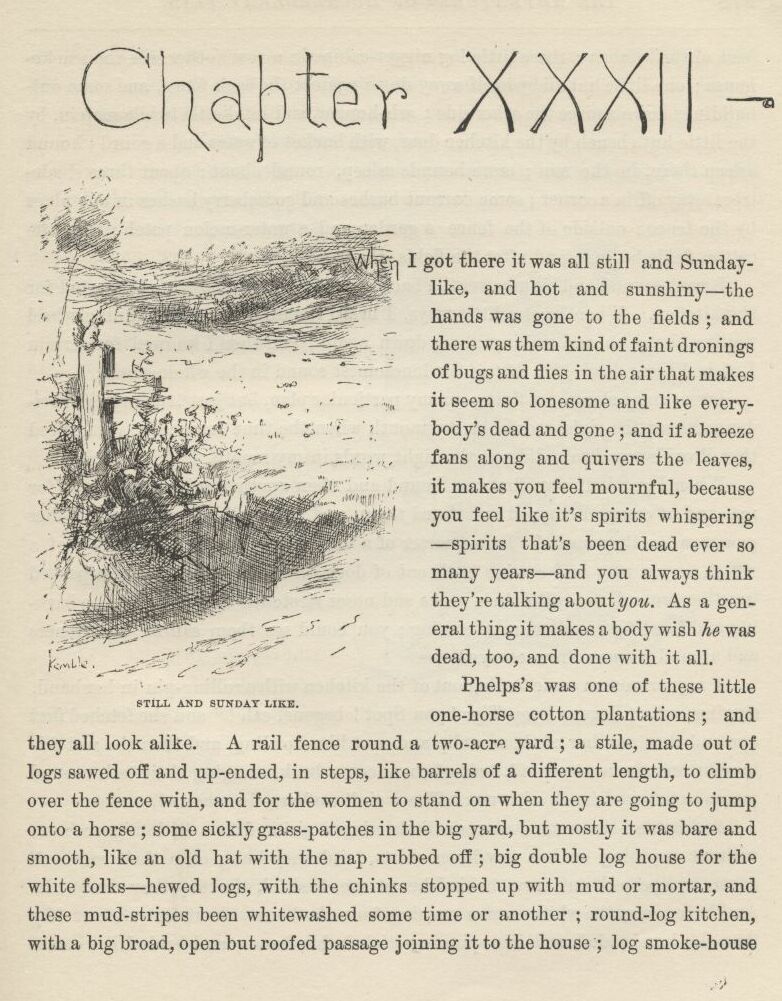
CHAPTER XXXII.
When I got there it was all still and Sunday-like, and hot and sunshiny; thehands was gone to the fields; and there was them kind of faint dronings of bugsand flies in the air that makes it seem so lonesome and like everybody’s deadand gone; and if a breeze fans along and quivers the leaves it makes you feelmournful, because you feel like it’s spirits whispering—spirits that’s beendead ever so many years—and you always think they’re talking about you.As a general thing it makes a body wish hewas dead, too, and done withit all.
Phelps’ was one of these little one-horse cotton plantations, and they all lookalike. A rail fence round a two-acre yard; a stile made out of logs sawed offand up-ended in steps, like barrels of a different length, to climb over thefence with, and for the women to stand on when they are going to jump on to ahorse; some sickly grass-patches in the big yard, but mostly it was bare andsmooth, like an old hat with the nap rubbed off; big double log-house for thewhite folks—hewed logs, with the chinks stopped up with mud or mortar, andthese mud-stripes been whitewashed some time or another; round-log kitchen,with a big broad, open but roofed passage joining it to the house; logsmoke-house back of the kitchen; three little log nigger-cabins in a rowt’other side the smoke-house; one little hut all by itself away down againstthe back fence, and some outbuildings down a piece the other side; ash-hopperand big kettle to bile soap in by the little hut; bench by the kitchen door,with bucket of water and a gourd; hound asleep there in the sun; more houndsasleep round about; about three shade trees away off in a corner; some currantbushes and gooseberry bushes in one place by the fence; outside of the fence agarden and a watermelon patch; then the cotton fields begins, and after thefields the woods.
I went around and clumb over the back stile by the ash-hopper, and started forthe kitchen. When I got a little ways I heard the dim hum of a spinning-wheelwailing along up and sinking along down again; and then I knowed for certain Iwished I was dead—for that isthe lonesomest sound in the whole world.
I went right along, not fixing up any particular plan, but just trusting toProvidence to put the right words in my mouth when the time come; for I’dnoticed that Providence always did put the right words in my mouth if I left italone.
When I got half-way, first one hound and then another got up and went for me,and of course I stopped and faced them, and kept still. And such another powwowas they made! In a quarter of a minute I was a kind of a hub of a wheel, as youmay say—spokes made out of dogs—circle of fifteen of them packed togetheraround me, with their necks and noses stretched up towards me, a-barking andhowling; and more a-coming; you could see them sailing over fences and aroundcorners from everywheres.
A nigger woman come tearing out of the kitchen with a rolling-pin in her hand,singing out, “Begone youTige! you Spot! begone sah!” and she fetchedfirst one and then another of them a clip and sent them howling, and then therest followed; and the next second half of them come back, wagging their tailsaround me, and making friends with me. There ain’t no harm in a hound, nohow.
And behind the woman comes a little nigger girl and two little nigger boyswithout anything on but tow-linen shirts, and they hung on to their mother’sgown, and peeped out from behind her at me, bashful, the way they always do.And here comes the white woman running from the house, about forty-five orfifty year old, bareheaded, and her spinning-stick in her hand; and behind hercomes her little white children, acting the same way the little niggers wasdoing. She was smiling all over so she could hardly stand—and says:
“It’s you, at last!—ain’tit?”
I out with a “Yes’m” before I thought.
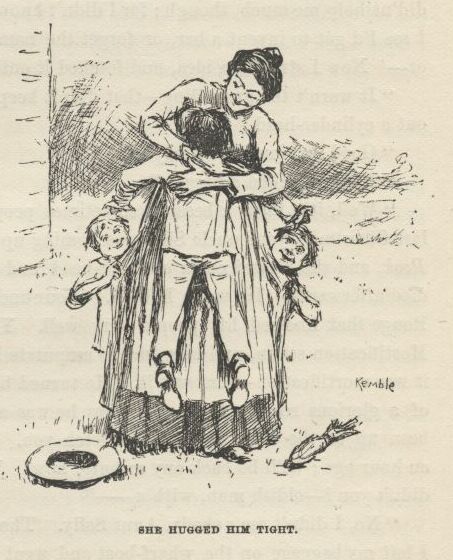
She grabbed me and hugged me tight; and then gripped me by both hands and shookand shook; and the tears come in her eyes, and run down over; and she couldn’tseem to hug and shake enough, and kept saying, “You don’t look as much likeyour mother as I reckoned you would; but law sakes, I don’t care for that, I’msoglad to see you! Dear, dear, it does seem like I could eat you up!Children, it’s your cousin Tom!—tell him howdy.”
But they ducked their heads, and put their fingers in their mouths, and hidbehind her. So she run on:
“Lize, hurry up and get him a hot breakfast right away—or did you get yourbreakfast on the boat?”
I said I had got it on the boat. So then she started for the house, leading meby the hand, and the children tagging after. When we got there she set me downin a split-bottomed chair, and set herself down on a little low stool in frontof me, holding both of my hands, and says:
“Now I can have a goodlook at you; and, laws-a-me, I’ve been hungry forit a many and a many a time, all these long years, and it’s come at last! Webeen expecting you a couple of days and more. What kep’ you?—boat get aground?”
“Yes’m—she—”
“Don’t say yes’m—say Aunt Sally. Where’d she get aground?”
I didn’t rightly know what to say, because I didn’t know whether the boat wouldbe coming up the river or down. But I go a good deal on instinct; and myinstinct said she would be coming up—from down towards Orleans. That didn’thelp me much, though; for I didn’t know the names of bars down that way. I seeI’d got to invent a bar, or forget the name of the one we got aground on—or—NowI struck an idea, and fetched it out:
“It warn’t the grounding—that didn’t keep us back but a little. We blowed out acylinder-head.”
“Good gracious! anybody hurt?”
“No’m. Killed a nigger.”
“Well, it’s lucky; because sometimes people do get hurt. Two years ago lastChristmas your uncle Silas was coming up from Newrleans on the old LallyRook, and she blowed out a cylinder-head and crippled a man. And I think hedied afterwards. He was a Baptist. Your uncle Silas knowed a family in BatonRouge that knowed his people very well. Yes, I remember now, he diddie.Mortification set in, and they had to amputate him. But it didn’t save him.Yes, it was mortification—that was it. He turned blue all over, and died in thehope of a glorious resurrection. They say he was a sight to look at. Youruncle’s been up to the town every day to fetch you. And he’s gone again, notmore’n an hour ago; he’ll be back any minute now. You must a met him on theroad, didn’t you?—oldish man, with a—”
“No, I didn’t see nobody, Aunt Sally. The boat landed just at daylight, and Ileft my baggage on the wharf-boat and went looking around the town and out apiece in the country, to put in the time and not get here too soon; and so Icome down the back way.”
“Who’d you give the baggage to?”
“Nobody.”
“Why, child, it’ll be stole!”
“Not where Ihid it I reckon it won’t,” I says.
“How’d you get your breakfast so early on the boat?”
It was kinder thin ice, but I says:
“The captain see me standing around, and told me I better have something to eatbefore I went ashore; so he took me in the texas to the officers’ lunch, andgive me all I wanted.”
I was getting so uneasy I couldn’t listen good. I had my mind on the childrenall the time; I wanted to get them out to one side and pump them a little, andfind out who I was. But I couldn’t get no show, Mrs. Phelps kept it up and runon so. Pretty soon she made the cold chills streak all down my back, becauseshe says:
“But here we’re a-running on this way, and you hain’t told me a word about Sis,nor any of them. Now I’ll rest my works a little, and you start up yourn; justtell me everything—tell me all about ’m all every one of ’m; and howthey are, and what they’re doing, and what they told you to tell me; and everylast thing you can think of.”
Well, I see I was up a stump—and up it good. Providence had stood by me thisfur all right, but I was hard and tight aground now. I see it warn’t a bit ofuse to try to go ahead—I’d gotto throw up my hand. So I says to myself,here’s another place where I got to resk the truth. I opened my mouth to begin;but she grabbed me and hustled me in behind the bed, and says:
“Here he comes! Stick your head down lower—there, that’ll do; you can’t be seennow. Don’t you let on you’re here. I’ll play a joke on him. Children, don’t yousay a word.”
I see I was in a fix now. But it warn’t no use to worry; there warn’t nothingto do but just hold still, and try and be ready to stand from under when thelightning struck.
I had just one little glimpse of the old gentleman when he come in; then thebed hid him. Mrs. Phelps she jumps for him, and says:
“Has he come?”
“No,” says her husband.
“Good-nessgracious!” she says, “what in the world can have become ofhim?”
“I can’t imagine,” says the old gentleman; “and I must say it makes me dreadfuluneasy.”
“Uneasy!” she says; “I’m ready to go distracted! He musta come; andyou’ve missed him along the road. I knowit’s so—something tells me so.”
“Why, Sally, I couldn’tmiss him along the road—youknow that.”
“But oh, dear, dear, what willSis say! He must a come! You must amissed him. He—”
“Oh, don’t distress me any more’n I’m already distressed. I don’t know what inthe world to make of it. I’m at my wit’s end, and I don’t mind acknowledging ’tI’m right down scared. But there’s no hope that he’s come; for hecouldn’tcome and me miss him. Sally, it’s terrible—justterrible—something’s happened to the boat, sure!”
“Why, Silas! Look yonder!—up the road!—ain’t that somebody coming?”
He sprung to the window at the head of the bed, and that give Mrs. Phelps thechance she wanted. She stooped down quick at the foot of the bed and give me apull, and out I come; and when he turned back from the window there she stood,a-beaming and a-smiling like a house afire, and I standing pretty meek andsweaty alongside. The old gentleman stared, and says:
“Why, who’s that?”
“Who do you reckon ’t is?”

“I hain’t no idea. Who isit?”
“It’s Tom Sawyer!”
By jings, I most slumped through the floor! But there warn’t no time to swapknives; the old man grabbed me by the hand and shook, and kept on shaking; andall the time how the woman did dance around and laugh and cry; and then howthey both did fire off questions about Sid, and Mary, and the rest of thetribe.
But if they was joyful, it warn’t nothing to what I was; for it was like beingborn again, I was so glad to find out who I was. Well, they froze to me for twohours; and at last, when my chin was so tired it couldn’t hardly go any more, Ihad told them more about my family—I mean the Sawyer family—than ever happenedto any six Sawyer families. And I explained all about how we blowed out acylinder-head at the mouth of White River, and it took us three days to fix it.Which was all right, and worked first-rate; because theydidn’t know butwhat it would take three days to fix it. If I’d a called it a bolthead it woulda done just as well.
Now I was feeling pretty comfortable all down one side, and prettyuncomfortable all up the other. Being Tom Sawyer was easy and comfortable, andit stayed easy and comfortable till by-and-by I hear a steamboat coughing alongdown the river. Then I says to myself, s’pose Tom Sawyer comes down on thatboat? And s’pose he steps in here any minute, and sings out my name before Ican throw him a wink to keep quiet? Well, I couldn’t haveit that way;it wouldn’t do at all. I must go up the road and waylay him. So I told thefolks I reckoned I would go up to the town and fetch down my baggage. The oldgentleman was for going along with me, but I said no, I could drive the horsemyself, and I druther he wouldn’t take no trouble about me.
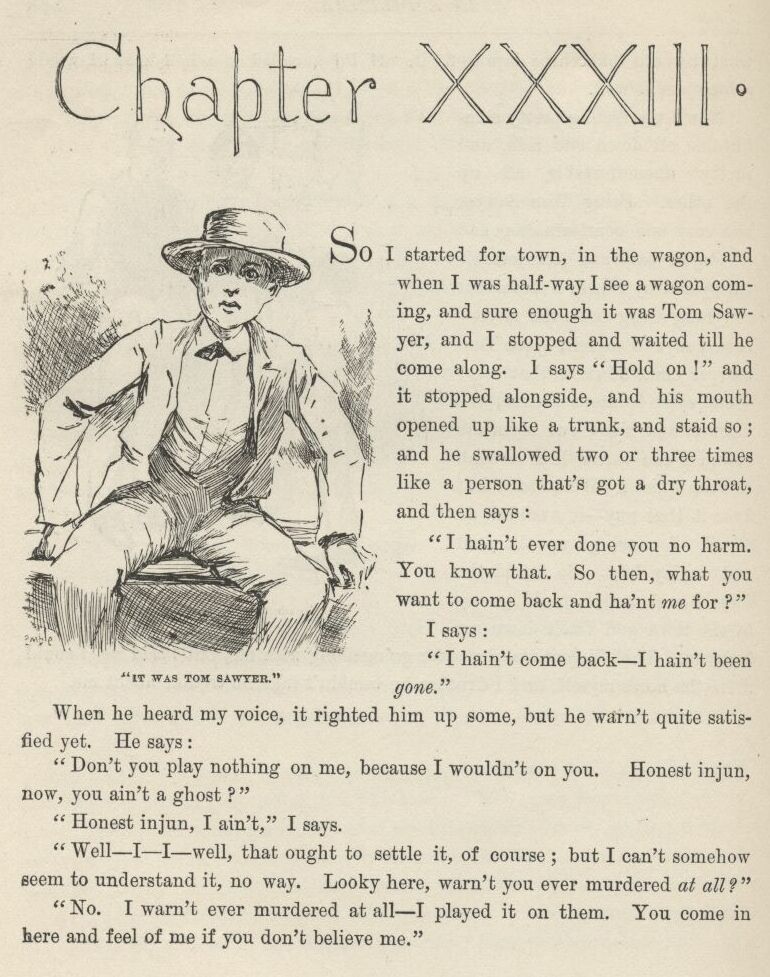
CHAPTER XXXIII.
So I started for town in the wagon, and when I was half-way I see a wagoncoming, and sure enough it was Tom Sawyer, and I stopped and waited till hecome along. I says “Hold on!” and it stopped alongside, and his mouth opened uplike a trunk, and stayed so; and he swallowed two or three times like a personthat’s got a dry throat, and then says:
“I hain’t ever done you no harm. You know that. So, then, what you want to comeback and ha’nt mefor?”
I says:
“I hain’t come back—I hain’t been gone.”
When he heard my voice it righted him up some, but he warn’t quite satisfiedyet. He says:
“Don’t you play nothing on me, because I wouldn’t on you. Honest injun, now, youain’t a ghost?”
“Honest injun, I ain’t,” I says.
“Well—I—I—well, that ought to settle it, of course; but I can’t somehow seem tounderstand it no way. Looky here, warn’t you ever murdered at all?”
“No. I warn’t ever murdered at all—I played it on them. You come in here andfeel of me if you don’t believe me.”
So he done it; and it satisfied him; and he was that glad to see me again hedidn’t know what to do. And he wanted to know all about it right off, becauseit was a grand adventure, and mysterious, and so it hit him where he lived. ButI said, leave it alone till by-and-by; and told his driver to wait, and wedrove off a little piece, and I told him the kind of a fix I was in, and whatdid he reckon we better do? He said, let him alone a minute, and don’t disturbhim. So he thought and thought, and pretty soon he says:
“It’s all right; I’ve got it. Take my trunk in your wagon, and let on it’syour’n; and you turn back and fool along slow, so as to get to the house aboutthe time you ought to; and I’ll go towards town a piece, and take a freshstart, and get there a quarter or a half an hour after you; and you needn’t leton to know me at first.”
I says:
“All right; but wait a minute. There’s one more thing—a thing thatnobodydon’t know but me. And that is, there’s a nigger here that I’ma-trying to steal out of slavery, and his name is Jim—old Miss Watson’sJim.”
He says:
“What! Why, Jim is—”
He stopped and went to studying. I says:
“Iknow what you’ll say. You’ll say it’s dirty, low-down business; butwhat if it is? I’m low down; and I’m a-going to steal him, and I wantyou keep mum and not let on. Will you?”
His eye lit up, and he says:
“I’ll helpyou steal him!”
Well, I let go all holts then, like I was shot. It was the most astonishingspeech I ever heard—and I’m bound to say Tom Sawyer fell considerable in myestimation. Only I couldn’t believe it. Tom Sawyer a nigger stealer!
“Oh, shucks!” I says; “you’re joking.”
“I ain’t joking, either.”
“Well, then,” I says, “joking or no joking, if you hear anything said about arunaway nigger, don’t forget to remember that youdon’t know nothingabout him, and Idon’t know nothing about him.”
Then we took the trunk and put it in my wagon, and he drove off his way and Idrove mine. But of course I forgot all about driving slow on accounts of beingglad and full of thinking; so I got home a heap too quick for that length of atrip. The old gentleman was at the door, and he says:
“Why, this is wonderful! Whoever would a thought it was in that mare to do it?I wish we’d a timed her. And she hain’t sweated a hair—not a hair. It’swonderful. Why, I wouldn’t take a hundred dollars for that horse now—Iwouldn’t, honest; and yet I’d a sold her for fifteen before, and thought ’twasall she was worth.”
That’s all he said. He was the innocentest, best old soul I ever see. But itwarn’t surprising; because he warn’t only just a farmer, he was a preacher,too, and had a little one-horse log church down back of the plantation, whichhe built it himself at his own expense, for a church and schoolhouse, and nevercharged nothing for his preaching, and it was worth it, too. There was plentyother farmer-preachers like that, and done the same way, down South.
In about half an hour Tom’s wagon drove up to the front stile, and Aunt Sallyshe see it through the window, because it was only about fifty yards, and says:
“Why, there’s somebody come! I wonder who ’tis? Why, I do believe it’s astranger. Jimmy” (that’s one of the children) “run and tell Lize to put onanother plate for dinner.”
Everybody made a rush for the front door, because, of course, a stranger don’tcome everyyear, and so he lays over the yaller-fever, for interest,when he does come. Tom was over the stile and starting for the house; the wagonwas spinning up the road for the village, and we was all bunched in the frontdoor. Tom had his store clothes on, and an audience—and that was always nutsfor Tom Sawyer. In them circumstances it warn’t no trouble to him to throw inan amount of style that was suitable. He warn’t a boy to meeky along up thatyard like a sheep; no, he come ca’m and important, like the ram. When he gota-front of us he lifts his hat ever so gracious and dainty, like it was the lidof a box that had butterflies asleep in it and he didn’t want to disturb them,and says:
“Mr. Archibald Nichols, I presume?”
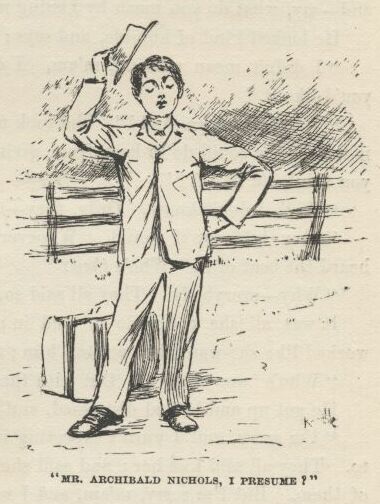
“No, my boy,” says the old gentleman, “I’m sorry to say ’t your driver hasdeceived you; Nichols’s place is down a matter of three mile more. Come in,come in.”
Tom he took a look back over his shoulder, and says, “Too late—he’s out ofsight.”
“Yes, he’s gone, my son, and you must come in and eat your dinner with us; andthen we’ll hitch up and take you down to Nichols’s.”
“Oh, I can’tmake you so much trouble; I couldn’t think of it. I’llwalk—I don’t mind the distance.”
“But we won’t letyou walk—it wouldn’t be Southern hospitality to do it.Come right in.”
“Oh, do,” says Aunt Sally; “it ain’t a bit of trouble to us, not a bitin the world. You muststay. It’s a long, dusty three mile, and wecan’tlet you walk. And, besides, I’ve already told ’em to put onanother plate when I see you coming; so you mustn’t disappoint us. Come rightin and make yourself at home.”
So Tom he thanked them very hearty and handsome, and let himself be persuaded,and come in; and when he was in he said he was a stranger from Hicksville,Ohio, and his name was William Thompson—and he made another bow.
Well, he run on, and on, and on, making up stuff about Hicksville and everybodyin it he could invent, and I getting a little nervious, and wondering how thiswas going to help me out of my scrape; and at last, still talking along, hereached over and kissed Aunt Sally right on the mouth, and then settled backagain in his chair comfortable, and was going on talking; but she jumped up andwiped it off with the back of her hand, and says:
“You owdacious puppy!”
He looked kind of hurt, and says:
“I’m surprised at you, m’am.”
“You’re s’rp—Why, what do you reckon I am? I’ve a good notion to take and—Say,what do you mean by kissing me?”
He looked kind of humble, and says:
“I didn’t mean nothing, m’am. I didn’t mean no harm. I—I—thought you’d likeit.”
“Why, you born fool!” She took up the spinning stick, and it looked like it wasall she could do to keep from giving him a crack with it. “What made you thinkI’d like it?”
“Well, I don’t know. Only, they—they—told me you would.”
“Theytold you I would. Whoever told you’s anotherlunatic. Inever heard the beat of it. Who’s they?”
“Why, everybody. They all said so, m’am.”
It was all she could do to hold in; and her eyes snapped, and her fingersworked like she wanted to scratch him; and she says:
“Who’s ‘everybody’? Out with their names, or ther’ll be an idiot short.”
He got up and looked distressed, and fumbled his hat, and says:
“I’m sorry, and I warn’t expecting it. They told me to. They all told me to.They all said, kiss her; and said she’d like it. They all said it—every one ofthem. But I’m sorry, m’am, and I won’t do it no more—I won’t, honest.”
“You won’t, won’t you? Well, I sh’d reckonyou won’t!”
“No’m, I’m honest about it; I won’t ever do it again—till you ask me.”
“Till I askyou! Well, I never see the beat of it in my born days! I layyou’ll be the Methusalem-numskull of creation before ever I ask you—or thelikes of you.”
“Well,” he says, “it does surprise me so. I can’t make it out, somehow. Theysaid you would, and I thought you would. But—” He stopped and looked aroundslow, like he wished he could run across a friendly eye somewheres, and fetchedup on the old gentleman’s, and says, “Didn’t youthink she’d like me tokiss her, sir?”
“Why, no; I—I—well, no, I b’lieve I didn’t.”
Then he looks on around the same way to me, and says:
“Tom, didn’t youthink Aunt Sally ’d open out her arms and say, ‘SidSawyer—’”
“My land!” she says, breaking in and jumping for him, “you impudent youngrascal, to fool a body so—” and was going to hug him, but he fended her off,and says:
“No, not till you’ve asked me first.”
So she didn’t lose no time, but asked him; and hugged him and kissed him overand over again, and then turned him over to the old man, and he took what wasleft. And after they got a little quiet again she says:
“Why, dear me, I never see such a surprise. We warn’t looking for youatall, but only Tom. Sis never wrote to me about anybody coming but him.”
“It’s because it warn’t intendedfor any of us to come but Tom,” hesays; “but I begged and begged, and at the last minute she let me come, too;so, coming down the river, me and Tom thought it would be a first-rate surprisefor him to come here to the house first, and for me to by-and-by tag along anddrop in, and let on to be a stranger. But it was a mistake, Aunt Sally. Thisain’t no healthy place for a stranger to come.”
“No—not impudent whelps, Sid. You ought to had your jaws boxed; I hain’t beenso put out since I don’t know when. But I don’t care, I don’t mind theterms—I’d be willing to stand a thousand such jokes to have you here. Well, tothink of that performance! I don’t deny it, I was most putrified withastonishment when you give me that smack.”
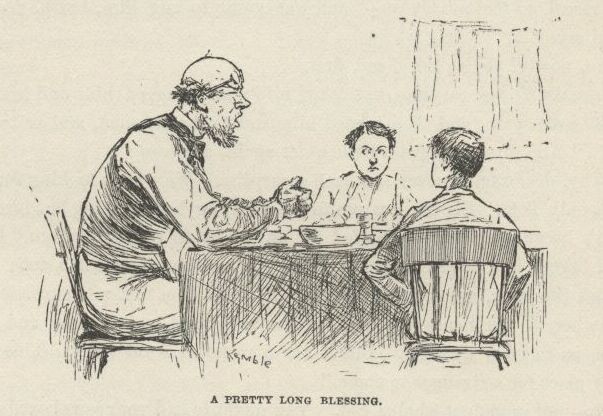
We had dinner out in that broad open passage betwixt the house and the kitchen;and there was things enough on that table for seven families—and all hot, too;none of your flabby, tough meat that’s laid in a cupboard in a damp cellar allnight and tastes like a hunk of old cold cannibal in the morning. Uncle Silashe asked a pretty long blessing over it, but it was worth it; and it didn’tcool it a bit, neither, the way I’ve seen them kind of interruptions do lots oftimes. There was a considerable good deal of talk all the afternoon, and me andTom was on the lookout all the time; but it warn’t no use, they didn’t happento say nothing about any runaway nigger, and we was afraid to try to work up toit. But at supper, at night, one of the little boys says:
“Pa, mayn’t Tom and Sid and me go to the show?”
“No,” says the old man, “I reckon there ain’t going to be any; and you couldn’tgo if there was; because the runaway nigger told Burton and me all about thatscandalous show, and Burton said he would tell the people; so I reckon they’vedrove the owdacious loafers out of town before this time.”
So there it was!—but Icouldn’t help it. Tom and me was to sleep in thesame room and bed; so, being tired, we bid good-night and went up to bed rightafter supper, and clumb out of the window and down the lightning-rod, andshoved for the town; for I didn’t believe anybody was going to give the kingand the duke a hint, and so if I didn’t hurry up and give them one they’d getinto trouble sure.
On the road Tom he told me all about how it was reckoned I was murdered, andhow pap disappeared pretty soon, and didn’t come back no more, and what a stirthere was when Jim run away; and I told Tom all about our Royal Nonesuchrapscallions, and as much of the raft voyage as I had time to; and as we struckinto the town and up through the middle of it—it was as much as half-aftereight, then—here comes a raging rush of people with torches, and an awfulwhooping and yelling, and banging tin pans and blowing horns; and we jumped toone side to let them go by; and as they went by I see they had the king and theduke astraddle of a rail—that is, I knowed it wasthe king and the duke,though they was all over tar and feathers, and didn’t look like nothing in theworld that was human—just looked like a couple of monstrous big soldier-plumes.Well, it made me sick to see it; and I was sorry for them poor pitiful rascals,it seemed like I couldn’t ever feel any hardness against them any more in theworld. It was a dreadful thing to see. Human beings canbe awful cruelto one another.
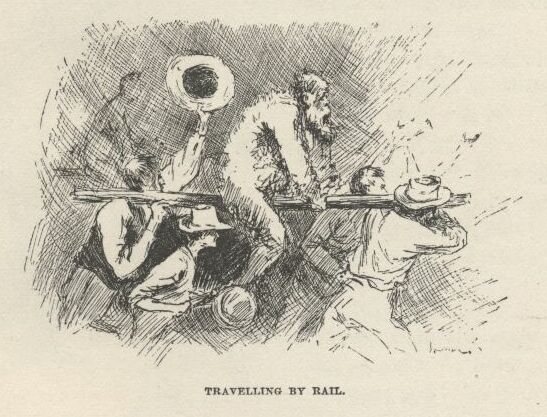
We see we was too late—couldn’t do no good. We asked some stragglers about it,and they said everybody went to the show looking very innocent; and laid lowand kept dark till the poor old king was in the middle of his cavortings on thestage; then somebody give a signal, and the house rose up and went for them.
So we poked along back home, and I warn’t feeling so brash as I was before, butkind of ornery, and humble, and to blame, somehow—though Ihadn’t donenothing. But that’s always the way; it don’t make no difference whether you doright or wrong, a person’s conscience ain’t got no sense, and just goes for himanyway. If I had a yaller dog that didn’t know no more than a person’sconscience does I would pison him. It takes up more room than all the rest of aperson’s insides, and yet ain’t no good, nohow. Tom Sawyer he says the same.

CHAPTER XXXIV.
We stopped talking, and got to thinking. By-and-by Tom says:
“Looky here, Huck, what fools we are to not think of it before! I bet I knowwhere Jim is.”
“No! Where?”
“In that hut down by the ash-hopper. Why, looky here. When we was at dinner,didn’t you see a nigger man go in there with some vittles?”
“Yes.”
“What did you think the vittles was for?”
“For a dog.”
“So’d I. Well, it wasn’t for a dog.”
“Why?”
“Because part of it was watermelon.”
“So it was—I noticed it. Well, it does beat all that I never thought about adog not eating watermelon. It shows how a body can see and don’t see at thesame time.”
“Well, the nigger unlocked the padlock when he went in, and he locked it againwhen he came out. He fetched uncle a key about the time we got up fromtable—same key, I bet. Watermelon shows man, lock shows prisoner; and it ain’tlikely there’s two prisoners on such a little plantation, and where thepeople’s all so kind and good. Jim’s the prisoner. All right—I’m glad we foundit out detective fashion; I wouldn’t give shucks for any other way. Now youwork your mind, and study out a plan to steal Jim, and I will study out one,too; and we’ll take the one we like the best.”
What a head for just a boy to have! If I had Tom Sawyer’s head I wouldn’t tradeit off to be a duke, nor mate of a steamboat, nor clown in a circus, nornothing I can think of. I went to thinking out a plan, but only just to bedoing something; I knowed very well where the right plan was going to comefrom. Pretty soon Tom says:
“Ready?”
“Yes,” I says.
“All right—bring it out.”
“My plan is this,” I says. “We can easy find out if it’s Jim in there. Then getup my canoe to-morrow night, and fetch my raft over from the island. Then thefirst dark night that comes steal the key out of the old man’s britches afterhe goes to bed, and shove off down the river on the raft with Jim, hidingdaytimes and running nights, the way me and Jim used to do before. Wouldn’tthat plan work?”
“Work?Why, cert’nly it would work, like rats a-fighting. But it’s tooblame’ simple; there ain’t nothing toit. What’s the good of a plan thatain’t no more trouble than that? It’s as mild as goose-milk. Why, Huck, itwouldn’t make no more talk than breaking into a soap factory.”
I never said nothing, because I warn’t expecting nothing different; but Iknowed mighty well that whenever he got hisplan ready it wouldn’t havenone of them objections to it.
And it didn’t. He told me what it was, and I see in a minute it was worthfifteen of mine for style, and would make Jim just as free a man as mine would,and maybe get us all killed besides. So I was satisfied, and said we wouldwaltz in on it. I needn’t tell what it was here, because I knowed it wouldn’tstay the way, it was. I knowed he would be changing it around every which wayas we went along, and heaving in new bullinesses wherever he got a chance. Andthat is what he done.
Well, one thing was dead sure, and that was that Tom Sawyer was in earnest, andwas actuly going to help steal that nigger out of slavery. That was the thingthat was too many for me. Here was a boy that was respectable and well brungup; and had a character to lose; and folks at home that had characters; and hewas bright and not leather-headed; and knowing and not ignorant; and not mean,but kind; and yet here he was, without any more pride, or rightness, orfeeling, than to stoop to this business, and make himself a shame, and hisfamily a shame, before everybody. I couldn’tunderstand it no way atall. It was outrageous, and I knowed I ought to just up and tell him so; and sobe his true friend, and let him quit the thing right where he was and savehimself. And I didstart to tell him; but he shut me up, and says:
“Don’t you reckon I know what I’m about? Don’t I generly know what I’m about?”
“Yes.”
“Didn’t I sayI was going to help steal the nigger?”
“Yes.”
“Well, then.”
That’s all he said, and that’s all I said. It warn’t no use to say any more;because when he said he’d do a thing, he always done it. But Icouldn’tmake out how he was willing to go into this thing; so I just let it go, andnever bothered no more about it. If he was bound to have it so, Icouldn’t help it.
When we got home the house was all dark and still; so we went on down to thehut by the ash-hopper for to examine it. We went through the yard so as to seewhat the hounds would do. They knowed us, and didn’t make no more noise thancountry dogs is always doing when anything comes by in the night. When we gotto the cabin we took a look at the front and the two sides; and on the side Iwarn’t acquainted with—which was the north side—we found a square window-hole,up tolerable high, with just one stout board nailed across it. I says:
“Here’s the ticket. This hole’s big enough for Jim to get through if we wrenchoff the board.”
Tom says:
“It’s as simple as tit-tat-toe, three-in-a-row, and as easy as playing hooky. Ishould hopewe can find a way that’s a little more complicated thanthat, Huck Finn.”

“Well, then,” I says, “how’ll it do to saw him out, the way I done before Iwas murdered that time?”
“That’s more like,” he says. “It’s real mysterious, and troublesome, andgood,” he says; “but I bet we can find a way that’s twice as long. There ain’tno hurry; le’s keep on looking around.”
Betwixt the hut and the fence, on the back side, was a lean-to that joined thehut at the eaves, and was made out of plank. It was as long as the hut, butnarrow—only about six foot wide. The door to it was at the south end, and waspadlocked. Tom he went to the soap-kettle and searched around, and fetched backthe iron thing they lift the lid with; so he took it and prized out one of thestaples. The chain fell down, and we opened the door and went in, and shut it,and struck a match, and see the shed was only built against a cabin and hadn’tno connection with it; and there warn’t no floor to the shed, nor nothing in itbut some old rusty played-out hoes and spades and picks and a crippled plow.The match went out, and so did we, and shoved in the staple again, and the doorwas locked as good as ever. Tom was joyful. He says;
“Now we’re all right. We’ll dighim out. It’ll take about a week!”
Then we started for the house, and I went in the back door—you only have topull a buckskin latch-string, they don’t fasten the doors—but that warn’tromantical enough for Tom Sawyer; no way would do him but he must climb up thelightning-rod. But after he got up half way about three times, and missed fireand fell every time, and the last time most busted his brains out, he thoughthe’d got to give it up; but after he was rested he allowed he would give herone more turn for luck, and this time he made the trip.
In the morning we was up at break of day, and down to the nigger cabins to petthe dogs and make friends with the nigger that fed Jim—if it wasJimthat was being fed. The niggers was just getting through breakfast and startingfor the fields; and Jim’s nigger was piling up a tin pan with bread and meatand things; and whilst the others was leaving, the key come from the house.
This nigger had a good-natured, chuckle-headed face, and his wool was all tiedup in little bunches with thread. That was to keep witches off. He said thewitches was pestering him awful these nights, and making him see all kinds ofstrange things, and hear all kinds of strange words and noises, and he didn’tbelieve he was ever witched so long before in his life. He got so worked up,and got to running on so about his troubles, he forgot all about what he’d beena-going to do. So Tom says:
“What’s the vittles for? Going to feed the dogs?”
The nigger kind of smiled around gradually over his face, like when you heave abrickbat in a mud-puddle, and he says:
“Yes, Mars Sid, adog. Cur’us dog, too. Does you want to go en look at’im?”
“Yes.”
I hunched Tom, and whispers:
“You going, right here in the daybreak? Thatwarn’t the plan.”
“No, it warn’t; but it’s the plan now.”
So, drat him, we went along, but I didn’t like it much. When we got in wecouldn’t hardly see anything, it was so dark; but Jim was there, sure enough,and could see us; and he sings out:
“Why, Huck!En good lan’! ain’ dat Misto Tom?”
I just knowed how it would be; I just expected it. Ididn’t know nothingto do; and if I had I couldn’t a done it, because that nigger busted in andsays:
“Why, de gracious sakes! do he know you genlmen?”
We could see pretty well now. Tom he looked at the nigger, steady and kind ofwondering, and says:
“Does whoknow us?”
“Why, dis-yer runaway nigger.”
“I don’t reckon he does; but what put that into your head?”
“What putit dar? Didn’ he jis’ dis minute sing out like he knowed you?”
Tom says, in a puzzled-up kind of way:
“Well, that’s mighty curious. Whosung out? Whendid he sing out?whatdid he sing out?” And turns to me, perfectly ca’m, and says, “Didyouhear anybody sing out?”
Of course there warn’t nothing to be said but the one thing; so I says:
“No; Iain’t heard nobody say nothing.”
Then he turns to Jim, and looks him over like he never see him before, andsays:
“Did you sing out?”
“No, sah,” says Jim; “Ihain’t said nothing, sah.”
“Not a word?”
“No, sah, I hain’t said a word.”
“Did you ever see us before?”
“No, sah; not as Iknows on.”
So Tom turns to the nigger, which was looking wild and distressed, and says,kind of severe:
“What do you reckon’s the matter with you, anyway? What made you think somebodysung out?”
“Oh, it’s de dad-blame’ witches, sah, en I wisht I was dead, I do. Dey’s awluzat it, sah, en dey do mos’ kill me, dey sk’yers me so. Please to don’t tellnobody ’bout it sah, er ole Mars Silas he’ll scole me; ’kase he say deyain’tno witches. I jis’ wish to goodness he was heah now—denwhat would he say! I jis’ bet he couldn’ fine no way to git aroun’ itdistime. But it’s awluz jis’ so; people dat’s sot, stays sot;dey won’t look into noth’n’en fine it out f’r deyselves, en when youfine it out en tell um ’bout it, dey doan’ b’lieve you.”

Tom give him a dime, and said we wouldn’t tell nobody; and told him to buy somemore thread to tie up his wool with; and then looks at Jim, and says:
“I wonder if Uncle Silas is going to hang this nigger. If I was to catch anigger that was ungrateful enough to run away, Iwouldn’t give him up,I’d hang him.” And whilst the nigger stepped to the door to look at the dimeand bite it to see if it was good, he whispers to Jim and says:
“Don’t ever let on to know us. And if you hear any digging going on nights,it’s us; we’re going to set you free.”
Jim only had time to grab us by the hand and squeeze it; then the nigger comeback, and we said we’d come again some time if the nigger wanted us to; and hesaid he would, more particular if it was dark, because the witches went for himmostly in the dark, and it was good to have folks around then.

CHAPTER XXXV.
It would be most an hour yet till breakfast, so we left and struck down intothe woods; because Tom said we got to have somelight to see how to digby, and a lantern makes too much, and might get us into trouble; what we musthave was a lot of them rotten chunks that’s called fox-fire, and just makes asoft kind of a glow when you lay them in a dark place. We fetched an armful andhid it in the weeds, and set down to rest, and Tom says, kind of dissatisfied:
“Blame it, this whole thing is just as easy and awkward as it can be. And so itmakes it so rotten difficult to get up a difficult plan. There ain’t nowatchman to be drugged—now there oughtto be a watchman. There ain’teven a dog to give a sleeping-mixture to. And there’s Jim chained by one leg,with a ten-foot chain, to the leg of his bed: why, all you got to do is to liftup the bedstead and slip off the chain. And Uncle Silas he trusts everybody;sends the key to the punkin-headed nigger, and don’t send nobody to watch thenigger. Jim could a got out of that window-hole before this, only therewouldn’t be no use trying to travel with a ten-foot chain on his leg. Why, dratit, Huck, it’s the stupidest arrangement I ever see. You got to inventallthe difficulties. Well, we can’t help it; we got to do the best wecan with the materials we’ve got. Anyhow, there’s one thing—there’s more honorin getting him out through a lot of difficulties and dangers, where therewarn’t one of them furnished to you by the people who it was their duty tofurnish them, and you had to contrive them all out of your own head. Now lookat just that one thing of the lantern. When you come down to the cold facts, wesimply got to let onthat a lantern’s resky. Why, we could work with atorchlight procession if we wanted to, Ibelieve. Now, whilst I think ofit, we got to hunt up something to make a saw out of the first chance we get.”
“What do we want of a saw?”
“What do we wantof it? Hain’t we got to saw the leg of Jim’s bed off,so as to get the chain loose?”
“Why, you just said a body could lift up the bedstead and slip the chain off.”
“Well, if that ain’t just like you, Huck Finn. You canget up theinfant-schooliest ways of going at a thing. Why, hain’t you ever read any booksat all?—Baron Trenck, nor Casanova, nor Benvenuto Chelleeny, nor Henri IV., nornone of them heroes? Who ever heard of getting a prisoner loose in such anold-maidy way as that? No; the way all the best authorities does is to saw thebed-leg in two, and leave it just so, and swallow the sawdust, so it can’t befound, and put some dirt and grease around the sawed place so the very keenestseneskal can’t see no sign of it’s being sawed, and thinks the bed-leg isperfectly sound. Then, the night you’re ready, fetch the leg a kick, down shegoes; slip off your chain, and there you are. Nothing to do but hitch your ropeladder to the battlements, shin down it, break your leg in the moat—because arope ladder is nineteen foot too short, you know—and there’s your horses andyour trusty vassles, and they scoop you up and fling you across a saddle, andaway you go to your native Langudoc, or Navarre, or wherever it is. It’s gaudy,Huck. I wish there was a moat to this cabin. If we get time, the night of theescape, we’ll dig one.”
I says:
“What do we want of a moat when we’re going to snake him out from under thecabin?”
But he never heard me. He had forgot me and everything else. He had his chin inhis hand, thinking. Pretty soon he sighs and shakes his head; then sighs again,and says:
“No, it wouldn’t do—there ain’t necessity enough for it.”
“For what?” I says.
“Why, to saw Jim’s leg off,” he says.
“Good land!” I says; “why, there ain’t nonecessity for it. And whatwould you want to saw his leg off for, anyway?”
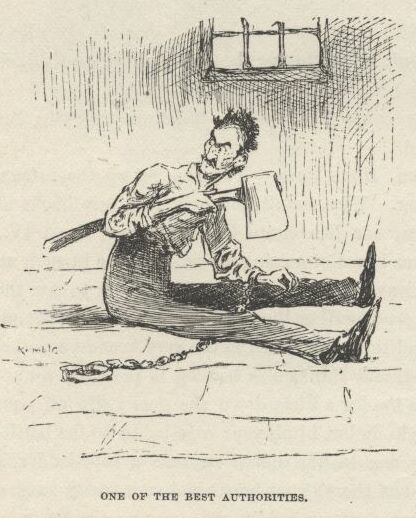
“Well, some of the best authorities has done it. They couldn’t get the chainoff, so they just cut their hand off and shoved. And a leg would be betterstill. But we got to let that go. There ain’t necessity enough in this case;and, besides, Jim’s a nigger, and wouldn’t understand the reasons for it, andhow it’s the custom in Europe; so we’ll let it go. But there’s one thing—he canhave a rope ladder; we can tear up our sheets and make him a rope ladder easyenough. And we can send it to him in a pie; it’s mostly done that way. And I’veet worse pies.”
“Why, Tom Sawyer, how you talk,” I says; “Jim ain’t got no use for a ropeladder.”
“He hasgot use for it. How youtalk, you better say; you don’tknow nothing about it. He’s gotto have a rope ladder; they all do.”
“What in the nation can he dowith it?”
“Dowith it? He can hide it in his bed, can’t he? That’s what they alldo; and he’sgot to, too. Huck, you don’t ever seem to want to doanything that’s regular; you want to be starting something fresh all the time.S’pose he don’tdo nothing with it? ain’t it there in his bed, for aclew, after he’s gone? and don’t you reckon they’ll want clews? Of course theywill. And you wouldn’t leave them any? That would be a prettyhowdy-do,wouldn’tit! I never heard of such a thing.”
“Well,” I says, “if it’s in the regulations, and he’s got to have it, allright, let him have it; because I don’t wish to go back on no regulations; butthere’s one thing, Tom Sawyer—if we go to tearing up our sheets to make Jim arope ladder, we’re going to get into trouble with Aunt Sally, just as sure asyou’re born. Now, the way I look at it, a hickry-bark ladder don’t costnothing, and don’t waste nothing, and is just as good to load up a pie with,and hide in a straw tick, as any rag ladder you can start; and as for Jim, heain’t had no experience, and so hedon’t care what kind of a—”
“Oh, shucks, Huck Finn, if I was as ignorant as you I’d keep still—that’s whatI’ddo. Who ever heard of a state prisoner escaping by a hickry-barkladder? Why, it’s perfectly ridiculous.”
“Well, all right, Tom, fix it your own way; but if you’ll take my advice,you’ll let me borrow a sheet off of the clothesline.”
He said that would do. And that gave him another idea, and he says:
“Borrow a shirt, too.”
“What do we want of a shirt, Tom?”
“Want it for Jim to keep a journal on.”
“Journal your granny—Jimcan’t write.”
“S’pose he can’twrite—he can make marks on the shirt, can’t he, if wemake him a pen out of an old pewter spoon or a piece of an old ironbarrel-hoop?”
“Why, Tom, we can pull a feather out of a goose and make him a better one; andquicker, too.”
“Prisonersdon’t have geese running around the donjon-keep to pull pensout of, you muggins. They alwaysmake their pens out of the hardest,toughest, troublesomest piece of old brass candlestick or something like thatthey can get their hands on; and it takes them weeks and weeks and months andmonths to file it out, too, because they’ve got to do it by rubbing it on thewall. Theywouldn’t use a goose-quill if they had it. It ain’t regular.”
“Well, then, what’ll we make him the ink out of?”
“Many makes it out of iron-rust and tears; but that’s the common sort andwomen; the best authorities uses their own blood. Jim can do that; and when hewants to send any little common ordinary mysterious message to let the worldknow where he’s captivated, he can write it on the bottom of a tin plate with afork and throw it out of the window. The Iron Mask always done that, and it’s ablame’ good way, too.”
“Jim ain’t got no tin plates. They feed him in a pan.”
“That ain’t nothing; we can get him some.”
“Can’t nobody readhis plates.”
“That ain’t got anything to dowith it, Huck Finn. All he’sgotto do is to write on the plate and throw it out. You don’t haveto beable to read it. Why, half the time you can’t read anything a prisoner writeson a tin plate, or anywhere else.”
“Well, then, what’s the sense in wasting the plates?”
“Why, blame it all, it ain’t the prisoner’splates.”
“But it’s somebody’splates, ain’t it?”
“Well, spos’n it is? What does the prisonercare whose—”
He broke off there, because we heard the breakfast-horn blowing. So we clearedout for the house.

Along during the morning I borrowed a sheet and a white shirt off of theclothes-line; and I found an old sack and put them in it, and we went down andgot the fox-fire, and put that in too. I called it borrowing, because that waswhat pap always called it; but Tom said it warn’t borrowing, it was stealing.He said we was representing prisoners; and prisoners don’t care how they get athing so they get it, and nobody don’t blame them for it, either. It ain’t nocrime in a prisoner to steal the thing he needs to get away with, Tom said;it’s his right; and so, as long as we was representing a prisoner, we had aperfect right to steal anything on this place we had the least use for to getourselves out of prison with. He said if we warn’t prisoners it would be a verydifferent thing, and nobody but a mean, ornery person would steal when hewarn’t a prisoner. So we allowed we would steal everything there was that comehandy. And yet he made a mighty fuss, one day, after that, when I stole awatermelon out of the nigger-patch and eat it; and he made me go and give theniggers a dime without telling them what it was for. Tom said that what hemeant was, we could steal anything we needed. Well, I says, I needed thewatermelon. But he said I didn’t need it to get out of prison with; there’swhere the difference was. He said if I’d a wanted it to hide a knife in, andsmuggle it to Jim to kill the seneskal with, it would a been all right. So Ilet it go at that, though I couldn’t see no advantage in my representing aprisoner if I got to set down and chaw over a lot of gold-leaf distinctionslike that every time I see a chance to hog a watermelon.
Well, as I was saying, we waited that morning till everybody was settled downto business, and nobody in sight around the yard; then Tom he carried the sackinto the lean-to whilst I stood off a piece to keep watch. By-and-by he comeout, and we went and set down on the woodpile to talk. He says:
“Everything’s all right now except tools; and that’s easy fixed.”
“Tools?” I says.
“Yes.”
“Tools for what?”
“Why, to dig with. We ain’t a-going to gnawhim out, are we?”
“Ain’t them old crippled picks and things in there good enough to dig a niggerout with?” I says.
He turns on me, looking pitying enough to make a body cry, and says:
“Huck Finn, did you everhear of a prisoner having picks and shovels,and all the modern conveniences in his wardrobe to dig himself out with? Now Iwant to ask you—if you got any reasonableness in you at all—what kind of a showwould thatgive him to be a hero? Why, they might as well lend him thekey and done with it. Picks and shovels—why, they wouldn’t furnish ’em to aking.”
“Well, then,” I says, “if we don’t want the picks and shovels, what do wewant?”
“A couple of case-knives.”
“To dig the foundations out from under that cabin with?”
“Yes.”
“Confound it, it’s foolish, Tom.”
“It don’t make no difference how foolish it is, it’s the rightway—andit’s the regular way. And there ain’t no otherway, that ever Iheard of, and I’ve read all the books that gives any information about thesethings. They always dig out with a case-knife—and not through dirt, mind you;generly it’s through solid rock. And it takes them weeks and weeks and weeks,and for ever and ever. Why, look at one of them prisoners in the bottom dungeonof the Castle Deef, in the harbor of Marseilles, that dug himself out that way;how long was heat it, you reckon?”
“I don’t know.”
“Well, guess.”
“I don’t know. A month and a half.”
“Thirty-seven year—and he come out in China. That’sthe kind. Iwish the bottom of thisfortress was solid rock.”
“Jimdon’t know nobody in China.”
“What’s thatgot to do with it? Neither did that other fellow. Butyou’re always a-wandering off on a side issue. Why can’t you stick to the mainpoint?”
“All right—Idon’t care where he comes out, so he comesout; andJim don’t, either, I reckon. But there’s one thing, anyway—Jim’s too old to bedug out with a case-knife. He won’t last.”
“Yes he will last, too. You don’t reckon it’s going to take thirty-sevenyears to dig out through a dirtfoundation, do you?”
“How long will it take, Tom?”
“Well, we can’t resk being as long as we ought to, because it mayn’t take verylong for Uncle Silas to hear from down there by New Orleans. He’ll hear Jimain’t from there. Then his next move will be to advertise Jim, or somethinglike that. So we can’t resk being as long digging him out as we ought to. Byrights I reckon we ought to be a couple of years; but we can’t. Things being souncertain, what I recommend is this: that we really dig right in, as quick aswe can; and after that, we can let on, to ourselves, that we was at itthirty-seven years. Then we can snatch him out and rush him away the first timethere’s an alarm. Yes, I reckon that’ll be the best way.”
“Now, there’s sensein that,” I says. “Letting on don’t cost nothing;letting on ain’t no trouble; and if it’s any object, I don’t mind letting on wewas at it a hundred and fifty year. It wouldn’t strain me none, after I got myhand in. So I’ll mosey along now, and smouch a couple of case-knives.”

“Smouch three,” he says; “we want one to make a saw out of.”
“Tom, if it ain’t unregular and irreligious to sejest it,” I says, “there’s anold rusty saw-blade around yonder sticking under the weather-boarding behindthe smoke-house.”
He looked kind of weary and discouraged-like, and says:
“It ain’t no use to try to learn you nothing, Huck. Run along and smouch theknives—three of them.” So I done it.

CHAPTER XXXVI.
As soon as we reckoned everybody was asleep that night we went down thelightning-rod, and shut ourselves up in the lean-to, and got out our pile offox-fire, and went to work. We cleared everything out of the way, about four orfive foot along the middle of the bottom log. Tom said he was right behindJim’s bed now, and we’d dig in under it, and when we got through there couldn’tnobody in the cabin ever know there was any hole there, because Jim’scounter-pin hung down most to the ground, and you’d have to raise it up andlook under to see the hole. So we dug and dug with the case-knives till mostmidnight; and then we was dog-tired, and our hands was blistered, and yet youcouldn’t see we’d done anything hardly. At last I says:
“This ain’t no thirty-seven year job; this is a thirty-eight year job, TomSawyer.”
He never said nothing. But he sighed, and pretty soon he stopped digging, andthen for a good little while I knowed that he was thinking. Then he says:
“It ain’t no use, Huck, it ain’t a-going to work. If we was prisoners it would,because then we’d have as many years as we wanted, and no hurry; and wewouldn’t get but a few minutes to dig, every day, while they was changingwatches, and so our hands wouldn’t get blistered, and we could keep it up rightalong, year in and year out, and do it right, and the way it ought to be done.But wecan’t fool along; we got to rush; we ain’t got no time to spare.If we was to put in another night this way we’d have to knock off for a week tolet our hands get well—couldn’t touch a case-knife with them sooner.”
“Well, then, what we going to do, Tom?”
“I’ll tell you. It ain’t right, and it ain’t moral, and I wouldn’t like it toget out; but there ain’t only just the one way: we got to dig him out with thepicks, and let onit’s case-knives.”
“Nowyou’re talking!” I says; “your head gets leveler and levelerall the time, Tom Sawyer,” I says. “Picks is the thing, moral or no moral; andas for me, I don’t care shucks for the morality of it, nohow. When I start into steal a nigger, or a watermelon, or a Sunday-school book, I ain’t no waysparticular how it’s done so it’s done. What I want is my nigger; or what I wantis my watermelon; or what I want is my Sunday-school book; and if a pick’s thehandiest thing, that’s the thing I’m a-going to dig that nigger or thatwatermelon or that Sunday-school book out with; and I don’t give a dead ratwhat the authorities thinks about it nuther.”
“Well,” he says, “there’s excuse for picks and letting-on in a case like this;if it warn’t so, I wouldn’t approve of it, nor I wouldn’t stand by and see therules broke—because right is right, and wrong is wrong, and a body ain’t got nobusiness doing wrong when he ain’t ignorant and knows better. It might answerfor youto dig Jim out with a pick, withoutany letting on,because you don’t know no better; but it wouldn’t for me, because I do knowbetter. Gimme a case-knife.”
He had his own by him, but I handed him mine. He flung it down, and says:
“Gimme a case-knife.”
I didn’t know just what to do—but then I thought. I scratched around amongstthe old tools, and got a pickaxe and give it to him, and he took it and went towork, and never said a word.
He was always just that particular. Full of principle.
So then I got a shovel, and then we picked and shoveled, turn about, and madethe fur fly. We stuck to it about a half an hour, which was as long as we couldstand up; but we had a good deal of a hole to show for it. When I got up stairsI looked out at the window and see Tom doing his level best with thelightning-rod, but he couldn’t come it, his hands was so sore. At last he says:
“It ain’t no use, it can’t be done. What you reckon I better do? Can’t youthink of no way?”
“Yes,” I says, “but I reckon it ain’t regular. Come up the stairs, and let onit’s a lightning-rod.”
So he done it.
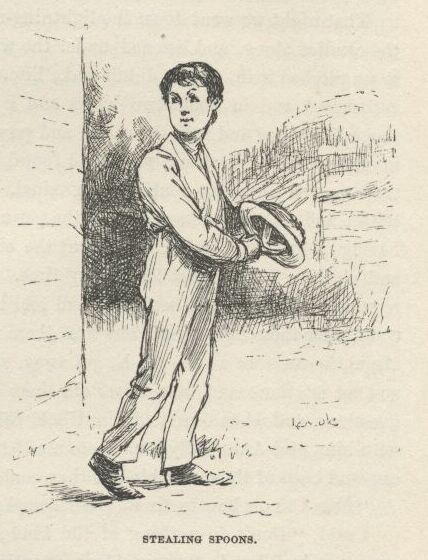
Next day Tom stole a pewter spoon and a brass candlestick in the house, for tomake some pens for Jim out of, and six tallow candles; and I hung around thenigger cabins and laid for a chance, and stole three tin plates. Tom says itwasn’t enough; but I said nobody wouldn’t ever see the plates that Jim throwedout, because they’d fall in the dog-fennel and jimpson weeds under thewindow-hole—then we could tote them back and he could use them over again. SoTom was satisfied. Then he says:
“Now, the thing to study out is, how to get the things to Jim.”
“Take them in through the hole,” I says, “when we get it done.”
He only just looked scornful, and said something about nobody ever heard ofsuch an idiotic idea, and then he went to studying. By-and-by he said he hadciphered out two or three ways, but there warn’t no need to decide on any ofthem yet. Said we’d got to post Jim first.
That night we went down the lightning-rod a little after ten, and took one ofthe candles along, and listened under the window-hole, and heard Jim snoring;so we pitched it in, and it didn’t wake him. Then we whirled in with the pickand shovel, and in about two hours and a half the job was done. We crept inunder Jim’s bed and into the cabin, and pawed around and found the candle andlit it, and stood over Jim awhile, and found him looking hearty and healthy,and then we woke him up gentle and gradual. He was so glad to see us he mostcried; and called us honey, and all the pet names he could think of; and wasfor having us hunt up a cold-chisel to cut the chain off of his leg with rightaway, and clearing out without losing any time. But Tom he showed him howunregular it would be, and set down and told him all about our plans, and howwe could alter them in a minute any time there was an alarm; and not to be theleast afraid, because we would see he got away, sure. So Jim he said itwas all right, and we set there and talked over old times awhile, and then Tomasked a lot of questions, and when Jim told him Uncle Silas come in every dayor two to pray with him, and Aunt Sally come in to see if he was comfortableand had plenty to eat, and both of them was kind as they could be, Tom says:
“NowI know how to fix it. We’ll send you some things by them.”
I said, “Don’t do nothing of the kind; it’s one of the most jackass ideas Iever struck;” but he never paid no attention to me; went right on. It was hisway when he’d got his plans set.
So he told Jim how we’d have to smuggle in the rope-ladder pie and other largethings by Nat, the nigger that fed him, and he must be on the lookout, and notbe surprised, and not let Nat see him open them; and we would put small thingsin uncle’s coat-pockets and he must steal them out; and we would tie things toaunt’s apron-strings or put them in her apron-pocket, if we got a chance; andtold him what they would be and what they was for. And told him how to keep ajournal on the shirt with his blood, and all that. He told him everything. Jimhe couldn’t see no sense in the most of it, but he allowed we was white folksand knowed better than him; so he was satisfied, and said he would do it alljust as Tom said.
Jim had plenty corn-cob pipes and tobacco; so we had a right down good sociabletime; then we crawled out through the hole, and so home to bed, with hands thatlooked like they’d been chawed. Tom was in high spirits. He said it was thebest fun he ever had in his life, and the most intellectural; and said if heonly could see his way to it we would keep it up all the rest of our lives andleave Jim to our children to get out; for he believed Jim would come to like itbetter and better the more he got used to it. He said that in that way it couldbe strung out to as much as eighty year, and would be the best time on record.And he said it would make us all celebrated that had a hand in it.
In the morning we went out to the woodpile and chopped up the brass candlestickinto handy sizes, and Tom put them and the pewter spoon in his pocket. Then wewent to the nigger cabins, and while I got Nat’s notice off, Tom shoved a pieceof candlestick into the middle of a corn-pone that was in Jim’s pan, and wewent along with Nat to see how it would work, and it just worked noble; whenJim bit into it it most mashed all his teeth out; and there warn’t everanything could a worked better. Tom said so himself. Jim he never let on butwhat it was only just a piece of rock or something like that that’s alwaysgetting into bread, you know; but after that he never bit into nothing but whathe jabbed his fork into it in three or four places first.
And whilst we was a-standing there in the dimmish light, here comes a couple ofthe hounds bulging in from under Jim’s bed; and they kept on piling in tillthere was eleven of them, and there warn’t hardly room in there to get yourbreath. By jings, we forgot to fasten that lean-to door! The nigger Nat he onlyjust hollered “Witches” once, and keeled over on to the floor amongst the dogs,and begun to groan like he was dying. Tom jerked the door open and flung out aslab of Jim’s meat, and the dogs went for it, and in two seconds he was outhimself and back again and shut the door, and I knowed he’d fixed the otherdoor too. Then he went to work on the nigger, coaxing him and petting him, andasking him if he’d been imagining he saw something again. He raised up, andblinked his eyes around, and says:
“Mars Sid, you’ll say I’s a fool, but if I didn’t b’lieve I see most a milliondogs, er devils, er some’n, I wisht I may die right heah in dese tracks. I did,mos’ sholy. Mars Sid, I feltum—I feltum, sah; dey was all overme. Dad fetch it, I jis’ wisht I could git my han’s on one er dem witches jis’wunst—on’y jis’ wunst—it’s all I’d ast. But mos’ly I wisht dey’d lemme’lone, I does.”
Tom says:
“Well, I tell you what Ithink. What makes them come here just at thisrunaway nigger’s breakfast-time? It’s because they’re hungry; that’s thereason. You make them a witch pie; that’s the thing for youto do.”
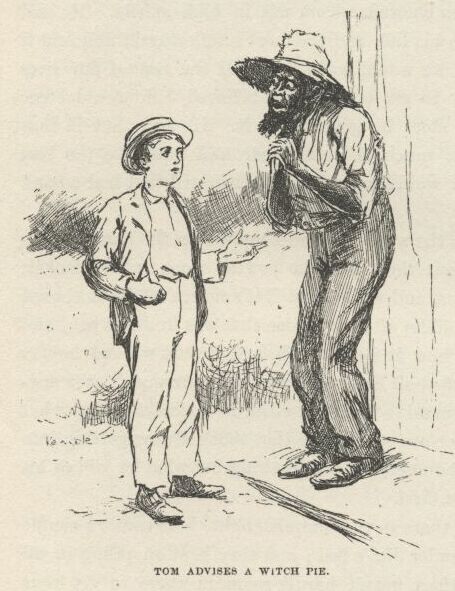
“But my lan’, Mars Sid, how’s Igwyne to make ’m a witch pie? I doan’know how to make it. I hain’t ever hearn er sich a thing b’fo’.”
“Well, then, I’ll have to make it myself.”
“Will you do it, honey?—will you? I’ll wusshup de groun’ und’ yo’ foot, Iwill!”
“All right, I’ll do it, seeing it’s you, and you’ve been good to us and showedus the runaway nigger. But you got to be mighty careful. When we come around,you turn your back; and then whatever we’ve put in the pan, don’t you let onyou see it at all. And don’t you look when Jim unloads the pan—something mighthappen, I don’t know what. And above all, don’t you handlethewitch-things.”
“Hannel’m, Mars Sid? What isyou a-talkin’ ’bout? I wouldn’ layde weight er my finger on um, not f’r ten hund’d thous’n billion dollars, Iwouldn’t.”

CHAPTER XXXVII.
That was all fixed. So then we went away and went to the rubbage-pile in theback yard, where they keep the old boots, and rags, and pieces of bottles, andwore-out tin things, and all such truck, and scratched around and found an oldtin washpan, and stopped up the holes as well as we could, to bake the pie in,and took it down cellar and stole it full of flour and started for breakfast,and found a couple of shingle-nails that Tom said would be handy for a prisonerto scrabble his name and sorrows on the dungeon walls with, and dropped one ofthem in Aunt Sally’s apron-pocket which was hanging on a chair, and t’other westuck in the band of Uncle Silas’s hat, which was on the bureau, because weheard the children say their pa and ma was going to the runaway nigger’s housethis morning, and then went to breakfast, and Tom dropped the pewter spoon inUncle Silas’s coat-pocket, and Aunt Sally wasn’t come yet, so we had to wait alittle while.
And when she come she was hot and red and cross, and couldn’t hardly wait forthe blessing; and then she went to sluicing out coffee with one hand andcracking the handiest child’s head with her thimble with the other, and says:
“I’ve hunted high and I’ve hunted low, and it does beat all what hasbecome of your other shirt.”
My heart fell down amongst my lungs and livers and things, and a hard piece ofcorn-crust started down my throat after it and got met on the road with acough, and was shot across the table, and took one of the children in the eyeand curled him up like a fishing-worm, and let a cry out of him the size of awarwhoop, and Tom he turned kinder blue around the gills, and it all amountedto a considerable state of things for about a quarter of a minute or as much asthat, and I would a sold out for half price if there was a bidder. But afterthat we was all right again—it was the sudden surprise of it that knocked us sokind of cold. Uncle Silas he says:
“It’s most uncommon curious, I can’t understand it. I know perfectly well Itook it off, because—”
“Because you hain’t got but one on. Just listenat the man!Iknow you took it off, and know it by a better way than yourwool-gethering memory, too, because it was on the clo’s-line yesterday—I see itthere myself. But it’s gone, that’s the long and the short of it, and you’lljust have to change to a red flann’l one till I can get time to make a new one.And it’ll be the third I’ve made in two years. It just keeps a body on thejump to keep you in shirts; and whatever you do manage to dowith ’m allis more’n Ican make out. A body ’d think you wouldlearn to takesome sort of care of ’em at your time of life.”
“I know it, Sally, and I do try all I can. But it oughtn’t to be altogether myfault, because, you know, I don’t see them nor have nothing to do with themexcept when they’re on me; and I don’t believe I’ve ever lost one of themoffof me.”
“Well, it ain’t yourfault if you haven’t, Silas; you’d a done it if youcould, I reckon. And the shirt ain’t all that’s gone, nuther. Ther’s a spoongone; and thatain’t all. There was ten, and now ther’s only nine. Thecalf got the shirt, I reckon, but the calf never took the spoon, that’scertain.”
“Why, what else is gone, Sally?”
“Ther’s six candlesgone—that’s what. The rats could a got the candles,and I reckon they did; I wonder they don’t walk off with the whole place, theway you’re always going to stop their holes and don’t do it; and if they warn’tfools they’d sleep in your hair, Silas—you’dnever find it out; but youcan’t lay the spoonon the rats, and that I know.”
“Well, Sally, I’m in fault, and I acknowledge it; I’ve been remiss; but I won’tlet to-morrow go by without stopping up them holes.”
“Oh, I wouldn’t hurry; next year’ll do. Matilda Angelina AramintaPhelps!”
Whack comes the thimble, and the child snatches her claws out of the sugar-bowlwithout fooling around any. Just then the nigger woman steps on to the passage,and says:
“Missus, dey’s a sheet gone.”
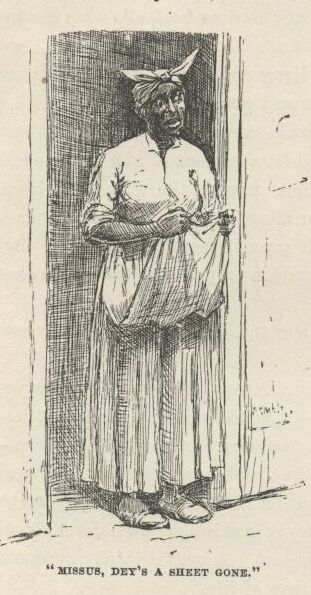
“A sheetgone! Well, for the land’s sake!”
“I’ll stop up them holes to-day,” says Uncle Silas, looking sorrowful.
“Oh, doshet up!—s’pose the rats took the sheet? Where’sit gone,Lize?”
“Clah to goodness I hain’t no notion, Miss’ Sally. She wuz on de clo’slineyistiddy, but she done gone: she ain’ dah no mo’ now.”
“I reckon the world iscoming to an end. I neversee the beat ofit in all my born days. A shirt, and a sheet, and a spoon, and six can—”
“Missus,” comes a young yaller wench, “dey’s a brass cannelstick miss’n.”
“Cler out from here, you hussy, er I’ll take a skillet to ye!”
Well, she was just a-biling. I begun to lay for a chance; I reckoned I wouldsneak out and go for the woods till the weather moderated. She kept a-ragingright along, running her insurrection all by herself, and everybody else mightymeek and quiet; and at last Uncle Silas, looking kind of foolish, fishes upthat spoon out of his pocket. She stopped, with her mouth open and her handsup; and as for me, I wished I was in Jeruslem or somewheres. But not long,because she says:
“It’s justas I expected. So you had it in your pocket all the time; andlike as not you’ve got the other things there, too. How’d it get there?”
“I reely don’t know, Sally,” he says, kind of apologizing, “or you know I wouldtell. I was a-studying over my text in Acts Seventeen before breakfast, and Ireckon I put it in there, not noticing, meaning to put my Testament in, and itmust be so, because my Testament ain’t in; but I’ll go and see; and if theTestament is where I had it, I’ll know I didn’t put it in, and that will showthat I laid the Testament down and took up the spoon, and—”
“Oh, for the land’s sake! Give a body a rest! Go ’long now, the whole kit andbiling of ye; and don’t come nigh me again till I’ve got back my peace ofmind.”
I’da heard her if she’d a said it to herself, let alone speaking itout; and I’d a got up and obeyed her if I’d a been dead. As we was passingthrough the setting-room the old man he took up his hat, and the shingle-nailfell out on the floor, and he just merely picked it up and laid it on themantel-shelf, and never said nothing, and went out. Tom see him do it, andremembered about the spoon, and says:
“Well, it ain’t no use to send things by himno more, he ain’treliable.” Then he says: “But he done us a good turn with the spoon, anyway,without knowing it, and so we’ll go and do him one without himknowingit—stop up his rat-holes.”
There was a noble good lot of them down cellar, and it took us a whole hour,but we done the job tight and good and shipshape. Then we heard steps on thestairs, and blowed out our light and hid; and here comes the old man, with acandle in one hand and a bundle of stuff in t’other, looking as absent-mindedas year before last. He went a mooning around, first to one rat-hole and thenanother, till he’d been to them all. Then he stood about five minutes, pickingtallow-drip off of his candle and thinking. Then he turns off slow and dreamytowards the stairs, saying:
“Well, for the life of me I can’t remember when I done it. I could show her nowthat I warn’t to blame on account of the rats. But never mind—let it go. Ireckon it wouldn’t do no good.”
And so he went on a-mumbling up stairs, and then we left. He was a mighty niceold man. And always is.
Tom was a good deal bothered about what to do for a spoon, but he said we’d gotto have it; so he took a think. When he had ciphered it out he told me how wewas to do; then we went and waited around the spoon-basket till we see AuntSally coming, and then Tom went to counting the spoons and laying them out toone side, and I slid one of them up my sleeve, and Tom says:
“Why, Aunt Sally, there ain’t but nine spoons yet.”
She says:
“Go ’long to your play, and don’t bother me. I know better, I counted ’mmyself.”
“Well, I’ve counted them twice, Aunty, and Ican’t make but nine.”
She looked out of all patience, but of course she come to count—anybody would.
“I declare to gracious ther’ ain’tbut nine!” she says. “Why, what inthe world—plague takethe things, I’ll count ’m again.”
So I slipped back the one I had, and when she got done counting, she says:
“Hang the troublesome rubbage, ther’s tennow!” and she looked huffy andbothered both. But Tom says:
“Why, Aunty, Idon’t think there’s ten.”
“You numskull, didn’t you see me count’m?”
“I know, but—”
“Well, I’ll count ’m again.”
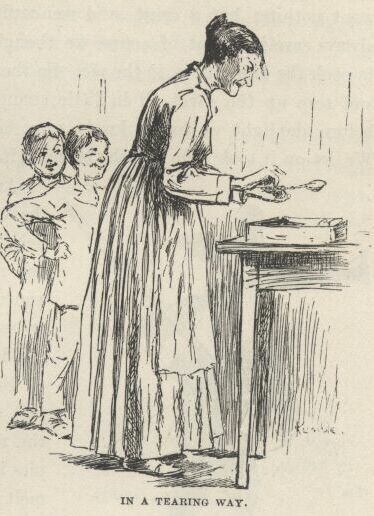
So I smouched one, and they come out nine, same as the other time. Well, shewasin a tearing way—just a-trembling all over, she was so mad. But shecounted and counted till she got that addled she’d start to count in thebasketfor a spoon sometimes; and so, three times they come out right,and three times they come out wrong. Then she grabbed up the basket and slammedit across the house and knocked the cat galley-west; and she said cle’r out andlet her have some peace, and if we come bothering around her again betwixt thatand dinner she’d skin us. So we had the odd spoon, and dropped it in herapron-pocket whilst she was a-giving us our sailing orders, and Jim got it allright, along with her shingle nail, before noon. We was very well satisfiedwith this business, and Tom allowed it was worth twice the trouble it took,because he said nowshe couldn’t ever count them spoons twice alikeagain to save her life; and wouldn’t believe she’d counted them right if shedid;and said that after she’d about counted her head off for the nextthree days he judged she’d give it up and offer to kill anybody that wanted herto ever count them any more.
So we put the sheet back on the line that night, and stole one out of hercloset; and kept on putting it back and stealing it again for a couple of daystill she didn’t know how many sheets she had any more, and she didn’tcare, and warn’t a-going to bullyrag the rest of her soul out about it,and wouldn’t count them again not to save her life; she druther die first.
So we was all right now, as to the shirt and the sheet and the spoon and thecandles, by the help of the calf and the rats and the mixed-up counting; and asto the candlestick, it warn’t no consequence, it would blow over by-and-by.
But that pie was a job; we had no end of trouble with that pie. We fixed it upaway down in the woods, and cooked it there; and we got it done at last, andvery satisfactory, too; but not all in one day; and we had to use up threewash-pans full of flour before we got through, and we got burnt pretty much allover, in places, and eyes put out with the smoke; because, you see, we didn’twant nothing but a crust, and we couldn’t prop it up right, and she wouldalways cave in. But of course we thought of the right way at last—which was tocook the ladder, too, in the pie. So then we laid in with Jim the second night,and tore up the sheet all in little strings and twisted them together, and longbefore daylight we had a lovely rope that you could a hung a person with. Welet on it took nine months to make it.
And in the forenoon we took it down to the woods, but it wouldn’t go into thepie. Being made of a whole sheet, that way, there was rope enough for fortypies if we’d a wanted them, and plenty left over for soup, or sausage, oranything you choose. We could a had a whole dinner.

But we didn’t need it. All we needed was just enough for the pie, and so wethrowed the rest away. We didn’t cook none of the pies in the wash-pan—afraidthe solder would melt; but Uncle Silas he had a noble brass warming-pan whichhe thought considerable of, because it belonged to one of his ancesters with along wooden handle that come over from England with William the Conqueror inthe Mayfloweror one of them early ships and was hid away up garret witha lot of other old pots and things that was valuable, not on account of beingany account, because they warn’t, but on account of them being relicts, youknow, and we snaked her out, private, and took her down there, but she failedon the first pies, because we didn’t know how, but she come up smiling on thelast one. We took and lined her with dough, and set her in the coals, andloaded her up with rag rope, and put on a dough roof, and shut down the lid,and put hot embers on top, and stood off five foot, with the long handle, cooland comfortable, and in fifteen minutes she turned out a pie that was asatisfaction to look at. But the person that et it would want to fetch a coupleof kags of toothpicks along, for if that rope ladder wouldn’t cramp him down tobusiness I don’t know nothing what I’m talking about, and lay him in enoughstomach-ache to last him till next time, too.
Nat didn’t look when we put the witch pie in Jim’s pan; and we put the threetin plates in the bottom of the pan under the vittles; and so Jim goteverything all right, and as soon as he was by himself he busted into the pieand hid the rope ladder inside of his straw tick, and scratched some marks on atin plate and throwed it out of the window-hole.
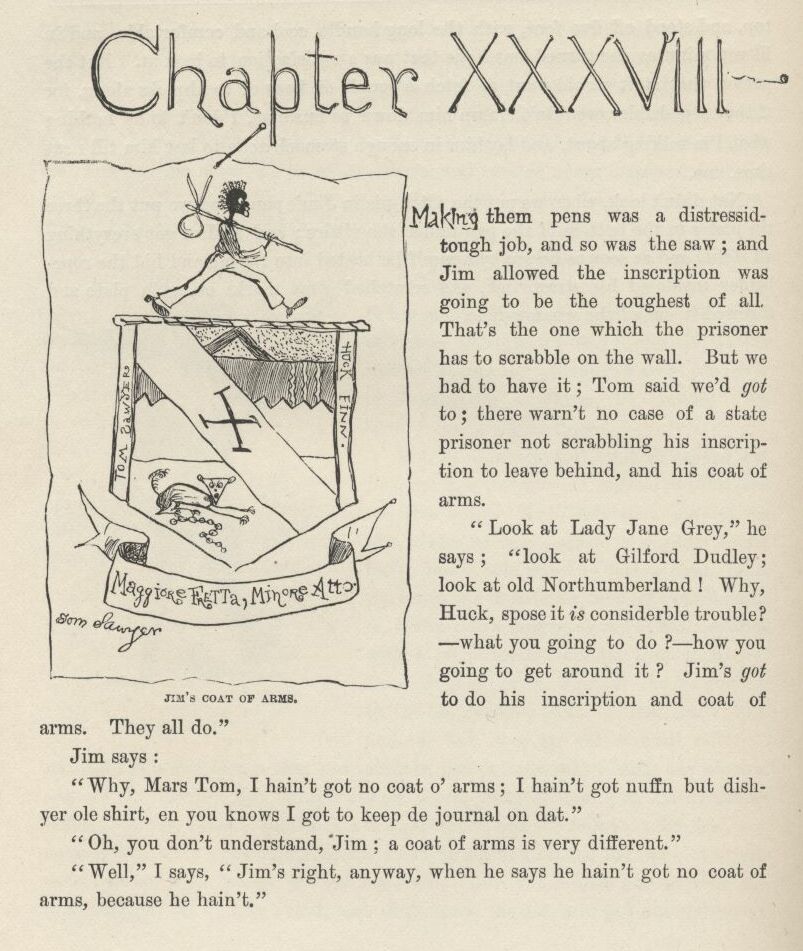
CHAPTER XXXVIII.
Making them pens was a distressid tough job, and so was the saw; and Jimallowed the inscription was going to be the toughest of all. That’s the onewhich the prisoner has to scrabble on the wall. But he had to have it; Tom saidhe’d gotto; there warn’t no case of a state prisoner not scrabbling hisinscription to leave behind, and his coat of arms.
“Look at Lady Jane Grey,” he says; “look at Gilford Dudley; look at oldNorthumberland! Why, Huck, s’pose it isconsiderble trouble?—what yougoing to do?—how you going to get around it? Jim’s gotto do hisinscription and coat of arms. They all do.”
Jim says:
“Why, Mars Tom, I hain’t got no coat o’ arm; I hain’t got nuffn but dish yerole shirt, en you knows I got to keep de journal on dat.”
“Oh, you don’t understand, Jim; a coat of arms is very different.”
“Well,” I says, “Jim’s right, anyway, when he says he ain’t got no coat ofarms, because he hain’t.”
“I reckon Iknowed that,” Tom says, “but you bet he’ll have one beforehe goes out of this—because he’s going out right, and there ain’t goingto be no flaws in his record.”
So whilst me and Jim filed away at the pens on a brickbat apiece, Jim a-makinghis’n out of the brass and I making mine out of the spoon, Tom set to work tothink out the coat of arms. By-and-by he said he’d struck so many good ones hedidn’t hardly know which to take, but there was one which he reckoned he’ddecide on. He says:
“On the scutcheon we’ll have a bend orin the dexter base, a saltiremurreyin the fess, with a dog, couchant, for common charge, and underhis foot a chain embattled, for slavery, with a chevron vertin a chiefengrailed, and three invected lines on a field azure, with the nombrilpoints rampant on a dancette indented; crest, a runaway nigger, sable,with his bundle over his shoulder on a bar sinister; and a couple of gules forsupporters, which is you and me; motto, Maggiore fretta, minore atto.Got it out of a book—means the more haste, the less speed.”
“Geewhillikins,” I says, “but what does the rest of it mean?”
“We ain’t got no time to bother over that,” he says; “we got to dig in like allgit-out.”
“Well, anyway,” I says, “what’s someof it? What’s a fess?”
“A fess—a fess is—youdon’t need to know what a fess is. I’ll show himhow to make it when he gets to it.”
“Shucks, Tom,” I says, “I think you might tell a person. What’s a barsinister?”
“Oh, Idon’t know. But he’s got to have it. All the nobility does.”
That was just his way. If it didn’t suit him to explain a thing to you, hewouldn’t do it. You might pump at him a week, it wouldn’t make no difference.
He’d got all that coat of arms business fixed, so now he started in to finishup the rest of that part of the work, which was to plan out a mournfulinscription—said Jim got to have one, like they all done. He made up a lot, andwrote them out on a paper, and read them off, so:
1. Here a captive heart busted.
2. Here a poor prisoner, forsook by the world and friends, fretted out hissorrowful life.
3. Here a lonely heart broke, and a worn spirit went to its rest, afterthirty-seven years of solitary captivity.
4. Here, homeless and friendless, after thirty-seven years of bittercaptivity, perished a noble stranger, natural son of Louis XIV.
Tom’s voice trembled whilst he was reading them, and he most broke down. Whenhe got done he couldn’t no way make up his mind which one for Jim to scrabbleon to the wall, they was all so good; but at last he allowed he would let himscrabble them all on. Jim said it would take him a year to scrabble such a lotof truck on to the logs with a nail, and he didn’t know how to make letters,besides; but Tom said he would block them out for him, and then he wouldn’thave nothing to do but just follow the lines. Then pretty soon he says:
“Come to think, the logs ain’t a-going to do; they don’t have log walls in adungeon: we got to dig the inscriptions into a rock. We’ll fetch a rock.”
Jim said the rock was worse than the logs; he said it would take him such apison long time to dig them into a rock he wouldn’t ever get out. But Tom saidhe would let me help him do it. Then he took a look to see how me and Jim wasgetting along with the pens. It was most pesky tedious hard work and slow, anddidn’t give my hands no show to get well of the sores, and we didn’t seem tomake no headway, hardly; so Tom says:
“I know how to fix it. We got to have a rock for the coat of arms and mournfulinscriptions, and we can kill two birds with that same rock. There’s a gaudybig grindstone down at the mill, and we’ll smouch it, and carve the things onit, and file out the pens and the saw on it, too.”
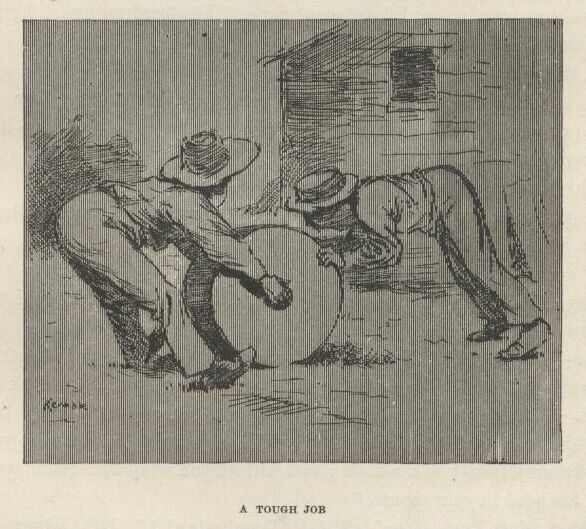
It warn’t no slouch of an idea; and it warn’t no slouch of a grindstone nuther;but we allowed we’d tackle it. It warn’t quite midnight yet, so we cleared outfor the mill, leaving Jim at work. We smouched the grindstone, and set out toroll her home, but it was a most nation tough job. Sometimes, do what we could,we couldn’t keep her from falling over, and she come mighty near mashing usevery time. Tom said she was going to get one of us, sure, before we gotthrough. We got her half way; and then we was plumb played out, and mostdrownded with sweat. We see it warn’t no use; we got to go and fetch Jim. So heraised up his bed and slid the chain off of the bed-leg, and wrapt it round andround his neck, and we crawled out through our hole and down there, and Jim andme laid into that grindstone and walked her along like nothing; and Tomsuperintended. He could out-superintend any boy I ever see. He knowed how to doeverything.
Our hole was pretty big, but it warn’t big enough to get the grindstonethrough; but Jim he took the pick and soon made it big enough. Then Tom markedout them things on it with the nail, and set Jim to work on them, with the nailfor a chisel and an iron bolt from the rubbage in the lean-to for a hammer, andtold him to work till the rest of his candle quit on him, and then he could goto bed, and hide the grindstone under his straw tick and sleep on it. Then wehelped him fix his chain back on the bed-leg, and was ready for bed ourselves.But Tom thought of something, and says:
“You got any spiders in here, Jim?”
“No, sah, thanks to goodness I hain’t, Mars Tom.”
“All right, we’ll get you some.”
“But bless you, honey, I doan’ wantnone. I’s afeard un um. I jis’ ’ssoon have rattlesnakes aroun’.”
Tom thought a minute or two, and says:
“It’s a good idea. And I reckon it’s been done. It musta been done; itstands to reason. Yes, it’s a prime good idea. Where could you keep it?”
“Keep what, Mars Tom?”
“Why, a rattlesnake.”
“De goodness gracious alive, Mars Tom! Why, if dey was a rattlesnake to come inheah I’d take en bust right out thoo dat log wall, I would, wid my head.”
“Why, Jim, you wouldn’t be afraid of it after a little. You could tame it.”
“Tameit!”
“Yes—easy enough. Every animal is grateful for kindness and petting, and theywouldn’t thinkof hurting a person that pets them. Any book will tellyou that. You try—that’s all I ask; just try for two or three days. Why, youcan get him so, in a little while, that he’ll love you; and sleep with you; andwon’t stay away from you a minute; and will let you wrap him round your neckand put his head in your mouth.”
“Please, Mars Tom—doan’ talk so! I can’t stan’ it! He’dletme shove his head in my mouf—fer a favor, hain’t it? I lay he’d waita pow’ful long time ’fo’ I asthim. En mo’ en dat, I doan’ wanthim to sleep wid me.”
“Jim, don’t act so foolish. A prisoner’s gotto have some kind of a dumbpet, and if a rattlesnake hain’t ever been tried, why, there’s more glory to begained in your being the first to ever try it than any other way you could everthink of to save your life.”
“Why, Mars Tom, I doan’ wantno sich glory. Snake take ’n bite Jim’schin off, den whahis de glory? No, sah, I doan’ want no sich doin’s.”
“Blame it, can’t you try?I only wantyou to try—you needn’t keepit up if it don’t work.”
“But de trouble all doneef de snake bite me while I’s a tryin’ him.Mars Tom, I’s willin’ to tackle mos’ anything ’at ain’t onreasonable, but efyou en Huck fetches a rattlesnake in heah for me to tame, I’s gwyne toleave, dat’s shore.”
“Well, then, let it go, let it go, if you’re so bull-headed about it. We canget you some garter-snakes, and you can tie some buttons on their tails, andlet on they’re rattlesnakes, and I reckon that’ll have to do.”
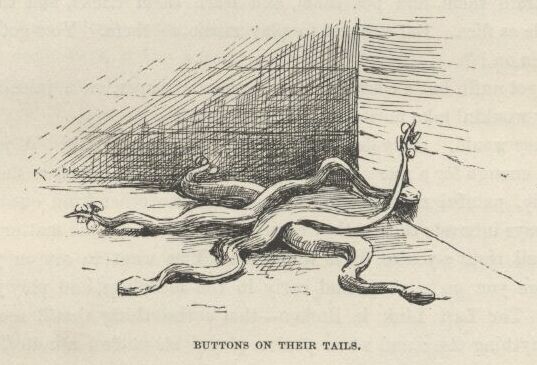
“I k’n stan’ dem, Mars Tom, but blame’ ’f I couldn’ get along widout um,I tell you dat. I never knowed b’fo’ ’t was so much bother and trouble to be aprisoner.”
“Well, it alwaysis when it’s done right. You got any rats around here?”
“No, sah, I hain’t seed none.”
“Well, we’ll get you some rats.”
“Why, Mars Tom, I doan’ wantno rats. Dey’s de dadblamedest creturs to’sturb a body, en rustle roun’ over ’im, en bite his feet, when he’s tryin’ tosleep, I ever see. No, sah, gimme g’yarter-snakes, ’f I’s got to have ’m, butdoan’ gimme no rats; I hain’ got no use f’r um, skasely.”
“But, Jim, you gotto have ’em—they all do. So don’t make no more fussabout it. Prisoners ain’t ever without rats. There ain’t no instance of it. Andthey train them, and pet them, and learn them tricks, and they get to be associable as flies. But you got to play music to them. You got anything to playmusic on?”
“I ain’ got nuffn but a coase comb en a piece o’ paper, en a juice-harp; but Ireck’n dey wouldn’ take no stock in a juice-harp.”
“Yes they would. Theydon’t care what kind of music ’tis. A jews-harp’splenty good enough for a rat. All animals like music—in a prison they dote onit. Specially, painful music; and you can’t get no other kind out of ajews-harp. It always interests them; they come out to see what’s the matterwith you. Yes, you’re all right; you’re fixed very well. You want to set onyour bed nights before you go to sleep, and early in the mornings, and playyour jews-harp; play ‘The Last Link is Broken’—that’s the thing that’ll scoopa rat quicker ’n anything else; and when you’ve played about two minutes you’llsee all the rats, and the snakes, and spiders, and things begin to feel worriedabout you, and come. And they’ll just fairly swarm over you, and have a noblegood time.”
“Yes, deywill, I reck’n, Mars Tom, but what kine er time is Jimhavin’? Blest if I kin see de pint. But I’ll do it ef I got to. I reck’n Ibetter keep de animals satisfied, en not have no trouble in de house.”
Tom waited to think it over, and see if there wasn’t nothing else; and prettysoon he says:
“Oh, there’s one thing I forgot. Could you raise a flower here, do you reckon?”
“I doan know but maybe I could, Mars Tom; but it’s tolable dark in heah, en Iain’ got no use f’r no flower, nohow, en she’d be a pow’ful sight o’ trouble.”
“Well, you try it, anyway. Some other prisoners has done it.”
“One er dem big cat-tail-lookin’ mullen-stalks would grow in heah, Mars Tom, Ireck’n, but she wouldn’t be wuth half de trouble she’d coss.”
“Don’t you believe it. We’ll fetch you a little one and you plant it in thecorner over there, and raise it. And don’t call it mullen, call itPitchiola—that’s its right name when it’s in a prison. And you want to water itwith your tears.”
“Why, I got plenty spring water, Mars Tom.”
“You don’t wantspring water; you want to water it with your tears. It’sthe way they always do.”
“Why, Mars Tom, I lay I kin raise one er dem mullen-stalks twyste wid springwater whiles another man’s a start’none wid tears.”
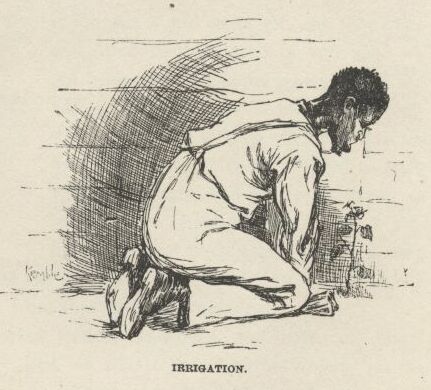
“That ain’t the idea. You gotto do it with tears.”
“She’ll die on my han’s, Mars Tom, she sholy will; kase I doan’ skasely evercry.”
So Tom was stumped. But he studied it over, and then said Jim would have toworry along the best he could with an onion. He promised he would go to thenigger cabins and drop one, private, in Jim’s coffee-pot, in the morning. Jimsaid he would “jis’ ’s soon have tobacker in his coffee;” and found so muchfault with it, and with the work and bother of raising the mullen, andjews-harping the rats, and petting and flattering up the snakes and spiders andthings, on top of all the other work he had to do on pens, and inscriptions,and journals, and things, which made it more trouble and worry andresponsibility to be a prisoner than anything he ever undertook, that Tom mostlost all patience with him; and said he was just loadened down with moregaudier chances than a prisoner ever had in the world to make a name forhimself, and yet he didn’t know enough to appreciate them, and they was justabout wasted on him. So Jim he was sorry, and said he wouldn’t behave so nomore, and then me and Tom shoved for bed.

CHAPTER XXXIX.
In the morning we went up to the village and bought a wire rat-trap and fetchedit down, and unstopped the best rat-hole, and in about an hour we had fifteenof the bulliest kind of ones; and then we took it and put it in a safe placeunder Aunt Sally’s bed. But while we was gone for spiders little ThomasFranklin Benjamin Jefferson Elexander Phelps found it there, and opened thedoor of it to see if the rats would come out, and they did; and Aunt Sally shecome in, and when we got back she was a-standing on top of the bed raisingCain, and the rats was doing what they could to keep off the dull times forher. So she took and dusted us both with the hickry, and we was as much as twohours catching another fifteen or sixteen, drat that meddlesome cub, and theywarn’t the likeliest, nuther, because the first haul was the pick of the flock.I never see a likelier lot of rats than what that first haul was.
We got a splendid stock of sorted spiders, and bugs, and frogs, andcaterpillars, and one thing or another; and we like to got a hornet’s nest, butwe didn’t. The family was at home. We didn’t give it right up, but stayed withthem as long as we could; because we allowed we’d tire them out or they’d gotto tire us out, and they done it. Then we got allycumpain and rubbed on theplaces, and was pretty near all right again, but couldn’t set down convenient.And so we went for the snakes, and grabbed a couple of dozen garters andhouse-snakes, and put them in a bag, and put it in our room, and by that timeit was supper-time, and a rattling good honest day’s work: and hungry?—oh, no,I reckon not! And there warn’t a blessed snake up there when we went back—wedidn’t half tie the sack, and they worked out somehow, and left. But it didn’tmatter much, because they was still on the premises somewheres. So we judged wecould get some of them again. No, there warn’t no real scarcity of snakes aboutthe house for a considerable spell. You’d see them dripping from the raftersand places every now and then; and they generly landed in your plate, or downthe back of your neck, and most of the time where you didn’t want them. Well,they was handsome and striped, and there warn’t no harm in a million of them;but that never made no difference to Aunt Sally; she despised snakes, be thebreed what they might, and she couldn’t stand them no way you could fix it; andevery time one of them flopped down on her, it didn’t make no difference whatshe was doing, she would just lay that work down and light out. I never seesuch a woman. And you could hear her whoop to Jericho. You couldn’t get her totake a-holt of one of them with the tongs. And if she turned over and found onein bed she would scramble out and lift a howl that you would think the housewas afire. She disturbed the old man so that he said he could most wish therehadn’t ever been no snakes created. Why, after every last snake had been goneclear out of the house for as much as a week Aunt Sally warn’t over it yet; shewarn’t near over it; when she was setting thinking about something you couldtouch her on the back of her neck with a feather and she would jump right outof her stockings. It was very curious. But Tom said all women was just so. Hesaid they was made that way for some reason or other.
We got a licking every time one of our snakes come in her way, and she allowedthese lickings warn’t nothing to what she would do if we ever loaded up theplace again with them. I didn’t mind the lickings, because they didn’t amountto nothing; but I minded the trouble we had to lay in another lot. But we gotthem laid in, and all the other things; and you never see a cabin as blithesomeas Jim’s was when they’d all swarm out for music and go for him. Jim didn’tlike the spiders, and the spiders didn’t like Jim; and so they’d lay for him,and make it mighty warm for him. And he said that between the rats and thesnakes and the grindstone there warn’t no room in bed for him, skasely; andwhen there was, a body couldn’t sleep, it was so lively, and it was alwayslively, he said, because theynever all slept at one time, but took turnabout, so when the snakes was asleep the rats was on deck, and when the ratsturned in the snakes come on watch, so he always had one gang under him, in hisway, and t’other gang having a circus over him, and if he got up to hunt a newplace the spiders would take a chance at him as he crossed over. He said if heever got out this time he wouldn’t ever be a prisoner again, not for a salary.
Well, by the end of three weeks everything was in pretty good shape. The shirtwas sent in early, in a pie, and every time a rat bit Jim he would get up andwrite a little in his journal whilst the ink was fresh; the pens was made, theinscriptions and so on was all carved on the grindstone; the bed-leg was sawedin two, and we had et up the sawdust, and it give us a most amazingstomach-ache. We reckoned we was all going to die, but didn’t. It was the mostundigestible sawdust I ever see; and Tom said the same.
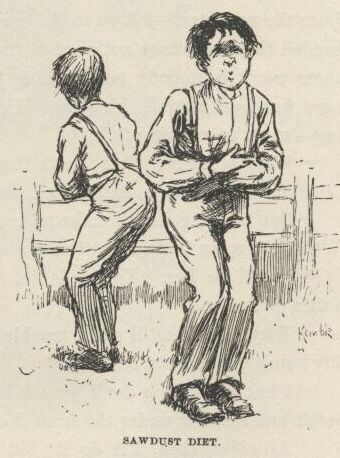
But as I was saying, we’d got all the work done now, at last; and we was allpretty much fagged out, too, but mainly Jim. The old man had wrote a couple oftimes to the plantation below Orleans to come and get their runaway nigger, buthadn’t got no answer, because there warn’t no such plantation; so he allowed hewould advertise Jim in the St. Louis and New Orleans papers; and when hementioned the St. Louis ones it give me the cold shivers, and I see we hadn’tno time to lose. So Tom said, now for the nonnamous letters.
“What’s them?” I says.
“Warnings to the people that something is up. Sometimes it’s done one way,sometimes another. But there’s always somebody spying around that gives noticeto the governor of the castle. When Louis XVI. was going to light out of theTooleries, a servant-girl done it. It’s a very good way, and so is thenonnamous letters. We’ll use them both. And it’s usual for the prisoner’smother to change clothes with him, and she stays in, and he slides out in herclothes. We’ll do that, too.”
“But looky here, Tom, what do we want to warnanybody for thatsomething’s up? Let them find it out for themselves—it’s their lookout.”
“Yes, I know; but you can’t depend on them. It’s the way they’ve acted from thevery start—left us to do everything. They’re so confiding andmullet-headed they don’t take notice of nothing at all. So if we don’tgivethem notice there won’t be nobody nor nothing to interfere with us,and so after all our hard work and trouble this escape ’ll go off perfectlyflat; won’t amount to nothing—won’t be nothing toit.”
“Well, as for me, Tom, that’s the way I’d like.”
“Shucks!” he says, and looked disgusted. So I says:
“But I ain’t going to make no complaint. Any way that suits you suits me. Whatyou going to do about the servant-girl?”
“You’ll be her. You slide in, in the middle of the night, and hook that yallergirl’s frock.”
“Why, Tom, that’ll make trouble next morning; because, of course, she prob’blyhain’t got any but that one.”
“I know; but you don’t want it but fifteen minutes, to carry the nonnamousletter and shove it under the front door.”
“All right, then, I’ll do it; but I could carry it just as handy in my owntogs.”
“You wouldn’t look like a servant-girl then, would you?”
“No, but there won’t be nobody to see what I look like, anyway.”
“That ain’t got nothing to do with it. The thing for us to do is just to do ourduty, and not worry about whether anybody seesus do it or not.Hain’t you got no principle at all?”
“All right, I ain’t saying nothing; I’m the servant-girl. Who’s Jim’s mother?”
“I’m his mother. I’ll hook a gown from Aunt Sally.”
“Well, then, you’ll have to stay in the cabin when me and Jim leaves.”
“Not much. I’ll stuff Jim’s clothes full of straw and lay it on his bed torepresent his mother in disguise, and Jim ’ll take the nigger woman’s gown offof me and wear it, and we’ll all evade together. When a prisoner of styleescapes it’s called an evasion. It’s always called so when a king escapes,f’rinstance. And the same with a king’s son; it don’t make no differencewhether he’s a natural one or an unnatural one.”
So Tom he wrote the nonnamous letter, and I smouched the yaller wench’s frockthat night, and put it on, and shoved it under the front door, the way Tom toldme to. It said:
Beware. Trouble is brewing. Keep a sharp lookout.UNKNOWNFRIEND.
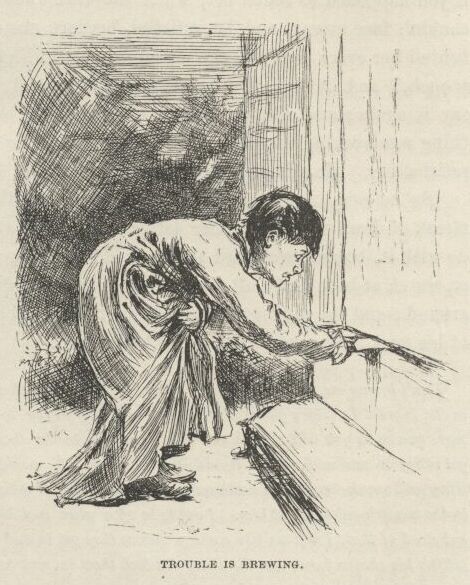
Next night we stuck a picture, which Tom drawed in blood, of a skull andcrossbones on the front door; and next night another one of a coffin on theback door. I never see a family in such a sweat. They couldn’t a been worsescared if the place had a been full of ghosts laying for them behind everythingand under the beds and shivering through the air. If a door banged, Aunt Sallyshe jumped and said “ouch!” if anything fell, she jumped and said “ouch!” ifyou happened to touch her, when she warn’t noticing, she done the same; shecouldn’t face noway and be satisfied, because she allowed there was somethingbehind her every time—so she was always a-whirling around sudden, and saying“ouch,” and before she’d got two-thirds around she’d whirl back again, and sayit again; and she was afraid to go to bed, but she dasn’t set up. So the thingwas working very well, Tom said; he said he never see a thing work moresatisfactory. He said it showed it was done right.
So he said, now for the grand bulge! So the very next morning at the streak ofdawn we got another letter ready, and was wondering what we better do with it,because we heard them say at supper they was going to have a nigger on watch atboth doors all night. Tom he went down the lightning-rod to spy around; and thenigger at the back door was asleep, and he stuck it in the back of his neck andcome back. This letter said:
Don’t betray me, I wish to be your friend. There is a desprate gang ofcutthroats from over in the Indian Territory going to steal your runaway niggerto-night, and they have been trying to scare you so as you will stay in thehouse and not bother them. I am one of the gang, but have got religgion andwish to quit it and lead an honest life again, and will betray the helishdesign. They will sneak down from northards, along the fence, at midnightexact, with a false key, and go in the nigger’s cabin to get him. I am to beoff a piece and blow a tin horn if I see any danger; but stead of that I willBAlike a sheep soon as they get in and not blow at all; thenwhilst they are getting his chains loose, you slip there and lock them in, andcan kill them at your leasure. Don’t do anything but just the way I am tellingyou, if you do they will suspicion something and raise whoop-jamboreehoo. I donot wish any reward but to know I have done the right thing.
UNKNOWNFRIEND
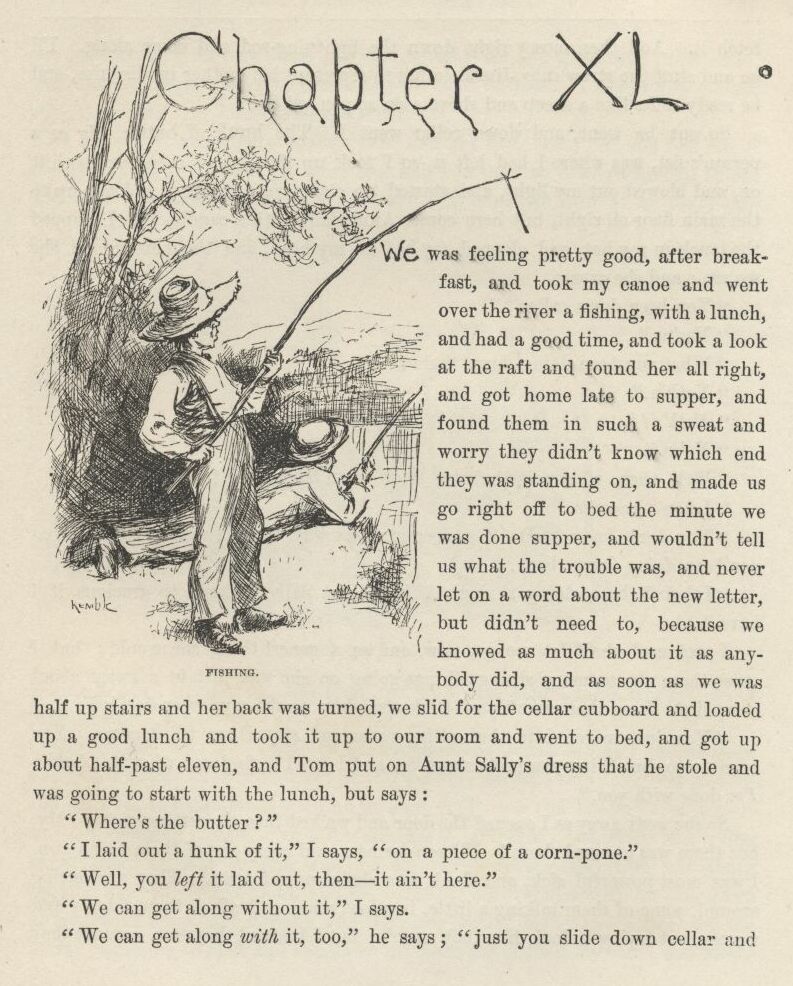
CHAPTER XL.
We was feeling pretty good after breakfast, and took my canoe and went over theriver a-fishing, with a lunch, and had a good time, and took a look at the raftand found her all right, and got home late to supper, and found them in such asweat and worry they didn’t know which end they was standing on, and made us goright off to bed the minute we was done supper, and wouldn’t tell us what thetrouble was, and never let on a word about the new letter, but didn’t need to,because we knowed as much about it as anybody did, and as soon as we was halfup stairs and her back was turned we slid for the cellar cupboard and loaded upa good lunch and took it up to our room and went to bed, and got up abouthalf-past eleven, and Tom put on Aunt Sally’s dress that he stole and was goingto start with the lunch, but says:
“Where’s the butter?”
“I laid out a hunk of it,” I says, “on a piece of a corn-pone.”
“Well, you leftit laid out, then—it ain’t here.”
“We can get along without it,” I says.
“We can get along withit, too,” he says; “just you slide down cellarand fetch it. And then mosey right down the lightning-rod and come along. I’llgo and stuff the straw into Jim’s clothes to represent his mother in disguise,and be ready to balike a sheep and shove soon as you get there.”
So out he went, and down cellar went I. The hunk of butter, big as a person’sfist, was where I had left it, so I took up the slab of corn-pone with it on,and blowed out my light, and started up stairs very stealthy, and got up to themain floor all right, but here comes Aunt Sally with a candle, and I clappedthe truck in my hat, and clapped my hat on my head, and the next second she seeme; and she says:
“You been down cellar?”
“Yes’m.”
“What you been doing down there?”
“Noth’n.”
“Noth’n!”
“No’m.”
“Well, then, what possessed you to go down there this time of night?”
“I don’t know ’m.”
“You don’t know?Don’t answer me that way. Tom, I want to know what youbeen doingdown there.”
“I hain’t been doing a single thing, Aunt Sally, I hope to gracious if I have.”
I reckoned she’d let me go now, and as a generl thing she would; but I s’posethere was so many strange things going on she was just in a sweat about everylittle thing that warn’t yard-stick straight; so she says, very decided:
“You just march into that setting-room and stay there till I come. You been upto something you no business to, and I lay I’ll find out what it is beforeI’mdone with you.”
So she went away as I opened the door and walked into the setting-room. My, butthere was a crowd there! Fifteen farmers, and every one of them had a gun. Iwas most powerful sick, and slunk to a chair and set down. They was settingaround, some of them talking a little, in a low voice, and all of them fidgetyand uneasy, but trying to look like they warn’t; but I knowed they was, becausethey was always taking off their hats, and putting them on, and scratchingtheir heads, and changing their seats, and fumbling with their buttons. Iwarn’t easy myself, but I didn’t take my hat off, all the same.
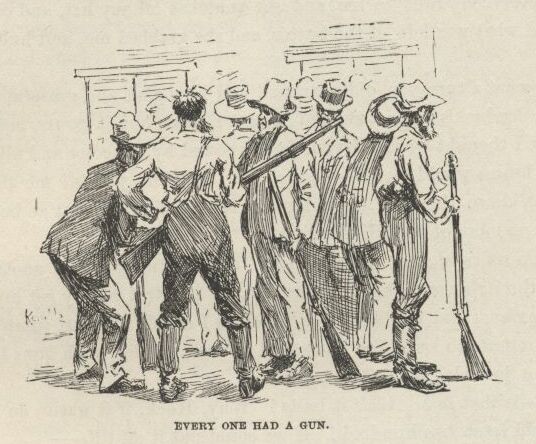
I did wish Aunt Sally would come, and get done with me, and lick me, if shewanted to, and let me get away and tell Tom how we’d overdone this thing, andwhat a thundering hornet’s-nest we’d got ourselves into, so we could stopfooling around straight off, and clear out with Jim before these rips got outof patience and come for us.
At last she come and begun to ask me questions, but I couldn’tanswerthem straight, I didn’t know which end of me was up; because these men was insuch a fidget now that some was wanting to start right nowand lay forthem desperadoes, and saying it warn’t but a few minutes to midnight; andothers was trying to get them to hold on and wait for the sheep-signal; andhere was Aunty pegging away at the questions, and me a-shaking all over andready to sink down in my tracks I was that scared; and the place getting hotterand hotter, and the butter beginning to melt and run down my neck and behind myears; and pretty soon, when one of them says, “I’mfor going and gettingin the cabin firstand right now, and catching them when theycome,” I most dropped; and a streak of butter come a-trickling down myforehead, and Aunt Sally she see it, and turns white as a sheet, and says:
“For the land’s sake, what isthe matter with the child? He’s got thebrain-fever as shore as you’re born, and they’re oozing out!”
And everybody runs to see, and she snatches off my hat, and out comes the breadand what was left of the butter, and she grabbed me, and hugged me, and says:
“Oh, what a turn you did give me! and how glad and grateful I am it ain’t noworse; for luck’s against us, and it never rains but it pours, and when I seethat truck I thought we’d lost you, for I knowed by the color and all it wasjust like your brains would be if—Dear, dear, whyd’nt you tellme thatwas what you’d been down there for, Iwouldn’t a cared. Now cler out tobed, and don’t lemme see no more of you till morning!”
I was up stairs in a second, and down the lightning-rod in another one, andshinning through the dark for the lean-to. I couldn’t hardly get my words out,I was so anxious; but I told Tom as quick as I could we must jump for it now,and not a minute to lose—the house full of men, yonder, with guns!
His eyes just blazed; and he says:
“No!—is that so? Ain’tit bully! Why, Huck, if it was to do over again,I bet I could fetch two hundred! If we could put it off till—”
“Hurry! hurry!” I says. “Where’s Jim?”
“Right at your elbow; if you reach out your arm you can touch him. He’sdressed, and everything’s ready. Now we’ll slide out and give thesheep-signal.”
But then we heard the tramp of men coming to the door, and heard them begin tofumble with the pad-lock, and heard a man say:
“I toldyou we’d be too soon; they haven’t come—the door is locked.Here, I’ll lock some of you into the cabin, and you lay for ’em in the dark andkill ’em when they come; and the rest scatter around a piece, and listen if youcan hear ’em coming.”
So in they come, but couldn’t see us in the dark, and most trod on us whilst wewas hustling to get under the bed. But we got under all right, and out throughthe hole, swift but soft—Jim first, me next, and Tom last, which was accordingto Tom’s orders. Now we was in the lean-to, and heard trampings close byoutside. So we crept to the door, and Tom stopped us there and put his eye tothe crack, but couldn’t make out nothing, it was so dark; and whispered andsaid he would listen for the steps to get further, and when he nudged us Jimmust glide out first, and him last. So he set his ear to the crack andlistened, and listened, and listened, and the steps a-scraping around out thereall the time; and at last he nudged us, and we slid out, and stooped down, notbreathing, and not making the least noise, and slipped stealthy towards thefence in Injun file, and got to it all right, and me and Jim over it; but Tom’sbritches catched fast on a splinter on the top rail, and then he hear the stepscoming, so he had to pull loose, which snapped the splinter and made a noise;and as he dropped in our tracks and started somebody sings out:
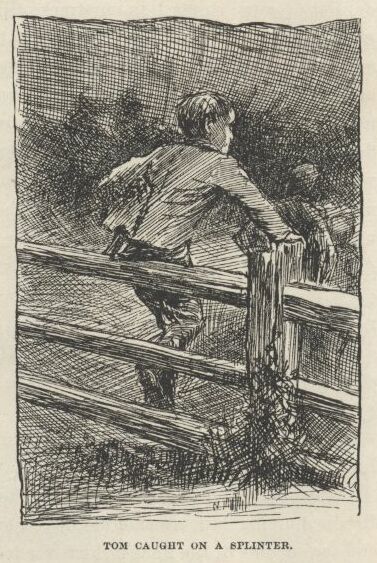
“Who’s that? Answer, or I’ll shoot!”
But we didn’t answer; we just unfurled our heels and shoved. Then there was arush, and a bang, bang, bang!and the bullets fairly whizzed around us!We heard them sing out:
“Here they are! They’ve broke for the river! After ’em, boys, and turn loosethe dogs!”
So here they come, full tilt. We could hear them because they wore boots andyelled, but we didn’t wear no boots and didn’t yell. We was in the path to themill; and when they got pretty close on to us we dodged into the bush and letthem go by, and then dropped in behind them. They’d had all the dogs shut up,so they wouldn’t scare off the robbers; but by this time somebody had let themloose, and here they come, making powwow enough for a million; but they was ourdogs; so we stopped in our tracks till they catched up; and when they see itwarn’t nobody but us, and no excitement to offer them, they only just saidhowdy, and tore right ahead towards the shouting and clattering; and then weup-steam again, and whizzed along after them till we was nearly to the mill,and then struck up through the bush to where my canoe was tied, and hopped inand pulled for dear life towards the middle of the river, but didn’t make nomore noise than we was obleeged to. Then we struck out, easy and comfortable,for the island where my raft was; and we could hear them yelling and barking ateach other all up and down the bank, till we was so far away the sounds got dimand died out. And when we stepped onto the raft I says:
“Now, old Jim, you’re a free man again, and I bet you won’t everbe a slave no more.”
“En a mighty good job it wuz, too, Huck. It ’uz planned beautiful, en it ’uzdonebeautiful; en dey ain’t nobodykin git up a plan dat’s mo’mixed-up en splendid den what dat one wuz.”
We was all glad as we could be, but Tom was the gladdest of all because he hada bullet in the calf of his leg.
When me and Jim heard that we didn’t feel so brash as what we did before. Itwas hurting him considerable, and bleeding; so we laid him in the wigwam andtore up one of the duke’s shirts for to bandage him, but he says:
“Gimme the rags; I can do it myself. Don’t stop now; don’t fool around here,and the evasion booming along so handsome; man the sweeps, and set her loose!Boys, we done it elegant!—’deed we did. I wish we’da had the handlingof Louis XVI., there wouldn’t a been no ‘Son of Saint Louis, ascend to heaven!’wrote down in hisbiography; no, sir, we’d a whooped him over theborder—that’s what we’d a done with him—and done it just as slickas nothing at all, too. Man the sweeps—man the sweeps!”
But me and Jim was consulting—and thinking. And after we’d thought a minute, Isays:
“Say it, Jim.”
So he says:
“Well, den, dis is de way it look to me, Huck. Ef it wuz himdat ’uzbein’ sot free, en one er de boys wuz to git shot, would he say, ‘Go on en saveme, nemmine ’bout a doctor f’r to save dis one?’ Is dat like Mars Tom Sawyer?Would he say dat? You bethe wouldn’t! Well, den, is Jimgywne to say it? No, sah—I doan’ budge a step out’n dis place ’dout adoctor;not if it’s forty year!”
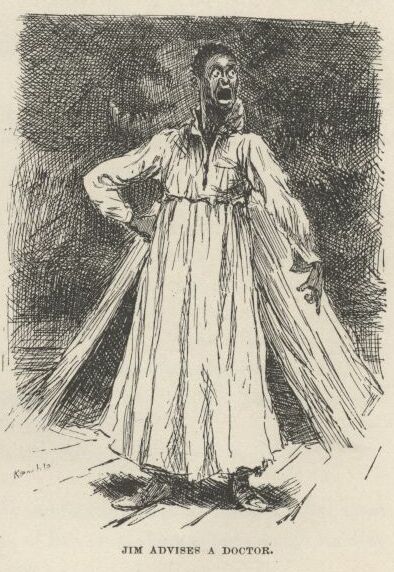
I knowed he was white inside, and I reckoned he’d say what he did say—so it wasall right now, and I told Tom I was a-going for a doctor. He raisedconsiderable row about it, but me and Jim stuck to it and wouldn’t budge; so hewas for crawling out and setting the raft loose himself; but we wouldn’t lethim. Then he give us a piece of his mind, but it didn’t do no good.
So when he sees me getting the canoe ready, he says:
“Well, then, if you’re bound to go, I’ll tell you the way to do when you get tothe village. Shut the door and blindfold the doctor tight and fast, and makehim swear to be silent as the grave, and put a purse full of gold in his hand,and then take and lead him all around the back alleys and everywheres in thedark, and then fetch him here in the canoe, in a roundabout way amongst theislands, and search him and take his chalk away from him, and don’t give itback to him till you get him back to the village, or else he will chalk thisraft so he can find it again. It’s the way they all do.”
So I said I would, and left, and Jim was to hide in the woods when he see thedoctor coming till he was gone again.
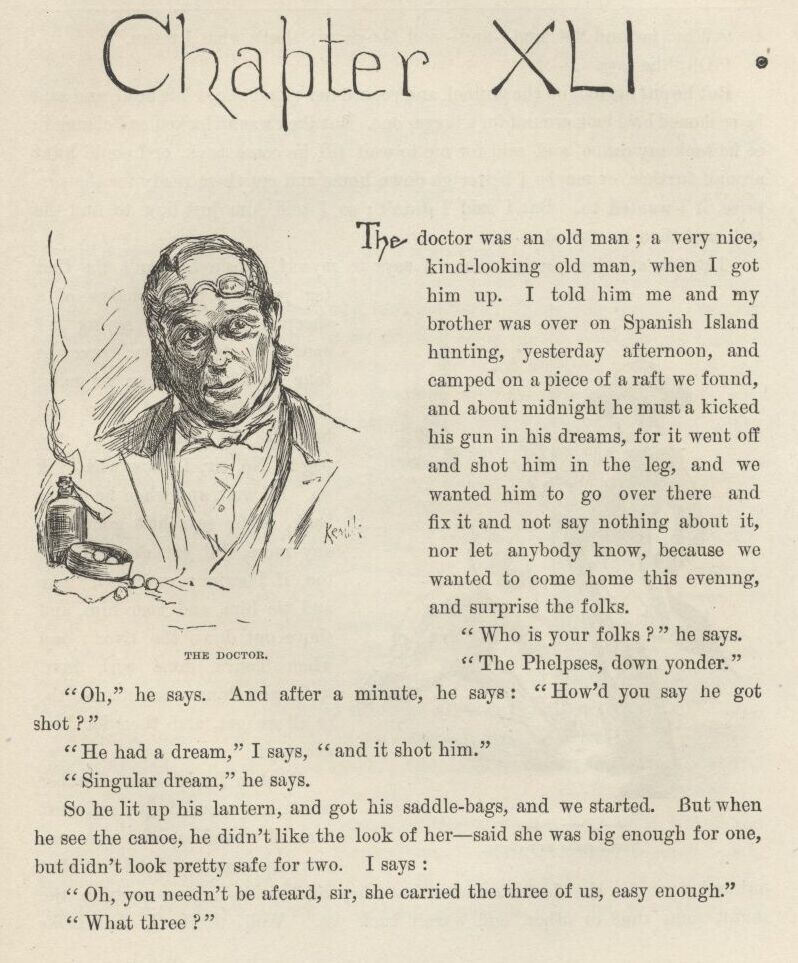
CHAPTER XLI.
The doctor was an old man; a very nice, kind-looking old man when I got him up.I told him me and my brother was over on Spanish Island hunting yesterdayafternoon, and camped on a piece of a raft we found, and about midnight he musta kicked his gun in his dreams, for it went off and shot him in the leg, and wewanted him to go over there and fix it and not say nothing about it, nor letanybody know, because we wanted to come home this evening and surprise thefolks.
“Who is your folks?” he says.
“The Phelpses, down yonder.”
“Oh,” he says. And after a minute, he says:
“How’d you say he got shot?”
“He had a dream,” I says, “and it shot him.”
“Singular dream,” he says.
So he lit up his lantern, and got his saddle-bags, and we started. But when hesees the canoe he didn’t like the look of her—said she was big enough for one,but didn’t look pretty safe for two. I says:
“Oh, you needn’t be afeard, sir, she carried the three of us easy enough.”
“What three?”
“Why, me and Sid, and—and—and the guns;that’s what I mean.”
“Oh,” he says.
But he put his foot on the gunnel and rocked her, and shook his head, and saidhe reckoned he’d look around for a bigger one. But they was all locked andchained; so he took my canoe, and said for me to wait till he come back, or Icould hunt around further, or maybe I better go down home and get them readyfor the surprise if I wanted to. But I said I didn’t; so I told him just how tofind the raft, and then he started.
I struck an idea pretty soon. I says to myself, spos’n he can’t fix that legjust in three shakes of a sheep’s tail, as the saying is? spos’n it takes himthree or four days? What are we going to do?—lay around there till he lets thecat out of the bag? No, sir; I know what I’lldo. I’ll wait, and when hecomes back if he says he’s got to go any more I’ll get down there, too, if Iswim; and we’ll take and tie him, and keep him, and shove out down the river;and when Tom’s done with him we’ll give him what it’s worth, or all we got, andthen let him get ashore.
So then I crept into a lumber-pile to get some sleep; and next time I waked upthe sun was away up over my head! I shot out and went for the doctor’s house,but they told me he’d gone away in the night some time or other, and warn’tback yet. Well, thinks I, that looks powerful bad for Tom, and I’ll dig out forthe island right off. So away I shoved, and turned the corner, and nearlyrammed my head into Uncle Silas’s stomach! He says:
“Why, Tom!Where you been all this time, you rascal?”
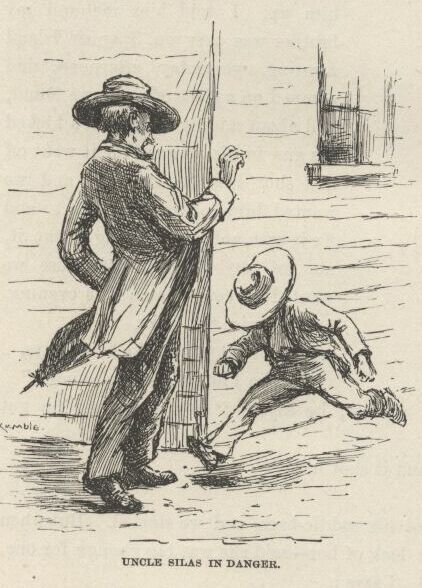
“Ihain’t been nowheres,” I says, “only just hunting for the runawaynigger—me and Sid.”
“Why, where ever did you go?” he says. “Your aunt’s been mighty uneasy.”
“She needn’t,” I says, “because we was all right. We followed the men and thedogs, but they outrun us, and we lost them; but we thought we heard them on thewater, so we got a canoe and took out after them and crossed over, but couldn’tfind nothing of them; so we cruised along up-shore till we got kind of tiredand beat out; and tied up the canoe and went to sleep, and never waked up tillabout an hour ago; then we paddled over here to hear the news, and Sid’s at thepost-office to see what he can hear, and I’m a-branching out to get somethingto eat for us, and then we’re going home.”
So then we went to the post-office to get “Sid”; but just as I suspicioned, hewarn’t there; so the old man he got a letter out of the office, and we waiteda while longer, but Sid didn’t come; so the old man said, come along, let Sidfoot it home, or canoe it, when he got done fooling around—but we would ride. Icouldn’t get him to let me stay and wait for Sid; and he said there warn’t nouse in it, and I must come along, and let Aunt Sally see we was all right.
When we got home Aunt Sally was that glad to see me she laughed and cried both,and hugged me, and give me one of them lickings of hern that don’t amount toshucks, and said she’d serve Sid the same when he come.
And the place was plum full of farmers and farmers’ wives, to dinner; and suchanother clack a body never heard. Old Mrs. Hotchkiss was the worst; her tonguewas a-going all the time. She says:
“Well, Sister Phelps, I’ve ransacked that-air cabin over, an’ I b’lieve thenigger was crazy. I says to Sister Damrell—didn’t I, Sister Damrell?—s’I, he’scrazy, s’I—them’s the very words I said. You all hearn me: he’s crazy, s’I;everything shows it, s’I. Look at that-air grindstone, s’I; want to tellme’t any cretur ’t’s in his right mind ’s a goin’ to scrabble all themcrazy things onto a grindstone, s’I? Here sich ’n’ sich a person busted hisheart; ’n’ here so ’n’ so pegged along for thirty-seven year, ’n’ allthat—natcherl son o’ Louis somebody, ’n’ sich everlast’n rubbage. He’s plumbcrazy, s’I; it’s what I says in the fust place, it’s what I says in the middle,’n’ it’s what I says last ’n’ all the time—the nigger’s crazy—crazy ’sNebokoodneezer, s’I.”
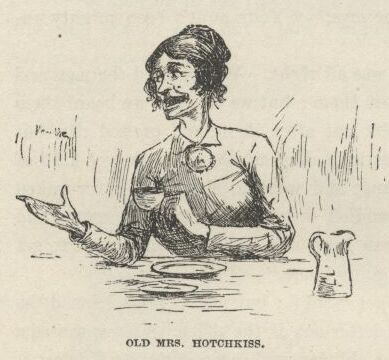
“An’ look at that-air ladder made out’n rags, Sister Hotchkiss,” says old Mrs.Damrell; “what in the name o’ goodness couldhe ever want of—”
“The very words I was a-sayin’ no longer ago th’n this minute to SisterUtterback, ’n’ she’ll tell you so herself. Sh-she, look at that-air rag ladder,sh-she; ’n’ s’I, yes, lookat it, s’I—what couldhe a-wanted ofit, s’I. Sh-she, Sister Hotchkiss, sh-she—”
“But how in the nation’d they ever gitthat grindstone inthere,anyway? ’n’ who dug that-air hole?’n’ who—”
“My very words, Brer Penrod! I was a-sayin’—pass that-air sasser o’m’lasses, won’t ye?—I was a-sayin’ to Sister Dunlap, jist this minute, howdidthey git that grindstone in there, s’I. Without help, mindyou—’thout help! Thar’swher ’tis. Don’t tell me, s’I;there wuzhelp, s’I; ’n’ ther’ wuz a plentyhelp, too, s’I;ther’s ben a dozena-helpin’ that nigger, ’n’ I lay I’d skin every lastnigger on this place but I’dfind out who done it, s’I; ’n’ moreover,s’I—”
“A dozensays you!—fortycouldn’t a done every thing that’s beendone. Look at them case-knife saws and things, how tedious they’ve been made;look at that bed-leg sawed off with ’m, a week’s work for six men; look at thatnigger made out’n straw on the bed; and look at—”
“You may wellsay it, Brer Hightower! It’s jist as I was a-sayin’ toBrer Phelps, his own self. S’e, what do youthink of it, SisterHotchkiss, s’e? Think o’ what, Brer Phelps, s’I? Think o’ that bed-leg sawedoff that a way, s’e? thinkof it, s’I? I lay it never saweditselfoff, s’I—somebody sawedit, s’I; that’s my opinion, takeit or leave it, it mayn’t be no ’count, s’I, but sich as ’t is, it’s myopinion, s’I, ’n’ if any body k’n start a better one, s’I, let him doit, s’I, that’s all. I says to Sister Dunlap, s’I—”
“Why, dog my cats, they must a ben a house-full o’ niggers in there every nightfor four weeks to a done all that work, Sister Phelps. Look at that shirt—everylast inch of it kivered over with secret African writ’n done with blood! Must aben a raft uv ’m at it right along, all the time, amost. Why, I’d give twodollars to have it read to me; ’n’ as for the niggers that wrote it, I ’low I’dtake ’n’ lash ’m t’ll—”
“People to helphim, Brother Marples! Well, I reckon you’d thinkso if you’d a been in this house for a while back. Why, they’ve stoleeverything they could lay their hands on—and we a-watching all the time, mindyou. They stole that shirt right off o’ the line! and as for that sheet theymade the rag ladder out of, ther’ ain’t no telling how many times theydidn’tsteal that; and flour, and candles, and candlesticks, and spoons,and the old warming-pan, and most a thousand things that I disremember now, andmy new calico dress; and me and Silas and my Sid and Tom on the constant watchday andnight, as I was a-telling you, and not a one of us could catchhide nor hair nor sight nor sound of them; and here at the last minute, lo andbehold you, they slides right in under our noses and fools us, and not onlyfools usbut the Injun Territory robbers too, and actuly getsawaywith that nigger safe and sound, and that with sixteen men andtwenty-two dogs right on their very heels at that very time! I tell you, itjust bangs anything I ever heardof. Why, speritscouldn’t a donebetter and been no smarter. And I reckon they must a beensperits—because, youknow our dogs, and ther’ ain’t no better; well,them dogs never even got on the trackof ’m once! You explainthatto me if you can!—anyof you!”
“Well, it does beat—”
“Laws alive, I never—”
“So help me, I wouldn’t a be—”
“House-thieves as well as—”
“Goodnessgracioussakes, I’d a ben afeard to livein sich a—”
“’Fraid to live!—why, I was that scared I dasn’t hardly go to bed, orget up, or lay down, or setdown, Sister Ridgeway. Why, they’d steal thevery—why, goodness sakes, you can guess what kind of a fluster Iwas inby the time midnight come last night. I hope to gracious if I warn’t afraidthey’d steal some o’ the family! I was just to that pass I didn’t have noreasoning faculties no more. It looks foolish enough now, in thedaytime; but I says to myself, there’s my two poor boys asleep, ’way up stairsin that lonesome room, and I declare to goodness I was that uneasy ’t I crep’up there and locked ’em in! I did. And anybody would. Because, you know,when you get scared that way, and it keeps running on, and getting worse andworse all the time, and your wits gets to addling, and you get to doing allsorts o’ wild things, and by-and-by you think to yourself, spos’n Iwasa boy, and was away up there, and the door ain’t locked, and you—” She stopped,looking kind of wondering, and then she turned her head around slow, and whenher eye lit on me—I got up and took a walk.
Says I to myself, I can explain better how we come to not be in that room thismorning if I go out to one side and study over it a little. So I done it. But Idasn’t go fur, or she’d a sent for me. And when it was late in the day thepeople all went, and then I come in and told her the noise and shooting wakedup me and “Sid,” and the door was locked, and we wanted to see the fun, so wewent down the lightning-rod, and both of us got hurt a little, and we didn’tnever want to try thatno more. And then I went on and told her all whatI told Uncle Silas before; and then she said she’d forgive us, and maybe it wasall right enough anyway, and about what a body might expect of boys, for allboys was a pretty harum-scarum lot as fur as she could see; and so, as long asno harm hadn’t come of it, she judged she better put in her time being gratefulwe was alive and well and she had us still, stead of fretting over what waspast and done. So then she kissed me, and patted me on the head, and droppedinto a kind of a brown study; and pretty soon jumps up, and says:
“Why, lawsamercy, it’s most night, and Sid not come yet! What hasbecomeof that boy?”
I see my chance; so I skips up and says:
“I’ll run right up to town and get him,” I says.
“No you won’t,” she says. “You’ll stay right wher’ you are; one’senoughto be lost at a time. If he ain’t here to supper, your uncle ’ll go.”
Well, he warn’t there to supper; so right after supper uncle went.
He come back about ten a little bit uneasy; hadn’t run across Tom’s track. AuntSally was a good dealuneasy; but Uncle Silas he said there warn’t nooccasion to be—boys will be boys, he said, and you’ll see this one turn up inthe morning all sound and right. So she had to be satisfied. But she said she’dset up for him a while anyway, and keep a light burning so he could see it.

And then when I went up to bed she come up with me and fetched her candle, andtucked me in, and mothered me so good I felt mean, and like I couldn’t look herin the face; and she set down on the bed and talked with me a long time, andsaid what a splendid boy Sid was, and didn’t seem to want to ever stop talkingabout him; and kept asking me every now and then if I reckoned he could a gotlost, or hurt, or maybe drownded, and might be laying at this minute somewheressuffering or dead, and she not by him to help him, and so the tears would dripdown silent, and I would tell her that Sid was all right, and would be home inthe morning, sure; and she would squeeze my hand, or maybe kiss me, and tell meto say it again, and keep on saying it, because it done her good, and she wasin so much trouble. And when she was going away she looked down in my eyes sosteady and gentle, and says:
“The door ain’t going to be locked, Tom, and there’s the window and the rod;but you’ll be good, won’tyou? And you won’t go? For mysake.”
Laws knows I wantedto go bad enough to see about Tom, and was allintending to go; but after that I wouldn’t a went, not for kingdoms.
But she was on my mind and Tom was on my mind, so I slept very restless. Andtwice I went down the rod away in the night, and slipped around front, and seeher setting there by her candle in the window with her eyes towards the roadand the tears in them; and I wished I could do something for her, but Icouldn’t, only to swear that I wouldn’t never do nothing to grieve her anymore. And the third time I waked up at dawn, and slid down, and she was thereyet, and her candle was most out, and her old gray head was resting on herhand, and she was asleep.
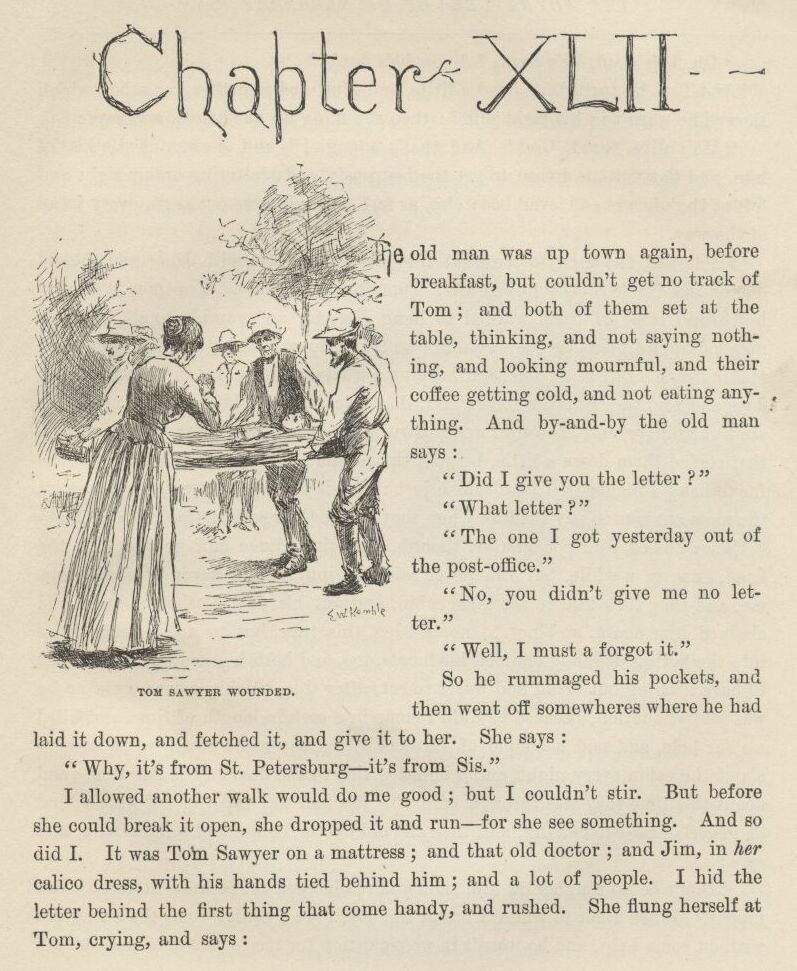
CHAPTER XLII.
The old man was uptown again before breakfast, but couldn’t get no track ofTom; and both of them set at the table thinking, and not saying nothing, andlooking mournful, and their coffee getting cold, and not eating anything. Andby-and-by the old man says:
“Did I give you the letter?”
“What letter?”
“The one I got yesterday out of the post-office.”
“No, you didn’t give me no letter.”
“Well, I must a forgot it.”
So he rummaged his pockets, and then went off somewheres where he had laid itdown, and fetched it, and give it to her. She says:
“Why, it’s from St. Petersburg—it’s from Sis.”
I allowed another walk would do me good; but I couldn’t stir. But before shecould break it open she dropped it and run—for she see something. And so did I.It was Tom Sawyer on a mattress; and that old doctor; and Jim, in hercalico dress, with his hands tied behind him; and a lot of people. I hid theletter behind the first thing that come handy, and rushed. She flung herself atTom, crying, and says:
“Oh, he’s dead, he’s dead, I know he’s dead!”
And Tom he turned his head a little, and muttered something or other, whichshowed he warn’t in his right mind; then she flung up her hands, and says:
“He’s alive, thank God! And that’s enough!” and she snatched a kiss of him, andflew for the house to get the bed ready, and scattering orders right and leftat the niggers and everybody else, as fast as her tongue could go, every jumpof the way.
I followed the men to see what they was going to do with Jim; and the olddoctor and Uncle Silas followed after Tom into the house. The men was veryhuffy, and some of them wanted to hang Jim for an example to all the otherniggers around there, so they wouldn’t be trying to run away like Jim done, andmaking such a raft of trouble, and keeping a whole family scared most to deathfor days and nights. But the others said, don’t do it, it wouldn’t answer atall; he ain’t our nigger, and his owner would turn up and make us pay for him,sure. So that cooled them down a little, because the people that’s always themost anxious for to hang a nigger that hain’t done just right is always thevery ones that ain’t the most anxious to pay for him when they’ve got theirsatisfaction out of him.
They cussed Jim considerble, though, and give him a cuff or two side the headonce in a while, but Jim never said nothing, and he never let on to know me,and they took him to the same cabin, and put his own clothes on him, andchained him again, and not to no bed-leg this time, but to a big staple droveinto the bottom log, and chained his hands, too, and both legs, and said hewarn’t to have nothing but bread and water to eat after this till his ownercome, or he was sold at auction because he didn’t come in a certain length oftime, and filled up our hole, and said a couple of farmers with guns must standwatch around about the cabin every night, and a bulldog tied to the door in thedaytime; and about this time they was through with the job and was tapering offwith a kind of generl good-bye cussing, and then the old doctor comes and takesa look, and says:
“Don’t be no rougher on him than you’re obleeged to, because he ain’t a badnigger. When I got to where I found the boy I see I couldn’t cut the bullet outwithout some help, and he warn’t in no condition for me to leave to go and gethelp; and he got a little worse and a little worse, and after a long time hewent out of his head, and wouldn’t let me come a-nigh him any more, and said ifI chalked his raft he’d kill me, and no end of wild foolishness like that, andI see I couldn’t do anything at all with him; so I says, I got to havehelpsomehow; and the minute I says it out crawls this nigger fromsomewheres and says he’ll help, and he done it, too, and done it very well. Ofcourse I judged he must be a runaway nigger, and there I was!and thereI had to stick right straight along all the rest of the day and all night. Itwas a fix, I tell you! I had a couple of patients with the chills, and ofcourse I’d of liked to run up to town and see them, but I dasn’t, because thenigger might get away, and then I’d be to blame; and yet never a skiff comeclose enough for me to hail. So there I had to stick plumb until daylight thismorning; and I never see a nigger that was a better nuss or faithfuller, andyet he was risking his freedom to do it, and was all tired out, too, and I seeplain enough he’d been worked main hard lately. I liked the nigger for that; Itell you, gentlemen, a nigger like that is worth a thousand dollars—and kindtreatment, too. I had everything I needed, and the boy was doing as well thereas he would a done at home—better, maybe, because it was so quiet; but there Iwas, with both of ’m on my hands, and there I had to stick till aboutdawn this morning; then some men in a skiff come by, and as good luck wouldhave it the nigger was setting by the pallet with his head propped on his kneessound asleep; so I motioned them in quiet, and they slipped up on him andgrabbed him and tied him before he knowed what he was about, and we never hadno trouble. And the boy being in a kind of a flighty sleep, too, we muffled theoars and hitched the raft on, and towed her over very nice and quiet, and thenigger never made the least row nor said a word from the start. He ain’t no badnigger, gentlemen; that’s what I think about him.”
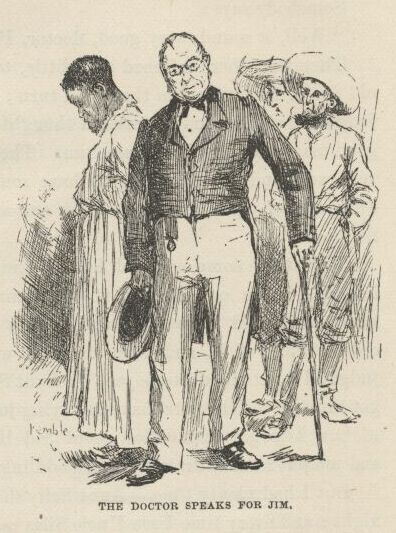
Somebody says:
“Well, it sounds very good, doctor, I’m obleeged to say.”
Then the others softened up a little, too, and I was mighty thankful to thatold doctor for doing Jim that good turn; and I was glad it was according to myjudgment of him, too; because I thought he had a good heart in him and was agood man the first time I see him. Then they all agreed that Jim had acted verywell, and was deserving to have some notice took of it, and reward. So everyone of them promised, right out and hearty, that they wouldn’t cuss him nomore.
Then they come out and locked him up. I hoped they was going to say he couldhave one or two of the chains took off, because they was rotten heavy, or couldhave meat and greens with his bread and water; but they didn’t think of it, andI reckoned it warn’t best for me to mix in, but I judged I’d get the doctor’syarn to Aunt Sally somehow or other as soon as I’d got through the breakersthat was laying just ahead of me—explanations, I mean, of how I forgot tomention about Sid being shot when I was telling how him and me put in thatdratted night paddling around hunting the runaway nigger.
But I had plenty time. Aunt Sally she stuck to the sick-room all day and allnight, and every time I see Uncle Silas mooning around I dodged him.
Next morning I heard Tom was a good deal better, and they said Aunt Sally wasgone to get a nap. So I slips to the sick-room, and if I found him awake Ireckoned we could put up a yarn for the family that would wash. But he wassleeping, and sleeping very peaceful, too; and pale, not fire-faced the way hewas when he come. So I set down and laid for him to wake. In about half an hourAunt Sally comes gliding in, and there I was, up a stump again! She motioned meto be still, and set down by me, and begun to whisper, and said we could all bejoyful now, because all the symptoms was first-rate, and he’d been sleepinglike that for ever so long, and looking better and peacefuller all the time,and ten to one he’d wake up in his right mind.
So we set there watching, and by-and-by he stirs a bit, and opened his eyesvery natural, and takes a look, and says:
“Hello!—why, I’m at home!How’s that? Where’s the raft?”
“It’s all right,” I says.
“And Jim?”
“The same,” I says, but couldn’t say it pretty brash. But he never noticed, butsays:
“Good! Splendid! Nowwe’re all right and safe! Did you tell Aunty?”
I was going to say yes; but she chipped in and says: “About what, Sid?”
“Why, about the way the whole thing was done.”
“What whole thing?”
“Why, thewhole thing. There ain’t but one; how we set the runawaynigger free—me and Tom.”
“Good land! Set the run— What isthe child talking about! Dear, dear, outof his head again!”
“No, I ain’t out of my HEAD; I know all what I’m talkingabout. We didset him free—me and Tom. We laid out to do it, and wedoneit. And we done it elegant, too.” He’d got a start, and she neverchecked him up, just set and stared and stared, and let him clip along, and Isee it warn’t no use for meto put in. “Why, Aunty, it cost us a powerof work—weeks of it—hours and hours, every night, whilst you was all asleep.And we had to steal candles, and the sheet, and the shirt, and your dress, andspoons, and tin plates, and case-knives, and the warming-pan, and thegrindstone, and flour, and just no end of things, and you can’t think what workit was to make the saws, and pens, and inscriptions, and one thing or another,and you can’t think halfthe fun it was. And we had to make up thepictures of coffins and things, and nonnamous letters from the robbers, and getup and down the lightning-rod, and dig the hole into the cabin, and made therope ladder and send it in cooked up in a pie, and send in spoons and things towork with in your apron pocket—”
“Mercy sakes!”
“—and load up the cabin with rats and snakes and so on, for company for Jim;and then you kept Tom here so long with the butter in his hat that you comenear spiling the whole business, because the men come before we was out of thecabin, and we had to rush, and they heard us and let drive at us, and I got myshare, and we dodged out of the path and let them go by, and when the dogs comethey warn’t interested in us, but went for the most noise, and we got ourcanoe, and made for the raft, and was all safe, and Jim was a free man, and wedone it all by ourselves, and wasn’tit bully, Aunty!”
“Well, I never heard the likes of it in all my born days! So it was you,you little rapscallions, that’s been making all this trouble, and turnedeverybody’s wits clean inside out and scared us all most to death. I’ve as gooda notion as ever I had in my life to take it out o’ you this very minute. Tothink, here I’ve been, night after night, a—youjust get well once, youyoung scamp, and I lay I’ll tan the Old Harry out o’ both o’ ye!”
But Tom, he wasso proud and joyful, he just couldn’thold in,and his tongue just wentit—she a-chipping in, and spitting fire allalong, and both of them going it at once, like a cat convention; and she says:
“Well, you get all the enjoyment you can out of it now, for mindI tell you if I catch you meddling with him again—”
“Meddling with who?” Tom says, dropping his smile and looking surprised.
“With who?Why, the runaway nigger, of course. Who’d you reckon?”
Tom looks at me very grave, and says:
“Tom, didn’t you just tell me he was all right? Hasn’t he got away?”
“Him?” says Aunt Sally; “the runaway nigger? ’Deed he hasn’t. They’vegot him back, safe and sound, and he’s in that cabin again, on bread and water,and loaded down with chains, till he’s claimed or sold!”

Tom rose square up in bed, with his eye hot, and his nostrils opening andshutting like gills, and sings out to me:
“They hain’t no rightto shut him up! Shove!—and don’t you lose aminute. Turn him loose! he ain’t no slave; he’s as free as any cretur thatwalks this earth!”
“What doesthe child mean?”
“I mean every word I say, Aunt Sally, and if somebody don’t go,I’llgo. I’ve knowed him all his life, and so has Tom, there. Old MissWatson died two months ago, and she was ashamed she ever was going to sell himdown the river, and saidso; and she set him free in her will.”
“Then what on earth did youwant to set him free for, seeing he wasalready free?”
“Well, that isa question, I must say; and justlike women! Why,I wanted the adventureof it; and I’d a waded neck-deep in bloodto—goodness alive, AUNTPOLLY!”
If she warn’t standing right there, just inside the door, looking as sweet andcontented as an angel half full of pie, I wish I may never!
Aunt Sally jumped for her, and most hugged the head off of her, and cried overher, and I found a good enough place for me under the bed, for it was gettingpretty sultry for us, seemed to me. And I peeped out, and in a littlewhile Tom’s Aunt Polly shook herself loose and stood there looking across atTom over her spectacles—kind of grinding him into the earth, you know. And thenshe says:
“Yes, you betterturn y’r head away—I would if I was you, Tom.”
“Oh, deary me!” says Aunt Sally; “ishe changed so? Why, that ain’tTom, it’s Sid; Tom’s—Tom’s—why, where is Tom? He was here a minute ago.”
“You mean where’s Huck Finn—that’s what you mean! I reckon I hain’traised such a scamp as my Tom all these years not to know him when I seehim. That wouldbe a pretty howdy-do. Come out from under that bed, HuckFinn.”
So I done it. But not feeling brash.
Aunt Sally she was one of the mixed-upest-looking persons I ever see—exceptone, and that was Uncle Silas, when he come in and they told it all to him. Itkind of made him drunk, as you may say, and he didn’t know nothing at all therest of the day, and preached a prayer-meeting sermon that night that gave hima rattling ruputation, because the oldest man in the world couldn’t aunderstood it. So Tom’s Aunt Polly, she told all about who I was, and what; andI had to up and tell how I was in such a tight place that when Mrs. Phelps tookme for Tom Sawyer—she chipped in and says, “Oh, go on and call me Aunt Sally,I’m used to it now, and ’tain’t no need to change”—that when Aunt Sally took mefor Tom Sawyer I had to stand it—there warn’t no other way, and I knowed hewouldn’t mind, because it would be nuts for him, being a mystery, and he’d makean adventure out of it, and be perfectly satisfied. And so it turned out, andhe let on to be Sid, and made things as soft as he could for me.
And his Aunt Polly she said Tom was right about old Miss Watson setting Jimfree in her will; and so, sure enough, Tom Sawyer had gone and took all thattrouble and bother to set a free nigger free! and I couldn’t ever understandbefore, until that minute and that talk, how he couldhelp a body set anigger free with his bringing-up.
Well, Aunt Polly she said that when Aunt Sally wrote to her that Tom andSidhad come all right and safe, she says to herself:
“Look at that, now! I might have expected it, letting him go off that waywithout anybody to watch him. So now I got to go and trapse all the way downthe river, eleven hundred mile, and find out what that creetur’s up tothistime; as long as I couldn’t seem to get any answer out of you aboutit.”
“Why, I never heard nothing from you,” says Aunt Sally.
“Well, I wonder! Why, I wrote you twice to ask you what you could mean by Sidbeing here.”
“Well, I never got ’em, Sis.”
Aunt Polly she turns around slow and severe, and says:
“You, Tom!”
“Well—what?” he says, kind of pettish.
“Don’t you what me, you impudent thing—hand out them letters.”
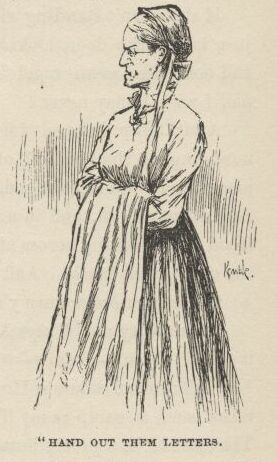
“What letters?”
“Themletters. I be bound, if I have to take aholt of you I’ll—”
“They’re in the trunk. There, now. And they’re just the same as they was when Igot them out of the office. I hain’t looked into them, I hain’t touched them.But I knowed they’d make trouble, and I thought if you warn’t in no hurry,I’d—”
“Well, you doneed skinning, there ain’t no mistake about it. And Iwrote another one to tell you I was coming; and I s’pose he—”
“No, it come yesterday; I hain’t read it yet, but it’sall right, I’vegot that one.”
I wanted to offer to bet two dollars she hadn’t, but I reckoned maybe it wasjust as safe to not to. So I never said nothing.

CHAPTER THE LAST
The first time I catched Tom private I asked him what was his idea, time of theevasion?—what it was he’d planned to do if the evasion worked all right and hemanaged to set a nigger free that was already free before? And he said, what hehad planned in his head from the start, if we got Jim out all safe, was for usto run him down the river on the raft, and have adventures plumb to the mouthof the river, and then tell him about his being free, and take him back up homeon a steamboat, in style, and pay him for his lost time, and write word aheadand get out all the niggers around, and have them waltz him into town with atorchlight procession and a brass-band, and then he would be a hero, and sowould we. But I reckoned it was about as well the way it was.
We had Jim out of the chains in no time, and when Aunt Polly and Uncle Silasand Aunt Sally found out how good he helped the doctor nurse Tom, they made aheap of fuss over him, and fixed him up prime, and give him all he wanted toeat, and a good time, and nothing to do. And we had him up to the sick-room,and had a high talk; and Tom give Jim forty dollars for being prisoner for usso patient, and doing it up so good, and Jim was pleased most to death, andbusted out, and says:

“Dah, now, Huck, what I tell you?—what I tell you up dah on Jacksonislan’? I toleyou I got a hairy breas’, en what’s de sign un it; en Itoleyou I ben rich wunst, en gwineter to be rich agin;en it’scome true; en heah she is! Dah, now! doan’ talk to me—signs issigns, mine I tell you; en I knowed jis’ ’s well ’at I ’uz gwineter berich agin as I’s a-stannin’ heah dis minute!”
And then Tom he talked along and talked along, and says, le’s all three slideout of here one of these nights and get an outfit, and go for howlingadventures amongst the Injuns, over in the Territory, for a couple of weeks ortwo; and I says, all right, that suits me, but I ain’t got no money for to buythe outfit, and I reckon I couldn’t get none from home, because it’s likelypap’s been back before now, and got it all away from Judge Thatcher and drunkit up.
“No, he hain’t,” Tom says; “it’s all there yet—six thousand dollars and more;and your pap hain’t ever been back since. Hadn’t when I come away, anyhow.”
Jim says, kind of solemn:
“He ain’t a-comin’ back no mo’, Huck.”
I says:
“Why, Jim?”
“Nemmine why, Huck—but he ain’t comin’ back no mo.”
But I kept at him; so at last he says:
“Doan’ you ’member de house dat was float’n down de river, en dey wuz a man indah, kivered up, en I went in en unkivered him and didn’ let you come in? Well,den, you kin git yo’ money when you wants it, kase dat wuz him.”
Tom’s most well now, and got his bullet around his neck on a watch-guard for awatch, and is always seeing what time it is, and so there ain’t nothing more towrite about, and I am rotten glad of it, because if I’d a knowed what a troubleit was to make a book I wouldn’t a tackled it, and ain’t a-going to no more.But I reckon I got to light out for the Territory ahead of the rest, becauseAunt Sally she’s going to adopt me and sivilize me, and I can’t stand it. Ibeen there before.
THE END. YOURS TRULY, HUCK FINN.


 Related articles



 Featured reads


 Hot news
 Follow us
